Heavy Duty Waterproof Outdoor Curtains: A Complete Buying Guide
Why I Stopped Trusting “Water-Resistant” Labels
My first set of outdoor curtains looked fantastic for about five weeks. They were a pretty cream polyester panel with a “weatherproof” tag, hung across a covered patio. The first proper monsoon-style downpour pushed sideways rain through the fabric, and the bottom hem went grey with mildew before the season ended.
That experience changed how I shop. The word “outdoor” on a curtain listing means very little. It can describe a lightweight fabric that tolerates a few splashes, or an engineered textile built to sit in sun and storms for a decade. This guide is about telling the two apart before you spend the money.
I’ll cover what the fabrics are actually made of, which brands are worth your attention, how hardware decides whether your curtains survive, and the placement mistakes that wreck even good panels.
Waterproof vs. Water-Repellent
Most buyers don’t realise these are different categories, and sellers rarely clarify.
Water-repellent fabrics, such as solution-dyed acrylic, are woven tightly and finished with a coating so water beads and rolls off. They also breathe, so the fabric dries quickly. Under a steady downpour or driving wind, though, they will eventually let moisture through.
Waterproof fabrics have a laminated or coated barrier, usually PVC, vinyl or polyurethane. They block water entirely, but they trap humidity underneath and can feel stiff.
Neither is “better.” It depends on how exposed your space is:
- Covered porch or pergola with a roof: water-repellent is usually enough, and it looks and drapes far better.
- Open-sided gazebo, pool cabana or windward deck: go with waterproof or a coated vinyl panel.
- Enclosing a space for winter use: clear or tinted vinyl, which is fully waterproof and also blocks wind.
Mildew resistance is a separate property again. A fabric can shed water and still grow mould if it stays damp and isn’t treated. Look for a mildew-resistant finish or a solution-dyed fibre in the spec.
Fabric Types Compared
Here’s how the main options stack up, based on what I’ve handled and on manufacturer specifications.
| Fabric | Waterproof Level | Breathability | UV / Fade Resistance | Look and Drape | Typical Lifespan | Best For |
|---|---|---|---|---|---|---|
| Solution-dyed acrylic | Water-repellent | High | Excellent | Soft, premium | 8–10+ years | Covered patios, pergolas |
| Solution-dyed polyester (outdoor-grade) | Water-repellent to moderate | Medium | Very good | Good | 4–7 years | Budget-friendly covered areas |
| Coated polyester (PU/PVC backing) | Waterproof | Low | Good | Slightly stiff | 3–6 years | Exposed decks, cabanas |
| Heavy vinyl (PVC) | Fully waterproof | None | Good, but can yellow | Rigid | 3–7 years | Winter enclosures, wind barriers |
| Canvas (treated cotton or blend) | Water-repellent | Medium | Moderate | Classic, textured | 2–5 years | Rustic styles, sheltered spots |
| Mesh or privacy screen | Not waterproof | Very high | Varies | Sheer | 3–5 years | Sun and bug control only |
My honest view is that solution-dyed acrylic is the best all-round material, but only if the area is genuinely covered. For anything open to the weather, a coated fabric or vinyl outperforms it.
Solution-dyed means the colour is added to the fibre before it’s spun, so the pigment runs all the way through. This is why quality outdoor curtains resist fading far better than printed ones.
Brands and Products Worth Knowing
I’m not going to pretend I’ve tested every curtain on the market. These are the names that come up repeatedly when I talk to installers and read independent reviews, along with my read on each.
Sunbrella-based panels
Sunbrella is the benchmark fabric. Many retailers sell curtains made from it. It’s solution-dyed acrylic, with a long track record and strong fade performance. The trade-off is price, since you pay a premium per panel, and it is water-repellent rather than waterproof.
Verdict: Best long-term value for covered spaces. Overkill for a sheltered balcony you only use in summer.
Outdura fabrics
Outdura is a close rival, also solution-dyed acrylic, and often found in custom or made-to-order curtains. Performance is comparable to Sunbrella, and some people find the hand-feel softer.
Verdict: A strong alternative if you’re ordering custom sizes and want options beyond off-the-shelf stock.
Coolaroo
Coolaroo is better known for shade cloth and sun screens. It’s a good choice if your priority is blocking heat and glare rather than keeping rain out.
Verdict: Excellent for sun control. Don’t buy it expecting storm protection.
Budget retail panels
You’ll find countless polyester sets on large marketplaces such as Amazon and at home-improvement retailers like Home Depot. Quality is wildly inconsistent. Some are genuinely good value for sheltered spots. Many are thin fabric with a vague “waterproof” claim.
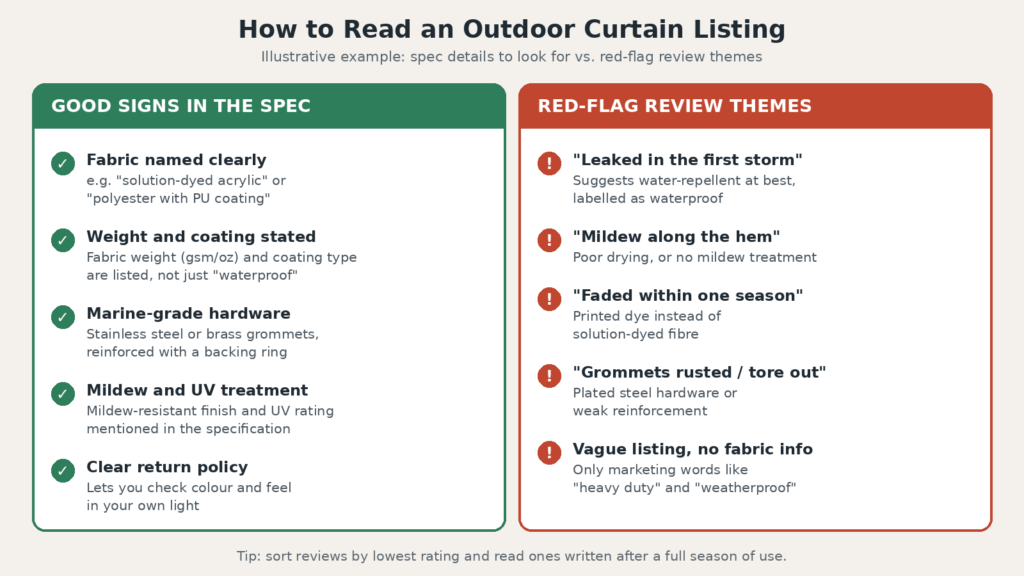
Verdict: Read recent one-star reviews first, not the five-star ones. Look for mentions of mildew, fading and grommet failure after one season. Check that the listing states the actual fabric content and weight, not just marketing language.
Hardware: The Part Most People Ignore
I’ve watched excellent fabric fail because of cheap hardware. In outdoor use, hardware takes the strain from wind and weight.
Grommets. Stainless steel or marine-grade brass holds up. Painted or plated steel rusts and leaves orange streaks down the fabric. Look for reinforced grommets with a backing ring.
Rods and tracks. Powder-coated aluminium or stainless steel rods suit most spaces. For wide spans, a ceiling-mounted track gives smoother movement than a rod, and it handles wind load better because the load is spread across more fixings.
Tie-backs and weighted hems. A weighted hem keeps panels from billowing. Magnetic or hook-and-loop tie-backs are useful for exposed sites, because a panel that flaps in a gale will eventually tear at the grommets.
Fixings. Use fixings matched to your surface (timber, masonry or metal). Under-specified screws are a surprisingly common point of failure.
If you take one thing from this section, budget around a quarter of your total spend for hardware. It’s the cheapest insurance you can buy.
Sizing, Wind, and Real-World Placement
Measure for fullness
For a natural look, panels should be roughly 1.5 to 2 times the width of the space they cover. Flat, stretched panels look cheap and put strain on the fabric. In wind-prone sites, slightly less fullness reduces sail effect, but don’t go below about 1.25 times.
Leave a gap above the ground
Curtains that touch the floor wick up water and grow mildew from the hem upwards. A gap of 1 to 2 inches (about 2.5 to 5 cm) lets them dry. This small detail extends their life more than almost any other.
Think about wind direction
Windward sides deserve heavier, coated fabric and more secure fixings. Leeward sides can use lighter drapes. If you have a prevailing weather direction, work with it.
Consider the sun
South- and west-facing spaces take the harshest UV. If fading worries you, solution-dyed fabric is not optional. A pale colour hides fading better than a deep one, and dark colours absorb heat, which can make the area behind the curtain stuffy.
Privacy versus airflow
Heavier waterproof panels block air. If you want to keep your space comfortable in summer, consider pairing a breathable panel for daily use with a coated one you deploy only during storms.
Care and Maintenance
Good curtains still need basic upkeep:
- Brush off dirt and debris regularly with a soft brush.
- Spot-clean with mild soap and lukewarm water. Skip bleach unless the manufacturer says otherwise, since it can damage coatings.
- Air-dry fully before folding or storing. Storing damp fabric is the quickest way to get mildew.
- Rinse after storms or salt exposure if you live near the coast.
- Store dry in winter if you’re in a region with heavy snow or freezing rain, even for fabrics rated for year-round use. Folded panels in a breathable bag last noticeably longer.
Always check the care label. Coated and vinyl fabrics have different rules from acrylic, and some can’t be machine washed.
Mistakes I See Constantly
- Trusting the headline claim. “Waterproof” without a stated fabric and coating is a red flag.
- Ignoring wind load. A beautiful panel on a flimsy rod will fail.
- Skipping the hem gap. Floor-touching curtains stay wet.
- Choosing dark colours in full sun without considering heat and fade.
- Buying one thick curtain when two layers work better. A breathable layer plus a removable waterproof layer is often more practical than a single heavy panel.
- Forgetting to confirm the return policy. Fabrics look different in your light. Buy from sellers who accept returns.
Where the Market Is Heading
A few trends look likely to shape the next few years, in my view:
- Recycled and solution-dyed fibres are becoming more common as manufacturers respond to sustainability pressure. Certifications such as OEKO-TEX are increasingly used as trust signals.
- PFAS-free water repellents are replacing older chemical finishes as regulations tighten in several regions. Expect more “PFC-free” labelling.
- Hybrid panels that pair a breathable face fabric with a thin waterproof membrane should keep improving, narrowing the old compromise between protection and comfort.
- Motorised and smart track systems for outdoor use are growing, particularly for large pergolas, though they cost more and add maintenance considerations.
Treat these as directional rather than certain. Product cycles move quickly, so check current specifications before buying.
FAQs
Are outdoor curtains actually waterproof?
Some are, but many are only water-repellent. Waterproof typically means a coated or vinyl fabric. Check the material specification, not just the product title.
How long do heavy duty outdoor curtains last?
It varies by material and exposure. Solution-dyed acrylic can last close to a decade with care, while budget polyester may need replacing within a few seasons.
Can I leave them up all year?
Often yes, if the fabric is rated for it and installed correctly. In areas with heavy snow, ice or hurricanes, taking them down during extreme weather is wise.
How do I stop outdoor curtains from billowing in the wind?
Use weighted hems, tie-backs, and secure side anchors. Slightly reducing fullness also helps.
Will waterproof curtains cause mould?
Coated fabrics can trap humidity. Allow airflow, keep a hem gap, and make sure they dry fully after rain.
Can I wash them in a machine?
Some acrylic panels can be machine washed on gentle, but coated and vinyl types usually can’t. Follow the care label.
What colour is best?
Lighter and mid-tone colours show fade and dirt less and stay cooler in the sun. Deep colours look rich but absorb heat.
Is it worth paying for premium fabric?
For a covered space you use often, yes. The cost per year usually works out lower than replacing cheap panels repeatedly.
Conclusion
Outdoor curtains look like a simple purchase, but they sit at the intersection of fabric science, hardware engineering and weather. The most useful habit I can recommend is to ignore the marketing adjectives and read the material spec, the coating type and the hardware list.
If your space is genuinely covered, invest in solution-dyed acrylic and quality fixings. If it’s exposed, choose coated fabric or vinyl and plan for wind. In both cases, leave a hem gap, let the fabric dry, and don’t skimp on the hardware.
Do that, and your curtains stop being a seasonal gamble and become part of the structure of the space.