I’ve grown eggplants for more than a decade in a mixed climate that swings from cool springs to hot, humid summers. The first few seasons taught me more about patience and heat than any seed catalog ever could. Eggplants are not tomatoes. They sulk in cool soil, demand consistent warmth, and reward the gardener who treats them like the tropical plants they essentially are. What follows is the practical system I use every year—how I choose seeds, start them, transplant them, and keep the plants producing until frost.
Table of Contents
Why Start with Seeds Instead of Nursery Plants
Choosing the Right Eggplant Seeds
Understanding Seed Types and What the Packet Actually Means
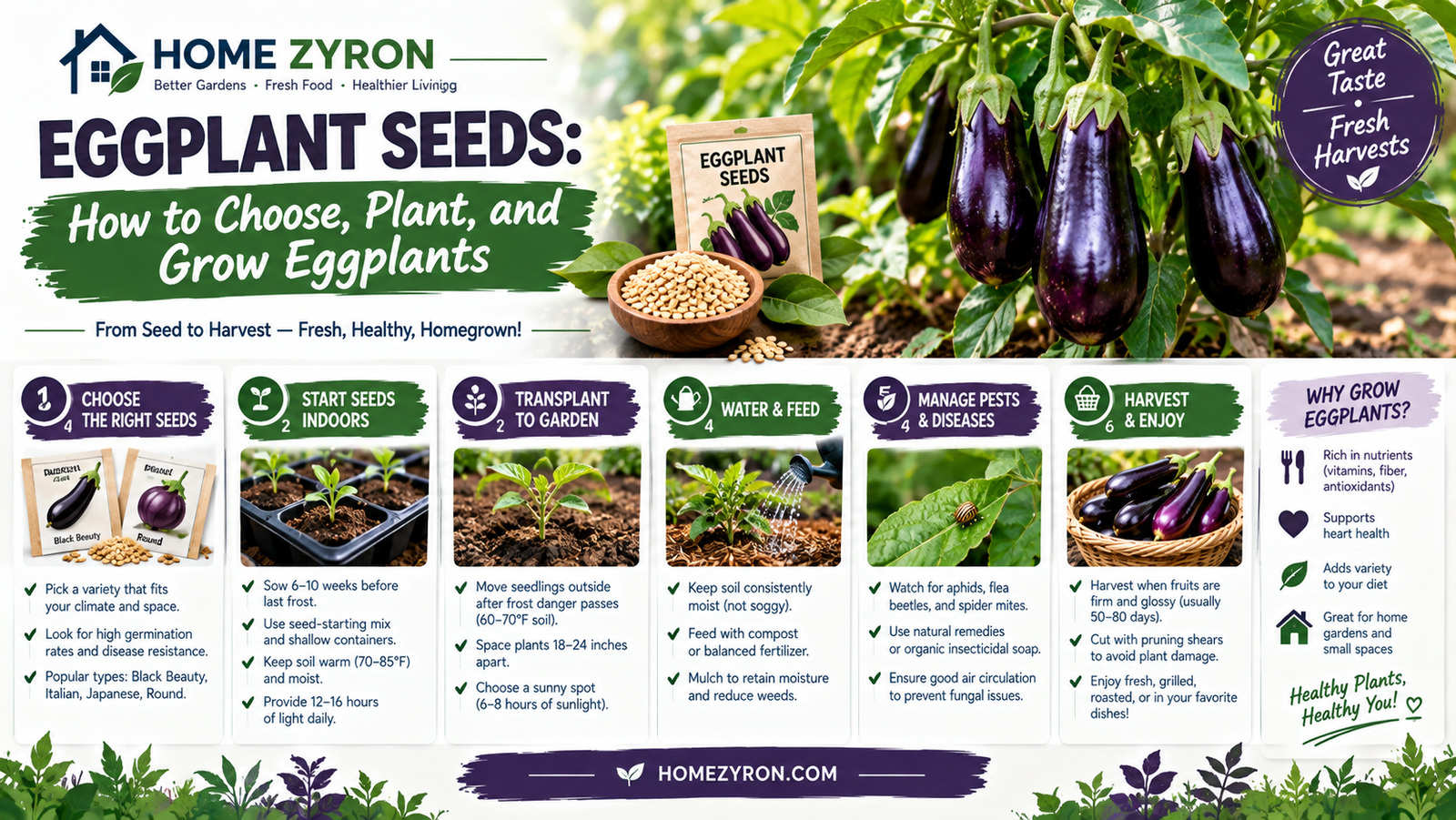
When and How to Start Seeds Indoors
Germination Conditions That Actually Work
Caring for Seedlings Until Transplant Time
Preparing the Garden Bed or Containers
Transplanting Without Stunting the Plants
Ongoing Care: Water, Feeding, Support, and Heat
Harvest Timing and Flavor
Common Problems and Honest Fixes
Saving Your Own Seeds
Future Trends Worth Watching
Frequently Asked Questions
Final Thoughts
Author Bio
Why Start with Seeds Instead of Nursery Plants
Buying transplants is convenient, but the selection at most garden centers is limited to a handful of standard purple globe types. Starting from seed opens up Japanese long thin varieties, Italian heirlooms with lavender and white streaking, compact container types, and early-maturing options that finish before short-season frost arrives. You also control the exact timing and the quality of the young plants. In my experience, home-started seedlings that never suffered transplant shock or cold stress outperform most store-bought ones by a noticeable margin once the real heat arrives.
Choosing the Right Eggplant Seeds
Start with your climate and your kitchen. If your summers are short or nights regularly dip below 55–60°F, prioritize early varieties that mature in 55–70 days from transplant. In long, hot seasons you can grow larger, later types without worry.
I group varieties by use and habit:
Classic large purple/black globes (Black Beauty types) for eggplant Parmesan and roasting. Reliable but slower.
Asian long thin types (Ichiban, Ping Tung Long, Millionaire) for stir-fries and grilling. These are usually more productive, set fruit in slightly cooler conditions, and have fewer seeds and milder flavor.
Italian and specialty heirlooms (Rosa Bianca, Listada de Gandia) for beauty and creamy texture when roasted or grilled.
Compact or patio types (Fairy Tale, Patio Baby, Hansel, Gretel) for containers or tight spaces. Many are AAS winners and surprisingly productive.
Buy from reputable sources that test germination rates. I’ve had consistently good results from Johnny’s Selected Seeds, Baker Creek, High Mowing, and Seed Savers Exchange. Check the pack date; eggplant seed stays viable 4–6 years under cool, dry storage, but fresher is always better.
Understanding Seed Types and What the Packet Actually Means
“Days to maturity” on eggplant packets almost always means days from transplant, not from sowing. Add 6–10 weeks of indoor growing time when planning. Hybrid (F1) seed usually costs more and produces vigorous, uniform plants. Open-pollinated and heirloom seed costs less and allows seed saving. Treated seed (sometimes fungicide-coated) is uncommon for home gardeners and rarely necessary if you use sterile mix and proper sanitation.
When and How to Start Seeds Indoors
Count backward 6–9 weeks from your planned transplant date. Transplant only after soil has warmed to at least 60–65°F and nighttime air temperatures stay reliably above 55°F (preferably 60°F+). In most temperate zones that puts sowing in March or early April for a late May/June transplant.
I use cell trays or 3–4 inch pots filled with a fine, sterile seed-starting mix—never garden soil. Sow seeds ¼ inch deep, one or two per cell. Lightly cover and firm the mix. Bottom water or mist so the surface stays evenly moist but never soggy.
Germination Conditions That Actually Work
Heat is non-negotiable. Ideal soil temperature is 75–90°F; the sweet spot for fast, even germination is around 80–85°F. At those temperatures most seeds sprout in 7–14 days. Below 70°F germination slows dramatically or fails. A seedling heat mat under the tray makes the difference between 80%+ germination and disappointing results. Cover with a humidity dome until the first sprouts appear, then remove it to prevent damping-off.
I once tried germinating without bottom heat in a warm room (around 68–70°F air temperature). Half the seeds never came up, and the rest took three weeks. The next year, same seed lot on a mat: nearly complete germination in under ten days. The lesson stuck.
Caring for Seedlings Until Transplant Time
Once seedlings emerge, give them strong light—grow lights 2–4 inches above the plants for 14–16 hours a day, or a very bright south window supplemented with lights if needed. Cooler air temperatures (65–70°F) after germination produce stockier plants. Thin to the strongest seedling per cell when true leaves appear.
Fertilize lightly once true leaves are present—half-strength liquid organic fertilizer every 10–14 days is enough. Avoid overwatering; let the surface dry slightly between waterings. Pot up into larger containers if roots fill the cells before transplant time.
Hardening off is critical. Over 7–10 days gradually expose the plants to outdoor conditions, starting with a few hours of shade and building to full sun and overnight temperatures. Eggplants hate cold shock; a single night in the 40s can set them back for weeks.
Preparing the Garden Bed or Containers
Eggplants need full sun (minimum 6–8 hours, preferably more) and the warmest microclimate you can give them. A south-facing wall or fence that reflects heat is ideal. Soil should be fertile, well-drained, and rich in organic matter, with a pH of roughly 6.0–6.8. Work in compost or well-rotted manure before planting. Raised beds or large containers (at least 5 gallons, preferably 10+) warm faster and drain better.
I often use black plastic mulch or landscape fabric in cooler climates to raise soil temperature and suppress weeds. It makes a measurable difference in early growth.
Transplanting Without Stunting the Plants
Wait until conditions are right—don’t rush it. Space plants 18–24 inches apart in rows 30–36 inches apart (closer for compact varieties). Plant at the same depth they were growing in their pots. Water thoroughly and, if nights are still marginal, protect with row covers or cloches for the first week or two. Stake or cage plants at planting time; the fruit gets heavy and branches snap easily later.
Ongoing Care: Water, Feeding, Support, and Heat
Consistent moisture is important—about 1–1.5 inches of water per week, more in extreme heat. Uneven watering leads to bitter fruit and blossom drop. Mulch after the soil is thoroughly warm to conserve moisture and keep roots cool.
Eggplants are moderate to heavy feeders. Side-dress with compost or a balanced organic fertilizer when plants are established and again when the first fruits set. Too much nitrogen early on produces lush foliage and fewer flowers.
Hand-pollination can help in still, humid weather or under row covers—simply shake the flowers gently or use a soft brush. Fruit set is best when days are in the 70s–85°F range and nights stay above 60°F. Prolonged heat above 95°F or cool nights below 55°F both reduce fruit set.
Harvest Timing and Flavor
Pick fruit while the skin is still glossy and the flesh is firm. Overripe fruit develops dull skin, large seeds, and bitterness. Most varieties are best harvested smaller rather than larger. Use a sharp knife or pruners; twisting can damage the plant. Regular harvesting encourages more production.
Young Asian types and small Italian varieties rarely need salting; larger classic types sometimes benefit from it if you’re sensitive to any residual bitterness.
Common Problems and Honest Fixes
Flea beetles are the most consistent early pest—tiny shot-holes in leaves. Floating row covers from transplant until flowering usually prevent serious damage. Colorado potato beetles, aphids, and spider mites appear later; hand-picking, insecticidal soap, or neem work for light infestations.
Diseases to watch: Verticillium and Fusarium wilt (rotate crops, choose resistant varieties), Phytophthora (avoid waterlogged soil), and bacterial wilt in warmer regions. Good air circulation, drip irrigation instead of overhead watering, and clean seed/transplants go a long way.
Blossom drop is almost always temperature-related. Poor fruit set can also result from excess nitrogen or insufficient pollination.
Saving Your Own Seeds
Only save from open-pollinated varieties. Allow a few fruits to fully mature past eating stage—skins dull and often yellow or brownish. Scoop the seedy pulp, ferment or blend gently with water, rinse, and dry thoroughly. Store in a cool, dry place. Isolation of 300+ feet reduces cross-pollination risk if multiple varieties are grown.
Future Trends Worth Watching
Breeders continue to release earlier-maturing, more heat- and humidity-tolerant varieties and compact types specifically for containers and urban gardens. Parthenocarpic (seedless or low-seed) types and improved disease resistance are also advancing. Climate shifts are pushing more gardeners toward heat-tolerant Asian and Mediterranean varieties even in traditionally cooler zones.
Frequently Asked Questions
How long do eggplant seeds take to germinate? 7–14 days under ideal warm conditions (80–85°F soil). Cooler soil can stretch this to three weeks or prevent germination entirely.
Can I direct-sow eggplant seeds? Only in frost-free climates with long, hot seasons and soil that stays above 70°F. Most gardeners get better results starting indoors.
Why aren’t my plants setting fruit? Most often cool nights, extreme heat, or excess nitrogen. Ensure temperatures are in the preferred range and avoid heavy nitrogen feeds once flowering begins.
Are eggplants good in containers? Yes—choose compact varieties and use large pots (5–10+ gallons) in the sunniest, warmest spot available. They actually benefit from the extra soil heat containers provide.
How many plants do I need? Two to four plants feed most households generously if you’re harvesting regularly. One plant of a productive Asian type can surprise you.
Final Thoughts
Growing eggplant from seed is one of those garden projects that feels finicky at first and then becomes second nature. The key is respecting their need for heat from the very first day of germination through the entire season. Once you dial in the timing and the warmth, the plants are surprisingly resilient and productive. There’s real satisfaction in walking out to the garden and cutting a glossy, perfect fruit that started as a tiny flat seed on a heat mat months earlier. That first harvest of the season—whether it’s a slender Japanese type for the wok or a fat Italian globe destined for the grill—makes the extra care worthwhile every single year.
Author Bio
A longtime home gardener and independent researcher focused on warm-season vegetables, the author has trialed dozens of eggplant varieties across varied microclimates and soil types. Practical experience with seed starting, disease management, and season extension informs this guide. Additional resources and variety trials are regularly documented through independent garden observations and correspondence with seed companies and university extension programs.



1 Comment