

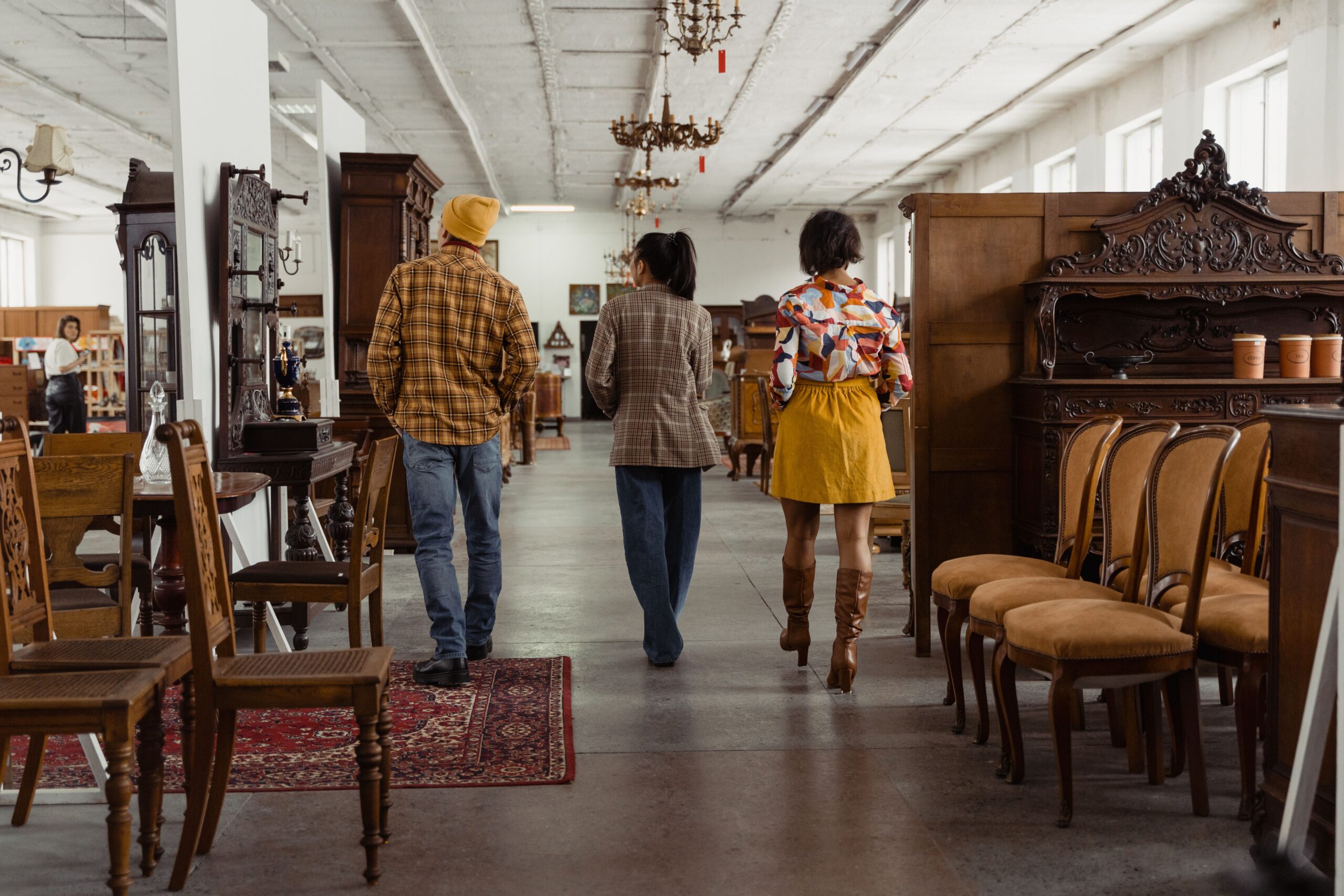
A client once asked me to help her “modernize” her living room, and the first thing I did was tell her not to get rid of her grandmother’s wingback chair. She looked at me like I’d misunderstood the assignment. But that chair, reupholstered in a fresher fabric, ended up anchoring the whole redesign. Trends came and went around it for decades, and it never looked dated because it was never trendy to begin with. It was just well-designed. That’s the thread running through every piece on this list. Timeless furniture isn’t about age or nostalgia.
It’s about proportion, function, and construction choices that solved a real problem so well that nobody’s improved on the solution since. Some of these pieces are a few hundred years old; one is barely seventy. What they share is that none of them have ever needed a “comeback,” because they never really left.
Table of Contents
- What Actually Makes Furniture “Timeless”
- How to Spot Quality That Will Actually Last
- The 15 Classic Pieces
- Mixing Eras: How These Pieces Work in Modern Homes
- Investment vs. Budget: Where to Spend and Where to Save
- Common Mistakes When Buying “Classic” Furniture
- Will Timeless Design Ever Change?
- FAQs
- Final Thoughts
- About the Author
1. What Actually Makes Furniture “Timeless”
Three things, consistently, across every piece I’ve researched or restored over the years.
It solves a real problem efficiently. A Windsor chair’s spindle back distributes weight without needing a heavy frame. A Parsons table’s flush, leg-at-the-corner design maximizes usable surface area. These aren’t decorative choices — they’re engineering solutions that happen to also look good.
The proportions were right the first time. Trend-driven furniture often exaggerates a feature — overly thin legs, oversized arms, dramatic curves — to feel “of the moment.” Timeless pieces tend to sit in a proportional middle ground that doesn’t read as belonging to any specific decade.
It tolerates reinterpretation. Almost every piece on this list has been reupholstered, refinished, or remade in new materials across generations without losing its identity. That adaptability is a strong sign a design has real structural logic behind it, not just stylistic flourish.
2. How to Spot Quality That Will Actually Last
Before getting into the list, it’s worth knowing how to tell a genuinely well-built version of these pieces from a flimsy reproduction, because the furniture market is full of both.
Check joinery first. Mortise-and-tenon or dovetail joints outlast screws and brackets by decades, especially under repeated stress like a chair being sat in daily. Pull gently on a chair’s arm or a table’s leg in the showroom — any wobble at the joint is a red flag regardless of how good the finish looks.
Look underneath. A table or chair’s underside tells you more than its visible surface ever will. Rough, unfinished, or overly thin wood underneath often signals corners cut elsewhere too.
Press the cushioning. On upholstered pieces, high-density foam or genuine down-and-feather mixes spring back slowly and evenly. Cheap foam collapses fast and doesn’t recover its shape, which is usually the first sign a sofa will sag within a couple of years.
3. The 15 Classic Pieces
1. The Chesterfield Sofa
Deep button-tufting, rolled arms at the same height as the back, and a low, substantial stance — the Chesterfield has barely changed since its 19th-century origins. My honest take: it’s a commitment piece. It works best as the single statement seat in a room rather than paired with too much else competing for attention. Genuine leather Chesterfields develop a patina that actually improves with age, which is rare in furniture.
2. The Eames Lounge Chair and Ottoman
The youngest piece on this list, designed in 1956, and already unmistakably a classic. Molded plywood shells with leather cushions sound simple, but the curvature was engineered specifically to cradle the body in a way few chairs since have matched. It’s expensive, and frankly, the market is flooded with reproductions of wildly varying quality — if you’re buying one, the plywood lamination quality is where cheap versions fail first, often visibly delaminating within a few years.
3. The Wingback Chair
Originally designed to block drafts near a fireplace, the tall “wings” on either side of the headrest are functional, not decorative. That’s exactly why it still works today — it creates a sense of enclosure and privacy in open-plan rooms, which is arguably more relevant now than when it was first designed.
4. The Windsor Chair
Spindle-back, saddle seat, and splayed legs that distribute weight without a heavy frame. It’s one of the most copied chair designs in history, partly because it’s genuinely efficient to produce and partly because the silhouette reads as comfortable across almost any interior style, from farmhouse to modern minimalist.
5. The Parsons Table
A flat top with legs flush to the corners, no apron, no ornamentation. Designed in the 1930s at the Paris Ecole Parsons, it remains one of the most versatile table forms because the lack of detail means it never visually competes with whatever’s styled on top of it or around it.
6. The Campaign Chest
Originally built for military officers who needed sturdy, transportable storage, campaign chests feature recessed brass corner hardware and clean horizontal lines. The hardware wasn’t decorative originally — it protected the corners during transport — but it’s become one of the most recognizable storage silhouettes in classic interiors.
7. The Trestle Dining Table
Two solid end supports connected by a stretcher beam, with no center leg to navigate around. This is genuinely one of the most practical dining table structures ever designed, since it maximizes legroom and seating flexibility. I’ve recommended this style constantly for families who need to squeeze extra chairs in for holidays.
8. The Ladder-Back Chair
Horizontal slats stacked up the back, often paired with a woven rush seat. It’s lightweight, stackable in some versions, and the open slat design keeps it visually airy even in a room full of furniture. Honest verdict: cheaper versions use thin, brittle slats that crack under lean-back pressure, so test this one in person if you can.
9. The English Roll-Arm Sofa
Slightly rounded arms that roll outward, deep seating, and a relaxed, lived-in silhouette. It’s the opposite of the Chesterfield’s formality — this is the sofa that looks intentional even slightly worn in, which is exactly why it suits family living rooms so well.
10. The Club Chair
Low, deep-seated, with substantial rolled arms, originally designed for gentlemen’s clubs and reading rooms. It remains one of the most comfortable accent chair forms because the proportions prioritize sinking in and staying a while, rather than sitting upright.
11. Shaker-Style Cabinetry
Flat panel doors, minimal hardware, and an almost complete absence of ornamentation. Shaker design emerged from a religious community’s belief that beauty came from function and honest craftsmanship, not decoration — and that philosophy has aged remarkably well into modern minimalist kitchens and cabinetry today.
12. The Mid-Century Credenza
Low-profile, often on tapered legs, with clean horizontal lines and sometimes sliding or tambour doors. It solved a real spatial problem in smaller postwar homes by providing storage without the visual bulk of a tall cabinet, and that low-profile logic still works exceptionally well in modern apartments.
13. The Four-Poster Bed
Four vertical posts at each corner, historically designed to support curtains for privacy and warmth before central heating existed. Even stripped of curtains entirely, the architectural presence of the posts gives a bedroom a sense of structure that a simple platform frame can’t replicate.
14. The Rocking Chair
The curved rockers underneath transform a simple chair into something genuinely soothing, and the design has barely needed adjustment since it was popularized. My honest take: weight distribution matters enormously here — poorly balanced rockers tip too easily, so check the curve and base width before buying, not just the seat comfort.
15. The Pedestal Dining Table
A single substantial center column instead of four legs, which means unlimited legroom and easy seating for uneven numbers of guests. It’s one of the more practical dining table forms for smaller rooms, since it visually takes up less floor space than a four-legged table of the same size.
4. Mixing Eras: How These Pieces Work in Modern Homes
None of these pieces require a themed, period-accurate room to work. In fact, the opposite is usually true — a Windsor chair pulled up to a glass dining table, or a Parsons table sitting under a contemporary pendant light, often looks more interesting than a fully matched set.
My general approach: pick one or two anchor pieces from this list per room, and let everything else around them be more neutral or contemporary. Too many “classic” statement pieces in one space starts to feel like a furniture showroom rather than a lived-in home.
5. Investment vs. Budget: Where to Spend and Where to Save
Spend on pieces that take daily physical stress — dining chairs, sofas, and beds — since joinery and upholstery quality directly determine how long they hold up under repeated use. A genuinely well-built wingback chair or trestle table can realistically last multiple decades, which makes the higher upfront cost reasonable over time.
Save on pieces that are more decorative or lightly used, like a secondary accent chair or a credenza in a low-traffic hallway. Well-made reproductions and secondhand finds work perfectly well here, and the secondhand market for mid-century credenzas and campaign chests in particular is genuinely strong right now, often offering better construction than new budget alternatives.
6. Common Mistakes When Buying “Classic” Furniture
- Assuming “classic style” automatically means quality construction — plenty of cheaply made reproductions exist for every piece on this list.
- Buying a statement piece without checking real dimensions against your actual room, since many of these forms (Chesterfields and pedestal tables especially) are bulkier than they appear in photos.
- Overlooking reupholstery costs when buying a secondhand piece. A worn but structurally sound Chesterfield or club chair can be a genuine bargain once you factor in that solid bones matter more than current fabric condition.
- Mixing too many high-personality pieces in one room without enough neutral furniture to balance them.
7. Will Timeless Design Ever Change?
Genuinely, I don’t think these fifteen forms are going anywhere, but I do see two real shifts happening around them.
Sustainability is reframing “timeless” as a selling point rather than just an aesthetic one. Buying one well-made trestle table instead of replacing a cheap one every five years is increasingly marketed — and genuinely understood by buyers — as the more sustainable choice, not just the more attractive one.
Modular reinterpretations are appearing. Designers are increasingly reworking pedestal tables and credenzas with modular components, letting the timeless silhouette stay intact while the function adapts to smaller, more flexible modern living spaces. The shape survives; the engineering underneath quietly modernizes.
8. FAQs
Is it worth buying a reproduction instead of an original antique? Often yes, especially for everyday-use pieces like dining chairs or tables. A well-made modern reproduction with solid joinery will outperform a fragile, century-old original under daily use, while true antiques are better suited to lower-traffic decorative roles.
How do I know if a secondhand piece is worth restoring? Check the frame and joinery first, not the surface finish. If the structure is solid — no wobble, no cracked joints — fabric, finish, and hardware can all be restored relatively affordably. A damaged frame is rarely worth the restoration cost.
Can timeless furniture work in a small apartment? Yes, and pedestal tables, mid-century credenzas, and Parsons tables in particular were often designed with smaller postwar homes in mind, making them genuinely well-suited to compact modern spaces.
Do these pieces work with modern, minimalist interiors? Very well, as long as you limit how many statement pieces you introduce at once. One classic anchor piece in an otherwise simple, neutral room tends to look more intentional than a fully themed period room.
9. Final Thoughts
What strikes me most, having researched and lived with several of these pieces personally, is how little any of them rely on being “in style” to earn their place in a room. They were designed to solve a specific problem — warmth, storage, legroom, comfort — and the styling followed the function rather than the other way around. That’s a genuinely different design process than most trend-driven furniture goes through, and it’s why these fifteen pieces have outlasted nearly a century of changing tastes between them.
If you’re furnishing a home you actually intend to live in for years rather than redecorate every season, starting with one or two pieces from this list isn’t a nostalgic choice. It’s a practical one.
About the Author
This guide was researched and written by a furniture and interior design writer with a background in restoration and material research. The author has personally restored multiple pieces featured in this guide, including reupholstering vintage club chairs and refinishing a campaign chest sourced secondhand, and has consulted historical design archives and furniture makers to verify the construction and origin details referenced throughout. Research for this piece combined hands-on materials assessment with historical sourcing to ensure both technical accuracy and practical buying relevance.