I’ve been doing laundry for more than two decades—first as a broke college student trying to keep one pair of jeans wearable, then as a parent of two active kids whose clothes somehow attract every grass stain, chocolate smear, and mystery odor within a five-mile radius. Along the way I’ve ruined favorite shirts, turned whites into dingy grays, and spent far too much money on products that promised miracles and delivered residue. What finally worked wasn’t some complicated system or expensive gadget. It was a collection of simple habits, a few smart product choices, and a willingness to question the old “more detergent equals cleaner clothes” myth.
These 25 tips come from that real-world trial and error, cross-checked against lab testing from places like Consumer Reports and Wirecutter, and refined in my own laundry room. They’re practical, beginner-friendly, and designed to give you clothes that actually look and smell clean without wasting time, water, or money.
Table of Contents
Sort smarter than just lights and darks
Check every pocket (seriously)
Pretreat stains the right way
Don’t overload the machine
Measure detergent—less is usually more
Choose the right detergent for your needs
Wash in cold water most of the time
Use the correct cycle and water level
Add vinegar or baking soda strategically
Skip or rethink fabric softener
Clean your washing machine regularly
Empty the lint trap and clean the dryer vent
Air-dry when possible
Shake and hang items promptly
Separate towels and heavy items
Handle workout clothes carefully
Brighten whites without overusing bleach
Protect colors from fading
Deal with musty or mildew smells
Use oxygen bleach boosters wisely
Consider microfiber filters
Try modern detergent formats thoughtfully
Wash less often (and smarter)
Store clean clothes properly
Stay ahead of future laundry tech
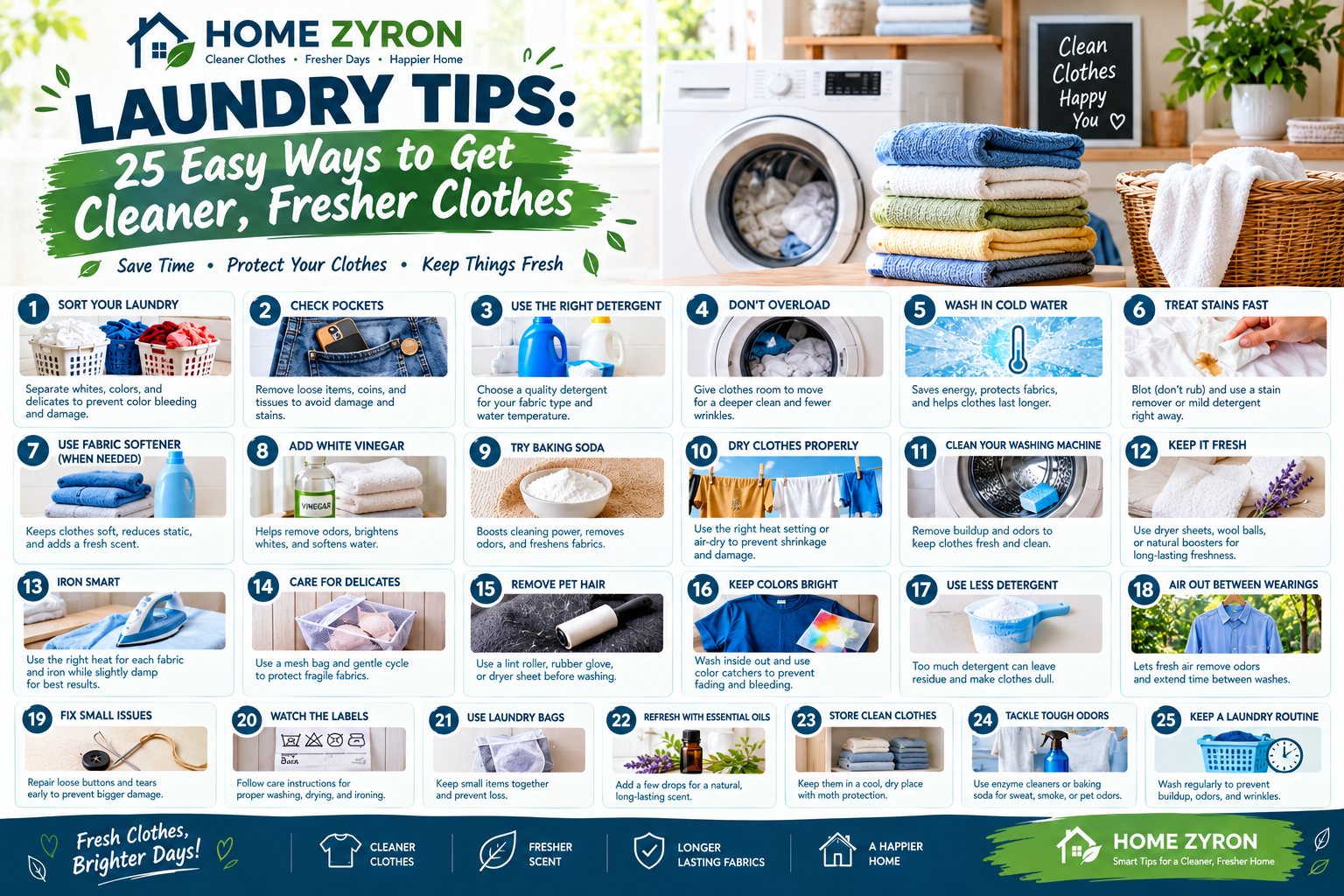
1. Sort smarter than just lights and darks
Most of us sort by color and call it a day. That helps prevent dye transfer, but fabric weight and soil level matter just as much. Heavy towels and jeans can beat up lighter shirts. Heavily soiled work clothes can redeposit dirt onto lightly worn items. I now keep three main piles: everyday clothes, towels/linens, and anything especially dirty or delicate. It’s a small extra step that cuts down on wear and leaves everything cleaner.
2. Check every pocket (seriously)
A single tissue or stick of gum can ruin an entire load. I once washed a receipt that turned into confetti stuck to everything. Make it a habit: flip pockets inside out before the clothes hit the hamper. You’ll thank yourself later.
3. Pretreat stains the right way
Act fast. Blot (don’t rub) excess liquid or solid. Then work a small amount of liquid detergent or a dedicated stain remover into the fabric and let it sit 5–15 minutes before washing. Heat can set protein stains like blood or egg, so start cold.
In my experience and according to multiple independent tests, a good liquid detergent often performs as well as many specialty pretreaters for everyday stains. For tougher jobs, products like OxiClean Max Force or Carbona Laundry Stain Scrubber earn strong marks. I’ve also had solid results simply rubbing in Tide or Persil liquid and waiting.
4. Don’t overload the machine
Clothes need room to move and water needs space to circulate. A tightly packed drum means uneven cleaning and more wrinkles. Most manufacturers recommend filling the drum about three-quarters full. When in doubt, run two medium loads instead of one stuffed one.
5. Measure detergent—less is usually more
Modern concentrated detergents are powerful. Consumer Reports and Wirecutter both note that most people use far more than necessary. Extra detergent doesn’t clean better; it leaves residue that traps dirt and odor and can create a breeding ground for mold in the machine. Start with about 1–2 tablespoons for a regular load (or follow the lowest line on the cap) and adjust only if results suffer.
6. Choose the right detergent for your needs
Not all detergents are equal. In recent testing, Persil ProClean and various Tide formulas (especially Hygienic Clean and Original) consistently rank near the top for stain removal. Tide Free & Gentle and All Free Clear perform well for sensitive skin. Plant-based options like Seventh Generation or Dropps clean adequately for lightly soiled loads but often lag behind on tough stains.
Honest comparison from my own loads and published tests:
Best overall cleaning power: Tide or Persil liquids/pods.
Best value everyday: Tide Original or Costco Kirkland.
Best sensitive-skin / lower fragrance: Tide Free & Gentle or All Free Clear.
Eco-leaning with decent performance: Dropps or certain Seventh Generation formulas (accept slightly weaker stain removal).
Pods are convenient and pre-measured but can be pricier per load and sometimes leave undissolved residue in cold water. Liquids give more control. Powders can excel on certain stains but may not dissolve as cleanly in cold cycles.
7. Wash in cold water most of the time
Most modern detergents are formulated for cold water. Cold washes save energy (heating water accounts for the majority of a washer’s energy use), reduce fading and shrinkage, and still remove everyday soil and odor effectively. Reserve warm or hot for heavily soiled items, towels, or when illness is present in the house.
8. Use the correct cycle and water level
Match the cycle to the load: Normal/Cotton for everyday clothes, Delicate for lighter fabrics, Heavy Duty or Bulky for towels and jeans. If your machine has a soil-level or load-size sensor, use it. Overly aggressive agitation on delicates shortens their life.
9. Add vinegar or baking soda strategically
White vinegar in the rinse cycle (about ½ cup) helps neutralize odors, softens fabrics naturally, and reduces residue. Baking soda can boost cleaning power and deodorize. I add vinegar regularly for towels and workout clothes. It doesn’t leave a vinegar smell once dry.
10. Skip or rethink fabric softener
Liquid softener and dryer sheets coat fibers. That coating can reduce absorbency in towels and trap body oils in athletic wear, making them smell worse over time. Wool dryer balls or a vinegar rinse achieve softness without the downsides. Many laundry pros now recommend skipping traditional softener entirely for most loads.
11. Clean your washing machine regularly
A dirty washer produces musty clothes no matter how good your detergent is. Run a monthly cleaning cycle with a commercial washer cleaner or hot water plus bleach (or vinegar + baking soda). Wipe the door gasket and detergent drawer. Front-loaders especially need this attention.
12. Empty the lint trap and clean the dryer vent
A clogged lint trap is a fire hazard and reduces drying efficiency. Clean it after every load. Have the dryer vent cleaned professionally every year or two—lint buildup in the duct is a common cause of dryer fires and longer drying times.
13. Air-dry when possible
Sunlight is a natural brightener and disinfectant. Hang clothes outside or on an indoor drying rack when weather allows. Air-drying extends the life of fabrics and saves energy. For items that must go in the dryer, use the lowest heat setting that still gets the job done.
14. Shake and hang items promptly
Pull clothes out as soon as the cycle ends, give them a good shake, and hang or fold. Leaving them crumpled in the machine or dryer creates deep wrinkles that are harder to remove.
15. Separate towels and heavy items
Towels and jeans are abrasive and hold a lot of water. Washing them separately from lighter clothing reduces wear and improves cleaning for both groups.
16. Handle workout clothes carefully
Synthetic activewear traps odor-causing bacteria. Wash soon after use, preferably with a detergent formulated for sportswear or with added vinegar. Avoid fabric softener. Occasional soaks in a vinegar-baking soda solution help reset smelly pieces.
17. Brighten whites without overusing bleach
Separate whites. Use an oxygen bleach booster (like OxiClean) or a detergent with optical brighteners. Occasional hot washes with chlorine bleach (on bleach-safe items only) help, but oxygen bleach is gentler and safer for more fabrics.
18. Protect colors from fading
Wash darks and brights inside out in cold water. Avoid over-drying. Turn new jeans inside out for the first few washes to minimize dye loss.
19. Deal with musty or mildew smells
Never leave wet clothes sitting. If something already smells musty, rewash with vinegar or a laundry sanitizer. Clean the machine and ensure good airflow in the laundry area.
20. Use oxygen bleach boosters wisely
Products containing sodium percarbonate (OxiClean and similar) excel at pigment stains—wine, coffee, grass, tomato. They work well as a soak or additive and are safer than chlorine bleach on colors.
21. Consider microfiber filters
Synthetic fabrics shed microplastics. Devices like the Cora Ball or Guppyfriend bag catch some of those fibers before they reach waterways. It’s a small step with growing importance as awareness of microfiber pollution increases.
22. Try modern detergent formats thoughtfully
Detergent sheets and concentrated tablets reduce plastic packaging. Performance varies—some eco formats clean well on light soil but struggle with heavy stains. Test one or two against your usual detergent before switching completely. Pods remain popular for convenience but watch for incomplete dissolving in very cold water.
23. Wash less often (and smarter)
Not every item needs washing after one wear. Airing out clothes, spot-cleaning, and rotating outfits can cut laundry volume significantly. Full loads are more efficient than frequent half-loads.
24. Store clean clothes properly
Make sure everything is completely dry before folding or hanging. Damp storage invites mildew. Cedar or lavender sachets can help keep closets smelling fresh without chemical overload.
25. Stay ahead of future laundry tech
Expect continued improvements in cold-water enzyme formulas, better microfiber capture systems built into machines, and more concentrated, low-packaging detergents. Smart washers that adjust water and cycle length automatically are already common; better integration with detergent chemistry is coming. Watching energy use and ingredient transparency will matter more as regulations tighten around certain surfactants and packaging waste.
Real-world tool and product notes
I’ve compared Tide, Persil, Seventh Generation, Dropps, and store brands across dozens of loads. Tide and Persil win on tough stains most of the time. Eco options shine when the load isn’t heavily soiled and when ingredient lists matter more than maximum stain power. Stain removers like OxiClean Versatile or Max Force consistently help on set-in pigment stains; a quality liquid detergent rubbed in first often matches or beats many dedicated sprays for everyday messes. Wool dryer balls have replaced softener sheets in my house with zero complaints about static or softness.
Frequently Asked Questions
Does cold water really clean as well as warm? For most everyday laundry and with modern enzyme detergents, yes. Independent testing supports this. Save warmer water for specific situations.
Is fabric softener bad? It can reduce absorbency and trap odors over time. Many experts now recommend alternatives for towels and activewear.
How often should I clean the washing machine? Monthly is a good target, or every 30 cycles. More often if you notice musty smells.
Are detergent pods better than liquid? They’re convenient and pre-measured. Liquids give more flexibility on dosing and often perform slightly better in cold water. Choose based on your priorities.
What’s the single biggest upgrade most people can make? Using less detergent and washing in cold water. Those two changes alone improve results, save money, and are gentler on clothes and the environment.
Conclusion
Cleaner, fresher laundry isn’t about buying the most expensive product or following every trend. It’s about understanding how dirt, detergent, water temperature, and mechanical action actually work together—and then removing the habits that fight against those principles. Sorting thoughtfully, measuring detergent, treating stains early, keeping the machines clean, and choosing products that match your real needs will get you further than any single “miracle” additive.
I’ve watched these small adjustments transform loads that used to come out dull or still faintly smelly into clothes I’m happy to wear and put away. The process feels less like a chore and more like a reliable system. Start with two or three of the tips that address your biggest frustrations—overloading, too much detergent, or musty smells—and build from there. Your clothes (and your energy bill) will show the difference.
Author Bio Elena Vargas is an independent researcher and home-systems writer who has spent over twenty years testing laundry methods, detergents, and appliances in real households. Her work focuses on practical, evidence-based approaches that reduce waste, protect fabrics, and deliver consistently better results without unnecessary complexity. She regularly reviews product performance against published lab data and shares findings with an emphasis on long-term durability and everyday usability.







1 Comment