Cleaning Solutions: What Works and What Wastes Money
My Step-by-Step Method
Removing Specific Stains
Killing Algae for Good
Mistakes That Damage Concrete
Sealing and Maintenance
Where Sidewalk Cleaning Is Heading
FAQs
Conclusion
About the Author
Why Sidewalks Get So Dirty So Fast
The first time I took a hard look at my own sidewalk, I realized it had gone from pale grey to a patchy brown-green without my noticing. That is how sidewalk grime works. It builds up a little each week, so your eyes adjust and you stop seeing it.
Concrete is also much less solid than it looks. Under magnification it is full of tiny pores, and those pores trap whatever lands on them: soil, tire residue, leaf tannins, oil drips, and airborne spores. Moisture then does the rest. A shaded, north-facing walkway that stays damp can turn slippery within a single season.
That slipperiness is the real reason to clean. Wet algae on concrete is a genuine fall hazard, especially for older people and kids. The look of the sidewalk matters, but safety and the lifespan of the surface matter more.
Know Your Surface Before You Touch It
Most bad cleaning outcomes come from treating every surface the same. Before buying anything, work out what you’re standing on.
Broom-finished concrete is the most common sidewalk surface. It’s durable and handles pressure well, but the texture grips dirt.
Smooth or trowelled concrete cleans easily but is more prone to slick algae films.
Exposed aggregate has stones set into the surface. Aggressive pressure can pop stones loose, so go gently.
Pavers (brick or concrete) rely on sand in the joints. Blast the joints and you’ve created a new problem, because weeds and wobble follow.
Natural stone such as sandstone or limestone is porous and often acid-sensitive. Acidic cleaners can etch it permanently.
Asphalt is a different animal entirely. Harsh solvents and high pressure break down the binder.
If you’re unsure, test any method in a small, hidden corner first. I do this every time, even after years of experience, because surprises still happen.
Identifying What You’re Actually Cleaning
Different contaminants need different attacks. Here is how I tell them apart.
Dirt and grime looks uniformly dull and brownish. Water alone often lifts the surface layer.
Algae is green, black, or sometimes slimy and orange. It lives in shaded, damp spots. If it feels slippery when wet, it’s biological.
Mold and mildew shows up as dark speckles, often on porous or north-facing areas. It usually appears alongside algae.
Rust stains are orange-brown and typically come from metal furniture, planters, or fertilizer.
Oil and grease leaves dark, glossy patches, mostly near driveways.
Organic stains (leaves, berries, tree sap) leave tea-coloured marks that settle deeply in porous concrete.
Efflorescence is white, chalky residue. It’s mineral salt migrating through the concrete, not dirt, and cleaning it the wrong way makes it return.
Diagnosing correctly saves time and money. I once spent an afternoon scrubbing what I assumed was grime, only to realize it was efflorescence that needed a mild acid rinse.
The Tools I Tested, With Honest Verdicts
Here is what I have actually found useful, with the trade-offs you won’t see on a product page.
Electric pressure washer
Electric units from brands like Sun Joe are what most homeowners should start with. They’re quiet, lightweight, and don’t need fuel. On a typical sidewalk covered in a season of dirt, a mid-range electric model did the job without drama.
Verdict: Best choice for most households. It runs out of steam on deeply embedded stains and large areas, but it’s very hard to damage a surface with one.
Gas-powered pressure washer
For big jobs, a gas unit delivers real power. Brands such as Kärcher offer models across the range, and you can browse many options at The Home Depot. I used a gas model on a long, badly stained stretch and it cleared in a fraction of the time.
Verdict: Worth it if you have a lot of concrete or stubborn staining. It’s also loud, heavy, and easy to misuse. Etched “zebra stripes” are a common beginner mistake.
Surface cleaner attachment
This is the flat, spinning disc attachment that sits over the sidewalk like a floor polisher. It was the single biggest upgrade I ever made to my results.
Verdict: The best value add-on. It eliminates streaks, speeds things up, and keeps the spray at a consistent distance. If you buy one accessory, make it this.
Stiff-bristle push broom and deck brush
Low tech, but underrated. For light dirt and algae with a cleaning solution, a good brush works surprisingly well and costs almost nothing.
Verdict: Ideal for small areas, tight spots, and sensitive surfaces where pressure is risky. It’s slow and tiring on a large sidewalk.
Pump sprayer
Used for applying cleaning solutions evenly. A basic garden pump sprayer is enough.
Verdict: Essential, cheap, and far better than pouring cleaner from a bucket.
Quick comparison
Tool
Best for
Weak point
My rating
Electric pressure washer
Everyday cleaning
Limited power
8/10
Gas pressure washer
Large or stubborn jobs
Noise, risk of damage
7/10
Surface cleaner attachment
Even, streak-free results
Extra cost
9/10
Push broom + brush
Small areas, delicate surfaces
Labour-intensive
6/10
Pump sprayer
Applying solutions
None really
9/10
Cleaning Solutions: What Works and What Wastes Money
Pressure alone often isn’t enough, especially for algae. These are the solutions I’ve come to trust, plus what to avoid.
Oxygen bleach (sodium percarbonate). Products like OxiClean use this compound, which releases oxygen when dissolved in water. It’s far gentler on plants and surroundings than chlorine and works well on organic stains and general grime. Learn more about the chemistry here. My verdict: my go-to for most jobs.
Sodium hypochlorite (chlorine bleach). A strong algae and mildew killer. It’s the same compound found in household bleach. It works fast, but it can harm grass and shrubs, and runoff is a concern. Always dilute, pre-wet nearby plants, and rinse thoroughly.
Dish soap. Fine for fresh grease and light grime. Don’t expect miracles on set-in stains.
White vinegar. Popular online, but I don’t recommend it for concrete. Acids can etch the surface, and it’s weak against heavy algae.
Commercial concrete cleaners. Some are excellent, others are just overpriced detergent. Read the active ingredients rather than the marketing.
For the environmental side, the EPA offers useful guidance on keeping cleaning runoff out of storm drains, which is worth a read before you start.
My Step-by-Step Method
After many trials, this is the routine I come back to.
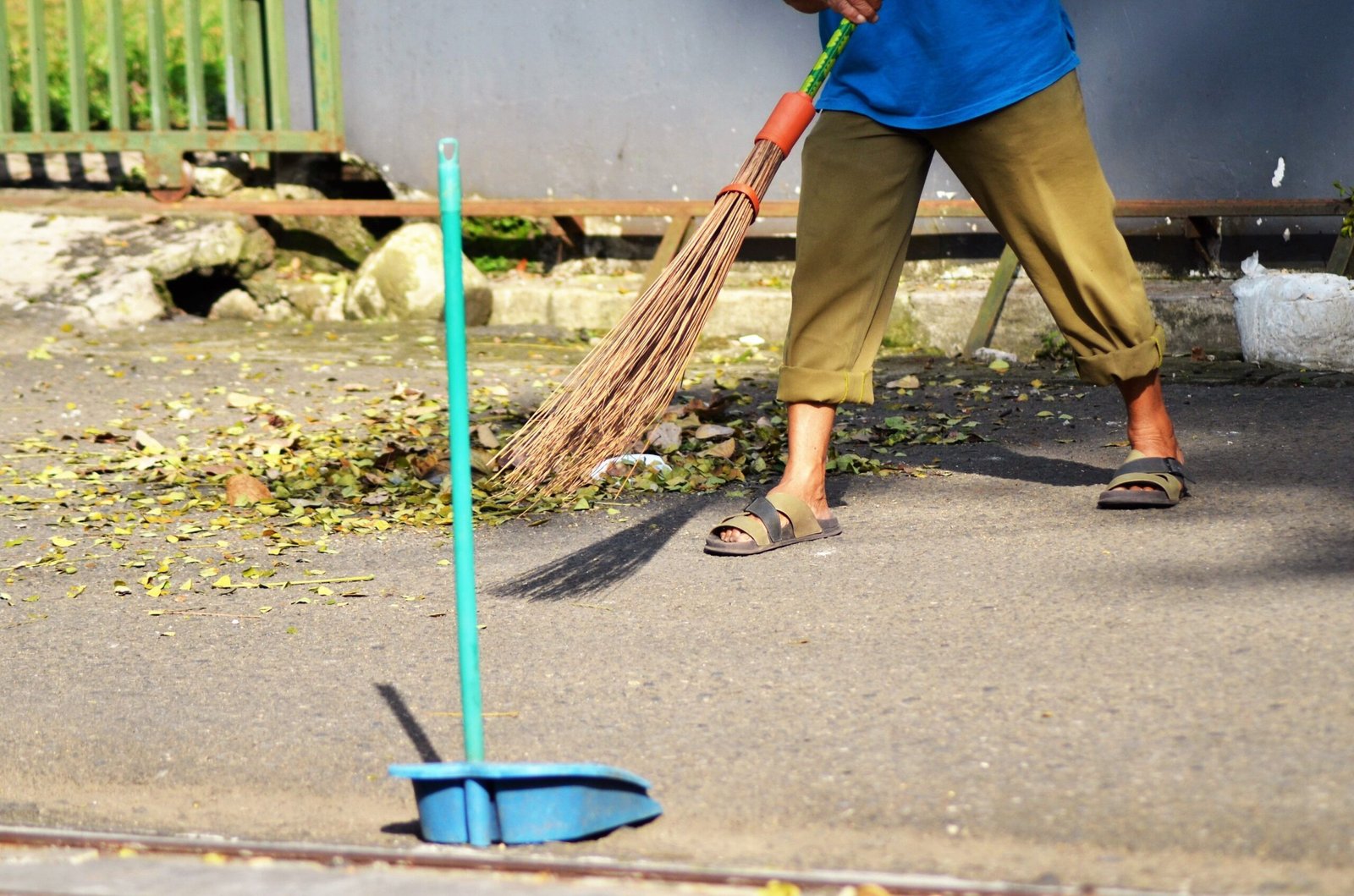
1. Clear and sweep. Remove furniture, planters, and debris. Sweep off loose dirt first, because wet dirt turns to mud and slows you down.
2. Pre-wet nearby plants. If you’re using any bleach-based product, soak surrounding vegetation first. It dilutes any accidental overspray.
3. Apply your solution. Use the pump sprayer to cover the sidewalk evenly. Work in sections of a few metres so nothing dries out.
4. Let it dwell. Give it 10 to 15 minutes. This is the step people skip, and it’s why they scrub so hard. The solution does the work, not your arms.
5. Agitate stubborn areas. A stiff brush on stained or algae-heavy patches makes a big difference.
6. Rinse or pressure wash. Keep the nozzle a consistent distance from the surface, and work in overlapping passes. Start with a wide fan tip; you can always go narrower.
7. Rinse again. Residue attracts new dirt, so rinse a second time.
8. Let it dry fully. Judge your results when it’s dry, not wet. Wet concrete always looks cleaner than it is.
Removing Specific Stains
Oil and grease: Soak up fresh spills with cat litter or sawdust, then apply degreaser and scrub. Older stains may need repeated treatments or a poultice.
Rust: Use a rust remover designed for concrete. Avoid chlorine bleach, which can set rust stains.
Leaf and tannin stains: Oxygen bleach and a stiff brush, ideally applied before the stain has had months to settle.
Gum: Freeze it with ice, then chip it off gently with a plastic scraper.
Efflorescence: Try a dry stiff brush first. If it persists, use a diluted concrete-safe acid wash (or a product made for the purpose) and rinse very thoroughly. Efflorescence points to moisture moving through the slab, so a clean today may not stay clean if drainage is the problem.
Killing Algae for Good
Algae is stubborn because it’s alive. Algae are photosynthetic organisms that thrive wherever there’s moisture, shade, and a little organic food. You can scrub the visible layer away, but if spores remain, it returns.
Here is what has worked for me:
Treat, don’t just blast. Apply an algaecide or bleach solution and let it kill the organism. Pressure alone often leaves roots behind.
Improve conditions. Trim overhanging branches, fix gutter overflow, and redirect downspouts. Cutting moisture and shade is the real long-term fix.
Schedule seasonal cleans. In humid or shaded areas, a light treatment in spring and autumn prevents the heavy buildup that requires harsh cleaning.
Consider a preventive treatment. Some residual algae-inhibiting products slow regrowth, which is useful in permanently damp spots.
I fixed one persistent green patch only after cutting back a hedge that was blocking sunlight. No cleaner had solved it, because the cause was never the cleaner.
Mistakes That Damage Concrete
Using too much pressure up close. This leaves permanent etched lines and roughens the surface.
Using a zero-degree (red) nozzle. It’s a cutting tool, not a cleaning tool.
Letting cleaner dry. Dried product leaves stains and residue.
Mixing chemicals. Never combine bleach with ammonia or acids. The fumes are dangerous.
Blasting paver joints. You’ll wash out the sand and invite weeds.
Skipping safety gear. Wear eye protection, gloves, and closed shoes. Water at high pressure can injure skin.
Ignoring runoff. Cleaning products in storm drains harm waterways.
Sealing and Maintenance
Once the surface is clean and fully dry, consider sealing. A penetrating sealer reduces absorption, so dirt and moisture sit on the surface instead of soaking in. That makes later cleaning far easier.
Choose a breathable sealer, especially in climates with freeze-thaw cycles, so trapped moisture doesn’t damage the slab. Reapplication is typically needed every few years, depending on traffic and weather.
For routine upkeep, a weekly sweep and a gentle rinse once a month take minutes and prevent most of the work described above. Prevention is quietly the cheapest strategy in the entire guide.
Where Sidewalk Cleaning Is Heading
A few trends are worth watching:
Battery-powered pressure washers are improving fast, and I expect them to replace many small gas units for homeowners over the next several years.
Biodegradable and enzyme-based cleaners are becoming more effective, which will reduce reliance on harsh chemicals.
Hot-water and low-water systems are growing in popularity for water conservation and deep cleaning.
Smart maintenance habits such as scheduled cleaning reminders and moisture-aware design are changing how people think about outdoor surfaces.
Water-repellent and anti-microbial sealers will likely become standard in shaded or humid regions.
My honest prediction: the future of sidewalk cleaning is less about stronger machines and more about smarter prevention.
FAQs
How often should I clean my sidewalk? Once or twice a year suits most homes. Shaded or humid areas may need seasonal attention.
Can I clean a sidewalk without a pressure washer? Yes. A stiff brush, a pump sprayer, and oxygen bleach handle light to moderate buildup well. It just takes more effort.
Is bleach safe for concrete? Properly diluted, it’s generally fine for concrete, but it can harm plants and runoff. Use it carefully and rinse well.
Why does algae keep coming back? Because moisture and shade remain. Cleaning removes the symptom; fixing drainage and sunlight addresses the cause.
What PSI should I use? For most concrete, moderate pressure with a wide fan tip is plenty. More isn’t better, and delicate surfaces need less.
Can I use vinegar? I’d avoid it on concrete and natural stone. The acidity can etch the surface and it’s weak against heavy algae.
Will cleaning make my sidewalk slippery? It should do the opposite by removing algae. Just be careful while the surface is wet and soapy.
Should I hire a professional? For large areas, delicate surfaces, or severe staining, it’s worth a quote. For routine cleaning, DIY is very doable.
Conclusion
Cleaning a sidewalk looks like a weekend chore, but it rewards a little thought. The surface, the stain, and the cause of the buildup all shape what actually works. The most effective approach I’ve found is simple: identify the problem, let the right solution do the heavy lifting, use the gentlest pressure that gets results, and fix the conditions that created the mess in the first place.
If you do only one thing after reading this, make it prevention. Trim back the shade, redirect the water, and sweep regularly. A clean sidewalk isn’t a one-off achievement. It’s a small habit that keeps paying off in safety, curb appeal, and the longevity of the concrete itself.






1 Comment