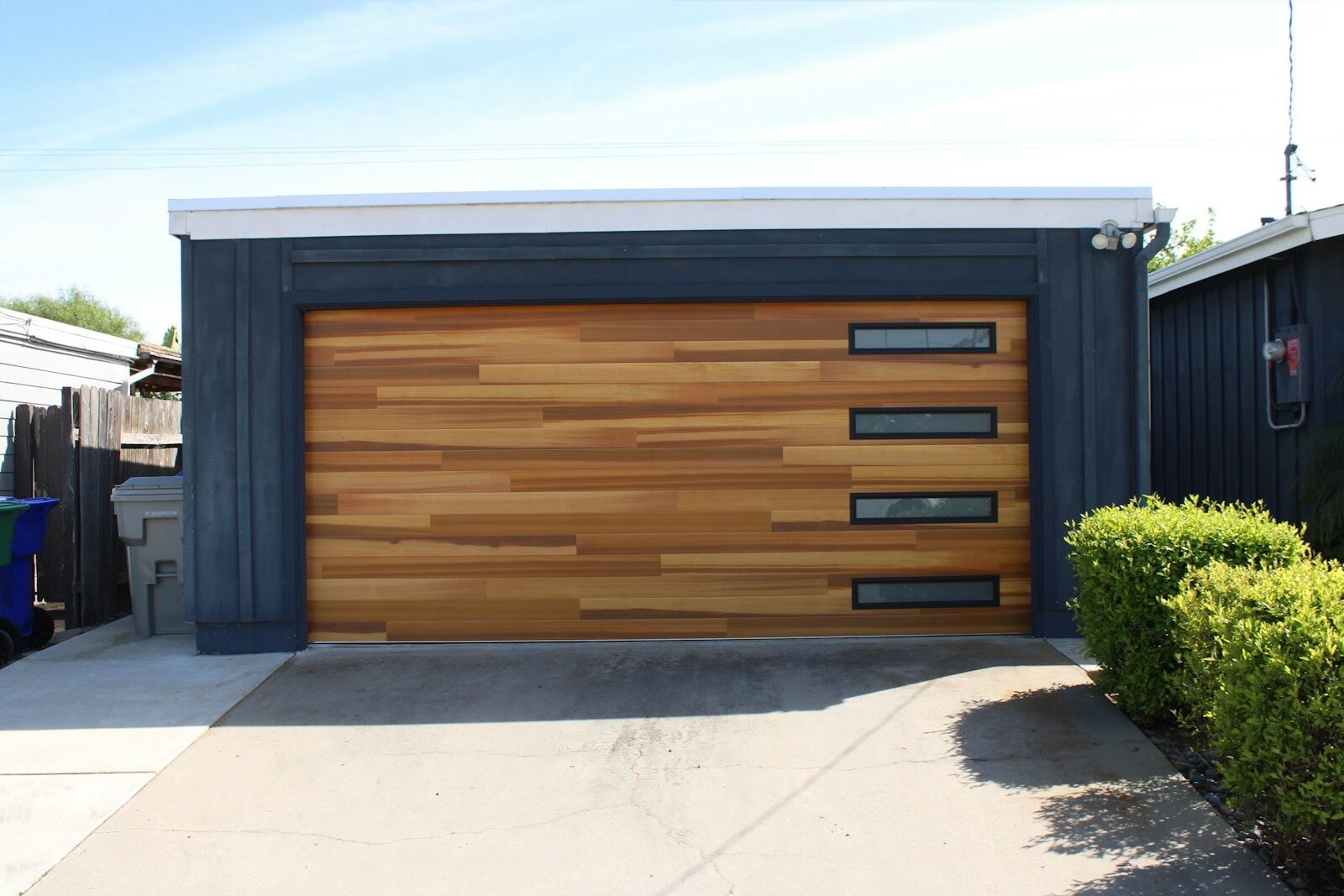


A practical guide to getting airflow, light, and bug protection without turning your garage into a wind tunnel.
Table of Contents
- Why I changed my mind about garage screens
- What a garage sliding screen door actually is
- The real benefits (and a few overhyped ones)
- Types compared
- Costs: what you’ll really pay
- Brands and products worth looking at
- Installation: DIY or professional?
- Mistakes I see again and again
- Where the category is heading
- FAQs
- Conclusion
Why I changed my mind about garage screens
For years I thought of a garage screen as a nice-to-have, something for people with woodworking hobbies and too much free time. Then I spent a July afternoon trying to refinish a dresser with the big door open, and I lost a running battle with mosquitoes, two wasps, and one very determined moth that headed straight for my wet varnish.
Closing the door meant working in a hot, stuffy box. Leaving it open meant sharing the space with every insect in the neighborhood. A screen solved both problems.
That’s the real appeal of a garage screen: it separates ventilation from security and from bugs. The garage door can stay up all day while the screen does the filtering.
This guide covers the types I think are worth your money, what they cost, how installation really goes, and where people get burned. Treat the prices as ballparks, since they shift by region and year.
What a garage sliding screen door actually is
The name covers a few different products, which is part of why shopping for one is confusing.
A garage sliding screen door is a mesh panel (or set of panels) that covers the garage opening, or a smaller walk-through opening, and moves sideways along a track. The mesh is usually fiberglass, aluminum, or a heavier polyester or vinyl-coated weave. It keeps out insects, leaves, and some debris while letting air through.
Two things to know before going further:
- It is not a security barrier. Mesh stops insects, not people. Your garage door and locks still do the security work.
- “Sliding” can mean several things. It might be a rigid framed panel on rollers, a set of mesh panels that stack to one side, or a retractable screen that disappears into a housing. These differ a lot in price and behavior.
The real benefits (and a few overhyped ones)
What genuinely delivers
Airflow without the bugs. This is the headline benefit, and it’s real. A garage with a screened opening on a breezy day feels dramatically different from a closed one, especially if you do any painting, sanding, or tinkering.
A usable bonus room. Once the garage stops being a sealed box, it becomes a place to work out, run a hobby, or let kids and pets spend time. People who add a screen often discover they use the space far more.
Better air quality for certain tasks. Ventilation helps disperse fumes from finishes, adhesives, and cleaning products. A screen doesn’t replace proper respiratory protection for serious fumes, but it lets you keep the door open without inviting insects in.
Pet and child containment (for light duty). A sturdy framed screen can keep a toddler or a small dog from wandering out, though I wouldn’t trust mesh alone with an excitable large dog.
Comfort in warm climates. In mild-to-hot regions, passive airflow can take the edge off garage heat and reduce moisture buildup.
What’s overhyped
Energy savings. Some sales pages imply a screen will cut your cooling bills. It might help marginally if the garage shares walls with living space, but I wouldn’t buy one for that reason.
“Total” insect protection. Cheap magnetic curtains and loose-fitting screens leave gaps. Mosquitoes find them. If you want near-complete protection, fit and sealing matter more than the mesh itself.
Security. Worth repeating: it’s a bug barrier. Anyone who tells you otherwise is selling something.
Types compared
Here’s how the main categories stack up in practice.
| Type | Best for | Typical lifespan | Pros | Cons |
|---|---|---|---|---|
| Retractable (rolls into a housing) | Full garage openings, clean look | 10–15+ years with care | Disappears when not in use, strong tracks, good seal | Highest cost, professional install often recommended |
| Rigid framed sliding panels | Walk-through or partial openings | 10+ years | Sturdy, pet-friendly, easy to repair | Panels stack and take up side space, track can collect debris |
| Bi-parting / stacking mesh panels | Wide openings on a budget | 5–10 years | Moderate cost, flexible sizing | Can sag, more visible hardware |
| Magnetic screen curtains | Renters, temporary use | 1–3 years | Very cheap, no drilling | Gaps, wind blows them open, not durable |
| DIY hinged or sliding kits | Handy homeowners | Varies widely | Customizable, affordable | Quality depends entirely on your build |
Retractable screens
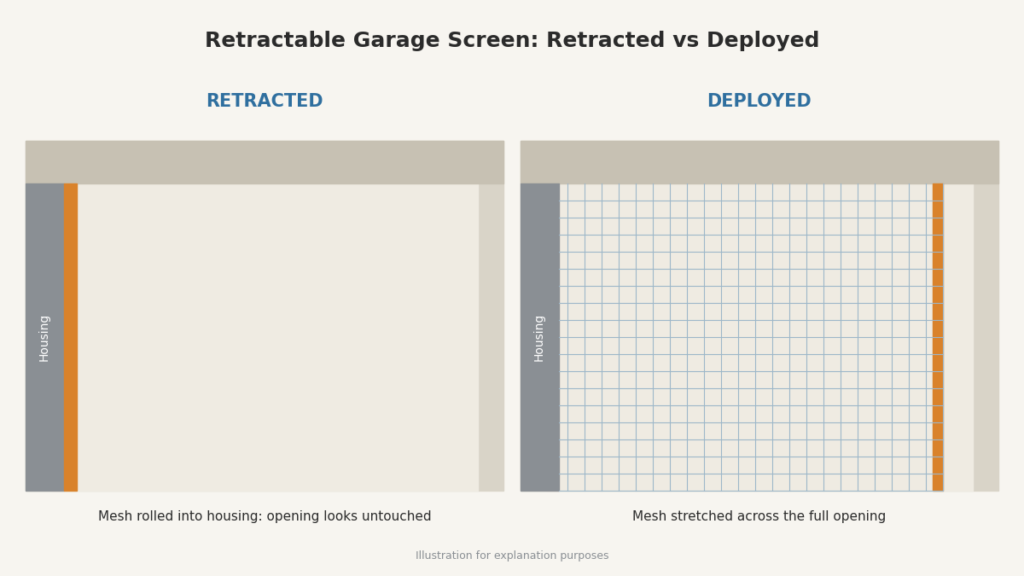
These are what most people picture when they see a polished garage screen. The mesh rolls into a cassette on one side (or top) and stretches along side tracks when deployed. When retracted, the opening looks untouched.
I like them for large openings because the mesh stays tensioned and flat rather than flapping. The trade-off is cost and the fact that a misaligned install makes them jam, which is why I’d lean toward professional installation for a wide two-car opening.
Rigid sliding panels
Think of a patio sliding screen door scaled for a garage. A metal frame holds the mesh and rolls along an upper and lower track. These are workhorses. If a panel gets damaged, you can often re-screen it yourself with a spline tool and a roll of mesh for a few dollars.
They suit smaller openings well, such as a side entry or a half-width section of the main door opening. For the full width of a two-car door, they get heavy and awkward.
Magnetic curtains
I’ll be blunt: I’ve tried these and I don’t love them. They work for a weekend project or a rental where you can’t alter the structure. But magnets lose grip over time, wind catches the bottom edge, and the gaps defeat the purpose. Treat them as temporary.
DIY kits and custom builds
If you’re comfortable with a drill, level, and tape measure, hardware stores sell track-and-roller systems you can pair with custom screen panels. The savings can be substantial. The risk is that a garage opening is rarely perfectly square, and small errors show up as sticking, gaps, or tracks that bind.
Costs: what you’ll really pay
Prices vary by region, opening size, and finish, so use these as planning figures and get at least two quotes before committing.
| Option | Rough cost range (installed unless noted) |
|---|---|
| Magnetic curtain (DIY) | $30–$200 |
| DIY sliding or hinged kit (materials only) | $200–$900 |
| Rigid sliding panels, small opening | $400–$1,200 |
| Retractable screen, single-car opening | $1,000–$2,500 |
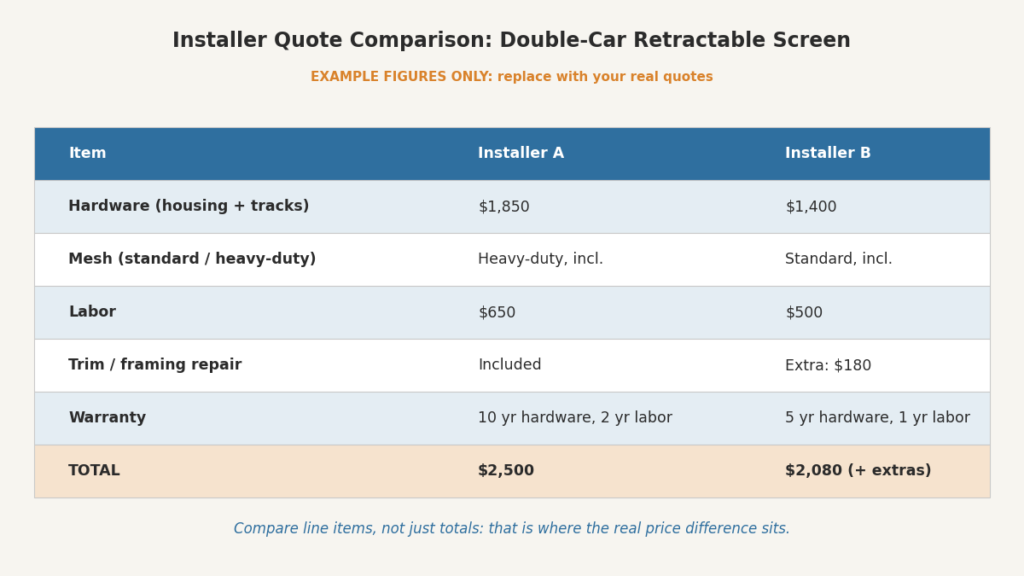
| Retractable screen, double-car opening | $2,500–$5,000+ |
What drives the price up
- Opening width and height. Wider spans need stronger housings and tracks.
- Mesh type. Heavier or tighter weaves cost more.
- Motorization. Some retractable models offer motors or remote operation, which adds cost.
- Custom colors and finishes. Powder-coated colors matching your trim cost more than standard white or bronze.
- Obstructions. Garage door tracks, springs, and lighting can complicate installation and add labor.
What I’d skimp on, and what I wouldn’t
I’d save money on mesh color and fancy accessories. I wouldn’t save on the tracks and housing. Weak tracks are the part that fails first, and replacing them costs more than buying decent hardware initially.
Brands and products worth looking at
I’m cautious about naming a single “best” product because availability and quality change by region. Here are places I’d start researching:
- Phantom Screens: a well-known name in retractable screens, with garage-specific options and a dealer network.
- Larson: a long-established door and screen manufacturer with a wide range of screen options.
- Home Depot and Lowe’s: good for DIY track hardware, mesh rolls, and magnetic screens if you want to build or experiment cheaply.
- ODL: known for door glass and screen products you might adapt or compare.
My honest verdict on these routes:
- If you want a clean, long-lasting result on a wide opening, a retractable system from a dealer is likely worth the premium.
- If you only need a partial opening or a walk-through, rigid sliding panels hit the best balance of cost and durability.
- If your budget is tight and you’re handy, a DIY build can work, but expect a learning curve and a few adjustments.
- I’d skip magnetic curtains unless your need is truly temporary.
Installation: DIY or professional?
Before you start: measure like a skeptic
Garage openings are rarely perfectly square. Measure the width in at least three places (top, middle, bottom) and the height in at least three places, and use the smallest numbers when ordering. Check the surfaces where tracks will mount, since uneven or damaged framing causes trouble later.
A realistic DIY outline
For a rigid sliding or kit-style system, the process generally looks like this:
- Check clearance. Make sure the garage door, its tracks, and any opener hardware don’t conflict with where the screen will sit.
- Mark and level the top track. Use a long level, and mark mounting holes before drilling.
- Install the top track securely. Anchor into solid framing, not just trim or drywall.
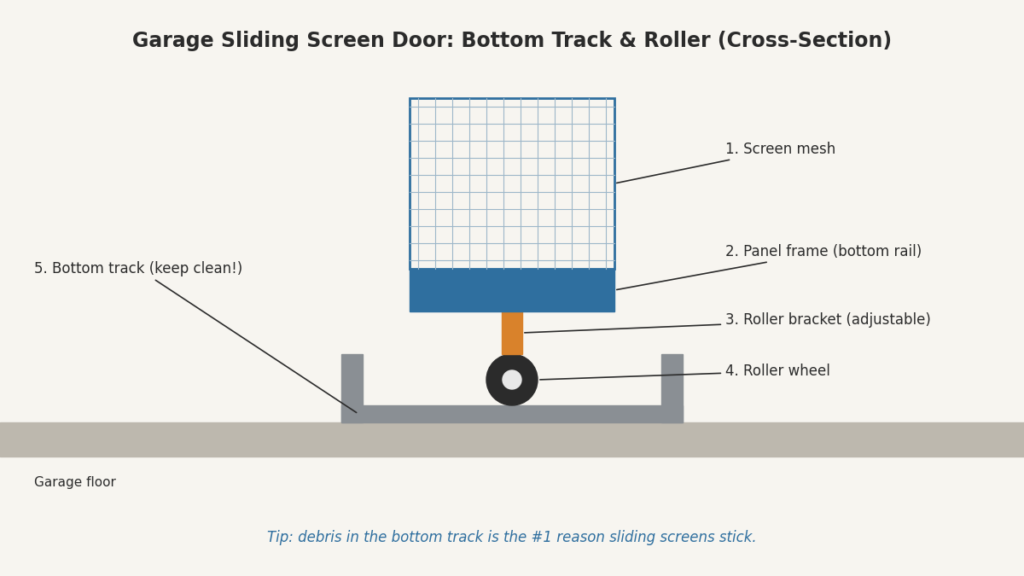
- Set the bottom track. It must align precisely with the top track, or panels will bind.
- Hang the panels and adjust rollers. Most systems have adjustment screws to fine-tune height and alignment.
- Test the glide. Slide it repeatedly, then check for light gaps along the edges.
- Add weatherstripping or brush seals where mesh meets frame to close small gaps.
A single-person install of a small sliding panel can take a few hours. A full retractable system on a wide opening is a longer, more demanding job.
When I’d call a professional
- The opening is very wide or tall.
- You’re installing a motorized or retractable system.
- The framing is out of square or damaged.
- You’d like a warranty covering workmanship.
When you get quotes, ask what the warranty covers, whether the mesh and hardware are separately warranted, and whether the price includes any repair to trim or framing.
Maintenance that actually matters
- Clean the tracks. Dust and leaf litter in the bottom track is the number one cause of sticking.
- Rinse the mesh gently with mild soap and water.
- Check for holes each season and patch small ones with repair kits.
- Lubricate rollers lightly with a silicone-based product, not heavy grease that attracts dirt.
Mistakes I see again and again
Ordering from rough measurements. A quarter-inch error can mean a screen that doesn’t fit. Measure twice, then once more.
Ignoring wind. Garages in open or coastal areas see strong gusts. Light curtains and flimsy panels can tear or blow open. Choose sturdier systems in windy locations.
Forgetting about the garage door’s operation. Some installations block the door’s path or hardware. Confirm clearances before drilling.
Buying on price alone. A cheap system that fails in two years costs more than a mid-range one that lasts a decade.
Expecting it to replace a bug-sealed room. A screen reduces insects dramatically, but a determined mosquito can still slip through a gap. If gaps matter to you, invest in better seals.
Where the category is heading
A few trends I’d keep an eye on:
- Smarter operation. Motorized and app-connected screens are becoming more common in the retractable category, mirroring the trend in garage openers.
- Tougher, finer meshes. Manufacturers keep improving weaves that resist tearing and block smaller insects while still passing air.
- Multi-purpose garages. As more people use garages as gyms, workshops, and hangout spaces, I expect demand for screens that look good, not just function.
- Better sealing details. Expect more attention to edge seals and brush systems, since gaps are the main complaint with budget systems.
These are my read of where the market is going, not guaranteed outcomes.
FAQs
Do garage sliding screen doors keep out all insects?
Not all, but a well-fitted one blocks the vast majority. Fit, edge sealing, and mesh density determine how close you get to complete coverage.
Can I install one on a standard two-car garage door opening?
Yes. Retractable systems are made for wide openings, though they cost more and usually call for professional installation.
Are they secure enough to leave overnight?
No. Mesh is not a security measure. Lock your garage door as usual and treat the screen as a bug barrier.
How long do they last?
Quality retractable systems commonly last a decade or more. Budget systems and magnetic curtains may need replacing within a few years, depending on weather and use.
Can pets damage them?
Yes. Claws and chewing can tear standard mesh. Heavier pet-resistant mesh helps, but it won’t be indestructible.
Will a screen affect my garage door opener?
It can if installed carelessly. Always check clearances for the door, tracks, springs, and opener sensors before mounting anything.
Is it worth it in cold climates?
Possibly, for the warmer months. Many people use screens in spring through fall, and some retractable models stow away neatly for winter.
Can I re-screen a damaged panel myself?
Usually, on rigid framed panels. You’ll need replacement mesh, spline, and a spline roller, and the repair is inexpensive.
Conclusion
The best garage screen is the one that matches how you actually use the space. If you only crack the door open now and then, a modest sliding panel or a budget kit may be all you need. If you want to live in your garage during warm months, a good retractable system is the kind of upgrade that quietly changes how you use your home.
Whatever you choose, give the tracks and hardware more attention than the mesh, measure carefully, and be realistic about what the screen can do. It will keep the bugs out and the breeze in, but the locks on your garage door still do the security work.
If I had to give one piece of advice, it would be to get two quotes and to spend your budget where failure is expensive: tracks, housings, and installation quality. The rest is easy to upgrade later.





1 Comment