

By Sophia Marín, Interior Design Researcher & Flooring Specialist |Herringbone
Why Herringbone Flooring Is Having Its Biggest Moment Yet {#why-herringbone}
There’s a point in every design trend cycle where something crosses from “fashionable” into “enduring.” Herringbone flooring crossed that threshold a long time ago it first appeared in Roman road construction but what’s happening with it right now feels genuinely new.
I’ve been studying and writing about interior design for over a decade, and I’ve watched trends rise and collapse like soufflés. What herringbone is doing in 2024 and into 2025 is different: it’s not simply being revived, it’s being reinterpreted. Designers are taking the fundamental V-shaped interlocking pattern and twisting it — literally and figuratively — into territory that can feel at once ancient and arrestingly modern.
Walk into any high-end new build in London, Lisbon, Copenhagen, or Chicago right now and there’s a very reasonable chance you’ll encounter herringbone floors. But you’ll also find it in mid-range renovations, rental-grade vinyl, budget-friendly ceramic tile, and even wallpaper. The pattern has become democratized without becoming diluted. That’s rare.
This article isn’t a shallow trend roundup. I want to go deep on why specific herringbone configurations work in specific rooms, which materials are genuinely worth the premium, where the trend is going, and what pitfalls trap well-meaning renovators.
A Quick History (Without the Boring Parts) {#history}
The name “herringbone” comes from the skeleton of a herring fish — the diagonal ribs radiating from a central spine create exactly the alternating V-pattern we recognize. Roman engineers used the layout in stone paving because the interlocking geometry distributes load exceptionally well. It wasn’t an aesthetic choice initially; it was structural engineering.
By the Renaissance, European palace floors — notably in the Louvre and Château de Fontainebleau — adopted herringbone in oak parquet for its visual richness. The pattern signaled wealth. Only estates that could afford master craftsmen and premium timber got herringbone floors.
The 20th century largely abandoned it. Wall-to-wall carpet, linoleum, and later, laminate in simple plank formats ruled the postwar era. Herringbone survived mainly in Victorian townhouses and stubbornly traditional dining rooms.
The revival started roughly around 2012–2015 in European interiors before hitting North America hard. And now, in the mid-2020s, we’re in what I’d call the pattern’s third act: a sophisticated, globally-influenced reinvention that pulls from Scandinavian minimalism, Japanese craft philosophy, and a renewed Western appreciation for material honesty.
The 7 Hottest Herringbone Trends Right Now {#trends}
1. Micro-Herringbone: Going Smaller for More Drama
Standard herringbone planks typically run 2–3 inches wide. Micro-herringbone drops that to ¾ inch to 1.5 inches, producing a denser, more intricate visual texture that reads almost like fabric from a distance.
This scale works extraordinarily well in bathrooms and powder rooms — small spaces where the detailed pattern fills the room without overwhelming it. I’ve seen micro-herringbone in marble mosaic tile in bathrooms where the floor becomes the singular decorative statement, completely eliminating the need for art or accessories.
The catch: installation is painstaking and labor costs are significantly higher. If you’re doing a bathroom floor in micro-herringbone natural stone, budget for skilled tile setters, not general contractors.
2. Wide-Plank Herringbone: The Unexpected Twist
On the opposite end, wide-plank herringbone — using boards 5 to 7 inches wide — creates a pattern that’s more geometric than traditional. Each “V” becomes exaggerated, almost like a bold graphic element underfoot.
This works best in large, open-plan spaces where the scale of the pattern can breathe. In a kitchen-dining-living great room of 800 square feet or more, wide-plank herringbone in a light oak makes the floor feel curated, not busy.
Structurally, wide planks in solid hardwood are more prone to seasonal movement and require very precise subfloor preparation. Engineered hardwood is often the smarter technical choice here.
3. Painted and Tinted Herringbone
One of the most creatively exciting developments: herringbone floors being painted, limewashed, or color-tinted rather than left in natural wood tones. Dusty sage green, faded terracotta, chalky white — these aren’t finishes from a manufacturer’s catalog, they’re custom treatments applied by artisans or adventurous homeowners.
The Swedish “Gustavian” painted floor tradition clearly influences this. But contemporary iterations feel less country-cottage and more avant-garde gallery. I’ve seen a Brooklyn loft with raw pine herringbone floors painted a deep, matte forest green — it should have been a disaster but was genuinely stunning.
Key consideration: painted floors require maintenance. High-traffic areas will show wear within two to three years and need touch-ups. It’s a living finish, not a permanent one — which is either a flaw or a feature depending on your philosophy.
4. Mixed-Material Herringbone
Pure wood or pure tile herringbone is classical. Mixed-material herringbone — alternating dark walnut planks with brass inlay strips, or combining two different tile colors in the interlocking pattern — is where things get architecturally interesting.
A particularly elegant execution I’ve studied: alternating matte black slate and brushed concrete tiles in herringbone for a restaurant floor. The subtle tonal shift creates depth without noise. At a glance it reads as monochromatic; on closer inspection it’s rich with contrast.
For residential use, restraint is everything. Two materials maximum. The contrast should be tonal, not dramatic. This isn’t the place for red and white tiles unless you’re designing a very specific, committed interior concept.
5. Diagonal vs. Centered Layouts
Most herringbone installations are “centered” — the pattern radiates from the visual center of the room, or is aligned parallel to the primary wall. Diagonal herringbone rotates the entire pattern 45 degrees relative to the walls, creating a completely different spatial effect.
Diagonal herringbone makes rooms feel larger and more dynamic. It draws the eye toward corners rather than walls, which creates a sense of expansion. In narrower spaces like hallways or galley kitchens, diagonal herringbone is close to a magic trick — it visually widens the room.
The installation complexity increases, as does material waste (expect 15–20% more material). But the results justify the cost in the right space.
6. Dark Wood and Smoked Finishes
Light European oak dominated herringbone for about a decade. Smoked, fumed, and dark-stained wood is now gaining serious ground. Smoked oak — where the wood is exposed to ammonia fumes, reacting with the tannins to produce a deep, warm gray-brown — is particularly beautiful in herringbone because the pattern itself provides so much visual structure that the color can be rich without becoming heavy.
Walnut in herringbone has also seen a resurgence. Its natural chocolate tones have a warmth that almost no other material can replicate. Against white walls and warm brass fixtures, dark walnut herringbone feels current without being trendy.
7. Herringbone in Unexpected Rooms
Kitchens, bathrooms, and entryways have historically been the herringbone zones. Increasingly, the pattern is appearing in bedrooms and home offices — spaces where it was previously considered “too much.”
The key is material choice. A bedroom herringbone floor in pale, wire-brushed white oak has a softness that doesn’t compete with the restful function of the room. A home office in medium-tone engineered oak herringbone creates a sense of intentionality — the space feels designed, which has a subtle psychological effect on focus and creativity.
Material Comparison: Wood vs. LVP vs. Tile vs. Stone {#materials}
| Material | Durability | Installation Difficulty | Cost (per sq ft, installed) | Best Use Case |
|---|---|---|---|---|
| Solid Hardwood | High (refinishable) | High | $12–$25 | Living rooms, dining rooms |
| Engineered Hardwood | High | Medium-High | $8–$18 | Any room, incl. over radiant heat |
| Luxury Vinyl Plank (LVP) | Very High (waterproof) | Medium | $5–$12 | Kitchens, bathrooms, basements |
| Ceramic/Porcelain Tile | Very High | High | $10–$22 | Bathrooms, kitchens, entryways |
| Natural Stone | Extremely High | Very High | $18–$45+ | Luxury bathrooms, entryways |
| Concrete Tile | High | High | $12–$28 | Modern/industrial spaces |
Honest verdict: Engineered hardwood in herringbone is the sweet spot for most renovations. It offers the warmth and refinishability of real wood, tolerates moisture and temperature fluctuation far better than solid hardwood, and works over radiant heating systems that solid wood simply cannot handle reliably. LVP has improved dramatically and is genuinely a respectable choice for budget-conscious renovations or high-moisture rooms, but it will never quite replicate the texture underfoot that wood provides.
Natural stone herringbone — particularly Calacatta marble, honed limestone, or aged travertine — is in a category of its own for luxury bathrooms. The investment is significant but the result is timeless in a way synthetic materials simply aren’t.
How Room Size Changes Everything About Layout {#room-size}
One of the most common herringbone mistakes is using the wrong plank scale for the room.
Small rooms (under 150 sq ft): Use narrower planks (2–3 inches). The smaller scale keeps the pattern crisp without overwhelming the space. Wider planks in a small room create a pattern that feels cut off and incomplete.
Medium rooms (150–400 sq ft): Standard 3–4 inch plank herringbone is ideal. Classic proportions that the pattern was designed for.
Large open-plan spaces (400+ sq ft): Wide-plank herringbone (5–7 inches) or a Chevron variation (where planks meet at a point rather than staggering) gives the pattern appropriate visual weight. Standard narrow planks in a very large room will look visually thin and restless.
Ceiling height matters too. In rooms with ceilings over 10 feet, the floor needs to hold its own visually. Darker finishes and larger-scale patterns help ground the space. Low-ceiling rooms benefit from lighter colors and smaller patterns that don’t compete with the ceiling’s visual weight.
Color Palettes That Work Best With Herringbone {#color}
The herringbone pattern itself is strong. It doesn’t need color contrast to be beautiful — in fact, strong wall-to-floor color contrast can fight with the pattern rather than complement it.
Safest approach: Analogous color harmony. Keep wall colors within two to three stops of the floor tone on a color wheel. A medium honey oak floor works beautifully with warm greiges, soft terracottas, and muted sage greens.
Bold approach: Extreme contrast but with tonal restraint. Dark smoked oak herringbone against stark white walls and white ceiling creates a dramatic, graphic interior — but it works because the contrast is tonal (light vs. dark) not colorful (competing hues).
The trap to avoid: Warm-toned floors with cool-toned walls. A red-undertoned cherry herringbone floor fighting with a blue-gray wall creates visual dissonance that’s hard to articulate but immediately feels “off” to most people.
DIY vs. Professional Installation: An Honest Look {#diy}
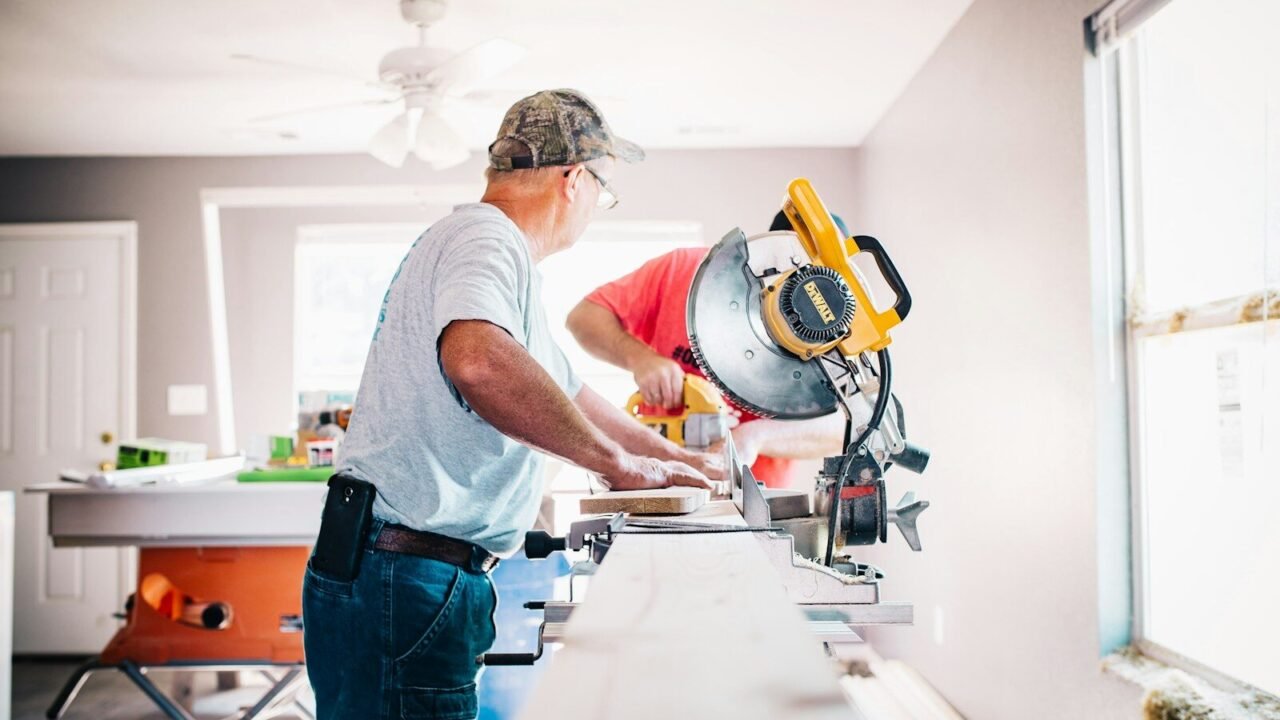
I’ll be direct here because I’ve seen too many DIY herringbone projects go wrong: herringbone installation is significantly harder than straight-plank or diagonal single-direction flooring. The pattern requires precise angle cuts (typically 45 degrees), careful layout planning from a center point, and constant vigilance against accumulated errors.
Realistic DIY candidates: Experienced DIYers with previous flooring installation experience, herringbone LVP (luxury vinyl is more forgiving), and rooms with simple rectangular shapes.
Hire a professional: Solid hardwood herringbone, any natural stone herringbone, rooms with alcoves or irregular shapes, and any project using adhesive-down engineered hardwood.
The pattern amplifies installation errors. A 2mm drift in a straight-plank floor is invisible. That same drift in herringbone becomes visually apparent within 4–5 feet and propagates across the entire floor.
Get multiple quotes, ask specifically about herringbone experience, and always request to see previous herringbone work before hiring.
Grout Line, Gap, and Finish Choices That Matter More Than You Think {#details}
For tile herringbone: grout joint width dramatically changes the character of the floor. Tight 1/16″ grout lines make the pattern feel seamless and almost textile-like. Wide 3/8″ grout lines create a more artisanal, handmade feel that suits rustic or Mediterranean aesthetics.
Grout color is equally important. Light grout with dark tile emphasizes every individual piece and maximizes the pattern’s graphic quality. Tone-on-tone grout (matching the tile) creates a quieter, more unified surface. Neither is universally correct — it depends entirely on the desired effect.
For wood herringbone: the finish sheen level changes everything. Matte and satin finishes read as more contemporary and casual. Semi-gloss finishes are traditional and slightly formal. High-gloss is a specific design statement — beautiful in very modern, minimal interiors but unforgiving on scratches and dust.
Wire-brushed and hand-scraped textures add warmth and hide minor wear. Smooth surfaces are more elegant but require more careful maintenance.
Common Mistakes and How to Avoid Them {#mistakes}
1. Not acclimating solid wood flooring. Solid hardwood must acclimate to the room’s temperature and humidity for a minimum of 5–7 days before installation. Skipping this step is the single most common cause of herringbone cupping, gapping, and buckling.
2. Starting from a wall rather than the room center. Herringbone must be laid from a central reference point outward, or the pattern will look off-center and the border cuts will be uneven.
3. Choosing the wrong adhesive for engineered herringbone. Floating engineered herringbone can buckle in high-humidity environments. Glue-down installation is more stable but requires careful adhesive selection based on the specific product’s back material.
4. Underestimating material waste. The 10% waste factor appropriate for straight-plank floors jumps to 15–20% for herringbone due to angle cuts. Order accordingly.
5. Ignoring the subfloor. Herringbone amplifies subfloor imperfections. Any dip or rise greater than 3/16″ over 10 feet must be corrected before installation. The pattern makes any unevenness painfully obvious.
Future Trends: Where Herringbone Is Heading {#future}
Based on what I’m tracking in European design markets — which typically lead North American residential trends by 18–24 months — several directions are emerging.
Sustainable and reclaimed herringbone is growing fast. Reclaimed oak parquet in herringbone, salvaged from old European buildings, has a character that new materials simply cannot replicate. The age marks, color variations, and patina tell a story. As sustainability becomes more central to design philosophy rather than just marketing language, expect this category to expand significantly.
Herringbone as wall treatment. Vertical herringbone paneling in living rooms and bedrooms is appearing in high-end projects. It brings the pattern off the floor and into a dimensional wall treatment — particularly striking in natural wood or textured plaster.
Biophilic material combinations. Herringbone in unsealed, natural stone alongside living moss walls or natural fiber textiles is emerging in wellness-focused interior design. The pattern’s inherent geometry creates a fascinating tension with organic, irregular materials.
Technology-assisted custom patterns. CNC cutting and digital fabrication are making truly custom herringbone layouts more accessible — inlaid borders, radiating patterns, dual-material precision layouts that would have required master craftsmen working for weeks are now achievable at a fraction of the time. Expect more personalized, bespoke flooring in coming years.
FAQs {#faqs}
Q: Is herringbone more expensive than straight-plank flooring? Yes — typically 20–30% more in labor costs due to the additional cutting and layout complexity, even when using the same material. Budget accordingly and get specific quotes for herringbone, not just standard flooring installation.
Q: Can herringbone work in a small bathroom? Absolutely, and often better than large-format tiles. Micro-herringbone in ceramic or porcelain tile at 1–2 inch scale creates a rich, hotel-spa quality in small bathrooms. The pattern fills the space beautifully.
Q: What’s the difference between herringbone and chevron? In herringbone, planks stagger and the ends cut at 90 degrees, creating the characteristic “broken” V. In chevron, planks cut at 45-degree angles and meet at a true point, creating a clean, unbroken zigzag. Chevron is slightly more formal; herringbone is more textural. Both are currently popular.
Q: Does herringbone make a room look larger or smaller? Diagonal-oriented herringbone visually expands a room. Standard (parallel to walls) herringbone in a room of appropriate scale reads as textured rather than expanding. Very busy, small-scale herringbone in a large room can paradoxically feel smaller. Scale the pattern to the room.
Q: How do you clean and maintain herringbone hardwood floors? Exactly like any hardwood floor — pH-neutral hardwood cleaner, microfiber mop, no wet mopping. The pattern itself doesn’t change maintenance requirements, but wire-brushed and textured finishes hide dust and minor scratches better than smooth finishes.
Q: Is LVP herringbone worth it over engineered hardwood? For high-moisture areas, LVP is genuinely better. For living spaces where comfort and longevity matter most, engineered hardwood’s feel and refinishability justify the premium. The gap in quality between premium LVP and entry-level engineered hardwood has narrowed considerably — compare both at a similar price point and decide based on your specific room and lifestyle.
Conclusion
Herringbone flooring endures not because of nostalgia, but because it does something that few design elements can: it makes a floor interesting without demanding that it be the center of attention. It rewards careful looking while also functioning beautifully in the background.
What excites me most about the current moment is that herringbones is no longer a style statement tied to a specific aesthetic — traditional, contemporary, industrial, Scandinavian, maximalist — it genuinely works across all of them. The pattern is a framework, and what you bring to it — the material, the scale, the finish, the color, the room — determines what it becomes.
If you’re planning a renovation and herringbones is on your list, spend real time on the material decision first. The pattern is relatively forgiving; the material choice is permanent. Get samples, live with them in your actual light conditions for at least a week, and don’t rush into a decision based on showroom lighting or glossy magazine images.
Done well, herringbones flooring is one of the few design investments that genuinely ages better than it starts — gaining character, warmth, and depth over years of use. That’s a rare thing in a world full of trends that peak on the day they’re installed.
About the Author
Sophia Marín is an independent interior design researcher and flooring specialist based between Barcelona and New York. With a background in architectural history from the Universidad Politécnica de Catalunya and over 12 years of hands-on experience advising residential and commercial renovation projects across Europe and North America, she focuses on the intersection of material science, design history, and livability. Sophia has contributed research and editorial content to interior design publications in six countries, consults on flooring specification for boutique hospitality projects, and runs a popular long-form design newsletter exploring the deeper stories behind materials and spaces. She believes that the best interiors are built on decisions that were thought through slowly.