




The first thing nobody tells you about goji berries is that the plant does not behave like the tidy little superfood bush pictured on seed packets. Mine spent its second summer throwing suckers three feet from the main stem, through a patch of lawn, toward a fence it had no business reaching. I’d planted it expecting a modest ornamental shrub. What I got was closer to a bramble with ambition.
That’s not a warning to skip growing them goji berries are genuinely one of the easier fruiting plants you can put in a home garden, tolerant of bad soil, drought, and neglect in a way most fruit crops simply aren’t. But most guides gloss over the plant’s actual personality in favor of listing its antioxidant content. This one won’t. Here’s what I’ve learned from growing them, plus what I found once I started comparing notes with nursery growers and extension sources on varieties, care, and the harvest process.
Table of Contents
- Quick Answer: What Growing Goji Berries Actually Involves
- Meet the Plant: Lycium barbarum vs. Lycium chinense
- Goji Berry Varieties Compared
- Where Goji Berries Actually Grow Well
- Starting Your Plant: Seed vs. Bare-Root vs. Container Nursery Stock
- Site Prep, Soil, and Planting Steps
- Watering and Feeding Through the Seasons
- Training and Pruning
- Pests and Diseases
- A Real Planting Timeline From My Own Backyard
- Harvesting Goji Berries: Timing and the Hand-Picking Myth
- Drying and Preserving Goji Berries Compared
- Common Mistakes First-Time Growers Make
- Health Benefits and Culinary Uses, Honestly
- Where This Is Heading: Trends Worth Watching
- FAQs
- Final Thoughts
- About the Author
Quick Answer: What Growing Goji Berries Actually Involves
Goji berries (mostly Lycium barbarum) grow as a sprawling, thorny, self-fertile shrub that thrives in USDA zones 5–9, tolerates poor and alkaline soil better than almost any other fruiting plant, and needs full sun and well-drained ground to produce well. Plant bare-root or container stock in early spring, expect a light harvest by year two, and full production — often several pounds of fresh fruit per plant — by year four. The catch isn’t difficulty; it’s containment. Left alone, goji suckers aggressively underground, and the single most important planning decision is deciding upfront how you’re going to keep it where you want it.
Meet the Plant: Lycium barbarum vs. Lycium chinense
Goji berry is a member of the nightshade family, related to tomatoes and peppers, which is obvious the moment you see the small purple, trumpet-shaped flowers. Two species get sold under the same “goji” label, and the difference actually matters:
- Lycium barbarum is the commercial standard, the more cold-hardy of the two, and the species behind most named cultivars sold in North America.
- Lycium chinense is less productive and less cold-tolerant, generally reliable only in zones 5–9 rather than the broader range L. barbarum can handle.
If you’re gardening in a colder zone, this distinction is worth confirming before you buy — a plant simply labeled “goji” from a generic seed packet won’t tell you which species you’re getting, a point Food Forest Nursery raises directly for cold-climate growers.
Goji Berry Varieties Compared
| Variety | Species | Growth Habit | Berry Character | Best For |
|---|---|---|---|---|
| Crimson Star | L. barbarum | 6–8 ft, medium vigor | Large, tangy-sweet, fewer seeds, cold-hardy to roughly -20°C | Reliable all-around home garden choice |
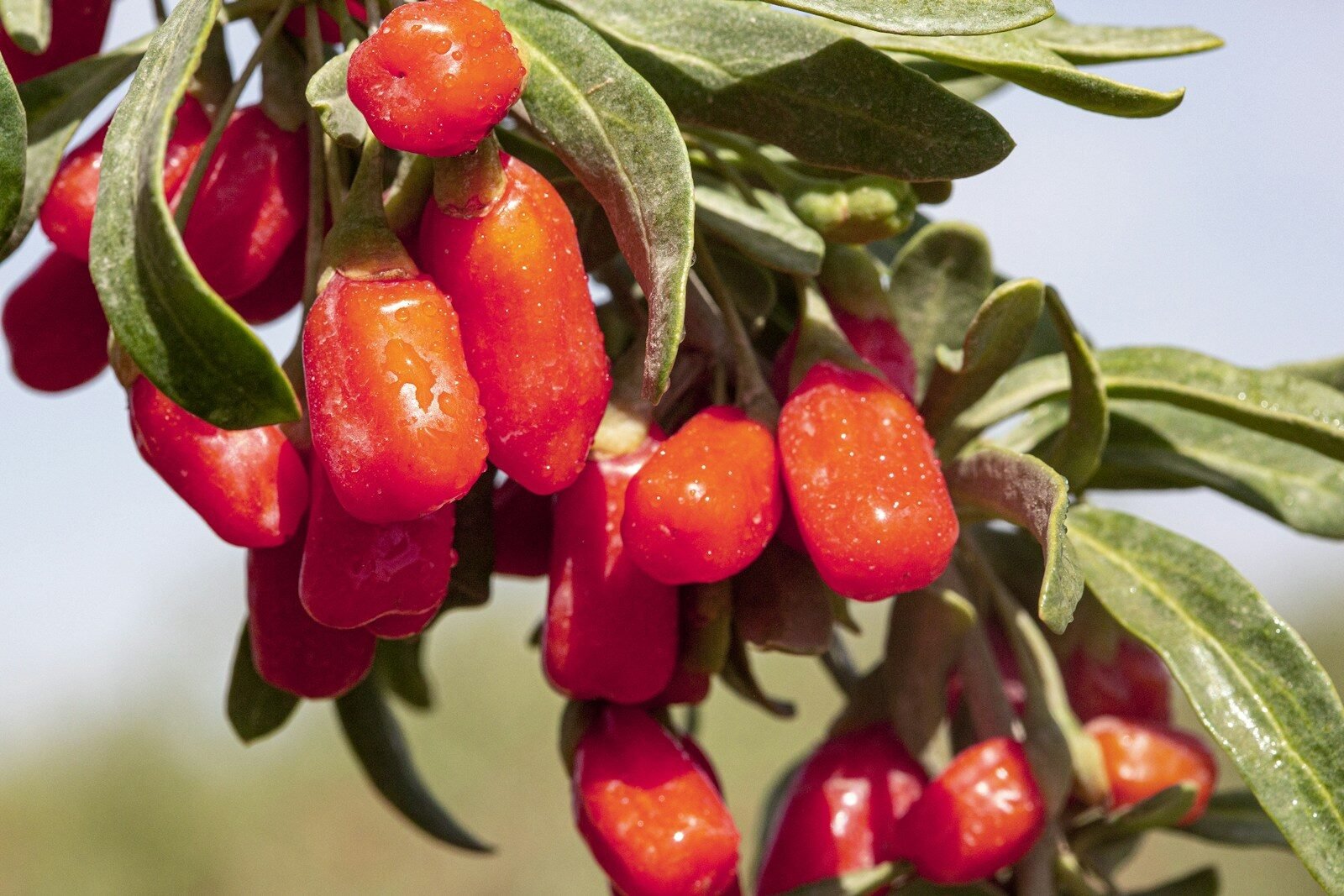
| Phoenix Tears | L. barbarum (labeling varies by vendor) | Compact, trellis-friendly | Deep-orange, jellybean-shaped, mildly sweet, ripens gradually | Small spaces, trellised growing |
| Big Lifeberry | L. chinense (per most growers) | Vigorous, sprawling | Notably larger-than-average berries | Growers prioritizing fruit size |
| Sweet Lifeberry | L. chinense | Compact, up to ~4 ft | Juicy, sweet, tangy fresh; raisin-like dried | Small gardens, sweeter fresh eating |
| Seed-grown / wild-type | Usually L. barbarum | Highly variable | Unpredictable size and sweetness | Budget plantings, permaculture hedges |
A quick honest note here: even nursery growers disagree on which species some of these cultivars actually belong to — I found conflicting species labels for Phoenix Tears across otherwise reputable sources. If species-level cold hardiness is critical for your zone, ask the specific nursery directly rather than trusting the variety name alone. For most home gardeners, Crimson Star or Phoenix Tears are the safest starting points — they’re the two most widely available named selections and the ones extension sources most consistently recommend for beginners.
Where Goji Berries Actually Grow Well
Most sources put goji’s hardiness at USDA zones 5–9, with cold-hardy L. barbarum selections occasionally pushing into zone 4 in a sheltered site, according to nursery growing guides including Raintree Nursery’s cultivation notes. What the plant actually cares about isn’t cold tolerance, though — it’s drainage and sun.
Goji genuinely prefers alkaline, well-drained soil, in the pH range of roughly 6.5 to 8.1, and performs best with a full 6 to 8 hours of direct sun. It’s notably drought-tolerant once established and, somewhat unusually for a fruiting shrub, actually produces better fruit under hot, dry conditions than in consistently moist ones. The one climate factor that trips people up is humidity — goji dislikes it, and high-humidity regions see more pressure from powdery mildew as a result, a pattern noted by Epic Gardening’s growing notes.
Starting Your Plant: Seed vs. Bare-Root vs. Container Nursery Stock
| Method | Cost | Time to First Harvest | Predictability | Verdict |
|---|---|---|---|---|
| Seed | Lowest | 2–3 years | Low — variable size, sweetness, vigor | Fine for hedges or permaculture plantings where uniformity doesn’t matter |
| Bare-root nursery stock | Low–Mid | 1–2 years | High — true to named variety | Best value for most home gardeners |
| Container nursery stock | Higher | 1–2 years | High — true to named variety | Best for gardeners planting outside the dormant season or wanting an established root system faster |
My honest take: skip seed-grown plants unless you specifically want an informal hedge or you’re planting in bulk. The variability is real — seedlings resemble tomato starts early on and won’t tell you anything about eventual fruit size or sweetness until they mature, a quirk noted in growing guidance from LSU AgCenter. For a named cultivar with known characteristics, bare-root stock planted in early spring, right at the tail end of dormancy, is the standard and most economical route.
Site Prep, Soil, and Planting Steps
- Test your soil pH. Goji tolerates a wide range but performs best in neutral-to-alkaline soil. If you’re well below 6.5, work in a little garden lime.
- Loosen soil 8–12 inches deep and mix in compost or well-rotted manure — goji isn’t a heavy feeder, but organic matter improves the drainage it actually needs.
- Space plants roughly 6 feet apart, per planting guidance from Burpee, more if you’re training multiple plants along a fence line.
- Dig a hole about twice the width of the root ball, set the plant so the crown sits level with the surrounding soil, backfill, and water deeply to settle the roots.
- Install a containment barrier now, not later. This is the step almost every beginner-friendly guide buries in a footnote. Because goji spreads by underground suckers, a sunk root barrier around the planting area — or growing it in a large container, 15 to 25 gallons — will save you years of chasing sprouts through the lawn.
Watering and Feeding Through the Seasons
Water deeply and consistently through the first growing season while the root system establishes; the fine roots dry out quickly and the plant is genuinely vulnerable during year one. After that, goji shifts into drought-tolerant mode, and slow, deep watering via drip irrigation works better than frequent shallow watering, which invites the soggy conditions the plant dislikes.
Feed lightly. A balanced organic fertilizer applied once at the start of the season, plus a fresh layer of compost, is enough. Overfeeding is a more common mistake than underfeeding — excess nitrogen produces long, spindly, unproductive growth instead of the compact fruiting branches you actually want.
Training and Pruning
Pruning confuses a lot of first-time growers because sources describe it differently, and the honest explanation is that goji fruits on new growth that emerges from the previous year’s wood — so pruning is about renewing that framework each year, not about avoiding cutting off “the fruit.”
- Year 1: Don’t prune. Let the plant establish its root system.
- Year 2: Select one strong shoot as a main trunk (if you want a tree-like form) or several as a framework, and remove weak competing shoots near the base.
- Ongoing: Prune in late winter or very early spring, just before bud break, removing dead or winter-damaged wood and thinning crowded growth to improve airflow — which also happens to be your best defense against powdery mildew.
- Trellising: Goji has a naturally weeping, vining habit. Training it up a trellis or fence, the way you’d handle raspberries, keeps fruit off the ground, makes harvest dramatically easier, and improves air circulation, according to growing advice from MasterClass.
Pests and Diseases
Goji has a reputation as a low-maintenance, pest-resistant plant, and for the most part that holds up. The recurring issues are predictable enough to plan around.
| Issue | Symptoms | Organic Control | Conventional Control |
|---|---|---|---|
| Spider mites | Fine webbing, stippled leaves, worse in hot/dry weather | Insecticidal soap, released ladybugs or lacewings | Miticide labeled for edible crops |
| Aphids | Curled new growth, sticky residue | Strong water spray, companion planting with marigold or nasturtium | Insecticidal soap |
| Thrips | Silvery leaf streaking, distorted growth | Blue sticky traps, beneficial insects | Spinosad-based sprays |
| Powdery mildew | White powdery coating on leaves | Improve airflow via pruning, avoid overhead watering | Sulfur-based fungicide |
Because goji is in the same family as tomatoes and peppers, it’s worth applying the same rotation logic gardeners already use for nightshades — avoid siting a new goji planting where those crops have struggled with soil-borne disease in the past. Companion planting with aromatic herbs like basil, mint (contained, since it spreads just as aggressively as goji does), and catnip is a commonly recommended deterrent worth trying before reaching for a spray, an approach detailed in MasterClass’s pest section.
A Real Planting Timeline From My Own Backyard
Here’s roughly how mine actually went, for anyone wanting realistic expectations rather than marketing-copy optimism:
- Spring, Year 1: Planted one bare-root Crimson Star along a south-facing fence, no root barrier (mistake — more on that below). Watered deeply twice a week through the first summer. No pruning, minimal growth above ground, though the roots were clearly busy.
- Year 2: Selected a main framework of three canes, tied them loosely to the fence. First flush of purple flowers in early summer, followed by a scattering of maybe two dozen berries — enough to taste, not enough to dry.
- Year 3: This is when it became a “real” plant. Steady flowering from July through the first light frost in October, harvested every few days, and pulled somewhere around 2 to 3 pounds of fresh fruit across the season — roughly in line with the yield range nursery growers describe for an establishing plant.
- Ongoing suckering problem: By year two, new shoots were appearing 2–3 feet from the base, coming up through the lawn. I now cut these at soil level every few weeks rather than pulling them, since pulling seemed to encourage even more vigorous regrowth from the disturbed root.
If I were starting over, the root barrier goes in on day one. Everything else about the timeline was genuinely low-effort.
Harvesting Goji Berries: Timing and the Hand-Picking Myth
Goji is what’s called an indeterminate bearer — it flowers and fruits continuously over a long window, typically from mid-summer through the first hard frost, rather than ripening all at once. That means harvest isn’t a single event; it’s a recurring task where you’re back at the bushes every few days picking whatever has ripened since the last pass, a pattern described well by Biology Insights in its harvest-timing guide.
Here’s the detail most beginners haven’t heard: traditional harvest advice recommends avoiding direct hand contact with ripe berries where possible, since the natural oils on skin can cause the fruit to oxidize and darken faster once picked. In practice, most home growers either wear light gloves or gently shake ripe clusters over a tarp or sheet, which also happens to be faster than picking berry by berry once you’ve got a productive, mature plant.
Ripe berries pull free easily with the lightest touch — if you’re tugging, they’re not ready yet.
Drying and Preserving Goji Berries Compared
Fresh goji berries are genuinely delicate and only keep a few days in the refrigerator, which is part of why you almost never see them fresh in stores. Drying is the standard path to actually using your harvest.
| Method | Time | Temperature | Result Quality | Verdict |
|---|---|---|---|---|
| Electric dehydrator | 8–24 hours | 105–115°F (41–46°C) | Consistent, best texture control | Best overall for reliability |
| Low oven | Several hours, checked often | 120–160°F (50–70°C), door slightly ajar | Good, but easy to over-dry if unattended | Solid backup if you don’t own a dehydrator |
| Sun-drying | Several days to about a week | Ambient, on screens under cheesecloth | Traditional flavor, weather-dependent | Best flavor when you have the patience and dry weather |
| Freeze-drying | Longest process, specialized equipment | Sub-zero, low pressure | Highest nutrient and antioxidant retention per published food-science research | Best quality if you already own or have access to a freeze dryer |
A couple of practical notes that made a real difference for me: sorting berries by size before drying matters, since larger berries take noticeably longer and will leave smaller ones over-dried if they’re mixed on the same tray, a tip echoed in home-drying guides like luv2garden’s. And lightly cracking the skins (a quick soak in warm water does it) speeds drying time across every method, per drying instructions from Jinghe Goji Berries. Properly dried berries should feel leathery and pliable, not sticky, wet, or brittle — closer to a raisin than a chip.
Store finished berries in an airtight container in a cool, dark spot; expect good quality for six to twelve months, longer in the freezer.
Common Mistakes First-Time Growers Make
- Skipping the root barrier. By far the most common regret among growers I talked to, myself included.
- Overwatering established plants. Goji actually performs worse, not better, in consistently damp soil.
- Planting in shade. Fruiting drops off fast without a genuine 6+ hours of direct sun.
- Hand-picking berry by berry instead of gently shaking ripe clusters, which slows harvest considerably once a plant matures.
- Assuming all “goji” plants are identical. Species and cultivar differences in hardiness and berry quality are real, and worth confirming before you buy.
Health Benefits and Culinary Uses, Honestly
Goji berries genuinely are nutrient-dense — high in antioxidants, vitamin C, and carotenoids — and the traditional-medicine reputation behind them is centuries old. But it’s worth being straightforward about where the science actually stands: most of the specific disease-fighting claims attached to goji in marketing material aren’t well-supported by rigorous clinical evidence, a caveat that Gardening Know How makes plainly in its own growing guide. That doesn’t make them not worth growing — a nutritious, drought-tolerant, low-maintenance fruiting shrub is a genuinely good addition to a home garden on its own merits, dried-berry marketing aside.
In the kitchen, dried goji works well stirred into oatmeal or trail mix, steeped as tea, or rehydrated in warm water or juice for baking. Fresh berries, when you have enough to bother, are pleasant in smoothies, though the flavor is more tart-earthy than sweet compared to the dried version most people are used to.
Where This Is Heading: Trends Worth Watching
A few developments are worth keeping an eye on if you’re planning a longer-term planting:
Cold-hardiness breeding is accelerating. North American breeding efforts have only really ramped up over the past decade or so, and university extension programs — including trial work associated with Utah State, Cornell, and Oregon State — are actively testing goji performance in climates well outside its traditional range, aiming to extend reliable cultivation further north.
Home-garden demand is rising faster than commercial supply chains are adapting. As more gardeners plant goji themselves rather than buying dried imports, expect wider availability of named, true-to-type nursery stock instead of the generic seed-grown plants that dominated the market even five years ago.
Research into nutrient retention during processing — including the freeze-drying comparisons showing better antioxidant preservation than standard hot-air drying — is likely to shape which preservation methods home dehydrator manufacturers optimize for next.
FAQs
How long does it take a goji berry plant to produce fruit? Expect a light harvest in year two and full production, often several pounds per plant, by year four.
Do I need two plants to get fruit? No. Goji is self-fertile, so a single plant will produce fruit on its own.
Can I grow goji berries in a container? Yes, and it’s actually a smart way to prevent the suckering problem — use a container in the 15 to 25 gallon range.
Why are my goji berries turning black instead of drying properly? This is almost always either overripe fruit left too long before harvest, excess handling with bare hands, or high humidity slowing the drying process. Try shaking ripe clusters loose rather than hand-picking, and dry in a well-ventilated space.
Is goji berry invasive? It’s not classified as invasive in most regions, but its aggressive underground suckering behaves similarly in a home garden context, which is why a containment plan matters from day one.
What’s the difference between goji berries and wolfberries? Nothing — “wolfberry” is simply the older common English name for the same plant, still used in some regions and in traditional literature.
Final Thoughts
If I’m honest, the goji berry deserves a slightly better reputation than “trendy superfood you buy dried at the grocery store.” It’s one of the most forgiving fruiting shrubs I’ve grown — genuinely drought-tolerant, unbothered by mediocre soil, and productive without much fuss. The only real skill involved is respecting what the plant actually is: a vigorous, suckering, thorny shrub that wants space and a boundary, not a delicate specimen that needs babying. Get the containment right at planting time, give it sun and decent drainage, and it will spend the next several years quietly doing its job while you mostly leave it alone.
About the Author
Author bio: This guide was researched and written by a home-orchard and edible-landscaping writer who focuses on lesser-grown fruiting plants for temperate home gardens. The research behind this piece draws on university extension guidance, nursery cultivar documentation, and hands-on growing notes, cross-checked to separate reliable horticultural practice from the marketing language that tends to surround “superfood” crops. The goal is straightforward: give home gardeners planting information they can actually rely on, season after season.