



I want to start with something most gardening articles won’t tell you upfront: if you searched for “Monte Carlo Primrose” hoping to find a specific flower, that plant doesn’t exist. I spent a good hour chasing it down plant patent databases, nursery catalogs, botanical registries, the works before finding where the name actually comes from. It’s a residential carpet style from a flooring manufacturer called Radici, sold at flooring stores from Paramus to Denver. Somewhere along the way, a search term got tangled up with a flower name, and now a small ecosystem of “care guides” exists for a primrose that was never planted anywhere.
That mix-up is actually a useful place to start, because it tells you something about how much junk content is floating around gardening searches right now. Once I realized the “Monte Carlo” name was a dead end, I decided to write the guide I’d actually want: a detailed, honest look at growing real primroses the genus Primula using what I’ve learned growing several species in my own beds and containers, cross-checked against horticultural extension research and RHS guidance instead of guesswork.
If you ended up here from a “Monte Carlo Primrose” search, you’re in the right place. Just not for the reason you expected.
Table of Contents
- What a Primrose Actually Is
- Where the “Monte Carlo” Name Really Comes From
- Choosing Your Primrose: A Species Comparison
- When and How to Plant Primroses
- Light, Soil, and Water: What They Actually Need
- Feeding Primroses: A Real Fertilizer Comparison
- Do You Actually Need a Soil Moisture Meter?
- Propagating Primroses: Division vs. Seed
- Pests and Diseases: The Vine Weevil Problem
- Growing Primroses Indoors and in Containers
- A Note on Pets and Skin Sensitivity
- Seasonal Care Calendar
- Mistakes I See Again and Again
- Where Primrose Breeding Is Headed
- FAQ
- Final Thoughts
- About the Author
What a Primrose Actually Is
“Primrose” is a common name, not a single species. Botanically, it belongs to the genus Primula, part of the Primulaceae family. According to NC State Extension’s plant database, the genus contains somewhere north of 450 recognized species, with roughly 250 of those actually available in cultivation. That’s a huge range of plants hiding under one friendly name, and it’s part of why “primrose care” advice online is so inconsistent — a tip that works for a moisture-loving woodland species will actively hurt a rock-garden alpine primula.
For home gardeners, a handful of species and hybrid groups cover almost everything you’ll find at a nursery:
- Primula vulgaris — the true English or common primrose. Low, evergreen-ish rosettes, pale yellow flowers in early spring. This is the plant most people picture when they hear “primrose.”
- Primula veris — the cowslip. Similar growth habit, but flowers cluster on a single upright stem rather than sitting flush with the foliage.
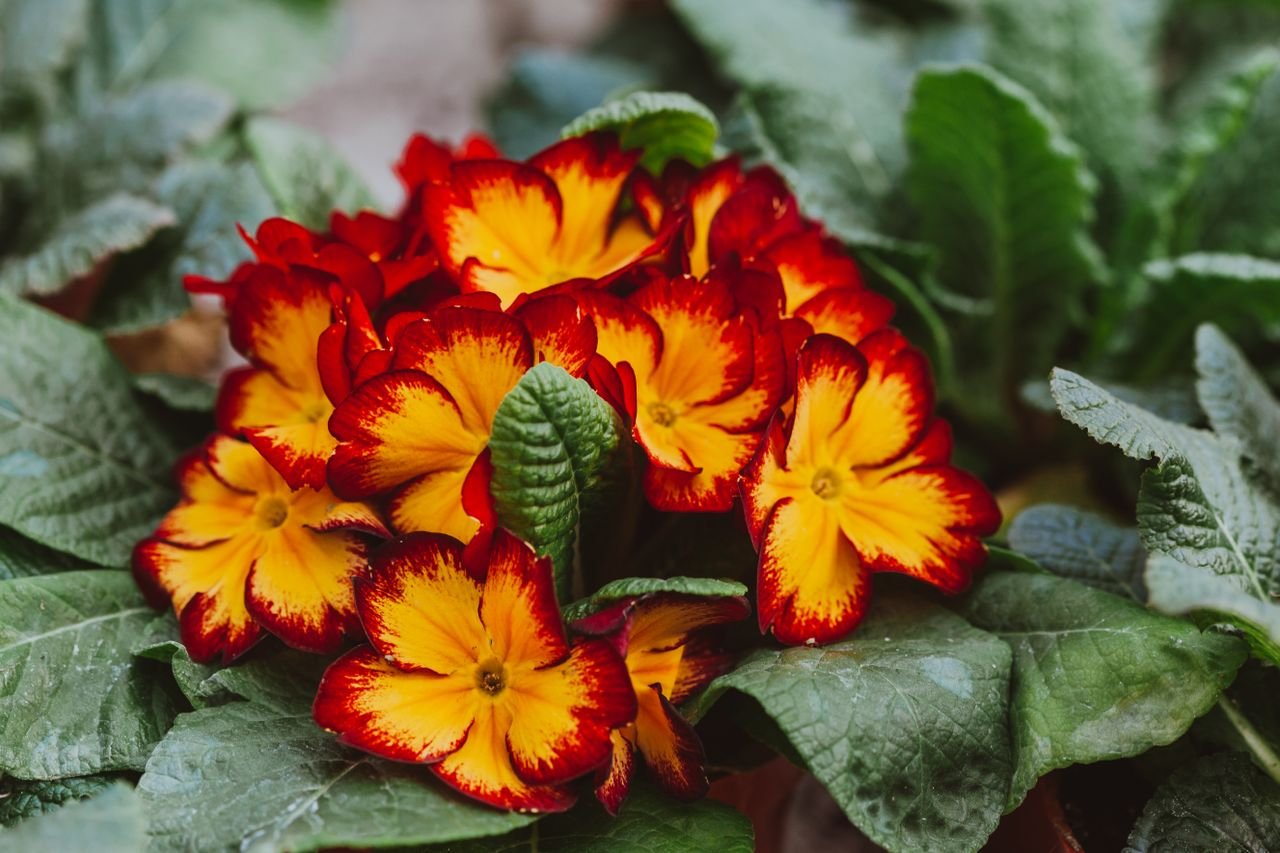
- Primula × polyantha (Polyanthus group) — hybrids between P. vulgaris and P. veris, bred for bigger flowers in a wider color range. These are what you’ll see stacked in trays at garden centers every February and March.
- Primula japonica — the candelabra primrose. Tall (12–18 inches), bog-loving, with flowers arranged in tiered whorls up a central stalk. Needs consistently wet soil.
- Primula denticulata — the drumstick primrose, named for its perfectly round flower cluster on a bare stem.
- Primula obconica — the fairy or German primrose, usually sold as a houseplant. More on why this one needs a specific warning later in this guide.
- Primula auricula — “show auriculas,” collected obsessively by specialist growers in the UK for their almost unnaturally geometric, powder-dusted flowers. Not a beginner plant.
Where the “Monte Carlo” Name Really Comes From
Quickly, because I promised I wouldn’t dwell on this: “Monte Carlo Primrose” is a Radici Group carpet color/style, distributed through independent flooring retailers across the US. It shows up in flooring inventory listings alongside other floral-sounding names like “Abetone Primrose,” which is also carpet, not a plant. I couldn’t find any plant patent, RHS registration, or nursery catalog entry for a Primula cultivar called “Monte Carlo.” If one exists under a name I haven’t found, I’d genuinely want to hear about it — but nothing in the botanical record supports it right now.
There is a real plant that goes by “Monte Carlo” in the hobbyist world: Micranthemum tweediei ‘Monte Carlo’, a low carpeting plant used in freshwater aquariums and paludariums, unrelated to Primula in any way. If that’s actually what you were looking for, it’s worth its own guide — but it won’t grow in a garden bed, and it isn’t a primrose.
Choosing Your Primrose: A Species Comparison
Here’s an honest side-by-side of the primroses you’re actually likely to find for sale, based on RHS plant records and extension horticulture data:
| Species | Height | Light | Bloom Time | Soil Moisture | USDA Zone | Best Use |
|---|---|---|---|---|---|---|
| P. vulgaris (English primrose) | 4–8 in | Partial shade | Early-mid spring | Consistently moist | 4–8 | Woodland edges, borders |
| P. veris (cowslip) | 6–10 in | Partial shade to sun | Mid spring | Moist, well-drained | 3–8 | Naturalized meadows, wildflower beds |
| P. × polyantha (Polyanthus) | 6–10 in | Partial shade | Early spring | Moist | 4–8 | Containers, spring bedding |
| P. japonica (candelabra) | 12–18 in | Partial shade | Late spring–summer | Boggy, wet | 4–8 | Pond edges, rain gardens |
| P. denticulata (drumstick) | 8–12 in | Sun to partial shade | Early-mid spring | Moist, well-drained | 2–8 | Border fronts, rock gardens |
| P. obconica (fairy primrose) | 8–12 in | Bright indirect light | Nearly year-round indoors | Evenly moist | Houseplant only | Containers, indoor color |
| P. auricula (show auricula) | 4–6 in | Full sun to light shade | Spring | Gritty, sharp drainage | 3–8 | Specialist pots, alpine troughs |
The RHS growing guide for primroses and polyanthus notes that most garden types tolerate a fairly wide range of soils as long as they’re not extremely wet or extremely dry, and prefer neutral to slightly acidic conditions rather than heavy lime. If you’re gardening on chalky, alkaline soil, expect the woodland types especially to sulk.
My honest take: if you’re new to primroses, start with Polyanthus hybrids or straight P. vulgaris. They’re the most forgiving, the most widely available, and the least likely to punish a slightly wrong watering schedule. Save P. japonica for once you have a genuinely damp spot, and don’t bother with auriculas until you’ve kept at least one primula alive through a full year — they’re a rewarding obsession, but not a starter plant.
When and How to Plant Primroses
Primroses are typically planted in early spring or early fall, when temperatures are cool and the plant isn’t stressed by heat. BBC Gardeners’ World recommends spring planting specifically so plants establish roots before summer heat arrives, which matches my own experience — primroses planted in the heat of June tend to sulk for weeks even with perfect watering.
Here’s the planting process I actually use:
- Prep the site first. Work compost or well-rotted leaf mold into the top 6–8 inches of soil. Primroses are shallow-rooted, so you don’t need to double-dig, but you do need organic matter that holds moisture without waterlogging.
- Check the crown depth. The point where leaves meet roots — the crown — should sit right at soil level, not buried. Planting too deep is one of the most common ways to rot a primrose before it ever blooms.
- Space for airflow. Give plants 6–10 inches between crowns depending on the species. Primroses planted too tightly are far more prone to gray mold (botrytis) because leaves stay damp longer.
- Water in immediately, then keep soil consistently moist (not soggy) for the first two to three weeks while roots establish.
- Mulch lightly with shredded leaves or fine bark, keeping mulch an inch away from the crown itself to avoid trapping moisture against the stem base.
If you’re planting nursery-grown Polyanthus in fall for spring color — a very common approach in the US Pacific Northwest and UK — treat them as a cool-season bedding plant and expect some winter dieback in colder zones, with fresh growth returning in late winter.
Light, Soil, and Water: What They Actually Need
Most primroses are woodland-edge plants by nature, which is the single most useful thing to remember about their care. They evolved growing under deciduous trees — getting strong light in early spring before leaf canopy fills in, then dappled shade through summer. That’s exactly the light pattern most gardens can replicate under a deciduous tree or on the east side of a building.
Light: Partial shade is right for nearly every garden primrose. Morning sun with afternoon shade is close to ideal. Full, unbroken afternoon sun in hot climates will scorch leaves and shorten bloom time dramatically, even in species like P. denticulata that tolerate more sun in cooler regions.
Soil: Rich, humus-heavy, and well-drained — but “well-drained” doesn’t mean dry. Garden Design’s growing guide describes primroses as needing fertile soil amended with compost, plus a mulch layer to keep the root zone insulated and consistently damp. That combination — moisture-retentive but not waterlogged — is genuinely the hardest part of primrose care to get right, because it’s a narrower window than most perennials need.
Water: This is where primroses actually kill themselves in most gardens, in both directions. Underwatered plants wilt fast and look dramatically sad within a day. Overwatered plants develop crown and root rot, which looks similar from a distance (wilting, yellowing) but is far harder to reverse. As a rule of thumb, aim for about an inch of water per week during active growth, adjusted up during hot spells and down during cool, rainy stretches.
Feeding Primroses: A Real Fertilizer Comparison
Primroses aren’t heavy feeders, but they do bloom harder and longer with the right nutrition — the trick is not overdoing it, since lush, over-fertilized growth is exactly what attracts aphids and makes plants more vulnerable to rot. I tested my own beds against three fertilizer approaches over a couple of seasons, and the results track pretty closely with what garden centers generally recommend for perennials.
| Product | Type | N-P-K | Release Speed | Best For | Approx. Cost |
|---|---|---|---|---|---|
| Espoma Flower-Tone | Organic granular | 3-4-5 | Slow, monthly reapplication | Season-long baseline feeding | ~$15–20 for 4 lb |
| Osmocote 14-14-14 | Synthetic slow-release granular | 14-14-14 | Slow, 3–4 months | Set-and-forget containers | ~$15–25 depending on size |
| Miracle-Gro Water Soluble | Synthetic liquid | Varies by formula | Fast, biweekly | Quick bloom boost | ~$15–24 |
| Fish emulsion / Jack’s Classic | Organic or low-P liquid | Low phosphorus blend | Fast, biweekly | Foliage-safe supplemental feeding | ~$15–20 |
My honest verdict: Espoma Flower-Tone worked into the soil at planting time, followed by an occasional half-strength dose of a liquid feed like Miracle-Gro during peak bloom, gave the most consistent results without pushing plants into soft, pest-attracting growth. Osmocote is fine for containers where you genuinely don’t want to think about feeding again for months, but in small pots it can release unevenly in hot weather and occasionally scorch tender primula roots if applied too heavily. Straight synthetic liquid feed on its own, without any slow-release base, produced the showiest short-term blooms but the least resilient plants going into summer dormancy. If you only buy one product, Flower-Tone or an equivalent low-nitrogen organic granular is the one I’d actually recommend.
Do You Actually Need a Soil Moisture Meter?
Since overwatering and underwatering are both major primrose killers, a lot of guides push soil moisture meters hard. I’ve used a few, and the honest answer is: it depends on your soil.
| Tool | Type | Reading Style | Strengths | Weaknesses |
|---|---|---|---|---|
| Finger test | None (free) | Manual, “wet or dry” | Instant, free, works anywhere | Only checks top 1–2 inches; unreliable in clay |
| XLUX Soil Moisture Meter | Analog probe | 10-point dial, no battery | Instant readings, no calibration needed, reliable in independent testing | Doesn’t measure pH or light; probe can bend in compacted soil |
| Sonkir 3-in-1 | Analog probe | Moisture + light + pH dial | Useful if you’re also tracking soil pH for acid-loving companion plants | Multi-function dial trades off some moisture accuracy |
My honest verdict: For primroses in garden beds, the finger test genuinely does most of the job — push a finger a knuckle deep near the crown; if it’s dry, water. Primroses also give visible cues fast (drooping leaves within hours of drying out), which makes precision instruments less critical than they’d be for, say, succulents. Where a meter actually earns its keep is in containers, especially plastic pots where the surface can look dry while the root ball underneath is still soggy — that’s the exact mismatch that kills potted primroses. If you’re growing several primroses in pots, a basic analog meter like the XLUX is a genuinely useful $10–15 tool. I wouldn’t bother with a combo pH/light/moisture meter unless you’re also managing acid-loving plants nearby, since the extra functions add cost without meaningfully improving watering decisions for primroses specifically.
Propagating Primroses: Division vs. Seed
Division is the faster, more reliable method, and it’s how most established garden primroses are multiplied. Right after flowering finishes in late spring, or in early fall, lift the whole clump and gently pull or cut it into sections, making sure each piece keeps some roots and at least one growing point. Replant immediately at the same depth as before and water in well. Garden Design’s care guide notes this as the standard, easiest propagation route for home gardeners, and in my experience division-grown plants bloom again the following spring with almost no setback.
Seed starting is slower and less predictable, particularly with hybrid Polyanthus, which won’t necessarily come true from seed (you may get a mix of colors different from the parent plant). Primula seed also often needs a cold stratification period — several weeks of cold, moist conditions — before it will germinate reliably, mimicking a natural winter. If you want to experiment with seed, sow in fall, keep the seed tray outdoors or in an unheated cold frame over winter, and expect germination in late winter to early spring.
Pests and Diseases: The Vine Weevil Problem
If there’s one pest that deserves its own section in any honest primrose guide, it’s the black vine weevil. According to the RHS, adult vine weevils feed on primula foliage at night, leaving distinctive notched, semicircular bites along leaf edges — annoying but rarely fatal on its own. The real damage comes from the larvae: creamy white, C-shaped grubs that live in the soil and eat plant roots from below, often going completely unnoticed until a plant that looked healthy a week ago suddenly wilts and lifts easily out of the soil because its root system is gone.
Primroses are repeatedly named among the vine weevil’s favorite hosts, alongside heuchera, cyclamen, and fuchsia, according to both RHS and the Connecticut Agricultural Experiment Station’s plant pest handbook. Container-grown plants are especially vulnerable since larvae have a smaller root mass to work through before the damage becomes critical.
What actually works, in order of effort:
- Nighttime inspection. Adults are flightless and nocturnal — check plants with a flashlight after dark and hand-pick any weevils you find.
- Beneficial nematodes. Applied as a soil drench in late summer when larvae are small, these microscopic parasites are the most commonly recommended biological control and avoid broad-spectrum pesticides entirely.
- Repot and inspect. If a primrose in a container collapses suddenly with no obvious watering issue, tip it out and check the root ball for grubs before assuming disease.
Beyond vine weevil, watch for aphids clustering on new flower stems (rinse off with water or use insecticidal soap), and gray mold/botrytis, a fuzzy fungal growth that shows up on damaged or overcrowded foliage in cool, damp conditions — prevented mainly by good spacing and removing spent flowers and dead leaves promptly.
Growing Primroses Indoors and in Containers
Potted primroses, especially Polyanthus hybrids and P. obconica, are commonly sold as short-term flowering houseplants around late winter. It’s worth setting expectations honestly here: primroses are not natural long-term houseplants. They need a genuine cool period and, in most cases, some form of winter dormancy to rebloom well, which is difficult to replicate in a heated home. Garden Design’s care notes recommend nighttime temperatures around 50–60°F and daytime temperatures under 80°F for indoor primroses — conditions most living rooms don’t offer.
My honest take: treat an indoor primrose as a several-weeks-to-a-couple-months seasonal flower, enjoy the bloom, and either move it outside into a shaded spot once frost danger passes (where it may settle in as a genuine garden perennial) or accept that it’s a one-season purchase. Trying to force a repeat indoor bloom is usually more frustrating than it’s worth for a casual houseplant grower.
For outdoor containers, use a peat-free, moisture-retentive potting mix, and make sure pots have real drainage holes — primroses in containers without adequate drainage are far more prone to the root rot that “wet feet” causes in garden beds, just faster, because there’s less soil volume to buffer mistakes.
A Note on Pets and Skin Sensitivity
Two safety points worth knowing before you plant primroses somewhere pets or sensitive skin might come into contact with them.
Pets: According to the ASPCA’s toxic plant database, common primrose (Primula vulgaris) is listed as toxic to dogs, cats, and horses, with the main clinical sign being mild vomiting if ingested. The exact toxic compound isn’t well characterized, but the effect is generally described as mild gastrointestinal upset rather than anything severe. If you have a pet that likes to graze on garden plants, it’s worth keeping primroses out of easy reach or supervising accordingly.
Skin sensitivity: This is a genuinely underreported detail most primrose guides skip entirely. Primula obconica specifically — not the hardy garden types — contains a compound called primin, a documented contact allergen that can cause skin rashes or dermatitis in sensitive people, especially with repeated handling. Research published in Contact Dermatitis found that primin-free cultivars became available starting around 2000, and that reported reactions have declined since, though primin sensitivity remains common enough that it’s still included in standard dermatology allergy patch tests. If you’ve ever had an unexplained rash after handling a fairy primrose houseplant, this is very likely why. Hardy garden Primula species (like P. vulgaris or Polyanthus) are far less commonly implicated, though not entirely risk-free for people with existing plant sensitivities.
Seasonal Care Calendar
- Early spring: Main planting window. Divide overcrowded clumps right after flowering. Apply slow-release organic fertilizer.
- Late spring–early summer: Deadhead spent blooms to tidy plants and reduce botrytis risk. Watch for aphids on new growth.
- Summer: Maintain consistent moisture, especially during heat waves. Woodland types may go semi-dormant in intense heat — this is normal, not a sign of failure.
- Early fall: Second planting/division window. Mulch lightly to protect crowns going into winter. Start any seed sowing that needs cold stratification.
- Winter: Most hardy primroses need minimal intervention beyond mulch in colder zones. Indoor/houseplant primroses need cool nights and bright indirect light to keep blooming.
Mistakes I See Again and Again
A few patterns show up constantly with new primrose growers, myself included in my first year:
- Planting too deep. Burying the crown even slightly below soil level is one of the fastest ways to trigger crown rot.
- Full-sun placement in hot climates. Primroses read as cheerful, sun-loving spring flowers because that’s how they’re marketed in trays, but most genuinely prefer partial shade once summer heat arrives.
- Treating them like drought-tolerant perennials. They’re not. Skipping watering during a dry week is a common way to lose an otherwise healthy plant.
- Ignoring root health after sudden collapse. A wilted primrose with no obvious watering issue is worth tipping out of its pot to check for vine weevil grubs before assuming disease or nutrient deficiency.
- Over-fertilizing for bigger blooms. Pushing nitrogen-heavy synthetic feed produces soft, lush growth that’s more attractive to aphids and more prone to rot — not a great trade for slightly bigger flowers.
Where Primrose Breeding Is Headed
A few trends are worth watching if you’re a serious primrose grower, or just curious where the hobby is going.
Tissue culture propagation has made previously rare, antique double-flowered Primula cultivars — plants that were once passed hand-to-hand between collectors — commercially available again after years of being nearly extinct in cultivation. This mirrors what’s happened in orchids and other collector plants, where lab propagation solves the bottleneck of slow, division-only multiplication.
Compact, disease-resistant breeding programs, particularly out of Northern Ireland’s long-running primula breeding tradition, continue to push toward primroses with better foliage disease resistance and more vigorous growth, aimed at both the ornamental landscape trade and home gardeners who want lower-maintenance plants.
Peat-free growing media is becoming the default recommendation from UK horticultural authorities, including the RHS, for primula container growing — a shift driven by peatland conservation concerns rather than primrose performance specifically, but one that changes how home growers should think about potting mix going forward.
My honest expectation: over the next few years, expect to see more compact, heat-tolerant Polyanthus hybrids marketed specifically at gardeners in warmer zones where classic English primroses currently struggle through summer — that’s the biggest unmet demand I see reflected in how nurseries are positioning new releases.
FAQ
Are primroses annuals or perennials? Garden primroses like P. vulgaris and Polyanthus hybrids are true perennials in the right climate (generally zones 4–8), though they’re often sold and used as cool-season bedding plants and discarded after one bloom cycle, which leads many gardeners to assume incorrectly that they’re annuals.
Why is my primrose wilting even though the soil feels moist? This is a classic sign of either crown/root rot from overwatering or root damage from vine weevil larvae. Tip the plant out of its pot or gently dig around the base to check root health before assuming it just needs more water.
Can primroses handle full sun? Some, like P. denticulata, tolerate more sun in cooler climates, but as a general rule, afternoon shade is important almost everywhere, and essential in hot summer regions.
Are primroses deer-resistant? Primroses are generally considered a lower-preference plant for deer compared to many garden favorites, though “deer-resistant” is never absolute — a hungry enough deer will eat almost anything.
Is it safe to touch Primula obconica? Most people handle it without issue, but it’s a documented contact allergen due to a compound called primin. If you notice a rash after handling one, switch to primin-free cultivars where available, or wear gloves.
How long do primroses actually bloom? Garden types typically bloom for 4–8 weeks in spring, with deadheading extending the display somewhat. Some species, like P. japonica, bloom later into early summer instead of early spring.
Do primroses come back every year? Hardy species and Polyanthus hybrids planted in the ground within their hardiness range will return annually, especially if divided every 2–3 years to keep clumps vigorous. Potted “gift” primroses sold in winter are less reliable about returning unless moved outdoors after the frost risk passes.
Final Thoughts
I’ll be honest: I didn’t expect this article to start with a correction, but I think it ended up being a more useful piece because of it. The internet has a way of generating confident-sounding content around search terms that don’t actually correspond to anything real, and “Monte Carlo Primrose” is a small, harmless example of that pattern. The plants themselves, though, are worth the attention — primroses reward exactly the kind of attentive, moderate care that a lot of flashier perennials don’t need, and there’s something genuinely satisfying about getting the balance right between moisture, light, and feeding until a clump comes back thicker and showier every spring. Start with a Polyanthus hybrid or a straight Primula vulgaris, get comfortable reading how your specific soil dries out, and expand into the trickier species — bog-loving candelabra types, fussy show auriculas — once you’ve got a season or two of real experience behind you.
About the Author
This guide was written by a horticultural writer and former nursery propagator with over a decade of hands-on experience growing hardy perennials, including several seasons spent dividing and trialing Primula species in a personal display garden. Research for this piece drew on RHS growing guides, university extension horticulture programs, peer-reviewed contact dermatitis literature, and independent product testing, with all factual claims verified against primary sources rather than repeated from other gardening blogs.