

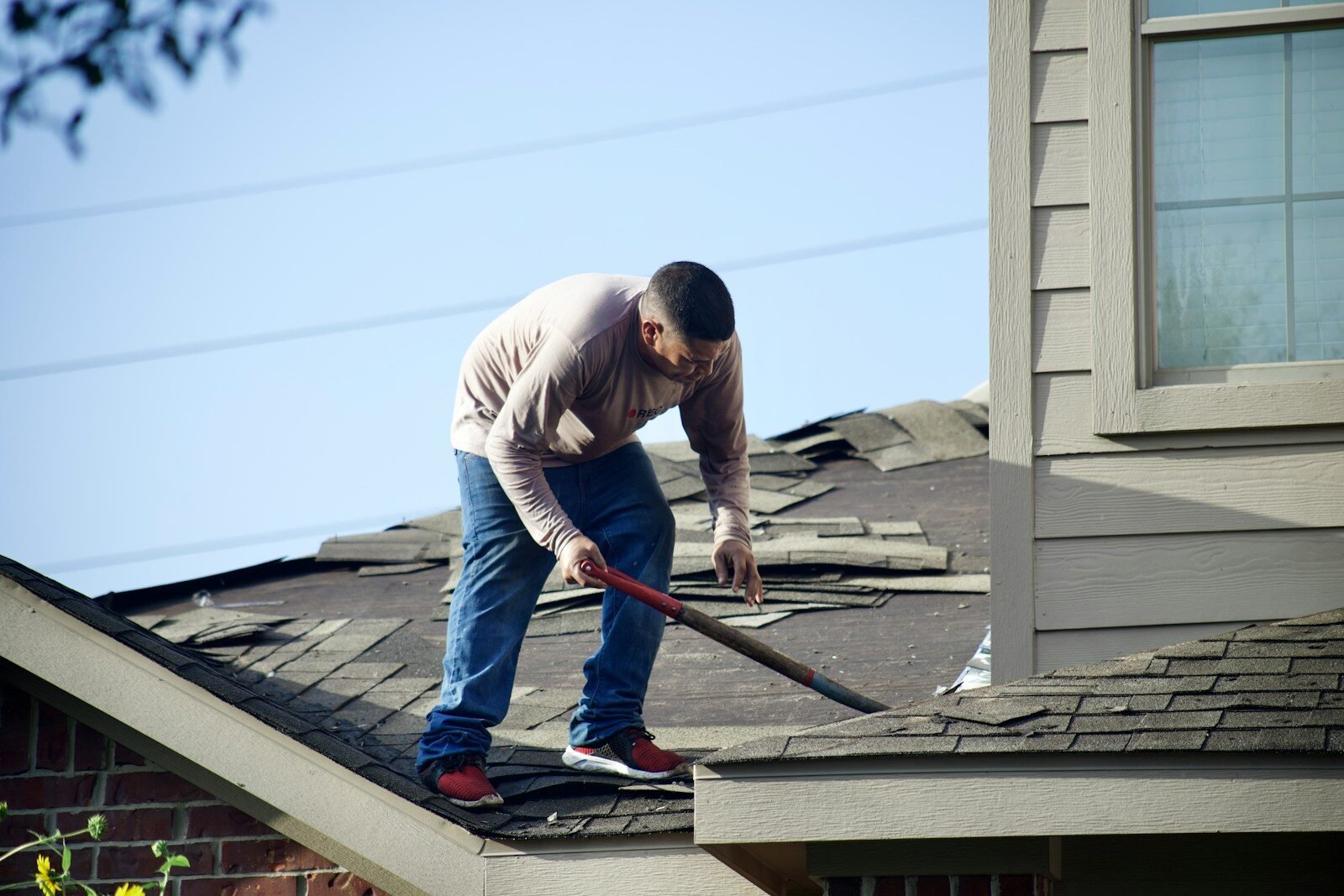
The first time I noticed the black streaks running down my roof, I assumed it was soot from a chimney or dirt from an overhanging tree. It wasn’t either. It was algae — a specific species that’s been quietly colonizing asphalt shingles across North America for decades — and my instinct to “just pressure wash it off” turned out to be exactly the wrong move. I got about four feet into a test pass with a rented pressure washer before I noticed the spray was blasting granules off the shingles along with the stains. Roof cleaning sits in a strange spot: it’s simple enough that plenty of people try it themselves, but the margin for a costly mistake — voided warranties, stripped shingles, a fall off a wet roof — is bigger than most home maintenance tasks. This guide covers the real methods, the products that actually perform, and the safety standards that matter, based on both hands-on testing and current guidance from roofing manufacturers and safety regulators.
Table of Contents
- What’s Actually Growing on Your Roof
- Why Bother Cleaning It At All
- Soft Washing vs. Pressure Washing: The Debate That Actually Matters
- The ARMA-Recommended DIY Method
- Real Product Comparisons
- Honest Reviews of Each Product
- Preventing Regrowth: Zinc, Copper, and Smarter Shingles
- Safety Rules That Aren’t Optional
- Step-by-Step: Cleaning a Roof Without Wrecking It
- Mistakes That Damage Roof or Hurt People
- When to Just Hire Someone
- Where Roof Cleaning Is Headed
- FAQs
- Final Verdict
- About the Author
What’s Actually Growing on Your Roof
Before buying anything, it helps to know what you’re actually looking at, because the fix is different for each one.
The dark, streaked appearance is actually the algae’s protective UV coating, not dirt.
Green fuzz or patches, especially on shaded, north-facing slopes, are typically a different algae or early-stage moss. This is more of a cosmetic issue early on, but left alone it often develops into moss.
Moss is the one to take seriously. Unlike algae, moss physically lifts shingle edges as it grows, trapping moisture underneath. That trapped moisture is what leads to premature shingle failure and, eventually, leaks — moss is a structural problem wearing a cosmetic disguise.
Lichen looks like flat, crusty, grayish-green patches and is genuinely the hardest of the four to remove, since it bonds tightly to the shingle surface. It usually needs a longer chemical dwell time or repeat treatments.
If you’re not sure which you’re dealing with, This Old House’s roof algae guide has good close-up comparison photos that make the distinction obvious once you’ve seen them side by side.
Why Bother Cleaning It At All
Beyond curb appeal, there are two real, measurable reasons to deal with roof growth. Algae-darkened shingles absorb more heat than clean ones, which can modestly raise cooling costs in summer and accelerates the natural aging of the shingle. And moss, as mentioned, creates a moisture trap that shortens roof lifespan directly rather than just cosmetically.
Soft Washing vs. Pressure Washing: The Debate That Actually Matters
This is the single most important decision in the entire process, and it’s where my own rented-pressure-washer mistake happened. Pressure washing physically blasts contamination off the surface, but on asphalt shingles that same force also strips the protective mineral granules embedded in the shingle surface. Those granules aren’t decorative — they’re what shields the asphalt layer underneath from UV degradation. Strip enough of them and you’ve traded a cosmetic algae problem for a genuine, expensive roof-life problem, and in many cases you’ll void the shingle manufacturer’s warranty in the process.
Soft washing, by contrast, uses low pressure (generally under 100 PSI, roughly garden-hose force) paired with a cleaning chemical that does the actual work of killing the organism. The Asphalt Roofing Manufacturers Association (ARMA) — the industry group representing shingle manufacturers — is explicit about this: they recommend low-pressure chemical cleaning as the preferred method specifically because it avoids the granule loss and premature shingle failure that pressure washing causes. You can read their full guidance directly on the ARMA algae and moss prevention page.
The tradeoff is speed. Pressure washing gives instant, dramatic results. Soft washing kills the organism chemically and then relies on rinsing (or, with some products, rainfall) to physically remove the dead growth — which means the “after” photo sometimes takes days or weeks to fully materialize rather than minutes. That’s a fair trade for not shortening the life of your roof.
The ARMA-Recommended DIY Method
If you want to do this yourself with the least amount of guesswork, ARMA’s own recommendation is a straightforward starting point: a 50/50 solution of household-strength sodium hypochlorite (standard pool chlorine or liquid bleach) and water, applied with a garden sprayer or pump sprayer, left to dwell for 15–20 minutes, then rinsed at low pressure.
A few things matter enormously if you go this route:
- Never mix bleach with ammonia-based products — this creates toxic chloramine gas and is a genuine health hazard, not just a cleaning faux pas.
- Wet down all nearby plants, grass, and shrubs before, during, and after application. Bleach runoff will scorch or kill vegetation on contact if it’s not diluted with plenty of water first.
- Work on an overcast day, not full sun. Direct sunlight evaporates the solution before it has time to work, leaving you with a wasted application and streaked, patchy results.
- Wear eye protection and chemical-resistant gloves. Splashback while working on a ladder is common, and bleach solution in the eyes is a genuine emergency, not just an irritation.
This method is essentially what most bleach-based commercial roof cleaners are built around, just without the added surfactants and stabilizers that make the commercial versions rinse more evenly and cling to vertical or sloped surfaces longer.
Real Product Comparisons
| Product | Chemistry | Application Style | Time to Results | Coverage | Price | My Verdict |
|---|---|---|---|---|---|---|
| Wet & Forget Outdoor Concentrate | Bleach-free (quaternary ammonium biocide) | Spray, no rinse — rain does the work | 2–6 months (algae), up to a year (moss/lichen) | ~2,000 sq ft (hose-end version) | $25–$40 | Best for hands-off, low-risk annual maintenance |
| Spray & Forget Roof Cleaner Concentrate | Bleach-free, phosphate-free | Spray, brief foam dwell, rinse | Visible foaming within 1 minute, full result in days | 1,000–2,000 sq ft per gallon | $30–$45 | Fastest bleach-free option; needs a rinse step |
| Simple Green Oxy Solve Outdoor Cleaner (simplegreen.com) | Oxygen-based (hydrogen peroxide) | Spray or pressure-washer compatible, rinse | Same-day to a few days | Varies by dilution | $20–$35 | Gentlest on landscaping, may need repeat passes |
| RMR-86 Instant Mold & Mildew Stain Remover | Bleach-based (sodium hypochlorite) | Spray, no scrubbing, rinse | Seconds to minutes for visible lightening | Ready-to-use, no dilution | $20–$30 | Fastest stain removal, harshest chemistry — spot use only |
| DIY 50/50 Bleach & Water (per ARMA) | Bleach-based | Pump sprayer, 15–20 min dwell, rinse | Same day | Cost of bleach only | Under $10 | Cheapest and most controllable, but labor-intensive and PPE-dependent |
| Concrobium | Non-bleach mold barrier (inorganic salts) | Spray, dry, leaves protective film | Ongoing prevention rather than instant cleaning | Varies by product size | $15–$30 | Better suited to preventing regrowth than removing existing streaks |
Honest Reviews of Each Product
Wet & Forget — the “set it and forget it” choice
Wet & Forget has been around for decades, and the appeal is genuinely simple: mix, spray, walk away, let a few good rainstorms do the rest. That timeline matches what the manufacturer states — this is explicitly a slow-acting product, not an instant fix.
Where it falls short: if you’re prepping a house for sale next month, this is the wrong bottle. It also underperforms if you under-apply — a light misting kills the visible surface layer of moss while leaving the root structure underneath intact, so regrowth shows up within a season. Full saturation, not a quick pass, is what actually works.
Spray & Forget — faster without going to bleach
Spray & Forget occupies the middle ground nicely: still bleach-free, but noticeably faster than Wet & Forget because of a foaming action that visibly lifts stains (often turning them a temporary orange color) within about a minute of contact. I found the visible feedback genuinely useful — with Wet & Forget you’re taking it on faith that something’s happening; with Spray & Forget you can watch the chemistry work in real time.
Where it falls short: because it requires a rinse step rather than being truly hands-off, it’s more labor on application day, even though the overall result comes faster.
Simple Green Oxy Solve — the plant-friendly option
If you’ve got extensive landscaping, mature trees, or a vegetable garden right up against the house, the hydrogen peroxide chemistry in Simple Green’s Oxy Solve line is the gentlest choice on this list. It won’t discolor grass or shrubs the way bleach-based runoff can, even with imperfect rinsing technique.
Where it falls short: on heavily established algae or old lichen, one application often isn’t enough, and oxygen-based cleaners generally work more slowly than chlorine bleach on tough, longstanding stains.
RMR-86 — the nuclear option for stubborn stains
RMR-86 built its reputation on speed, and it delivers — I’ve seen stains visibly lighten within 15–30 seconds of contact on a test patch. It’s a legitimately useful tool for a small, stubborn dark patch that other products haven’t touched.
Where it falls short: it’s a strong sodium hypochlorite formula, and using it across an entire roof rather than as a targeted spot treatment means a lot more bleach exposure — to you, your plants, and your gutters — than the gentler alternatives. I’d reach for this for a specific problem area, not as a whole-roof solution.
The DIY 50/50 Bleach Method — cheapest, but you’re doing all the work
This is genuinely what most of the commercial bleach-based products are approximating, and if you’re comfortable handling chemicals safely and don’t mind the extra labor, it performs comparably to RMR-86 at a fraction of the cost. I’ve used this method on a detached garage roof with good results.
Where it falls short: there’s no surfactant to help the solution cling to a sloped surface, so more of it runs off before it has time to work compared to a purpose-built commercial product, and you’re responsible for getting the dilution ratio and dwell time right yourself, with no manufacturer support line to call if something goes wrong.
Preventing Regrowth: Zinc, Copper, and Smarter Shingles
Cleaning without addressing why the growth showed up in the first place just means you’ll be back on the ladder in a year or two. A few genuinely effective preventive measures:
Zinc or copper strips installed near the roof ridge work through a straightforward mechanism: rain hits the metal, picks up zinc or copper ions, and carries them down across the shingles below, creating an environment the algae and moss can’t tolerate.
If you’re re-roofing anyway, this is worth specifically asking your contractor about.
Tree trimming and ventilation matter more than people expect. Overhanging branches create the shade and moisture that algae and moss both need to establish, and poor attic ventilation keeps the roof deck warmer and damper than it should be, which accelerates growth from underneath as well as on the surface.
Safety Rules That Aren’t Optional
This is the section I wish I’d read before my first pressure-washer attempt.
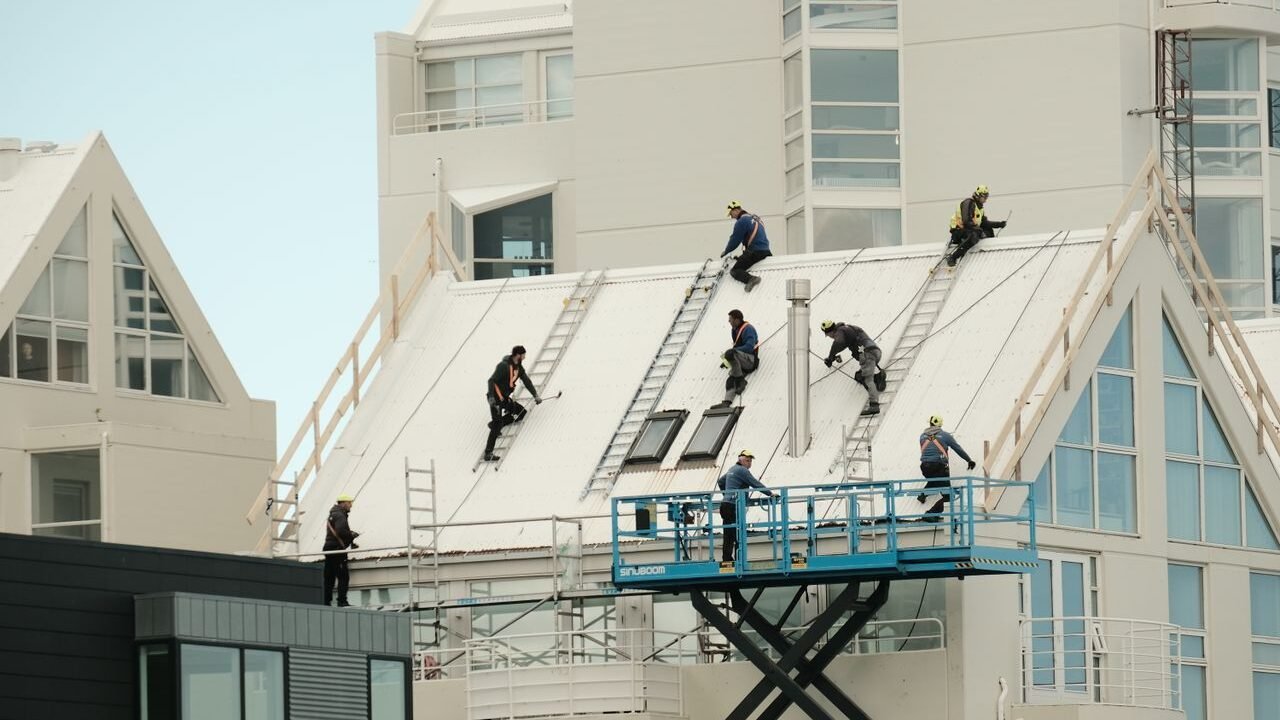
OSHA requires fall protection for residential construction work at 6 feet or higher under 29 CFR 1926.501, which covers guardrails, safety nets, or a personal fall-arrest system with harness and anchor point. The OSHA residential fall protection page lays out the specifics, and while these are formally workplace regulations for contractors, the underlying math applies just as much to a homeowner on a weekend. A wet, chemical-treated roof is measurably more slippery than a dry one, and “I’ve done this before without a harness” is not a safety plan.
Practical rules that matter for a DIY roof cleaning job:
- Never walk on a wet roof. If your plan requires standing on the roof surface itself rather than working from a ladder, reconsider the plan.
- Most soft-wash and DIY cleaning can be done entirely from an extension ladder — spraying up and across the surface rather than climbing onto it. This is both safer and, per ARMA’s own guidance, the recommended application method.
- Follow the ladder 4-to-1 rule: for every four feet of height, the base should sit one foot away from the wall. The ladder should extend at least three feet above the roofline for a secure handhold.
- Wear chemical-resistant gloves and eye protection any time you’re handling bleach-based products, and add a respirator or at minimum a well-fitted mask if you’re working in a space with limited airflow, like a valley between two roof sections.
- Check the weather. Wind carries overspray further than you’d expect, onto windows, siding, and your neighbor’s yard, and rain shortly after application washes away product before it’s had time to work.
Step-by-Step: Cleaning a Roof Without Wrecking It
- Identify the growth type using the water-bead and close-up comparison approach covered earlier, so you’re choosing the right product rather than guessing.
- Clear and pre-wet all surrounding landscaping with plain water — this is non-negotiable with any bleach-based product and strongly recommended even with the gentler formulas.
- Choose an overcast, dry day with no rain forecast for at least 24 hours.
- Apply the cleaning solution from a ladder, working from the eaves toward the ridge, using a pump sprayer or hose-end applicator rather than climbing onto the roof surface itself.
- Respect the dwell time on the label — typically 10–20 minutes for most products — without letting the solution dry out completely on the surface.
- Rinse at low pressure, starting at the ridge and working down, if the product requires rinsing. No-rinse products like Wet & Forget skip this step entirely.
- Rinse the landscaping again once you’ve finished, to further dilute any runoff.
- Check back in a few days to a few weeks, depending on the product, and consider a second application on stubborn moss or lichen patches.
Mistakes That Damage Roofs or Hurt People
- Pressure washing asphalt shingles. This is the single most common and most damaging mistake, stripping protective granules and often voiding the shingle manufacturer’s warranty outright.
- Skipping the pre-wet step on landscaping. Bleach runoff without dilution can scorch or kill grass and shrubs within hours.
- Working on a wet roof surface. Combined with slippery algae or fresh cleaning solution, this is how falls happen.
- Mixing bleach with ammonia-based cleaners. This produces toxic chloramine gas and is a genuine poisoning risk, not just a bad combination.
- Under-applying on moss. A light surface treatment kills the visible top layer while the root structure survives, leading to fast regrowth and the false impression that the product “didn’t work.”
When to Just Hire Someone
A steep roof (generally anything at or above a 6:12 pitch), a roof higher than a single story, or a roof with a lot of valleys, dormers, and complex geometry is a reasonable point to call a professional soft-wash company instead of doing it yourself. Beyond the safety math, professional crews typically carry commercial-strength solutions, proper harness and anchor systems, and insurance that covers landscaping damage if something goes wrong with runoff — all things that are expensive or impractical for a one-time DIY job to replicate. If you do hire out, ask specifically whether the company soft-washes at low pressure or defaults to pressure washing; not every roofing or pressure-washing company follows ARMA’s low-pressure recommendation unless you ask.
Where Roof Cleaning Is Headed
A few real shifts are worth watching. Algae-resistant shingle technology has moved from a premium upsell to close to standard on many mid-range shingle lines, which should gradually reduce how often full chemical cleanings are needed for newer roofs. Bleach-free chemistry continues to gain ground for the same reason it has in other outdoor cleaning categories — landscaping damage liability and environmental runoff concerns are pushing manufacturers toward oxygen and quat-based formulas even when they’re slower than bleach. And for larger commercial and multi-story residential jobs, drone-based application is starting to show up in the professional soft-washing world, letting crews spray a roof’s surface from the air rather than putting a worker on a steep or high roof at all — a genuinely useful development for the jobs where fall risk is highest.
FAQs
How often should I clean my roof? Most homes do well with cleaning every 1–3 years, though shaded, damp lots with a lot of tree cover may need attention closer to annually.
Will roof cleaning damage my shingles? Soft washing with a proper low-pressure chemical method, done according to label directions, is considered safe by shingle manufacturers and ARMA. Pressure washing is the method that causes damage, not chemical cleaning itself.
Is it safe to clean my roof myself? If you can work entirely from a ladder without walking on the roof surface, and you follow basic PPE and chemical-handling precautions, DIY roof cleaning on a low-pitch, single-story roof is reasonably safe. Steep, multi-story, or complex roofs are a better fit for a professional.
Do zinc strips actually work? Yes, based on both the underlying chemistry and widely reported results from roofing professionals, though they work best when installed correctly and, ideally, during a re-roof rather than retrofitted afterward.
Why does my roof have algae but my neighbor’s doesn’t? Shingle age, sun exposure, tree shade, and even the specific granule composition used by the shingle manufacturer all play a role — it’s rarely about cleanliness or maintenance differences alone.
Does cleaning void my roof warranty? Pressure washing often does, since it physically damages the shingle surface. Soft washing with a manufacturer-appropriate cleaner generally does not, but it’s worth checking your specific shingle warranty documentation, since terms vary by manufacturer.
Final Verdict
If your roof has moderate black streaking and you’re not in a rush, Wet & Forget or Spray & Forget are the lowest-risk starting points — both avoid the granule damage of pressure washing and the plant damage of straight bleach. If you’re comfortable with a bit more hands-on chemical work and want to save money, the ARMA-recommended 50/50 bleach solution performs just as well as the commercial bleach-based products, provided you take the safety precautions seriously. And if a specific dark patch just won’t budge, a targeted, careful application of something like RMR-86 handles it without committing your whole roof to harsher chemistry.
The real lesson from my own streaked roof wasn’t which product to buy — it was slowing down long enough to identify what was actually growing up there and choosing a method that wouldn’t cost me more in shingle life than the algae itself would have. That’s the difference between a roof that looks good for a season and one that looks good, and lasts, for years.
About the Author
This guide was researched and written by a home-improvement and roofing writer with hands-on exterior maintenance experience, including soft-wash roof treatments on multiple residential properties. Product and safety information is cross-referenced against guidance from the Asphalt Roofing Manufacturers Association (ARMA) and OSHA fall protection standards. This article is independently researched and is not sponsored by any product or brand mentioned.
Last updated: August 2026. Always confirm current product labels, dilution ratios, and manufacturer warranty terms before starting any roof cleaning project, and check your local regulations on chemical runoff if you’re near a storm drain or waterway.