The phrase covers three different products, and mixing them up is the most common way people end up disappointed.
A reclining sofa with a pull-out bed. The seats lean back, and a separate mattress frame folds out from under the cushions.
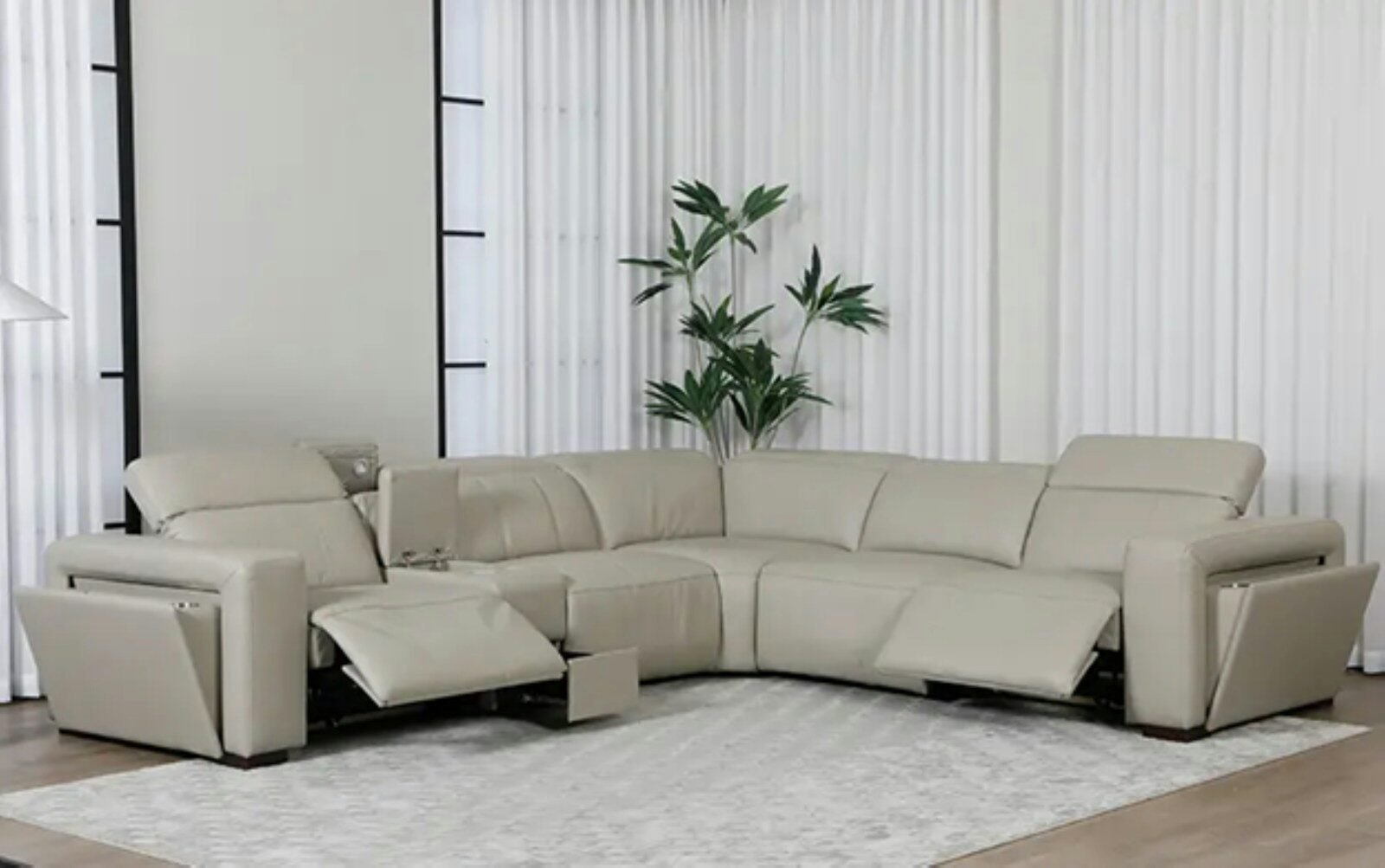
A power sofa bed. A motor extends the seat and back into a deep lounge or sleep surface. There’s usually no separate mattress.
A sleeper chair-recliner. A single-seat piece that opens into a narrow bed.
Retailer descriptions blur these together, so the first thing I do with any listing is work out which of the three it is.
The appeal is easy to see. A recliner sofa bed offers upright seating, reclined lounging, and a flat sleeping surface. By contrast, a regular sleeper sofa only toggles between sitting and sleeping. If you have a small home, a basement den, or a guest room that doubles as a TV room, one piece doing three jobs is attractive.
How the mechanisms work
Manual pull-out. The classic version hides a folded frame and mattress beneath the seat. You remove the cushions, pull the frame up and out, unfold the legs, and smooth the mattress. One retailer’s buying guide compares it, not unkindly, to setting up camping gear in the middle of your living room. That comparison is fair. The mechanism works, but it asks for effort and floor space.
Slide-out. The front seat section glides forward to create a wider lounge or sleep surface.
Power conversion. Newer models use a motor, so you press a button instead of wrestling a metal frame.
Reclining on top of all this. A recliner sofa bed typically uses an adjustable metal frame with multiple locking positions, giving you a manual or powered transition between sitting, reclined lounging, and flat sleeping.
One catch that surprised me when I first read the specs: on most recliner sofa beds the reclining seats and the pull-out bed operate independently. You generally can’t recline and use the bed function at the same time. If your plan is for one person to sleep while another watches TV reclined, check the specific model’s design before buying.
Manual vs. power: the real trade-offs
Power reclining is not simply “manual but fancier.”
Range of motion. A manual recliner uses a lever or push-back and locks into a few fixed angles. A power recliner can stop at any angle in between, which matters when you read, watch TV, and nap at different recline depths.
Extras. Power models often add USB ports, adjustable headrests, and power lumbar support that manual versions don’t offer.
Costs. According to one comparison, power recliners need a power source, cost more upfront, and carry some risk of motor or electrical malfunction over time.
Wear. One manufacturer points out that the mechanism flexes and folds the upholstery with every use, so fabric durability matters more here than on a fixed sofa.
My view: choose power if more than one person will use the piece or if anyone has limited hand strength or mobility. Choose manual if the sofa will sit against a wall far from an outlet, or if you want fewer parts that can fail. Both are reasonable. Neither is “better” in the abstract.
The sleep surface is where most of these fail
This is the part reviews tend to skim past, and it’s where overnight guests feel the difference.
In one buying guide, most sleeper-sofa beds use 4- or 5-inch foam, so pressure relief depends heavily on the specific model. That is thin compared to a normal mattress. In the same roundup, one budget sleeper drew criticism for a firm bed with noticeable seams, and another for a short 71-inch mattress. If you or your guests are tall, that last number matters. A 71-inch bed fits many adults only if they sleep curled up or diagonal.
Three things to check:
Bed length. Look for 72 inches or more, and ideally closer to 80.
Support bar. The metal bar under many pull-out mattresses is the classic source of “I could feel the frame” complaints. One premium model in that roundup was praised for having an 80-inch bed with no support bar.
Replaceability. If the mattress disappoints, an upgrade may be cheap. One roundup lists a 4.5-inch gel memory foam sofa-bed mattress for under $200, and its queen costs just over $150. That’s an easy fix, as long as the size fits your frame.
If a power model advertises a no-mattress design, where the seat extends into a wider surface with thick cushions, the same logic applies. Ask how thick the cushioning is and whether it’s rated for nightly use or occasional naps.
Side-by-side comparison
Type
How it converts
Recline?
Sleep surface
Rough price evidence
Best for
Manual reclining pull-out
Hand-pulled frame
Manual back recline
Thin fold-out mattress
One compact model lists a sale price of $249.99
Tight budgets, occasional guests
Power sofa bed
Motor extends seats
Stepless power recline (one retailer cites 105°–180°)
Extended cushion platform
One retailer lists its top model at $3,099
Daily lounging plus guests
Traditional sleeper (no recline)
Hand-pulled frame
None
4–5″ foam or hybrid
Wide range; some reviewed models cost far more than the manual picks above
Mostly sitting, occasional sleeping
Treat the price column as snapshots, not market averages. The $249.99 and $3,099 figures come from a retailer’s own review roundup, so they illustrate the spread rather than prove typical pricing.
Models and what I make of them
Reclining sleepers are a narrower category than ordinary sleepers, and the independent review coverage is thinner. Much of the detailed spec material I found comes from retailers. I’d read it as helpful but promotional.
Povison Mila Power Sofa Bed. The retailer’s own roundup calls it the best overall, with 105°–180° stepless power recline and a near-king extended platform. On paper that’s the most flexible option here. My caution: that ranking comes from the seller itself, so I’d want independent reviews or a long return window before paying about $3,100.
Povison Aurora. The same roundup frames it as a zero-clearance pick for rooms where rear space is limited. If your sofa has to sit against a wall, this “wall-hugger” design is worth checking in any brand.
Latitude Run reclining sleeper. A compact loveseat with manual back recline and a pull-out bed in a 51-inch frame. At that size, expect the bed to be small, and treat it as a guest-room or dorm solution rather than a daily bed.
Non-reclining benchmarks. For comparison, NBC Select named the Crate & Barrel Barrett II as its best overall sleeper, with a hybrid mattress, and a 4.5-star average from 675 reviews at the retailer. It doesn’t recline, but it shows what a well-reviewed sleep surface looks like. If a recliner model can’t match that comfort, you may be better off buying a dedicated sleeper and a separate recliner.
Honest verdict: for most households, the best deal is a recliner sofa with a good pull-out if guests are rare, or a power sofa bed if the piece is also your everyday couch. The compact manual models are fine for occasional use, but I wouldn’t promise a guest a good night on one.
[Screenshot suggestion: product page spec tables for two models side by side, with bed length and weight rating highlighted]
What it costs
Published prices across these categories are all over the map, and I’d rather say that plainly than pick a falsely precise average. Based on what I found:
Budget manual models can sit in the low hundreds of dollars.
Mid-range sleepers from known furniture brands often cost several times more.
Premium power models can reach roughly $3,000 or more.
Budget for extras, too. Delivery, assembly, a replacement mattress, a protective cover for the fabric, and an extended motor warranty can all change the real price. Ask about the motor warranty specifically, since the motor is the part most likely to cost money later.
A buying checklist
Decide the primary job. If it’s a daily couch, prioritize seat comfort and recline range. If it’s guest sleeping, prioritize bed length and support.
Measure the room twice. Include the fully reclined footprint and the fully opened bed footprint, plus doorways and hallways for delivery.
Check wall clearance. Ask whether it’s a wall-hugger or needs space behind it.
Find the weight ratings. One retailer says bed mode typically supports 500–600 lbs across the surface, while each reclining seat holds 250–300 lbs. Treat those as typical figures and confirm the specific model’s rating.
Check the outlet. Power models need one within cord reach, and a visible cord across the room is a real annoyance.
Read the return policy. Furniture returns can be expensive, so know who pays shipping.
Test the sleep surface if you can. Lie down for ten minutes, not ten seconds.
Ask about fabric. Durability matters more when the upholstery bends every time the seat moves.
Mistakes that lead to returns
Buying for looks, then discovering the bed is 71 inches long.
Assuming you can recline and sleep simultaneously. Most designs don’t allow it.
Ignoring noise. One retailer’s buying guide says power models should run below 45 decibels, which is a useful benchmark to ask about, even though it’s their own standard.
Skipping the measuring tape. Reclining sofas need more room than they look like they do in photos.
Expecting a thin foam mattress to feel like a bed. Most are 4 to 5 inches.
Where this category is heading
These are my opinions, not predictions I can prove.
More motorized options at lower prices. Power conversion used to be a premium feature. It’s showing up on more mid-priced models.
Better sleep surfaces. The weakest link is still the mattress, so I expect more hybrid and thicker-cushion designs.
Modular and wall-hugger frames for smaller rooms, since flexible furniture sells best where space is tight.
Honest labeling. I’d like to see standardized disclosure of bed length, mattress thickness, and weight rating. At the moment those details are scattered across listings.
FAQs
Can you recline and use the bed at the same time? On most recliner sofa beds, no. The reclining seats and the pull-out bed typically work independently.
Is a power or manual model better? Power gives you stepless angles and extras like USB ports, but costs more and adds a motor that could fail. Manual is simpler and cheaper.
Is a sleeper sofa recliner comfortable enough for every night? Usually not the budget ones. Most use thin 4–5 inch foam. For nightly use, look at thicker cushioning or a hybrid mattress.
Can I replace the mattress? Often, yes, if you match the size and thickness. Replacement sofa-bed mattresses can cost under $200 for some sizes.
How much weight can they hold? One retailer says bed mode commonly supports 500–600 lbs overall and each reclining seat 250–300 lbs. Always check the specific model.
How do I know which type I’m looking at? Read the spec sheet for how the bed deploys, whether it has a separate mattress, and whether recline and bed work independently.
Conclusion
A sleeper sofa recliner is a compromise piece, and that’s not a criticism. The best versions give you a comfortable seat, a real lounging position, and a guest bed that doesn’t embarrass you. The worst give you a mediocre sofa, a stiff recliner, and a thin mattress over a metal bar.
Decide first which job matters most, then shop for that job. Check bed length, mattress thickness, and weight ratings before style. And remember that much of what’s written about this category comes from the people selling it, so look for independent reviews and generous return windows. A good-looking spec sheet is a starting point, not proof.








1 Comment