Most exterior projects start the same way. Someone sees a nice front door online, then a paint color, then a light fixture, and buys each one separately. A year later the house looks like a collection of good ideas that never met.
A better approach is to treat the exterior as one composition with a few jobs to do: make the entrance obvious, keep the proportions calm, protect the building from water, and look considered at night as well as in daylight. One design guide puts the principle well. The strongest exterior is not the one with the most features, and the most effective ones are built on proportion, consistency, and function.
This guide walks through those decisions in the order I’d make them, with real cost and return figures where I could find them, and honest notes where the data conflicts.
Start with what you can’t change
Before choosing anything new, list the permanent elements: roof color, brick or stone, window shapes, roofline, and the house’s basic style. New choices should support those. A color guide from a roofing manufacturer notes that brick and stone have their own color casts (the underlying warm or cool tint in the material), so a palette has to work with them, not fight them. Another source advises considering the roof color and the natural surroundings when choosing new colors or materials.
In practice, this means:
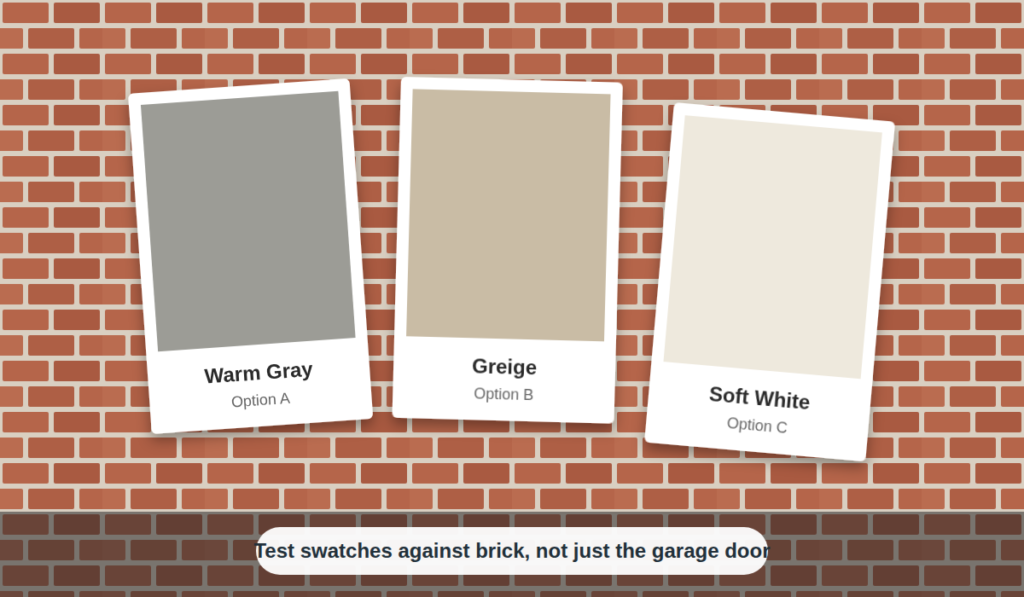
Hold a sample against the brick, not against the garage door. A “perfect” gray can look purple next to warm brick.
Look at the house in morning and evening light. Colors shift dramatically.
Match the era. A craftsman, a ranch, and a modern box want different detailing. Landscaping should also complement the home’s architectural style, as one curb-appeal guide emphasizes.
Color: fewer decisions, better results
The most reliable advice I’ve seen is also the simplest: limit the palette. One home-services guide recommends two to three complementary shades, such as white and black, white and gray, or beige and brown, for a timeless look. Another describes a “three features rule,” limiting the design to three paint colors or materials so the exterior stays cohesive.
A practical way to apply this:
Body color for the main walls.
Trim color, lighter or darker than the body, never random.
Accent color for the front door, and possibly shutters.
A fresh coat of paint is among the most effective curb-appeal moves available. The front door is the easiest place to take a risk, because repainting it is cheap and reversible. For neutral-bodied houses, a bold door color becomes the focal point.
On trends: one design writer notes that earth tones are popular right now, that light paint with black windows or dark trim is a common contrast approach, and that black exteriors are in demand on certain house styles. She also cites a Southern California appraiser who said black homes sold for more. I’d treat that last claim as one anecdote, not market data. Dark exteriors can also look wrong on some architectural styles, and the same writer warns against black on Spanish-style homes. If you want dark, test a sample on the sunniest wall and check your local climate and HOA rules.
The projects that pay back (and the numbers that disagree)
If resale matters to you, the standard reference is the Cost vs. Value Report. It’s widely quoted, but the quoted figures vary a lot, and that’s worth knowing before you plan around any single number.
Here is what secondary sources report for the 2025 edition of the report:
Project
Reported cost
Reported return
Garage door replacement
about $4,672
268% (one source); other sources list 190–194%
Steel entry door
$2,500–$5,000 range
216% (one source); 188% (another)
Manufactured stone veneer
about $10,000–$12,000
roughly 150% to 208%, depending on source
Fiber-cement siding
about $15,000–$25,000
about 114%
Vinyl siding
about $10,000–$18,000
about 97%
Why the spread? These sources appear to be quoting different report editions or regional cuts. One roundup lists garage doors at 194% and cites a $4,302 average cost, while another lists 268% at $4,672. I’d read the pattern, not the exact percentage: small, visible, front-facing projects return the most per dollar, and large replacements often return less than they cost. One analysis of the same data found that only 4 of 15 exterior projects recouped more than 100%, and that most homeowners expect only partial recovery on improvements. For the exact current figures, check the original Cost vs. Value Report itself before quoting any number publicly.
There’s also a math caveat. A garage door that costs about $4,300 and adds about $8,300 in perceived value produces a triple-digit return mainly because the cost is so low, not because garage doors are magical. A cheap project can show a huge percentage on a small base.
One rule of thumb from an exterior-upgrades roundup: spending 1% to 3% of a home’s value on strategic exterior improvements before listing tends to give the best overall return. That’s a heuristic, not a law, but it’s a useful guardrail.
Entry and garage door
If one feature does the most work for curb appeal, a design source argues it’s the front entry. A defined entry, with a clear path, a door that’s the visual focus, and light you can see from the street, tells visitors where to go.
The front door. Repainting can cost under $100, while a full replacement with modern hardware runs roughly $2,000 to $4,000 according to one source. If your door is sound, repaint first. If it’s drafty, damaged, or visually dated, replacement is justified.
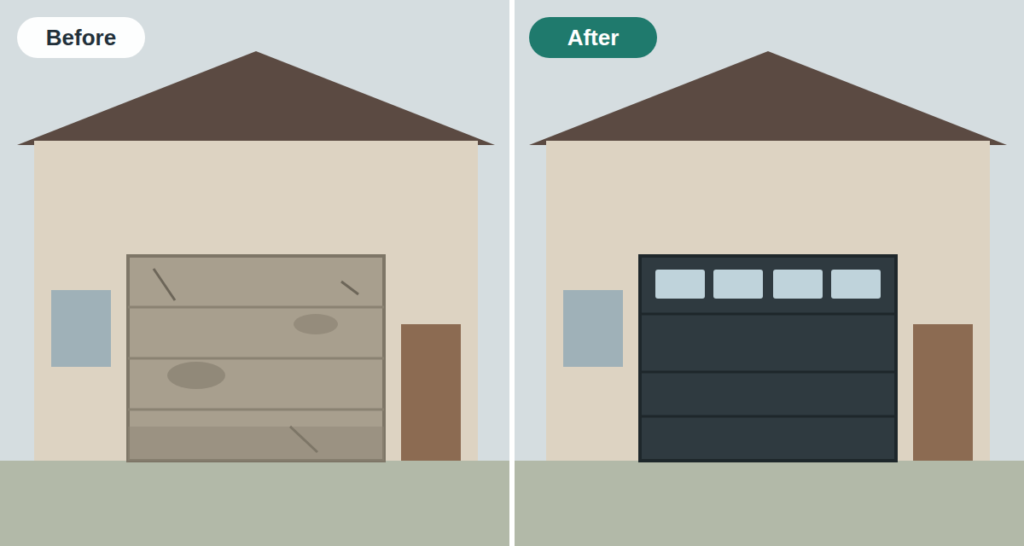
The garage door. On many homes, the garage door accounts for up to 30% of the front-facing facade. That’s why a dented, faded door drags down everything around it. Choose a style that suits the architecture, and pick a color that complements the house rather than competing with it. Replacing one costs real money, but few swaps change a facade as quickly.
Materials and siding compared
Material
Typical cost range reported
Honest take
Vinyl siding
$10,000–$18,000
Lower cost, decent return, but less texture and depth
Fiber-cement siding
$15,000–$25,000
Costs more, returns slightly more; durable and paintable
Stone veneer accent
about $10,000–$12,000
Best used as a limited accent; adds texture and weight
Brick or full stone
varies widely
Durable, but heavy cost and hard to change later
My advice: if your siding is sound, skip the replacement and invest in paint, trim, the entry, and lighting. Replace siding when it’s failing, not when it’s merely dated. One source emphasizes that new siding generally recovers only part of its cost, so it’s rarely the best choice for return alone. When you do change materials, use them with restraint. A design guide recommends adding texture through contrast without creating confusion, which means one or two materials doing clear jobs, not five competing ones.
Stone veneer works well as a base or accent. Replacing part of the siding with it, instead of the whole facade, keeps costs lower and looks deliberate.
Landscaping that supports the architecture
Landscaping should read as an extension of the house. Foundation planting can soften the base of the house, define walkways, and guide the eye to the entry. Here are the points I’d focus on:
Scale. Plants that will outgrow the windows in five years will cover your design in ten.
Symmetry and color coordination. A cohesive front yard comes from plants that complement the house and each other.
Simplicity. For modern homes, ornamental grasses, succulents, or boxwoods keep the look clean, and over-elaborate plantings should be avoided.
Upkeep. A well-kept lawn and defined beds communicate care more than any single feature. Match your plan to the maintenance you’ll actually do.
Walkways. A visible, comfortable path to the door matters as much as the planting beside it.
You’ll sometimes hear that “landscaping is king” for adding value. One exterior roundup cites landscaping returns of 100–267%, but ranges that wide suggest I’d treat them cautiously. Good planting clearly helps. Quote a precise return only if you can trace it to a source you trust.
Lighting
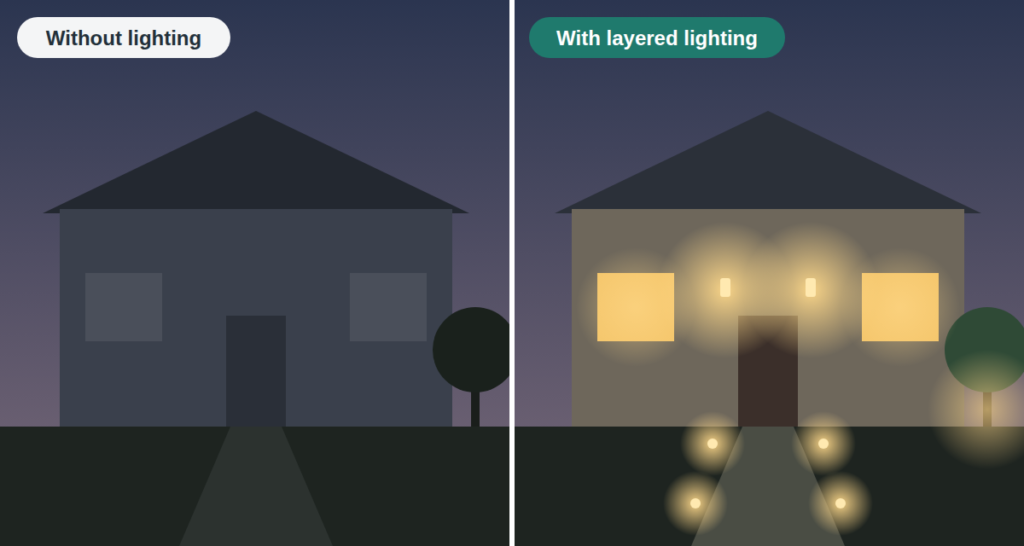
Lighting is often treated as a finishing touch, but it plays a major role in how a house reads after dark. It also does practical work: well-placed fixtures improve safety and create a welcoming atmosphere.
A layered approach works best:
Entry light that clearly illuminates the door and address.
Low-voltage path lights along walkways and near architectural features.
Recessed lighting in overhangs or porch ceilings, which brightens the entry without visual clutter.
Accent lights on a feature tree, a stone wall, or a column.
Under-rail LED lights on balconies, for a warm glow that isn’t harsh.
Choose fixture styles that match the architecture. Modern homes suit clean, geometric forms. Traditional homes suit lanterns and sconces with more detail. If you want a gentle upgrade first, swap fixtures at the front door before adding anything else.
A sensible order of work
This is my recommended sequence. It isn’t a rule from a source, just the order that avoids paying twice.
Fix water problems first. Maintain the roof, clean siding, gutters, and windows. Paint over a leak and the leak wins.
Repair, then repaint. Clean and fix trim and siding before the paint goes on.
Entry and garage door. These have the biggest visual payoff.
Lighting. Cheap, reversible, and immediate.
Landscaping. Plant after heavy work is done so crews don’t trample new beds.
Big-ticket material changes (siding, stone) only if the house truly needs them.
Mistakes I see repeated
Too many colors or materials. Three is a workable ceiling.
Ignoring fixed elements. The roof and brick set the palette.
Buying a trend that doesn’t suit the architecture. Black exteriors and board-and-batten don’t fit every house.
Over-investing in siding for resale. Returns are often below cost.
Skipping lighting. The house disappears at night.
Undersized or oversized fixtures. Check proportions against the door and wall.
Planting for today’s size. Check the mature size on the tag.
Assuming one ROI number is gospel. As shown above, quoted figures vary.
Where exterior design is heading
These are opinions, not forecasts I can prove.
Warmer, more natural palettes. Earth tones are gaining ground over stark white and gray.
High contrast. Light bodies with dark windows and trim are popular.
Wider siding profiles. Manufacturers are noting more interest in wider board-and-batten styles.
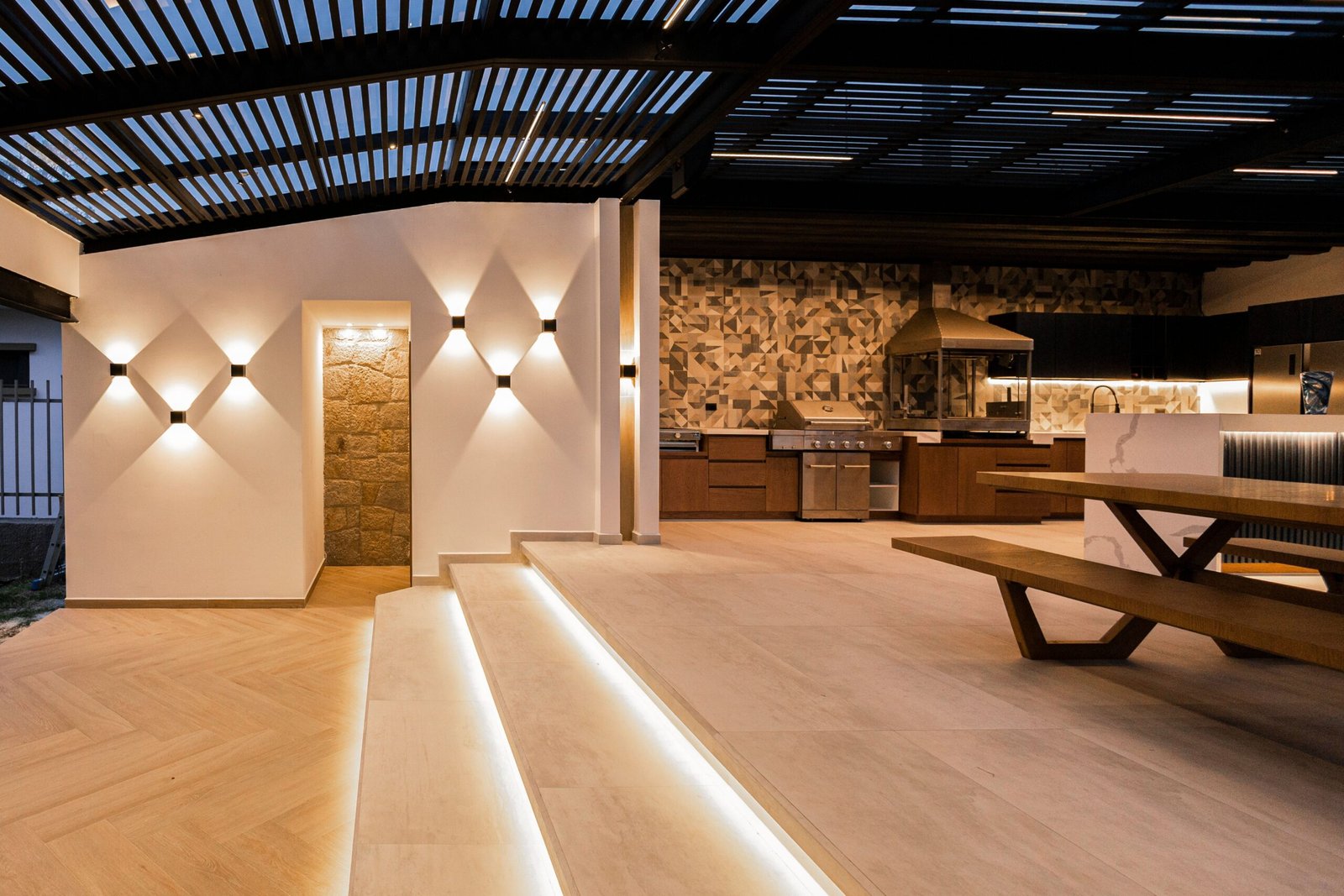
Outdoor living as part of the design. Pergolas, courtyards, and front-yard seating are being treated as architecture, with built-in lighting.
Durability and low maintenance. As costs rise, materials that last longer will keep gaining ground.
I’d be cautious about chasing any single trend. A neutral, well-proportioned house with good lighting survives most fashion cycles.
FAQs
What is the cheapest way to improve my home’s exterior? Repaint the front door, clean the siding and windows, and add or replace entry lighting. One source says repainting a front door can cost under $100.
Which exterior upgrade adds the most value? Reports consistently rank garage door replacement at or near the top, though quoted returns range from about 190% to 268% depending on the source and report edition.
How many colors should I use? Two to three, and many designers cap it at three colors or materials.
Is it worth replacing siding? Usually only if it’s failing. Sources show siding replacement often returns roughly 97–114% at best, and lower in some editions.
How much does a full exterior renovation cost? One guide says most full exterior renovations run between $30,000 and $80,000 depending on scope and materials. Treat that as a broad guide only.
What’s the best lighting for curb appeal? Low-voltage path lights, a well-lit entry, and recessed lighting in overhangs. Accent lighting highlights features.
Do dark exterior colors really sell for more? Evidence is anecdotal. Match the color to the architecture and your local market.
Conclusion
A good exterior doesn’t announce itself. It reads as calm, proportioned, and cared for, and it works the same way in daylight and at night.
If you take only a few things away, I’d make them these. Work with the permanent elements instead of fighting them. Limit your palette to three colors or materials. Spend first on the entry, the garage door, and lighting, where small money has big visual effect. And be skeptical of any single return-on-investment figure, since the published numbers vary widely. Verify them at the source, and decide based on what your house needs.






1 Comment