I still remember the first time I stood in a client’s powder room that felt more like a forgotten closet than a designed space. Four plain beige walls, a builder-grade vanity, and zero personality. We painted one wall a deep navy, added a simple arched mirror, and suddenly the room had presence. Guests started commenting. That project taught me something I still use every week: in a bathroom, the accent wall is not decoration for decoration’s sake. It is the single surface that decides whether the room feels intentional or forgettable.
Bathrooms are small, steamy, and heavily used. That combination makes wall choices more consequential than in almost any other room. Moisture, limited square footage, and the fact that you face the same wall every morning while brushing your teeth mean the material and placement have to work harder. Over the years I have tested paint formulas that claimed to be mold-proof, peel-and-stick products that failed after six months of real showers, handmade zellige that looked spectacular under gallery lighting but revealed its irregularities in a north-facing bath, and budget paneling that somehow outlasted expensive wallpaper.
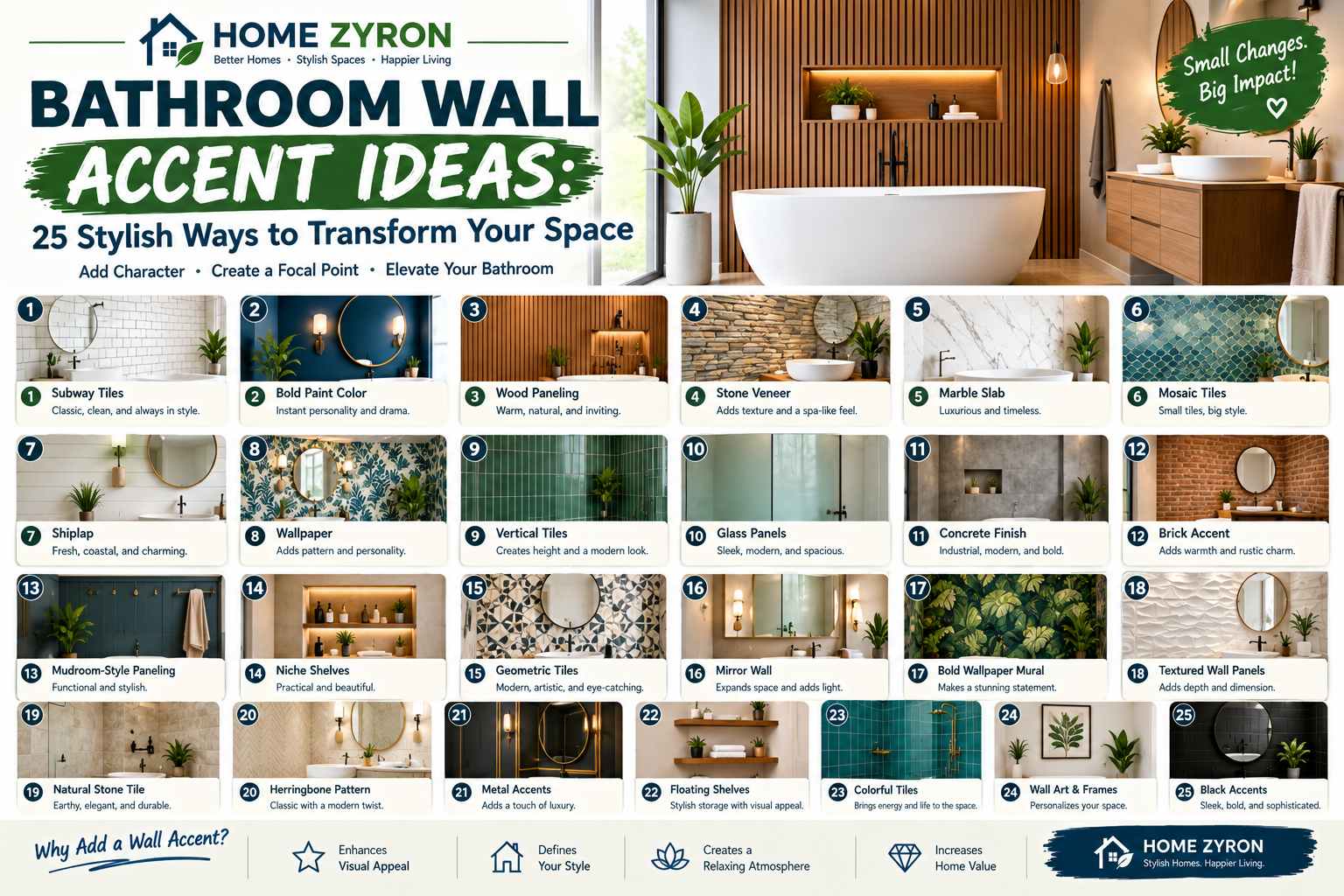
What follows is the practical, tested list I share with clients and friends who want results without the sales pitch. These 25 ideas range from a single afternoon of painting to more involved installations. I include real product comparisons, cost realities, and the honest verdicts that only come from seeing projects age.
Table of Contents
Choosing the Right Wall and Understanding Moisture Zones
Paint Accent Ideas (1–6)
Tile and Stone Accent Ideas (7–13)
Paneling, Slat, and Textured Surfaces (14–19)
Wallpaper, Murals, and Removable Options (20–22)
Lighting, Niches, and Hybrid Accents (23–25)
Material Comparison Table and Real-World Verdicts
Practical Installation Notes and Common Mistakes
Frequently Asked Questions
Looking Ahead: What I’m Watching for 2027
Final Thoughts
About the Author
Choosing the Right Wall and Understanding Moisture Zones
Not every bathroom wall is equal. The vanity wall is usually the winner because that is where you stand and look. The wall behind a freestanding tub creates a natural focal point. The wall behind the toilet is often ignored and therefore perfect for a quieter texture. The shower itself demands fully waterproof materials.
I divide bathrooms into three zones for material decisions:
Wet zone (inside the shower or within two feet of the tub spray): tile, porcelain slabs, solid surface, or properly sealed stone only.
Splash zone (around the sink and lower walls): moisture-resistant paint, bathroom-rated wallpaper, PVC or sealed wood paneling.
Dry zone (upper walls, opposite the shower, powder rooms with minimal steam): almost anything goes, including regular paint and non-vinyl wallpaper.
Ignore the zones and you will be scraping peeling paper or scrubbing mildew within a year. That is not theory. I have seen it.
Paint Accent Ideas (1–6)
1. Deep Navy Behind the Vanity Benjamin Moore Hale Navy (HC-154) remains my most-requested bathroom accent. Pair it with a warm-white ceiling and brass or black hardware. The low LRV creates depth without making the room feel cave-like if you keep good lighting. I used it last year in a narrow galley bath and the owner still sends me photos of the morning light hitting the wall. Use a bathroom-formulated paint in satin or semi-gloss. Benjamin Moore’s Aura Bath & Spa or Sherwin-Williams Emerald both hold up well.
2. Near-Black Drama in a Powder Room Sherwin-Williams Tricorn Black (SW 6258) turns a tiny half-bath into a jewel box. Add one large arched mirror and warm sconces. Dark walls absorb the edges of the room and make it feel more intimate than small. Avoid this in a windowless primary bath with poor lighting—it can feel oppressive.
3. Soft Spa Sage Evergreen Fog (SW 9130) or a similar muted gray-green delivers calm without the coldness of pure gray. It pairs beautifully with oak vanities and brushed nickel. This is the color I recommend when clients say they want “spa” but not “cold spa.”
4. Warm Terracotta or Clay Earthy rust tones have replaced cool grays in many of my 2025–2026 projects. They flatter skin tones in the mirror and work especially well with wood and brass. Look for clay-based paints or high-quality latex with good pigment.
5. Charcoal Half-Wall Paint the lower two-thirds of a wall charcoal and leave the top lighter, then cap it with a thin picture rail or simple molding. You get the visual weight of board-and-batten without the carpentry. Cost is essentially one gallon of paint plus a few dollars of trim.
6. Color-Drenching a Single Plane Paint the accent wall, the ceiling above it, and the adjacent trim the same deep color for a modern, enveloping effect. This works best in powder rooms or primary baths with good natural light.
Tile and Stone Accent Ideas (7–13)
7. Vertical Zellige Stack Handmade Moroccan zellige is still the texture everyone wants. The irregular glaze catches light differently on every tile. Stack them vertically behind the vanity for maximum drama. Expect variation—that is the point. Cost runs higher ($12–25 per square foot for the tile alone), but the wall becomes the art. Porcelain look-alikes exist and perform better in high-traffic showers if budget or consistency matters more than authenticity.
8. Large-Format Porcelain Slabs Twenty-four by forty-eight inch or larger porcelain that mimics marble or concrete creates almost seamless surfaces. Fewer grout lines mean less maintenance. Ideal for a full vanity wall or shower feature. Installation requires a skilled setter because the panels are heavy and unforgiving of uneven walls.
9. Herringbone Subway Classic three-by-six subway tile laid in herringbone still reads fresh in 2026. Use a contrasting grout for definition or matching grout for subtlety. This is one of the most DIY-friendly patterned installs if you measure carefully.
10. Fish-Scale or Scallop Tile Soft, retro, and surprisingly modern when used in a single color on one wall. Best outside direct high-pressure spray unless the tile and installation are fully waterproof.
11. Penny Rounds as a Feature Strip or Full Wall Small round mosaics create texture that large tiles cannot. Use them on the back wall of a shower or as a vertical band.
12. Fluted or 3D Porcelain Vertical fluted tiles add shadow and rhythm. They are one of the strongest trends from recent design awards and work in both contemporary and transitional baths.
13. Natural Stone Veneer or Thin Stone Panels Limestone, sandstone, or marble thin panels bring organic movement. Seal thoroughly and accept that stone will need more care than porcelain.
Paneling, Slat, and Textured Surfaces (14–19)
14. Vertical Wood-Effect Slat Wall Moisture-rated PVC or properly sealed real wood slats add warmth and reduce echo. Keep them out of the direct shower spray unless using outdoor-rated or PVC versions. Spacing of about three-quarters of an inch between boards creates the classic shadow gap.
15. Board and Batten at Three-Quarter Height Painted board and batten on the vanity wall or behind the toilet feels custom. Use MDF or moisture-resistant plywood, seal the edges, and paint with bathroom formula. This is a weekend project for most confident DIYers.
16. Shiplap (Horizontal or Vertical) White or painted shiplap still delivers coastal and farmhouse character. Seal every board and joint if humidity is high.
17. PVC Fluted or Reeded Panels These give the same vertical texture as wood slats but are fully waterproof, so they can go closer to wet zones. Many systems click together for faster installation.
18. 3D Sculptural Panels Paintable geometric or organic relief panels create depth on a single wall. Best in powder rooms or dry zones; the texture can collect dust and moisture if placed poorly.
19. Brick or Stone-Effect Panels Realistic PVC brick or stone panels deliver industrial or rustic character without the weight or cost of real masonry. Use as a true accent, not full-room coverage, or the space can feel heavy.
Wallpaper, Murals, and Removable Options (20–22)
20. Bold Botanical or Geometric Wallpaper In a powder room or on a dry vanity wall, high-quality vinyl or moisture-rated wallpaper transforms the space faster than almost anything else. Patterns that feel oversized work surprisingly well in small rooms because you only see a portion at a time. Avoid standard paper in full baths with daily showers—seams lift.
21. Peel-and-Stick Tile or Wallpaper Modern peel-and-stick products have improved dramatically. Brands offering thicker vinyl with better adhesives can last several years in splash zones. They remain the best renter-friendly and low-commitment option. My honest verdict: excellent for powder rooms and above-tile areas; temporary at best inside a daily shower.
22. Full-Wall Mural or Oversized Print A single large-scale mural behind a freestanding tub or vanity creates a destination feel. Choose moisture-rated materials and professional installation for longevity.
Lighting, Niches, and Hybrid Accents (23–25)
23. LED Backlit Panels or Cove Lighting Indirect light behind a floating vanity, inside a niche, or along the top of an accent wall is one of the highest-impact upgrades of the last few years. It makes even simple materials look expensive after dark.
24. Tiled or Paneled Niche as Accent A carefully placed recessed niche finished in contrasting tile or a different finish becomes both functional storage and a design moment. Backlight it for extra effect.
25. Hybrid: Paint + Texture + Hardware My current favorite approach is a deep paint color, a simple vertical texture (slats or fluting), and thoughtfully placed sconces or a statement mirror. The combination feels layered rather than one-note.
Material Comparison Table and Real-World Verdicts
Material
Approx. Material Cost/Sq Ft
DIY Difficulty
Moisture Performance
Longevity in Full Bath
Best Use Case
Honest Verdict
Bathroom Paint
$0.40–0.80
Easy
Good (satin/semi)
5–8 years
Any dry or splash wall
Highest impact per dollar
Peel-and-Stick
$1.50–4.00
Very Easy
Moderate
2–5 years
Powder rooms, renters
Great temporary, not permanent wet zone
Zellige / Handmade
$12–25
Moderate–Hard
Excellent
15+ years
Vanity or feature wall
Worth it for character
Large Porcelain Slab
$10–30
Hard
Excellent
20+ years
Seamless modern look
Premium and practical
PVC Slat/Fluted
$3–8
Moderate
Excellent
10+ years
Texture near wet zones
Best of both worlds for many projects
Board & Batten
$2–5
Moderate
Good if sealed
10+ years
Custom painted look
Classic and forgiving
Moisture Wallpaper
$2–6
Moderate
Good if rated
5–10 years
Pattern without tile cost
Use only where rated
Zinsser Perma-White and similar mold-resistant paints have performed best in the high-humidity jobs I track. For tile, porcelain consistently outperforms ceramic in wet zones for water absorption. Real zellige wins on soul; good porcelain wins on predictability and price.
Practical Installation Notes and Common Mistakes
Always prime properly. In bathrooms I prefer a stain-blocking, mold-resistant primer even over existing paint. For tile, the substrate must be flat and the correct waterproofing membrane used in wet zones—do not skip this. Measure twice for patterns and buy 10–15 percent extra material. Ventilation matters more than any product claim: a good exhaust fan is non-negotiable.
Common mistakes I still see: putting non-rated wallpaper in a steamy primary bath, choosing a dark color without upgrading lighting, and covering every wall so the room feels closed in. One strong accent is almost always better than four competing ones.
Frequently Asked Questions
Can I put wallpaper in a bathroom? Yes, if it is specifically rated for high humidity and you keep it out of the wet zone. Powder rooms are ideal.
What is the easiest high-impact change? A well-chosen paint color on the vanity wall plus better lighting. Under $100 and one afternoon for most people.
Are peel-and-stick products worth it? For renters or quick refreshes, yes. For a long-term primary bath that sees daily showers, invest in permanent materials.
How dark can I go? Very dark if the room has natural light or strong artificial lighting and you keep the other walls lighter. Test large samples on the actual wall under morning and evening light.
Should the accent wall be behind the vanity or the tub? Vanity for daily impact, tub for spa drama. Choose the wall you look at most.
Looking Ahead: What I’m Watching for 2027
Warm earth tones and tactile surfaces continue to push cool grays aside. Fluted and reeded textures are moving from trend to staple. Integrated lighting and hybrid material walls (paint meeting tile or paneling meeting stone) will keep growing. Biophilic patterns and nature-inspired finishes remain strong, but executed with more restraint than the maximalist versions of a few years ago. Sustainability in materials—recycled content porcelain, lower-VOC paints—will matter more to clients who ask about it.
Final Thoughts
A bathroom accent wall succeeds when it feels inevitable rather than forced. The best ones I have designed or lived with do not scream for attention every second; they simply make the room better every time you walk in. Start with the wall you already look at, respect the moisture realities of the space, and choose a material that matches both your budget and how long you plan to stay. The transformation is rarely about spending the most. It is about deciding what the room needs and executing it cleanly.
If you take only one idea from this list, make it this: treat the bathroom wall as a design surface with real constraints rather than leftover space. That shift in thinking is what separates the rooms people remember from the ones they forget the moment they leave.
About the Author
Elena Voss is a residential design consultant and former renovation project manager based in the Pacific Northwest. For more than twelve years she has specialized in small-space and moisture-challenged interiors, working with homeowners, architects, and builders on practical material selections that hold up under real daily use. Her work focuses on bridging aesthetic trends with long-term performance, and she regularly documents aging installations to refine recommendations. When not on job sites she tests new products in her own home and writes about the gap between marketing claims and lived experience.



1 Comment