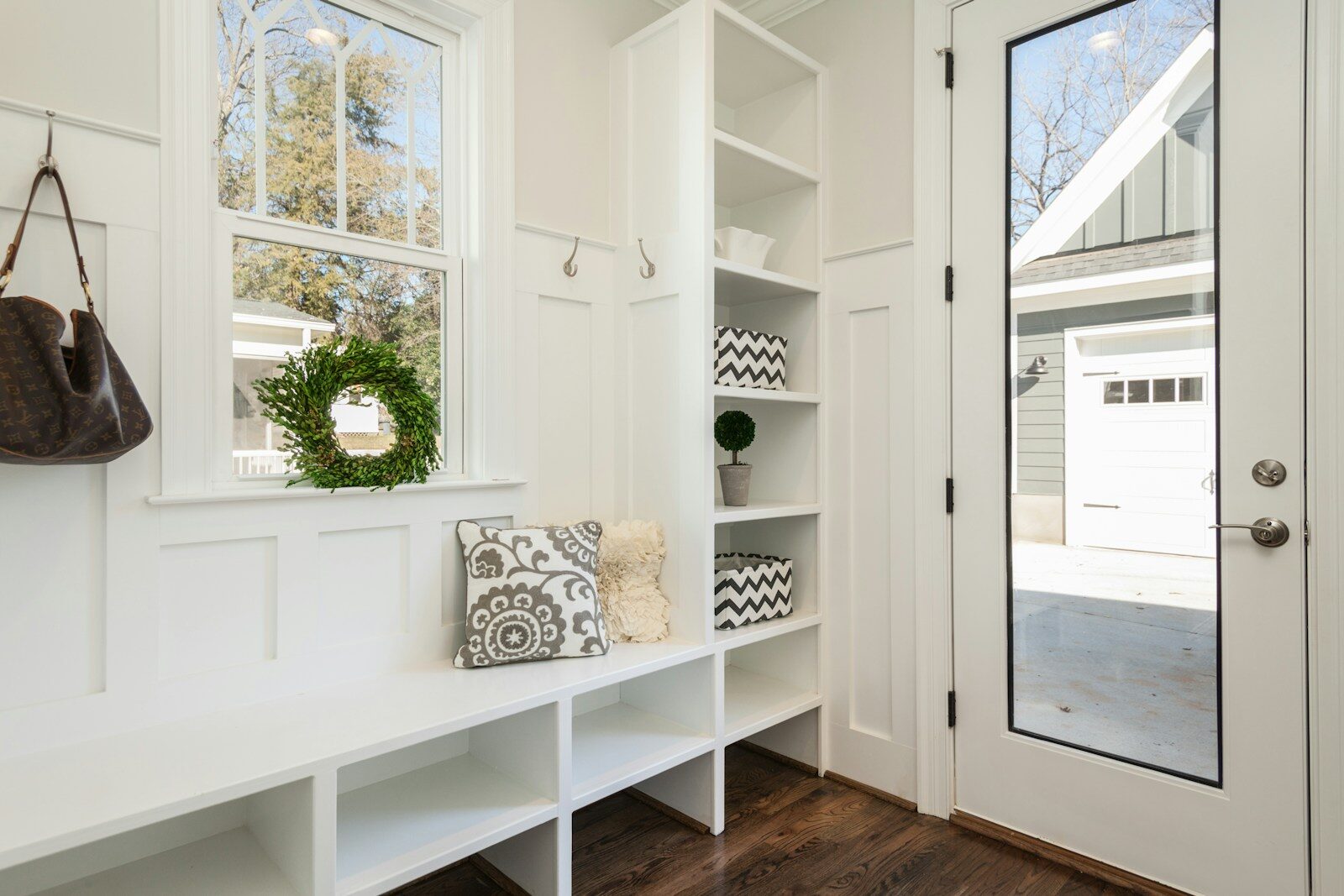
Every homeowner knows it: You’ve just come in from a rainy day, arms loaded with grocery bags, shoes wet, and the dog is splashing water all over the hardwood floor. You are at the threshold between the chaos of the outside world and the calm you’ve built within and there’s no logical place to land.
That’s just why mudrooms are there. And it’s a real pain in the ass to live with one, and going back.
I’ve spent years contemplating how homes are designed – what works, what gets photographed for magazines but never used, and what quietly changes the way a family moves through their day. The mudroom is very much in that last category. It’s not a chef’s kitchen, it’s not glamorous. But in terms of real, day-to-day quality of life impact? Hardly any spaces compare.
So What Is a Mudroom?
At its most basic, a mudroom is a transition area, a buffer zone between the exterior of your home and the primary living spaces. It’s where the outdoor life is left at the door: muddy boots, wet jackets, backpacks, leashes, sports gear, umbrellas and whatever else you’ve been dragging through the world.
The name is a throwback to when “mud” was a real issue. In the 19th and early 20th centuries, American farmhouses generally had a back entry room for field hands and family members coming in from the land. No one wanted barn mud on the rug in the parlour. It was an architectural solution. Build a special room for the mess.
Today’s mudrooms are a far cry from those humble beginnings. They are now purpose-built spaces, with built-in cabinetry, bench seating, charging stations, pet washing stations, and in higher-end homes, heated floors and humidity-controlled storage for seasonal gear. The function is unchanged. The execution has become a sort of art form.
Why Mudrooms Are All the Rage, Especially Post-2020
The pandemic has changed how people think about their homes in lasting ways. Walkways that were an afterthought became critical infrastructure. And when you are home all day, how you get in starts to matter so much.
Dedicated entryway storage, including mudrooms, was among the top 10 most desired features in new construction, according to a 2024 report from the National Association of Home Builders. And in remodelling surveys, mudrooms consistently place higher than home offices, wet bars and even home gyms on “would add to current home” lists.
Some of this is hygiene awareness left over from COVID. Part of that is the growth of multi-generational households, where the organisational demands at the front (or back) door multiply rapidly. And some of it is just people started seeing mudrooms in design content and thinking, wait, that could solve my whole hallway problem.
What Makes a Mudroom Well Designed
Not all mudrooms are created equal, but the best ones do have a certain DNA when it comes to structure. Here’s how they do it:
A Dedicated Dropzone
This is the heart of the mudroom – a surface or hook system where things drop the moment you walk in. The keyword is dedicated. A hook that also holds the emergency torch and the spare key and the dog collar quickly becomes useless. In good design, every element means something.
Hooks at various heights are often underestimated in their usefulness. Hooks for coats and bags at adult height, lower hooks for children and a top rail for seasonal items you don’t use very often. It sounds obvious, but most homes have one row of hooks at adult height and then wonder why nothing ever gets used properly.
Seating With Storage Below
A bench in a mudroom isn’t just a comfortable spot – it’s functional ergonomics. It is much more likely that someone will sit down to take their shoes off, than stand on one foot. The bench also forms an organic pause point, a deceleration point between inside and outside.
It is almost always better to use the space under the bench with cubbies or drawers rather than leaving it open. Open space is a graveyard of shoes. Defined slots for each family member’s footwear are actually used.
Closed Cabinet Storage
Hooks and benches are for the immediate-access items. But mudrooms also have to deal with the stuff that gets used seasonally or occasionally: rain boots, ski gear, sports equipment, winter hats, reusable bags. Tall cabinets with doors hide this away without adding visual noise.
One thing I’d argue hard – don’t fall for the temptation of all open shelving. Photographs of open shelving are good. In real life, real people don’t have stylists. It becomes visual clutter in a week.
Resilient Flooring
This is not negotiable. The flooring you choose for your mudroom must be waterproof, slip-resistant when wet and easy to clean. Porcelain tile is still the most practical choice — it can take moisture, temperature change and grit without complaint. Luxury vinyl plank (LVP) is a close second, especially in colder climates where tile is brutally cold underfoot.
Heated floors in a mudroom sounds like a luxury thing to have. The detail is what makes everything else work, in fact. Wet boots will dry overnight. The space never feels cold or punishing. People really are using it.
Proper Lighting
One mistake that’s easy to miss when designing a mudroom is that they are often interior spaces that don’t have natural light. The harsh overhead lighting made the space feel like a utility room. Layered lighting makes it feel intentional and usable, with overhead and task lighting in cabinets or under shelves.
Mudroom Types: Clever Corners To Full Rooms
Some homes don’t have the square footage for a dedicated mudroom. Okay. The idea generalises.
The Full Mudroom Room: A separate room, typically 40 to 80 square feet, often located between the garage and kitchen, or at a back entry. This is the gold standard — it can have laundry, a utility sink, pet washing and full storage systems.
The Mudroom Hall: A wider-than-average back hallway with built-ins along one or both walls. You are still walking through the space but it takes all the same functions. This is likely the most typical setup in the suburbs for homes built in the past 15 years.
The Mudroom Nook A dedicated alcove carved out near the main entry. A 4-foot depth will accommodate a bench, overhead hooks and a small cabinet. This is surprisingly effective in small homes and apartments.
The Mudroom Wall: Sometimes the best option is a single wall of purposeful storage near the entry — a custom built-in unit that acts as a mudroom without being a room at all — in open-plan homes or smaller spaces. This has been done brilliantly using Ikea’s PAX system. And so have custom millwork solutions that look a lot more expensive than they are.
Mudroom Design Mistakes (That Are All Too Common)
Under-estimation of number of hooks A family of four needs more hooks than seems sensible. Sports gear, all kinds of jackets for all kinds of weather, bags, hats — the demand is real. A hook-per-person model doesn’t work. Try to get at least 3-4 hooks per person.
Disregarding the vertical space from floor to ceiling. Most mud rooms use the prime zone (shoulder to knee height) and ignore everything above and below. High shelves for seasonal storage that are not used enough and low cubbies for shoes.
Selecting light-colored cabinets without considering maintenance. White cabinets in a mudroom will show each and every scuff and fingerprint. If you love white, go for a semi-gloss or satin finish that can be wiped clean easily. Or opt for a warmer natural wood tone that conceals life better.
No charging stations. In 2026, people come in with phones, wireless earbuds, smart watches, e-readers, etc. There is no provision for charging in a mudroom, so these devices end up charging on the kitchen counter and the counter clutter cascades throughout the day.
Pets forgotten. If you have a dog, your mudroom needs to have room for leashes, poop bags, towels for wet paws and ideally a place to rinse off the dog without coming into the main house. A pet washing station, a low sink or tub with a sprayer, has gone from rarity to fairly common in new builds, and for good reason.
How Much Does a Mudroom Cost? Planning for 2026
Cost varies dramatically by scope and by location, but here’s a realistic picture:
DIY Built-in Bench with Hooks $300-$800 in Materials Labour if hired out: $500–$1,200
Mid-range mudroom remodel (custom cabinets, tile floor, lighting): $5,000-$15,000 depending on size and level of finish.
High-end mudroom with all the bells and whistles (custom millwork, heated floor, utility sink, pet station) $20,000 – $50,000+
The ROI is really good. A well-planned mudroom will add functional, organised square footage that buyers will see right away. Mudrooms are a selling point in competitive real estate markets, and they photograph well and elicit an emotional response when you tour a home.
The Mudroom in Other Home Settings
In city apartments: The mudroom idea is transformed into an entryway system — a console table, a mirror, hooks and a small bench. The principle is the same, only the scale is different.
In a family home with kids: The mudroom is where the school days are wrangled. Backpacks. Sports uniforms. Instrument cases. Lunch boxes. Nothing has a home but the kitchen floor. Parents who have done this well say the change has been life-changing to their morning routines.
multi-generational homes: A mudroom with clearly defined zones for each person or family unit solves the issue of everyone’s stuff becoming everyone’s problem.
vacation or secondary homes: A mudroom is perfect for ski gear, beach towels, hiking boots and everything else that goes with recreational living. In these homes, a utility sink and drying area are often more important than even in a primary home.
Trending Mudroom Ideas for 2026
Smart lockers for deliveries . Package delivery is growing, and smart home technology is maturing. Some new builds are adding secured, connected lockers right into the mudroom design. Packages can be received without the homeowner there, and the whole system integrates with home security.
Features of biophilia. The old utilitarian mudroom was all function. Recent interpretations bring plants, natural materials and views to the exterior to create a decompression zone, a gentle psychological transition, not just physical.
Air purification and hygiene stations Entry-point hygiene has become a design consideration due to post-pandemic sensibilities. Some high-end mudrooms now include built-in air purifiers, hand-washing sinks and even UV shoe sanitisers.
Repurposed and sustainable materials Reclaimed wood benches, recycled glass tile and low-VOC cabinetry are becoming more and more common in mudrooms, partly because the utilitarian nature of the space makes imperfection feel right and beautiful.
Smaller, smarter footprints. With housing costs forcing developers to seek efficiency, mudrooms are being designed to do more with less square footage. The emphasis is on precision: every inch must mean something.
Frequently Asked Questions
A mudroom doesn’t have to be in a separate room.
No. The idea of the mudroom works at any scale, whether it’s a dedicated wall, a hallway built-in or a whole separate room. It’s all about function: a dedicated transition zone for handling outdoor gear.
Where should a mudroom be in a house?
The most practical place to put it is right by the most used entry point. For most families this is either the garage door or a back/side door. A mudroom off the front entry is less functional, because that’s not where routine coming and going actually happens.
Can I add a mudroom to my existing house?
Yes, and it’s one of the more worthwhile renovations out there. Options for conversion include finishing a back hallway, converting a coat closet, adding a bump-out addition or repurposing an underused back room. A designer or contractor experienced with mudrooms can show you options you might not see.
What is the best flooring for a mudroom?
Porcelain tile is the most durable and practical of all. LVP is a close second and is more comfy underfoot. Avoid hardwood (moisture damage), carpet (impossible to clean) and laminate (edges swell with moisture).
Once my mudroom is set up, how do I keep it organised?
Separate out each kind of thing, and keep it simple to find: labels, colour-coding for the kids, or just cubbies for each person. It’s about the design doing the work. If it’s a hassle to put something away, it’s not going to get put away.
Is a mudroom a good investment?
Yes, almost always. It cuts out daily friction, prevents mess from creeping into living spaces and adds real value to a home. The return is more than financial. The improvement in quality of life is immediate and permanent.
Final Thoughts
Think about it long enough, and there’s a certain philosophical quality to a mudroom. It’s a space that’s based on the understanding that life is messy that the world outside leaves its mark on you, and that home is a place worth protecting from that mess with a little intentional design.
The best mudrooms I’ve ever come across don’t shout. They are not the rooms you are shown on a house tour. That’s why the rest of the house looks the way it does uncluttered, calm, functional. They work behind the curtain, unseen, catching the chaos before it blows up.
Whether you have 400 square feet to give or just a single wall near your back door, the mudroom principle translates to your life. The question isn’t whether you can afford a mudroom. It’s whether you can afford not to have one.