


I still remember the first time I sank into a proper club chair. It was in a friend’s library years ago—a low, rounded leather piece that somehow made the room feel quieter. My shoulders dropped, my elbows found the wide arms without effort, and the conversation stretched longer than planned. That quiet invitation to stay is exactly what a club chair was designed for, and why the form has lasted more than a century.
This guide walks through the chair’s origins, the main silhouettes you’ll encounter, the materials that matter, and the practical decisions that separate a chair you’ll live with for decades from one that disappoints after a season. No marketing gloss—just the details I’ve learned from looking at, sitting in, and restoring these pieces over time.
Table of Contents
- What Exactly Is a Club Chair?
- A Short History: From Fauteuil Confortable to Icon
- Key Styles and Silhouettes
- Materials That Define Quality
- How to Choose the Right Club Chair
- Placement, Scale, and Real-World Use
- Care and Longevity
- Future Trends Worth Watching
- Frequently Asked Questions
- Final Thoughts
- Author Bio
What Exactly Is a Club Chair?
A club chair is a low, deep, fully upholstered armchair built for prolonged sitting. Traditional examples feature a solid wood frame, generous padded arms that flow into a relatively low back, and a seat deep enough that you settle rather than perch. Historically upholstered in leather, it prioritizes comfort and a sense of enclosure without the tall, formal presence of a wingback.
The name comes from the gentlemen’s clubs where the form became popular, though the design itself is French. Early versions were called fauteuil confortable—comfortable armchair—to distinguish them from the straighter, more upright fauteuil de style. The club chair’s proportions encourage a relaxed posture: seat heights typically land around 16–18 inches, seat depths 20–24 inches, and overall widths 30–36 inches for standard models.
Modern versions stretch the definition. You’ll see fabric-covered examples, swivel bases, and cleaner lines, but the core idea remains: a chair that feels substantial yet welcoming, suited to reading, conversation, or simply occupying a corner with presence.
A Short History: From Fauteuil Confortable to Icon
The club chair emerged in France around the turn of the 20th century. Craftsmen refined earlier comfortable armchairs by incorporating coil springs (including biconical springs in the seat, back, and arms), better webbing, and traditional fillings such as horsehair or coir. The result was more resilient and form-fitting than the heavy, purely stuffed chairs that preceded it.
By the 1920s and 1930s Art Deco period, the form diversified. Cleaner lines appeared alongside the classic rounded models. After World War II, American influence and broader production methods introduced further variations, yet the essential low, enveloping profile endured. Traditional French makers continued using sheepskin leather (basane) and solid beech frames, techniques still prized by restoration specialists today.
What keeps the design relevant is its refusal to chase trends. A well-made club chair develops a personal patina rather than looking dated. That slow aging is part of its quiet authority.
Key Styles and Silhouettes
Not every low, padded armchair is a true club chair, and within the category several distinct shapes have earned nicknames based on the backrest or overall form.
Classic Rounded Club Chair
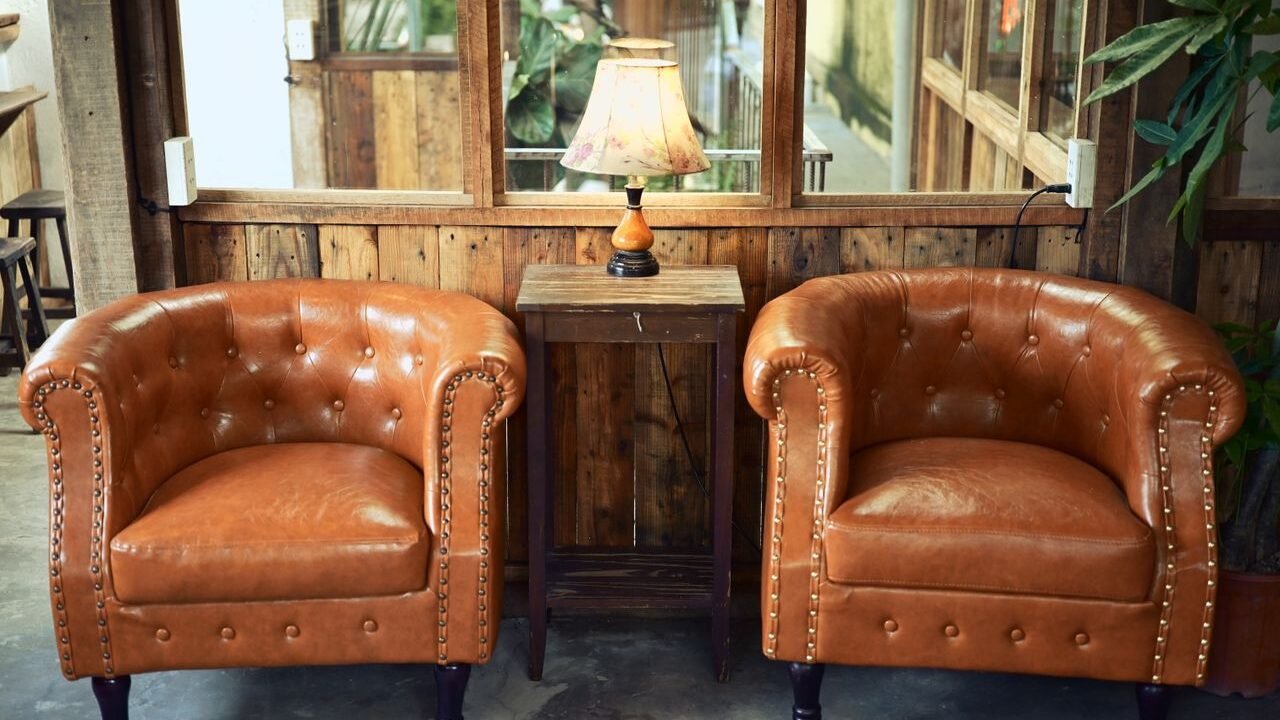
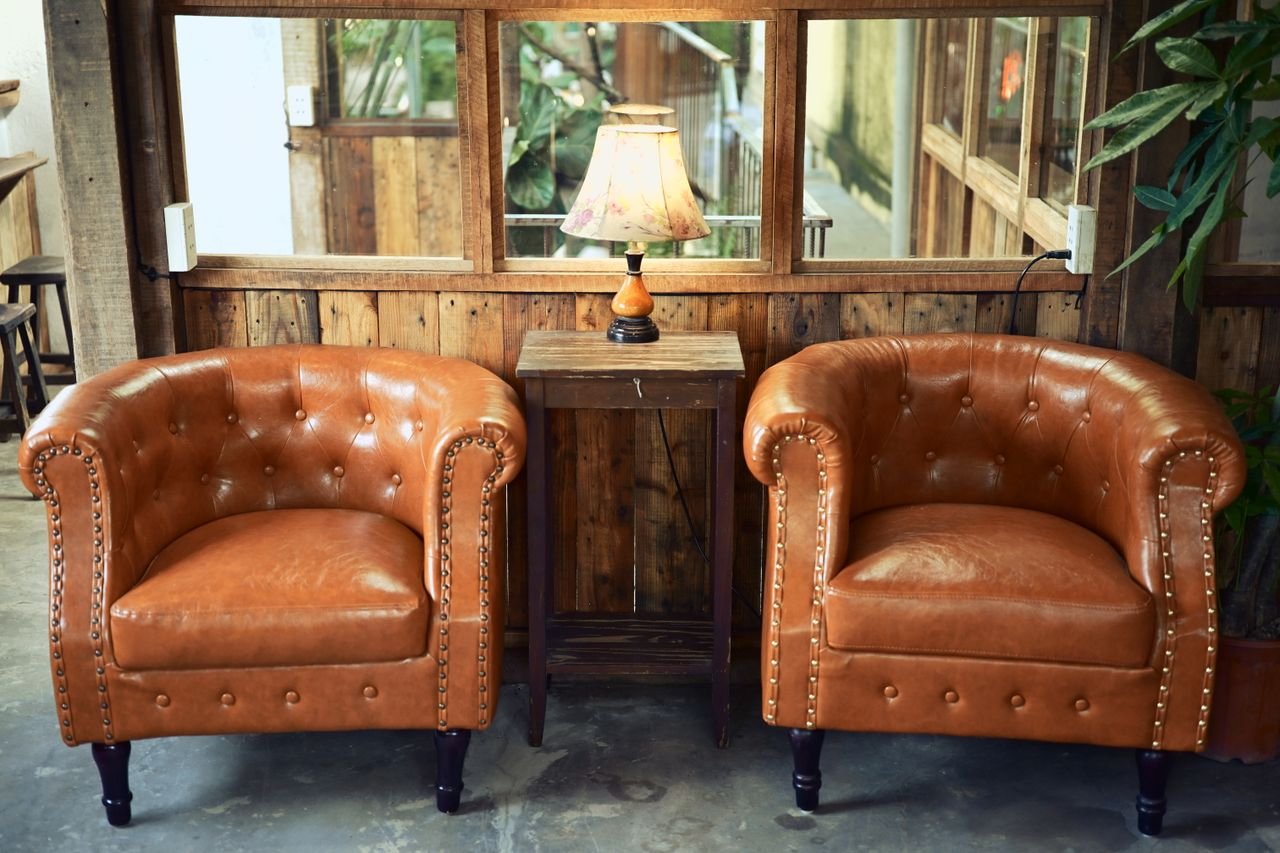
The archetype: continuous curves from the arms into a low, rounded back. Wide, often “bombé” (slightly bulging) arms invite the elbows. This silhouette feels the most enveloping and is the one most people picture when they hear “club chair.”
Moustache Back
The top of the back curves upward in two gentle peaks, resembling a stylized mustache. It adds a touch of elegance without raising the overall height much. Common on mid-century French examples.
Gendarme’s Hat (Chapeau de Gendarme)
The back rises into a soft, peaked profile inspired by the shape of a French police officer’s hat. Slightly more formal than the pure round, it still maintains the low, cozy proportions.
Bridge or Squarer Models
Straighter lines and more defined edges. These often feel more compact and work better in smaller rooms or modern interiors. Some lean toward Art Deco geometry.
Half-Moon or More Sculptural Forms
Deeper curves and stronger presence. These suit larger spaces and make a clearer statement.
Barrel chairs are sometimes confused with club chairs. A barrel chair has a continuous curved back and arms that form one rounded shell. A classic club chair keeps the arms and back more distinct, usually with a lower, wider stance. Wingbacks sit higher and feature the characteristic side wings originally meant to block drafts.
When shopping, sit in the chair. Proportions on paper rarely convey how the back supports your shoulders or whether the seat depth suits your leg length.
Materials That Define Quality
Frame
Look for solid hardwood—beech is traditional and stable when properly kiln-dried. Mortise-and-tenon or dowelled joints outperform staples and particleboard. A good frame should feel rigid when you press on the arms or back; any creaking or flex is a warning.
Cushioning and Support
Traditional construction uses eight-way hand-tied springs or high-quality coil systems with jute webbing and horsehair or high-density foam. Budget chairs often rely on serpentine springs or thick foam alone, which compresses over time. A quality seat should give comfortably yet rebound.
Upholstery
Leather remains the classic choice. Full-grain or aniline-dyed leather develops the richest patina; top-grain is more uniform and easier to clean while still durable. Sheepskin (basane) was historically favored for its flexibility and ability to stretch over complex curves. Corrected or pigmented leathers look consistent but age less gracefully.
Fabric options have expanded the range. Performance fabrics resist stains and hold up well in family homes. Velvet and linen offer softer hand-feel and more color flexibility. Faux leather can look convincing at first but typically peels or cracks sooner and lacks breathability.
Legs and Details
Turned wood legs, block feet, or hidden bases all appear. Nailhead trim is traditional but not mandatory. Exposed wood should be smoothly finished and matched in tone.
In practice, a solid wood frame paired with full-grain leather and proper spring support will outlast most sofas in the same room. I’ve seen restored 1930s French club chairs still firm and inviting after careful reupholstery.
How to Choose the Right Club Chair
Start with measurements of the space and your own body. Allow roughly 24 inches of clearance around the chair for movement. Standard dimensions hover around 32–36 inches wide, 34–38 inches deep, and 30–34 inches high, but petite and oversized versions exist.
Test the sit. Your feet should rest flat with knees roughly level with or slightly below the hips. The arms should support your elbows without forcing your shoulders up. Back support should feel continuous rather than leaving a gap at the lower spine.
Decide on the primary use. A reading chair benefits from slightly deeper seating and a firmer lumbar feel. A conversation chair can be a bit more upright. In a high-traffic living room, prioritize cleanable materials and a frame that won’t show every bump.
Budget realistically. Entry-level fabric or faux-leather models start a few hundred dollars. Mid-range solid-wood and top-grain leather pieces commonly fall between $1,500 and $4,000. Authentic French or high-end custom work climbs higher, often justified by decades of service and repairability.
Authenticity markers for vintage or high-end new pieces include full-grain leather with natural markings, solid beech or equivalent frames, and traditional spring systems. Machine-made uniformity and plastic glides usually signal lower-tier production.
Compare a few options side by side if possible. Weight is a useful clue—quality hardwood frames feel substantial. Ask about the warranty and whether the cushions are reversible or replaceable.
Placement, Scale, and Real-World Use
Club chairs shine in pairs flanking a fireplace or sofa, as a solitary reading chair with a side table and lamp, or in a home office where you need both comfort and a sense of occasion. Their low profile keeps sight lines open, which helps smaller rooms feel less crowded than a tall wingback would.
In open-plan spaces they can anchor a seating group without dominating. Avoid pushing them hard against walls; the rounded forms look better with a little breathing room. If the chair has casters or a swivel base, confirm the floor surface can handle them.
I’ve placed the same classic rounded leather model in three different rooms over the years. In a dark-paneled study it felt clubby and intimate. In a light modern living room the same chair read as a warm, grounded counterpoint. Scale relative to surrounding furniture matters more than absolute size.
Care and Longevity
Leather needs occasional conditioning (once or twice a year with a quality product suited to the finish) and protection from direct sun to avoid drying or fading. Wipe spills promptly. Fabric benefits from regular vacuuming and professional cleaning when needed. Rotate cushions if they are reversible.
A well-built frame can be reupholstered multiple times. Keep the original springs and webbing if they remain sound; replacing only the cover and top padding is often enough. Avoid harsh cleaners or steam that can damage adhesives or finishes.
Future Trends Worth Watching
Sustainability is influencing both materials and construction. More makers emphasize responsibly sourced hardwoods, vegetable-tanned leathers, and repairable designs. Performance fabrics continue to improve in hand-feel and durability, making fabric club chairs more practical for households with children or pets. Compact and modular versions appear for smaller urban homes, while classic proportions remain strong in both residential and hospitality settings. Customization—choice of leather color, nailhead finish, leg style—has become more accessible without requiring a full bespoke commission.
Frequently Asked Questions
Is a club chair the same as a barrel chair?
No. Barrel chairs feature a continuous rounded shell. Classic club chairs keep more distinct arms and a lower, broader stance.
Leather or fabric—which is better?
Leather develops character and cleans easily; fabric offers more color and pattern options and can feel softer initially. Choose based on lifestyle and climate.
How much space does a club chair need?
Plan for the chair’s footprint plus clearance to walk around it and open adjacent doors or drawers. Measure carefully before buying oversized models.
Can I put a club chair in a small apartment?
Yes—look for bridge or more compact silhouettes and lighter-colored upholstery to keep the visual weight down.
Are vintage French club chairs worth restoring?
Often yes, if the frame is solid. Reupholstery costs add up, but a good example can last another generation.
Final Thoughts
A club chair succeeds when it disappears into daily life while still elevating it. The best ones feel inevitable in their space—neither too precious nor too ordinary. They reward attention to construction and proportion far more than surface trends. Choose the silhouette that fits how you actually sit, the material that matches how you live, and the scale that respects the room. Done well, the chair becomes a quiet constant: the place you return to at the end of the day, book in hand or conversation underway, exactly as its makers intended more than a hundred years ago.
Author Bio
Eleanor Voss is an independent researcher and furniture historian specializing in 20th-century European seating design. She has spent over fifteen years documenting traditional upholstery techniques, restoring period club chairs, and advising collectors and interior designers on authentic materials and construction. Her work draws on archival sources, hands-on examination of French and English examples, and practical experience in both private collections and commercial restoration studios.
[…] in the Bedroom: Design Ideas, Benefits, and Things to Consider Club Chair: What It Is, Styles, Materials, and How to Choose One Pink Bathroom Tiles: A Complete Guide to Choosing the Right Style Wicker Chaise Lounge: A […]