

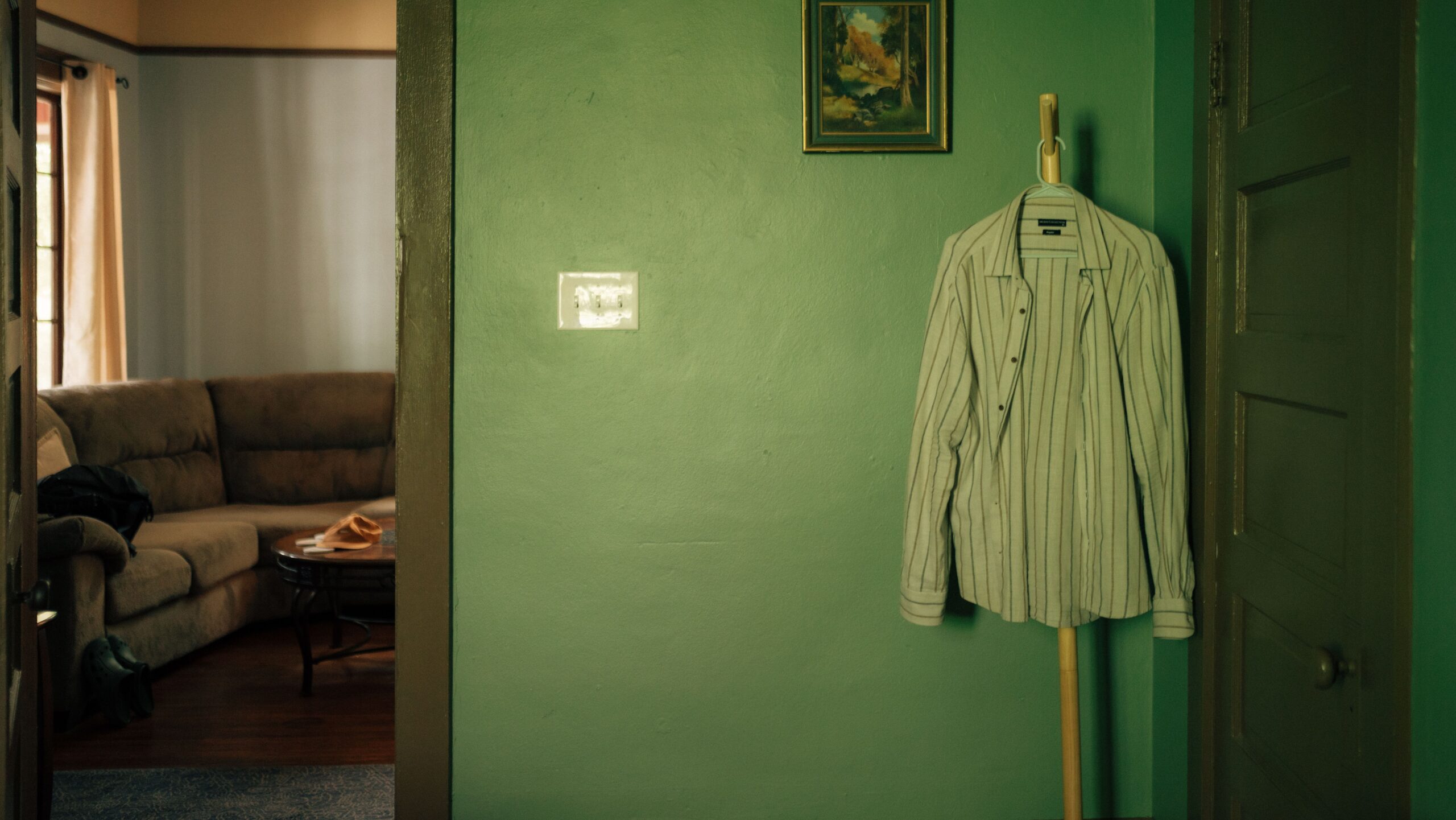
A client once handed me three “forest green” swatches from three different brands and asked which one was the real forest green. None of them were wrong, exactly — that’s the trap with this color. Forest green isn’t a single hue the way fire engine red basically is. It’s a whole family of dark, desaturated greens that range from nearly black to something that reads almost olive depending on the undertone, and picking the wrong one for your room’s light is the single most common regret I hear about after the paint’s already dry.
This guide goes deeper than a list of pretty names. I pulled actual Light Reflectance Values (LRV) for the shades that come up again and again in real projects, because LRV — not the name on the can — is what actually predicts whether a “forest green” room feels rich and cozy or like a closet you forgot to finish.
1. What “Forest Green” Actually Means (It’s Not One Color)
Every major paint brand has a “forest green,” and they don’t look alike. Some lean blue (closer to a spruce or pine), some lean yellow (closer to olive or moss), and some are nearly black with just enough green pigment to register as a color rather than a neutral.
The distinguishing feature across almost all of them is a low LRV — usually somewhere between 4 and 20 on the 0–100 scale, where 0 is theoretical pure black and 100 is pure white. That low number is what gives forest green its “enveloping” quality: it absorbs most of the light that hits it rather than bouncing it back into the room, which is exactly why it reads as cozy in a den and can feel oppressive in a windowless hallway with the wrong lighting plan.
The other variable that matters more than people expect is undertone. A blue-leaning forest green (sometimes marketed as “hunter” or “pine”) will look cooler and slightly more formal. A yellow-leaning one (often labeled “olive” adjacent) feels warmer, earthier, and pairs more naturally with wood tones. Reading the undertone correctly before you buy saves a repaint.
2. How LRV Should Actually Drive Your Decision
Most people pick paint by staring at a 2-inch chip under store lighting, which tells you almost nothing about how it’ll behave on a 12-foot wall in your living room. LRV is the number that actually predicts that behavior, and here’s the rule of thumb I give clients:
LRV under 10
(Essex Green, Studio Green, Dark Everglade): These need either strong natural light or a deliberate lighting plan with warm bulbs. In a windowless powder room with good overhead lighting, they look intentional and jewel-box-like. In a dim hallway with one weak overhead fixture, they’ll look almost black and can feel like a mistake.
LRV 10–20
(Rosemary, Green Smoke): The sweet spot for most full rooms. Dark enough to feel like a real color statement, light enough to still read as green rather than near-black in average lighting.
LRV 20+
(Evergreen Fog and similar): These work as an all-four-walls color in almost any lighting condition, including north-facing rooms, because they’re reflecting enough light to avoid the cave effect.
One thing worth knowing: a matte or flat finish will read slightly darker than the same color in eggshell or satin, because the textured matte surface scatters light rather than bouncing it back cleanly. If you’re right on the edge between two shades, going with the glossier finish of the lighter option is often safer than going matte with the darker one.
3. Color Pairings: What Actually Works With Forest Green
Warm whites and creams
Forest green’s depth needs a genuinely warm trim color to soften the contrast; a stark, blue-based white can make the green look colder and slightly clinical by comparison. Warm off-whites let the green feel rich rather than harsh.
Brass and unlacquered metals
This is close to a design cliché at this point because it simply works: brass hardware, sconces, and faucet fixtures against a deep forest green wall create the warm-cool contrast that makes both materials look more expensive than they are.
Black accents
For the darker end of the spectrum (Essex Green, Studio Green), black trim or black hardware doesn’t fight the green the way it might with a brighter color — instead it reads as one continuous dark, moody palette.
Terracotta and rust
These warm, earthy tones sit roughly opposite forest green on the color wheel, which is why the pairing feels so intentional rather than random. Think terracotta planters, rust-colored textiles, or a clay-toned tile floor.
Natural wood — Walnut and white oak both work, but for different reasons. Walnut’s warm darkness matches the mood of a deep forest green almost tonally, while white oak’s lightness creates contrast that keeps the room from feeling too heavy.
What to avoid: cool grays and icy blues tend to fight forest green’s warmth (even the cooler-leaning shades like Essex Green still have enough warmth in mixed lighting to clash with a stark blue-gray), and bright, saturated jewel tones like fuchsia or electric blue can make a forest green room feel busy rather than grounded.
4. Where to Use Forest Green (and Where I’d Skip It)
Kitchen cabinets — One of the strongest current applications. A forest green island or full cabinet run against white or stone countertops photographs beautifully and ages better than many trend colors because green has functioned almost like a neutral throughout design history.
Front doors — Forest green is one of the safest “statement color” choices for an exterior door because it reads as classic rather than trendy, and it works on brick, stone, and most siding colors without a lot of careful coordination.
Dining rooms — Dining rooms are used primarily in the evening under artificial light, which makes them one of the best candidates for the darker, lower-LRV greens that might feel too heavy in an all-day living space.
Home offices and libraries — The enveloping, slightly formal quality of a deep forest green suits a room meant for focus rather than casual lounging.
Where I’d be more careful: small windowless bathrooms with weak lighting (the lower-LRV options can genuinely disappear into near-black), and nurseries or kids’ rooms, where a lighter, higher-LRV green-gray like Evergreen Fog tends to feel more appropriate than a true near-black forest green.
5. Real Rooms: What I’ve Learned From Actual Projects
A dining room I worked on used Farrow & Ball Studio Green on all four walls with a picture-frame trim detail in the same color, just a different sheen — flat walls, satin trim. That subtle sheen contrast did more visual work than I expected; it kept the room from feeling like a flat block of color even though it’s technically monochromatic.
A kitchen renovation used Sherwin-Williams Rosemary on lower cabinets only, with white upper cabinets and open shelving. The LRV of 14 meant the lower half of the kitchen read as a confident, grounded color rather than a black void, even with only moderate natural light from a single window.
A client who wanted “forest green, but resale-friendly” ended up with Evergreen Fog throughout an open-concept living and dining space. It’s a choice I’d have pushed back on a few years ago as “not really forest green,” but in practice it gave them the cozy, nature-inspired mood they wanted without the commitment of a true dark green across that much square footage — and it’s proven to be one of the more universally well-received choices I’ve specified, which the color’s status as a former Color of the Year probably isn’t a coincidence about.
6. Sheen Guide: Matte, Eggshell, or Something Else
Flat/Matte — Best for ceilings and low-traffic accent walls. Hides imperfections well but shows scuffs and is harder to clean, which matters more in a high-traffic dining room than people expect.
Eggshell — The standard choice for living rooms, bedrooms, and most full-wall forest green applications. Enough sheen to be wipeable, not so much that it highlights every wall imperfection.
Satin — A common choice for trim, doors, and cabinetry. Slightly more durable and easier to clean than eggshell, with a bit more visible light bounce that can help a darker green avoid looking completely flat and lifeless.
Semi-gloss — Reserved for high-touch surfaces like cabinet doors and exterior trim, where durability matters more than a soft matte look. On a deep forest green, semi-gloss can genuinely shift the perceived LRV upward by a few points because of how much more light it reflects compared to matte.
7. Common Mistakes With Forest Green
The biggest one, by far: choosing a sub-10 LRV color for a room that doesn’t get much natural light and being surprised when it reads as nearly black. Test a real sample — not just a paint chip — taped to the actual wall for at least a full day-night cycle before committing.
The second: pairing a cool-undertone forest green (Essex Green, Studio Green, Dark Everglade) with warm yellow-toned wood without checking how they sit together in person. Some warm woods can make a cool green look slightly muddy rather than complementary; it’s worth holding the actual wood sample against the paint chip before finalizing either choice.
The third, smaller but common mistake: using a bright white trim with a very dark forest green wall and being disappointed that the contrast feels stark rather than elegant. A slightly warmer, softer white trim almost always reads as more intentional against deep green than a cool, bright white does.
8. Where Forest Green Is Headed Next
The clearest shift I’m watching is away from the near-black, ultra-saturated forest greens that dominated kitchen cabinet trends a few years ago, toward the softer, higher-LRV green-grays in the Evergreen Fog range. That’s partly fatigue with an extremely photographed look, and partly a broader move toward colors that function more like neutrals — versatile enough to live with for a decade rather than read as a specific design moment.
I’m also seeing more two-tone applications: a deep, low-LRV forest green on lower cabinetry or wainscoting, paired with a lighter, warmer neutral above, rather than a single saturated green covering an entire room. It gives you the richness of the dark shade without fully committing a whole space to a color that’s genuinely difficult to reverse without several coats of primer.
9. FAQs
Is forest green a warm or cool color? It depends entirely on the specific shade’s undertone — some forest greens lean cool and blue (like Essex Green or Dark Everglade), while others lean warm and closer to olive (like Rosemary). There’s no single universal answer, which is exactly why checking undertone before buying matters so much.
Will forest green make a small room feel smaller? Not necessarily. A deep, low-LRV green in a small room with good lighting can feel cozy and intentional rather than cramped. What actually shrinks a small room is high-contrast trim that breaks the walls into a busy grid — tone-matched or softly contrasting trim helps far more than the color itself.
What’s the difference between forest green and hunter green? The terms overlap heavily and aren’t strictly standardized across brands, but hunter green tends to be marketed as slightly more blue and saturated, while forest green often leans a touch more muted or olive-adjacent. The only reliable way to tell two specific paints apart is to compare their actual LRV and undertone data, not just their names.
Does forest green go out of style? Deep greens have shown up repeatedly across design history — Victorian interiors, 1970s avocado kitchens, and the recent kitchen cabinet wave all used some version of dark green. The muted, true forest shades tend to have more staying power than the very saturated emerald versions, largely because they function almost like a neutral.
Can I use forest green on a north-facing exterior? Yes, and it’s actually one of the more forgiving exterior choices — north-facing light tends to be cooler and flatter, which can mute a forest green slightly but rarely makes it look bad the way it might wash out a brighter color.
10. Final Thoughts
The thing I keep coming back to with forest green is that the name on the paint can tells you almost nothing useful by itself. Two colors both called “forest green” from two different brands can sit ten LRV points apart, which in practical terms is the difference between a room that feels rich and one that feels like a missed photo opportunity in low light.
If you take one thing from this guide, let it be to check the actual LRV and undertone before you buy, not just the swatch under store lighting. Once you know where a color sits on that scale, choosing the right forest green for your specific room stops being a guessing game and starts being a fairly straightforward decision — which, after watching plenty of beautiful rooms go sideways over exactly this kind of detail, is exactly the kind of decision that’s worth getting right the first time.
About the Author
Written by a color and materials researcher specializing in residential paint specification and the behavioral science of how color interacts with light. Their work draws on direct experience consulting on paint selections across kitchens, exteriors, and full-home color schemes, combined with ongoing research into Light Reflectance Value data, undertone analysis, and how different finishes and sheens affect a color’s real-world appearance. They’ve personally tested more peel-and-stick paint samples under more lighting conditions than they’d care to admit, all in pursuit of saving someone else the cost of a surprise repaint.