





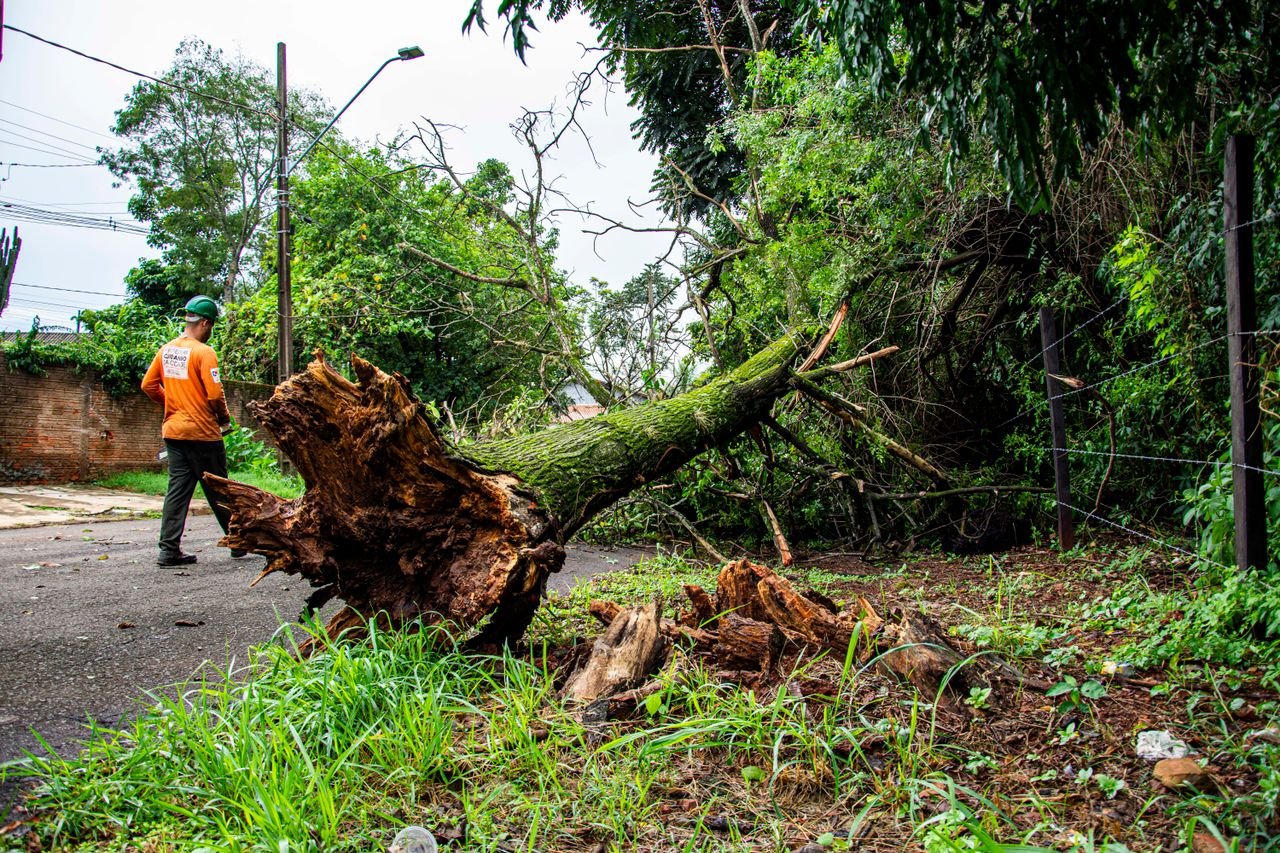
I still remember the morning after a derecho tore through our block back in 2021. The power was out, the street looked like a lumber yard, and the first thing that struck me wasn’t the mess itself — it was how many neighbors were already outside with chainsaws running, no gloves, no plan, just adrenaline and a need to “fix it now.” By the end of that week, two people on my street had ended up in urgent care. One from a kickback. The other when a limb that looked stable let go without any warning at all.
That week changed how I think about storm cleanup. In the years since, I’ve worked alongside certified arborists, insurance adjusters, and disaster-recovery crews on dozens of post-storm properties, and the lesson that keeps repeating itself is simple: the hour right after a storm is often more dangerous than the storm itself. People rush. Adrenaline overrides judgment. And trees that look “done falling” frequently aren’t.
This guide is built from that real-world experience, not copied from a generic disaster pamphlet. It covers what to actually do first, which tools are worth buying versus renting, what insurance adjusters really look for, and the mistakes I’ve personally watched people make more than once.
Table of Contents
- Safety Before Anything Else
- The First 24 Hours: A Practical Checklist
- How to Actually Assess Tree Damage
- DIY or Call a Professional? A Real Decision Framework
- Tool Comparisons: What’s Worth Buying vs. Renting
- Documenting Damage for Insurance
- Debris Removal: Your Real Options
- Mistakes I’ve Watched People Make More Than Once
- Where This Is Heading: Tech Changing Storm Cleanup
- FAQs
- Final Thoughts
- About the Author
Safety Before Anything Else
Before you pick up a single branch, walk the perimeter of your property from a distance and look for three things:
Downed power lines. Assume every line on the ground is live, even if the power is out in your house. Lines can be re-energized remotely without warning during restoration work. If you see a line anywhere near a fallen tree, stay back and call your utility company immediately. Ready.gov has a straightforward breakdown of downed-line protocol that’s worth bookmarking before storm season, not after.
Hung-up limbs, also called “widow-makers.” These are branches that broke but got caught in the canopy above instead of falling. They look stable. They are not. A gust, a nudge, or even the vibration from a chainsaw nearby can bring one down with zero warning. Never work directly underneath one.
Leaning or partially uprooted trees. If you can see soil heaved up around the base, or the trunk is at an unnatural angle, the tree’s root plate has likely failed. It can go over completely at any time, even days later. This is not a DIY cleanup situation — more on that below.
The OSHA guidance on storm damage and tree work is written for utility and municipal crews, but the hazard checklist applies just as much to homeowners with a chainsaw and a Saturday afternoon.
The First 24 Hours: A Practical Checklist
Here’s the order I actually follow on a property, and recommend to anyone I’m helping:
- Photograph everything before you touch it. Wide shots, close-ups, multiple angles. Insurance adjusters weight “as-found” photos heavily.
- Check for structural contact. Is any part of the tree resting on your roof, a power line, a fence, or a neighbor’s structure? If yes, stop and call a professional — weight distribution changes the moment you cut anything.
- Clear walkways and driveways of small, loose debris only. Twigs, leaves, small branches under wrist-thickness. Leave anything that requires lifting or cutting for later steps.
- Tarp any roof or structural openings if it’s safe to access them. A $30 tarp now can prevent thousands in water damage later.
- Do not move large limbs or trunk sections yet. Wait until you (or a pro) have assessed load and tension — this is where most injuries happen.
- Call your insurance company same-day, even if you’re not ready to file. Getting a claim number started early speeds everything up.
- Contact your municipality about debris pickup rules. Many cities have separate storm-debris collection windows that differ from regular yard waste.
How to Actually Assess Tree Damage
Not every damaged tree needs to come down. In my experience, homeowners either overreact (removing trees that would recover fine with a proper prune) or underreact (keeping trees that are a genuine hazard). Here’s a more useful lens than “does it look bad”:
The one-third rule. If less than a third of the crown (the branch structure) is damaged, most healthy trees recover well with corrective pruning. Above 50% crown loss, survival odds and structural safety both drop sharply.
Bark and cambium check. Peel back a small section of damaged bark. Underneath should be moist and greenish. If it’s dry, brown, and stringy, that section of the tree is dead tissue and won’t recover.
Trunk splits vs. branch breaks. A split trunk — especially a vertical crack running down the main stem — is usually a removal situation. Branch breaks, even large ones, are often manageable with pruning.
Root plate movement. This is the big one. Even a slight heave in the soil around the base means the root system has partially failed. These trees are unpredictable and should be treated as hazards regardless of how the canopy looks.
The International Society of Arboriculture publishes a genuinely useful post-storm tree evaluation guide that walks through this in more visual detail than I can in text — worth the five-minute read if you’re on the fence about a specific tree.
DIY or Call a Professional? A Real Decision Framework
I’ve done plenty of cleanup myself, and I’ve also called it in plenty of times. Here’s the honest line I use:
Handle it yourself if:
- Debris is on the ground, not hung up or leaning
- Branches are under 6 inches in diameter
- Nothing is in contact with power lines, structures, or your roofline
- You have proper PPE and a chainsaw you’re actually comfortable operating
Call a certified arborist or tree service if:
- Anything is touching a power line — full stop, no exceptions
- The tree is leaning with visible root movement
- You’d need a ladder to reach the damage
- A trunk is split or a large limb is hung in the canopy
- The tree overhangs a structure, driveway, or area you can’t fully control
A certified arborist (look for ISA certification specifically — find one through the ISA directory) carries the rigging, bucket trucks, and liability insurance that homeowner gear simply can’t replace. I’ve seen people save $400 on a removal and end up with a cracked windshield or a hospital bill that dwarfed the quote. It’s rarely worth it for anything beyond ground-level cleanup.
Tool Comparisons: What’s Worth Buying vs. Renting
This is the part most storm-cleanup guides skip, and it’s where people waste the most money — either overbuying gear they’ll use once, or underbuying and getting hurt. Here’s what I’ve actually used, across several cleanup jobs, with honest verdicts.
Chainsaws
| Saw | Type | Best For | Honest Verdict |
|---|---|---|---|
| Echo CS-590 | Gas, 20″ bar | Trunk sections, heavy limbs | Best value gas saw for occasional heavy use. Starts reliably even after sitting unused for months — a real plus for storm situations. Heavier than battery options, and gas storage/mixing is a hassle if you only use it once a year. |
| Stihl MS 271 | Gas, 18–20″ bar | Mixed-size branch and trunk work | Excellent build quality and the easiest gas saw I’ve used to start cold. Pricier than the Echo for similar performance, and Stihl dealer-only parts can mean waiting for service. |
| Husqvarna 450 Rancher | Gas, 18–20″ bar | All-around cleanup | Great balance of power and weight. Slightly more finicky carburetor tuning than the Echo in my experience, but performs beautifully once dialed in. |
| EGO Power+ 18″ (CS1800) | Battery | Branches under 8″, quick jobs | Genuinely impressive torque for a battery saw, and there’s no gas smell, no mixing, no pull-cord frustration. Battery life drops fast in heavy trunk work, so it’s not a full storm-cleanup replacement — more of a companion tool. |
| Fiskars Pruning Saw | Manual, folding | Small limbs, precision cuts near structures | No motor means no kickback risk, which matters near windows, siding, or fencing. Slow for anything beyond small branches, but it’s the tool I reach for when precision matters more than speed. |
Bottom line: for anything beyond light branch work, a gas saw still outperforms battery in raw stamina. The Echo CS-590 is my actual pick for a homeowner who wants one saw that handles 90% of storm cleanup without a big price tag.
Pole Saws (for high branches without a ladder)
| Tool | Reach | Verdict |
|---|---|---|
| DeWalt 20V Pole Saw (DCPS620) | ~10 ft reach | Solid mid-range option. Battery shared with other DeWalt tools if you already own the ecosystem, which is a real cost saver. |
| Fiskars Extendable Pole Saw (manual) | Up to 14–16 ft | No battery to charge, no motor to maintain — this is the one I recommend keeping on hand permanently, since it works the moment you need it, storm or no storm. |
| Greenworks 40V Pole Saw | ~8–10 ft reach | Lighter than the DeWalt, decent for smaller properties, but battery runtime is noticeably shorter on thicker branches. |
Bottom line: skip the ladder entirely if you can. A pole saw, even a manual one, removes one of the biggest injury risks in storm cleanup — losing balance while cutting overhead.
Wood Chippers: Rent, Don’t Buy (Usually)
Unless you own significant acreage and deal with brush regularly, buying a chipper rarely pencils out. A decent consumer chipper runs $600–$1,500, and most homeowners use it once every few years. Renting from a local equipment yard typically runs $80–$150 for a half-day, which covers the vast majority of storm-debris volume from a single property.
Verdict: rent. The exception is if your area gets hit by severe storms regularly (I’m looking at you, tornado-alley and hurricane-coast readers) — in that case, a mid-size chipper pays for itself within two or three storms.
Tarps, Rope, and Rigging
Don’t underestimate this category. A properly rated tarp (look for a minimum 5-mil poly or reinforced canvas) and quality rope matter more than people expect. Cheap hardware-store tarps tear within a season of UV exposure, which means the “temporary” roof patch fails right when the next storm hits. I’ve had good luck with heavier woven poly tarps rated for at least 90 mph winds — the extra $15–20 over a bargain tarp is worth it every time.
Rigging rope and pulleys are for professionals only, unless you have training. Improvised rigging with random rope from the garage is a leading cause of secondary injuries during storm cleanup — the load calculations aren’t intuitive, and a rope that looks strong enough often isn’t.
Documenting Damage for Insurance
I’ve sat in on enough insurance walkthroughs to know what actually speeds up a claim versus what slows it down.
What adjusters actually want:
- Timestamped photos from before any cleanup began
- A clear view of the tree’s point of origin (whose property it fell from, if relevant)
- Photos of any structural damage the tree caused, separate from the tree itself
- Written quotes from at least two removal or repair services
A detail most people miss: in many policies, whether a tree was already dead or diseased before the storm can affect coverage. Insurers sometimes argue a pre-existing hazard tree isn’t a covered “storm event” loss. If your tree was healthy, note that clearly in your claim notes and, if you have them, any past maintenance records. The Insurance Information Institute has a clear breakdown of how tree-damage claims typically get evaluated, including the often-confusing question of whose insurance pays when a neighbor’s tree falls on your property.
Debris Removal: Your Real Options
| Option | Cost | Best For |
|---|---|---|
| Municipal storm debris pickup | Free (with your taxes) | Most residential cleanup — check your city’s specific storm pickup window, which usually differs from regular yard waste days |
| Curbside chipping service (often run by the city or utility) | Free to low-cost | Branches cut to specified lengths, usually under 6″ diameter |
| Rented chipper + self-haul | $80–150/day | Larger properties or dense brush |
| Junk removal service (app-based, like 1-800-GOT-JUNK or local haulers) | $150–400 per load | When you want it gone same-day and don’t want to deal with logistics |
| Full-service tree removal company | $400–3,000+ depending on tree size | Large trees, anything requiring rigging or crane work — usually includes debris hauling in the quote |
Honest tip: ask any tree removal company whether debris haul-away is included before you accept a quote. It’s a common upsell, and the difference between “removal only” and “removal plus haul-away” can be a few hundred dollars you didn’t budget for.
Mistakes I’ve Watched People Make More Than Once
Cutting from underneath a hung-up limb. This is the single most common serious injury I’ve seen. The limb releases suddenly once tension changes, and there’s no time to react.
Ignoring spring-loaded branches. A branch bent under load — pinned by another branch or the ground — stores enormous energy. Cutting it in the wrong spot can cause it to whip back violently. If a branch looks bent under tension, treat it like a loaded spring, not a static object.
Using a ladder near a compromised tree. Ladders and chainsaws together are already a risky combination. Add an unstable tree, and you’ve stacked two of the top causes of tree-work injuries.
Not checking for embedded metal. Old fence wire, nails from long-gone tree houses, or hardware from decades-old swing sets can be buried inside a trunk. Hitting metal with a chainsaw chain is a serious kickback risk — and it happens more often than people expect on older properties.
Rushing the insurance call. Waiting a week to report damage “until things calm down” genuinely slows claims. Adjusters prioritize based on report date in high-volume storm events, not damage severity.
Where This Is Heading: Tech Changing Storm Cleanup
A few shifts I’ve noticed over the past couple of years that are genuinely changing how this work gets done:
Drone-based damage assessment is becoming standard for larger properties and municipalities. Instead of a human climbing to inspect canopy damage, a drone pass gives arborists a clear view of hung limbs and crown damage from a safe distance — faster and safer than the old method.
AI-assisted insurance estimating is speeding up claims processing. Several major insurers now use image-recognition tools to pre-assess damage severity from submitted photos, which is part of why clear, well-lit, multi-angle photos matter more than ever for getting a fair initial estimate.
Smarter chainsaw safety tech — automatic chain brakes triggered by kickback sensors, not just inertia — are trickling down from professional-grade saws into the consumer market. I expect this to become close to standard within the next several years, the same way anti-kickback guards became universal.
None of this replaces good judgment on the ground, but it’s making the process measurably safer and faster than it was even five years ago.
FAQs
How soon can I start cleanup after a storm? Once the storm has fully passed and you’ve confirmed no live wires or unstable trees are involved, ground-level debris clearing is generally safe immediately. Anything overhead or structural should wait for full daylight and a clear-headed assessment — fatigue and adrenaline are genuine safety risks in the immediate aftermath.
Do I need a permit to remove a storm-damaged tree? It depends on your municipality and sometimes on the tree species — some cities protect certain native or heritage trees even when storm-damaged. A quick call to your local planning or public works department before removal avoids fines in stricter jurisdictions.
Will my homeowner’s insurance cover tree removal? Usually yes, if the tree caused damage to a structure or blocked a driveway/entrance. Simply having a tree fall in your yard with no property damage is often not covered — policies vary significantly here, so check your specific declarations page.
What if my neighbor’s tree fell on my property? In most U.S. states, your own homeowner’s policy covers the damage regardless of whose tree caused it, though your insurer may pursue reimbursement from the neighbor’s insurer if negligence (like a known-dead tree) is involved.
Can a tree survive losing half its branches? It depends heavily on species and overall health beforehand. Some species, like willows and maples, recover surprisingly well. Others, like many conifers, rarely recover from major crown loss and are better candidates for removal.
Is it safe to remove a leaning tree myself? No — this is one of the clearest “call a professional” situations. Leaning trees with root movement are unpredictable and have caused serious injuries even to experienced tree workers without proper rigging.
Final Thoughts
Storm cleanup rewards patience more than speed, even though every instinct in the moment says otherwise. The properties I’ve seen come through storm damage the best weren’t the ones cleaned up fastest — they were the ones where people took an extra hour to actually assess what they were dealing with before picking up a saw. That pause is genuinely the most valuable tool in the entire process, and it doesn’t cost anything.
If there’s one thing worth taking away from all of this, it’s that a damaged tree is rarely an emergency in the way it feels like one. The real emergency is a downed power line or a hung limb over a spot you haven’t secured yet. Handle those first, breathe, and the rest of the cleanup becomes a much more manageable and safer job.
About the Author
This guide was compiled by a disaster-recovery researcher who has spent the past several years documenting post-storm property recovery, working alongside ISA-certified arborists, insurance claims adjusters, and municipal debris-management teams across multiple storm-affected regions. Their work focuses on translating field-level cleanup practices into clear, practical guidance for homeowners navigating storm recovery for the first time. This article reflects direct, hands-on experience from real cleanup jobs rather than secondhand or generic safety literature.