



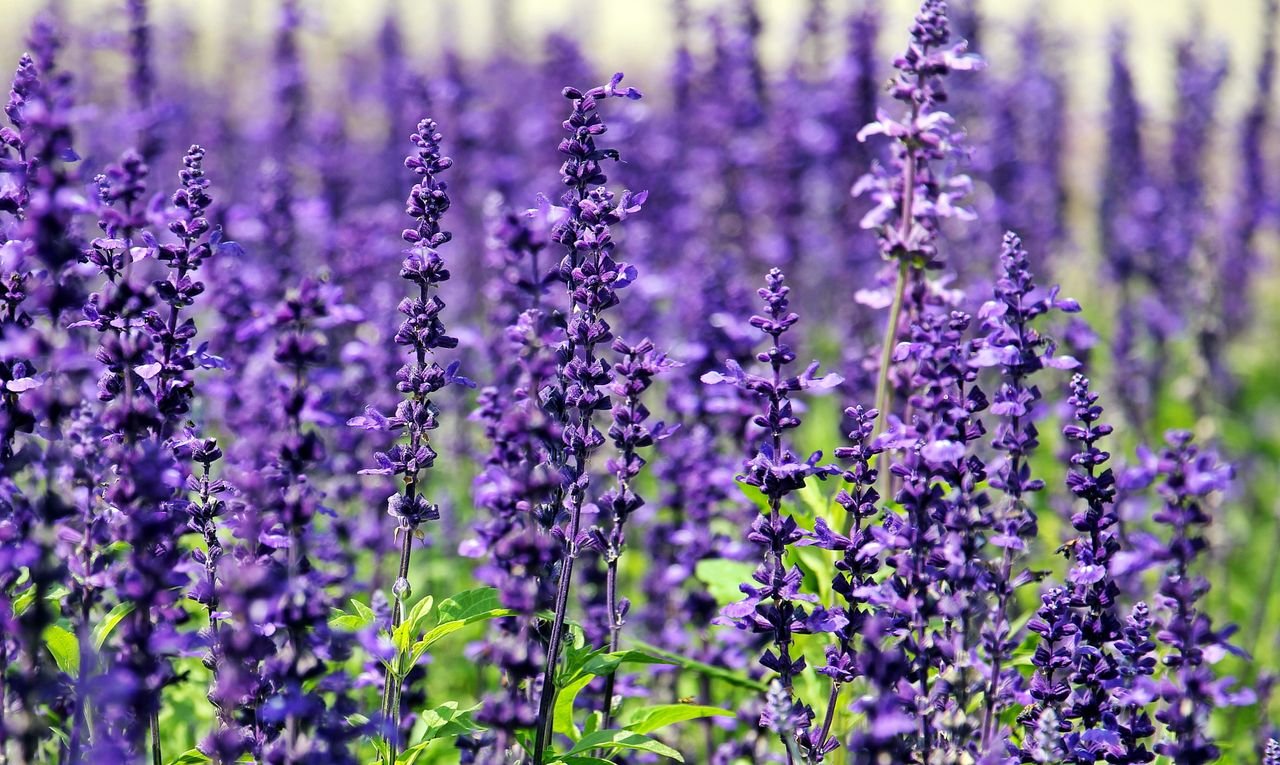
The first year I planted lavender, I nearly gave up on it in June. I’d seen photos of those endless purple rows in Provence and assumed my little border plants were behind schedule or just failing. Turns out I’d planted English lavender, which was doing exactly what it’s supposed to do — building root and foliage first, saving the real show for a few weeks later. The plant wasn’t struggling. I just didn’t understand its timeline yet.
That confusion is incredibly common, and it usually comes down to one thing: people talk about “lavender” like it’s a single plant with a single bloom schedule, when in reality there are several distinct types, each with its own rhythm. After several seasons of growing multiple lavender varieties side by side — partly out of curiosity, partly because I kept buying “just one more” at the garden center — I’ve got a much clearer picture of what actually drives bloom timing, and where most of the guesswork people have is coming from.
Table of Contents
- The Short Answer
- Why Bloom Time Isn’t the Same for Every Lavender
- Bloom Times by Lavender Type
- How Climate and Hardiness Zone Shift the Timeline
- Getting More Blooms: What Actually Works
- First-Year vs. Established Plants: Realistic Expectations
- Signs Your Lavender Is About to Bloom
- Extending the Bloom Season
- Mistakes That Delay or Prevent Blooming
- Where Lavender Growing Is Headed
- FAQs
- Final Thoughts
- About the Author
The Short Answer
Most lavender varieties bloom sometime between late spring and mid-summer, with the bulk of Northern Hemisphere gardens seeing peak color from June through July. But that window shifts significantly depending on which type of lavender you’re growing, your climate zone, and whether the plant is established or still in its first year. Spanish lavender can bloom as early as April in mild climates, while lavandin hybrids often peak in late July. If you’re in the Southern Hemisphere, shift all of this roughly six months — think November through January.
If you want the full picture instead of just a rough window, keep reading — the variety you’re growing matters more than almost anything else.
Why Bloom Time Isn’t the Same for Every Lavender
“Lavender” is a genus (Lavandula), not a single species, and the differences between the common types aren’t cosmetic — they affect cold hardiness, bloom duration, fragrance intensity, and timing in ways that genuinely surprise first-time growers.
English lavender (Lavandula angustifolia) is the hardiest of the common types and the one most often used for culinary purposes. It blooms later than the others but tends to have the longest-lasting individual bloom period.
French lavender (Lavandula dentata) has distinctive toothed, fringed leaves and isn’t reliably cold-hardy outside warmer zones. It blooms earlier and, in the right climate, almost continuously.
Spanish lavender (Lavandula stoechas), recognizable by its rabbit-ear-shaped bracts on top of each flower spike, is the earliest bloomer of the group by a wide margin, but it’s also the least cold-tolerant.
Lavandin (Lavandula x intermedia), a hybrid between English lavender and spike lavender, is what you’re actually looking at in most of those famous Provence lavender fields. It blooms later in summer, produces noticeably longer stems, and is prized commercially for its higher oil yield.
Bloom Times by Lavender Type
| Variety | Typical Bloom Window (Northern Hemisphere) | Cold Hardiness | Notes |
|---|---|---|---|
| English lavender (L. angustifolia) | Late May – July | USDA zones 5–9 | Most cold-hardy common type; good for reblooming with proper deadheading |
| French lavender (L. dentata) | Nearly year-round in mild climates, peak spring–summer | USDA zones 8–10 | Needs winter protection or container growing in colder zones |
| Spanish lavender (L. stoechas) | March – May, sometimes rebloom in fall | USDA zones 7–9 | Earliest bloomer; distinctive “rabbit ear” bracts |
| Lavandin (L. x intermedia) | Mid-July – August | USDA zones 5–8 | Later, showier bloom; the type used in most commercial lavender fields |
Honest take: if you want blooms as early as possible in the season, Spanish lavender wins by a wide margin. If you want the longest-lasting, most fragrant, most cold-tolerant option for a typical home garden, English lavender is still the most reliable all-around choice — which is probably why it’s the one most garden centers stock by default.
How Climate and Hardiness Zone Shift the Timeline
Bloom windows shift earlier in warmer zones and later in cooler ones, sometimes by a full month or more. A gardener in USDA zone 9 might see English lavender blooming in late May, while a zone 6 gardener with the same variety might not see flowers until mid-July. The USDA Plant Hardiness Zone Map is worth checking if you’re not certain of your exact zone — soil temperature at planting time affects the whole season’s timeline more than most people expect.
Microclimates matter too, more than garden guides usually admit. A south-facing bed against a stone wall can run measurably warmer than an open bed twenty feet away, which is often why two lavender plants in the “same” garden bloom on noticeably different schedules.
Getting More Blooms: What Actually Works
This is where most of the real troubleshooting happens, and it’s also where tool and product choice genuinely matters.
Pruning Shears Comparison
Deadheading and post-bloom pruning are the single biggest factors in whether lavender reblooms and how bushy it stays long-term. Not all pruners are equal for this job.
| Tool | Best For | Verdict |
|---|---|---|
| Felco 2 bypass pruners | Precision deadheading, established woody stems | The sharpest, cleanest cut of anything I’ve used, and the blade holds an edge for years. Pricier than most home gardeners expect to spend on pruners, but if you’re maintaining several lavender plants long-term, it’s a genuine buy-once tool. |
| Fiskars softgrip bypass pruners | General deadheading and light shaping | Excellent value and comfortable for long sessions — this is what I actually reach for most days. Blade sharpness degrades faster than the Felco over a few seasons of heavy use. |
| Garden shears (hedge-style) | Shaping a whole hedge of lavender at once | Much faster for a mass planting or lavender hedge than individual pruners, but less precise — fine for shaping, not ideal for careful deadheading. |
| Kitchen scissors (in a pinch) | Light, occasional deadheading | Works fine for a couple of plants if you don’t own dedicated pruners, but they dull fast on woody lavender stems and aren’t built for repeated use. |
Bottom line: for anyone growing more than a plant or two, a proper bypass pruner pays for itself within a season, both in plant health and in how much faster the job goes.
Fertilizer: Less Is Genuinely More
This surprises a lot of new gardeners, but lavender actually performs worse with rich, heavily fertilized soil. It evolved in poor, rocky Mediterranean soils, and excess nitrogen pushes leafy growth at the expense of blooms.
| Approach | Verdict |
|---|---|
| No fertilizer, just well-draining soil | Honestly the best approach for most established lavender. Amending soil with sand or grit at planting time does more for bloom quality than any fertilizer will. |
| Light bone meal at planting | A reasonable one-time boost for phosphorus, which supports flowering. Not necessary for established plants. |
| Balanced all-purpose fertilizer | Generally a mistake for lavender specifically — it tends to produce a leafier, floppier plant with fewer blooms. Save it for your vegetable beds instead. |
First-Year vs. Established Plants: Realistic Expectations
A first-year lavender plant, especially one grown from a small nursery starter, often puts most of its energy into root establishment rather than flowering. Don’t be surprised by a thin, delayed, or nearly absent bloom in year one — this is normal, not a sign of a problem. Most varieties hit their real stride in year two or three, once the root system is well established and the woody framework of the plant has matured. I’ve had plants that looked genuinely unimpressive their first summer turn into full, fragrant mounds covered in bloom spikes by their third year, with no change in care whatsoever.
Signs Your Lavender Is About to Bloom
Watch for flower spikes elongating above the foliage — these start green and slender before any color shows, usually two to three weeks ahead of visible bloom. New silvery-green growth at the stem tips is another early signal, especially after a round of spring pruning. If you’re seeing healthy foliage growth but no spike formation well into your variety’s expected window, that’s usually a sign of either too much shade, too much nitrogen, or a plant that’s still too young — not a lost cause, just a timing issue.
Extending the Bloom Season
Planting more than one lavender type is genuinely the most effective way to extend color in a garden bed, since each type’s bloom window overlaps only partially with the others. A combination of Spanish lavender for early spring color, English lavender through early summer, and lavandin for a late-summer finish can realistically stretch flowering across four to five months in a favorable climate.
Deadheading spent spikes promptly on English lavender specifically can trigger a lighter secondary bloom in early fall, though it’s rarely as full as the first flush. This doesn’t work reliably on Spanish or French lavender, which have different growth habits.
Mistakes That Delay or Prevent Blooming
Overwatering, by far the most common issue I see. Lavender genuinely prefers to be on the dry side between waterings. Consistently damp soil, especially heavy clay that doesn’t drain, leads to weak growth and root problems long before it shows up as an obvious bloom issue.
Planting in partial shade and expecting full bloom. Lavender wants a minimum of six hours of direct sun, and ideally more. A plant getting four hours of dappled light will survive but rarely put on a strong flowering show.
Skipping the post-bloom prune entirely. Without pruning, lavender plants get increasingly woody and sparse at the base over a few years, and bloom production noticeably declines. A light shape-up after the main bloom, cutting back roughly a third of the plant, keeps it productive for years longer.
Mismatching variety to climate. Planting Spanish or French lavender in a zone 5 garden without any winter protection is one of the more common disappointments I hear about — the plant simply isn’t built to survive that cold, regardless of bloom timing questions.
Where Lavender Growing Is Headed
A few real shifts I’ve noticed in the lavender-growing world over the past couple of years:
Cold-hardy cultivar breeding has picked up noticeably, with newer English lavender cultivars pushing hardiness further into colder zones than was reliably possible a decade ago. This is opening up serious lavender growing to gardeners in regions that previously had to treat it as an annual or container plant.
Xeriscaping and drought-tolerant landscaping have pushed lavender into far more mainstream use, especially in the western U.S., where water-conscious garden design has made low-water bloomers like lavender genuinely fashionable rather than a niche cottage-garden plant.
Lavender-adjacent agritourism — u-pick farms and lavender festivals timed to peak bloom — has grown enough that several regions now publish predicted bloom-peak dates each year, similar to how some areas track cherry blossom timing. It’s a small but telling sign of how much more mainstream attention lavender’s bloom cycle is getting.
FAQs
Does lavender bloom more than once a year? Some varieties, especially English lavender, can produce a lighter secondary bloom in early fall if deadheaded promptly after the main summer flush. It’s rarely as full as the first bloom, but it’s a real and fairly common occurrence.
Why is my lavender not blooming at all? The most common causes, in order of likelihood, are insufficient direct sunlight, soil that’s too rich or holds too much moisture, and the plant simply being too young. Check sun exposure and soil drainage before assuming anything is seriously wrong.
How long does a single lavender bloom period last? Individual flower spikes typically stay in bloom for three to four weeks, though the overall “bloom season” for a plant, accounting for spikes opening at slightly different times, can stretch six to eight weeks for English lavender.
Can I grow lavender indoors year-round for continuous blooms? It’s possible with a very sunny south-facing window or grow lights, but indoor lavender rarely blooms as reliably as outdoor plants — it needs more direct light than most indoor spaces naturally provide.
Is it normal for lavender not to bloom its first year? Yes, this is extremely common and not a sign of a problem. Most lavender plants focus on root and foliage establishment in year one and hit full bloom potential by year two or three.
What month does lavender bloom in Provence, France? Peak bloom for the lavandin fields most commonly photographed there typically runs from mid-July through early August, though English lavender in the same region can start blooming several weeks earlier.
Final Thoughts
If there’s one thing I’d want a first-time lavender grower to take away from all this, it’s that the plant isn’t being difficult when it doesn’t bloom on the schedule you expected — it’s just following a rhythm that depends on variety, climate, and age in ways most nursery tags never explain. Once you know which type you’re actually growing and roughly what its natural window looks like, the whole guessing game mostly disappears, and what’s left is just watching for those first silvery spikes to start climbing above the foliage, which is honestly one of the more satisfying moments in a garden year.
About the Author
This guide was written by a horticultural researcher and hands-on gardener who has grown multiple lavender varieties side by side across several seasons to document real bloom timing, care outcomes, and variety-specific differences. Their work focuses on translating practical, field-tested growing experience into clear guidance for home gardeners, rather than relying on generic plant-tag advice.