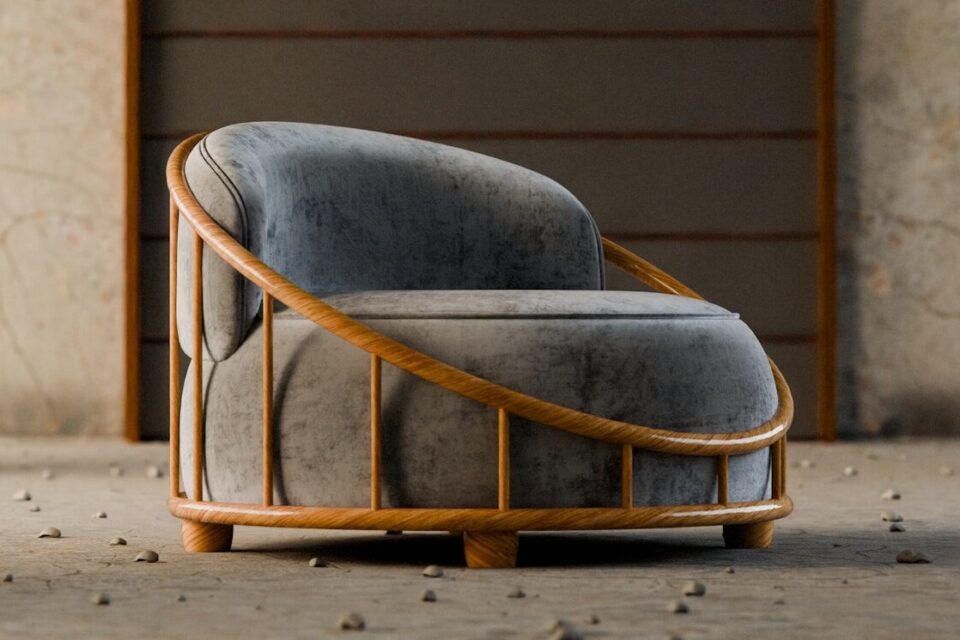
A client once described the barrel chairs in her reading nook as “the piece of furniture that finally made the corner feel like a room instead of leftover space.” I think about that comment a lot, because it’s exactly what a good barrel chair does it fills an awkward corner or a bare wall with something that has enough presence to matter but not so much bulk that it takes over.
I’ve now specified barrel chairs for probably thirty different spaces, sat in more of them than I can count in showrooms, and returned two that looked perfect online and felt like sitting in a barrel-shaped disappointment in person. Here’s what actually matters when you’re choosing one.
Table of Contents
- What Actually Makes a Chair a “Barrel Chairs”
- Barrel Chair vs Other Accent Chair Styles
- The Anatomy of a Well-Built Barrel Chair
- Best Barrel Chairs by Budget Tier — A Real Comparison
- Room-by-Room Guide
- Fabric and Upholstery Choices
- Swivel Base vs Stationary Legs
- Sizing and Proportion: Getting the Scale Right
- Buying Tools Compared: AR Apps, Showrooms, and Reviews
- Mistakes I See Constantly
- Where Barrel Chairs Are Headed
- FAQs
- Final Thoughts
What Actually Makes a Chair a “Barrel Chair”
The name comes from the shape, not the size a barrel chair has a rounded, enclosed back that curves around the sides like the staves of a wooden barrel, usually without separate visible arms. That continuous curve is the whole point. It reads softer and more sculptural than a boxy club chair, and it gives you a sense of being tucked in without the heaviness of a wingback.
The design has real mid-century roots. Designers like Edward Wormley popularized barrel-shaped upholstered chairs in the 1950s as a counterpoint to the stiffer, more formal club chairs of earlier decades, and that lineage still shows up in how contemporary barrel chairs are marketed — almost always as the “warmer” or “softer” alternative in a furniture line, sitting next to a boxier option.
What’s changed since then is proportion and materials. Modern barrel chairs tend to be lower to the ground, wider in the seat, and far more likely to sit on a swivel base than the original stationary wood-leg versions. The silhouette is the same; the way you actually sit in one has evolved quite a bit.
Barrel Chair vs Other Accent Chair Styles
People often ask me why they’d choose a barrel chair over a wingback or a slipper chair, and the honest answer usually comes down to how the room is used and how much visual weight you want in the corner.
| Style | Silhouette | Best Use | Formality |
|---|---|---|---|
| Barrel chair | Rounded, enclosed back, no distinct arms | Reading nooks, casual living rooms, bedrooms | Casual to transitional |
| Wingback | Tall, angled “wings” at the head | Formal living rooms, fireside seating | Formal |
| Club chair | Boxy, deep-seated, thick rolled arms | Masculine dens, libraries | Transitional |
| Slipper chair | Low profile, no arms, straight back | Small spaces, extra seating, bedrooms | Casual |
| Accent swivel chair | Similar to barrel but often straighter-backed | Home offices, conversation areas | Casual to modern |
If I had to generalize: barrel chairs win when you want something that reads as intentional and a little sculptural without pushing the room toward formal. Wingbacks and club chairs both carry more visual weight and a more traditional feel, which isn’t a bad thing — it’s just a different job.
The Anatomy of a Well-Built Barrel Chair
This is the section that actually determines whether your chair lasts five years or fifteen, and it’s the part most product listings gloss over.
Frame material. Kiln-dried hardwood is what you want underneath the upholstery. Particleboard or softwood frames are common in budget chairs and are the first thing to fail — usually at the joints where the arms curve into the back. You can’t always see the frame in a listing, but customer reviews mentioning wobbling or creaking after a year or two are a reliable red flag.
Cushion fill. High-density foam holds its shape longest and is what I recommend for daily-use chairs. A foam-and-down blend feels more luxurious initially — that sink-in softness — but tends to need more frequent fluffing and can flatten faster in a chair that gets heavy daily use. Down-only fill is the least practical for a chair, though it shows up occasionally in premium lines marketed on comfort alone.
Seat suspension. Look for eight-way hand-tied springs or a sinuous (S-spring) system underneath the cushion. Webbing alone, common in the cheapest chairs, tends to sag noticeably within a year or two of regular use.
Swivel mechanism (if applicable). A metal swivel base with a locking mechanism holds up far better over time than a plastic base, which is more prone to squeaking and eventually seizing up.
Best Barrel Chairs by Budget Tier
I’ve sat in and specified chairs across all of these tiers for actual client projects. Here’s my honest read.
| Tier | Price Range | What You’re Actually Getting | My Verdict |
|---|---|---|---|
| Budget (big-box retailers, Wayfair house brands) | $ | Softwood or particleboard frame, standard foam, fabric quality varies widely | Fine for a low-use guest room or a first apartment, but don’t expect it to survive a move or five years of daily sitting. Check the return window before buying, since fit and comfort are hardest to judge at this tier from photos alone. |
| Mid-range (West Elm, Article, Joybird, CB2) | $$ | Hardwood frame, high-density foam, better fabric options, often customizable | This is where I steer most clients. Article’s barrel-style chairs and West Elm’s swivel barrel options both hold up well in real homes, and the ability to choose your own fabric on some models is genuinely useful for matching an existing room. |
| Premium (Design Within Reach, higher-end designer reissues) | $$$ | Solid hardwood, eight-way hand-tied springs, premium leather or performance fabric | Noticeably better construction and longer warranties, and worth it if this is a piece you plan to keep for a decade or more. The price jump from mid-range is real, but so is the difference in how the chair feels after three years of use. |
| Vintage or reproduction | Varies widely | Depends entirely on condition and original construction quality | A well-cared-for vintage barrel chair from an estate sale or vintage dealer can outperform a brand-new budget chair by a wide margin, but reupholstering costs should be factored into your total budget — they’re rarely cheap. |
My honest recommendation for most people: mid-range is the sweet spot. You’re paying for real hardwood and foam quality without the premium markup that mostly buys you brand name and marginally better spring systems.
Room-by-Room Guide
Living rooms. This is the classic home for a barrel chair, usually paired with a sofa as an accent seat rather than the primary seating. A single barrel chair in a bold fabric works as a focal point; a pair flanking a fireplace or window creates a more formal, symmetrical look.
Bedrooms.
A barrel chair in a corner does double duty as a reading spot and a place to toss clothes (we all do it). Because bedroom chairs get lower daily use than living room seating, this is one place where a slightly less structurally robust mid-range chair is perfectly reasonable.
Home offices.
A swivel-base barrel chair works surprisingly well as a secondary seat for a home office — somewhere a guest or a video call participant can sit that isn’t the desk chair. Choose a slightly firmer foam fill here, since it’s more likely to be sat in for longer stretches than a purely decorative accent chair.
Entryways.
In a larger entry, a barrel chair adds warmth without blocking traffic flow the way a bulkier bench or settee might. Skip delicate fabrics here — an entryway chair takes more incidental wear (bags set down, coats draped over the arm) than people expect.
Dining rooms.
An emerging trend I’ve seen more of in the last couple of years: swapping one or two dining chairs at the head of the table for upholstered barrel-style chairs, which adds visual softness to an otherwise matching set. This works best when the barrel chair’s seat height closely matches the rest of the dining set — check this measurement carefully, since dining table clearance is unforgiving of even an inch of difference.
Primary suite sitting areas.
For a larger primary bedroom with a dedicated sitting nook, a pair of barrel chairs with a small side table between them reads as intentional and hotel-suite-like without requiring a full second seating arrangement.
Fabric and Upholstery Choices
Performance fabric (stain-resistant woven textiles) has become the default recommendation for most households, especially with kids or pets in the house. It’s come a long way in look and feel over the past several years — it no longer automatically looks or feels like outdoor furniture fabric the way early versions did.
Velvet photographs beautifully and adds real richness to a room, but it shows crushing and wear patterns faster in high-use chairs. I recommend it for lower-traffic rooms — primary suites, formal living rooms — over daily-use family room chairs.
Boucle has been the breakout upholstery choice of the last few years, and for barrel chairs specifically, its nubby texture actually complements the rounded silhouette in a way flat fabrics don’t always achieve. The tradeoff is that boucle can pill over time with heavy use and is genuinely harder to clean than a tightly woven performance fabric.
Leather is the most durable option for genuinely heavy daily use, and ages well if it’s real leather rather than bonded leather, which cracks and peels within a few years. It’s a warmer, more casual look on a barrel chair than on a boxier club chair, since the curved shape softens leather’s typically more masculine associations.
Swivel Base vs Stationary Legs
Swivel bases have become the more popular choice for a reason — they make a barrel chair function more like a conversation-friendly seat, letting you turn toward whoever’s talking without the chair needing to be repositioned. They’re particularly useful in open-concept living spaces where a chair might need to face the TV at one moment and a group conversation the next.
Stationary wood-leg versions read as slightly more traditional and tend to have a lower profile overall, which can suit smaller rooms where a swivel base’s slightly bulkier mechanism underneath would feel disproportionate. If floor space is tight, a stationary-leg barrel chair also tends to have a smaller footprint since it doesn’t need clearance space to rotate.
Sizing and Proportion
This is where online furniture shopping goes wrong most often. A barrel chair that looks perfectly proportioned in a product photo, shot in a large, high-ceilinged showroom, can look oversized or undersized in your actual room depending on ceiling height and surrounding furniture scale.
A few measurements worth checking against your own space before buying:
- Seat height should generally match or come close to your sofa’s seat height if the chair sits nearby, so the eye reads them as part of the same seating group.
- Overall width, including the widest point of the curved back, matters more for a barrel chair than for a boxier style, since the curve extends the visual footprint slightly beyond the base measurement.
- Arm height, where applicable, should sit at a comfortable resting height relative to your own proportions — this is genuinely hard to judge from a listing and is one of the best reasons to sit in a floor model if one’s available nearby.
Buying Tools Compared
In-store testing. Still the most reliable way to judge comfort, and the only way to genuinely assess cushion firmness and seat depth before buying. The limitation is selection — most local stores carry only a handful of barrel chair styles, so you may need to test a similar style rather than your exact final choice.
AR/room-visualizer tools (Wayfair’s View in Room 3D, similar tools from other major retailers). You can place a to-scale digital model of the chair in a photo of your actual room. Honest verdict: genuinely useful for catching proportion problems before they become an expensive return, and noticeably more reliable for furniture than for something like paint color, since scale and shape translate more accurately than color and texture do on a screen.
Customer review aggregation. Reading a large volume of reviews, rather than the top two or three, is the most useful way to catch frame-quality issues that don’t show up in professional product photography. Look specifically for reviews written six months to a year after purchase rather than immediate unboxing reviews, since structural problems in cheaper chairs tend to surface after that point, not immediately.
My actual recommendation: use an AR tool to confirm scale, sit in a comparable floor-model chair if your local stores carry one, and read a stack of older reviews for the specific model before finalizing a purchase — especially for anything in the budget or mid-range tier, where construction quality varies most.
Mistakes I See Constantly
The most common one is buying based purely on the photo’s styling rather than checking actual dimensions against the room — a barrel chair photographed in a spacious loft can look deceptively compact.
The second is prioritizing fabric trendiness over practicality for the room’s actual use — a stunning velvet or boucle chair in a high-traffic family room often looks worn within a year, while the same fabric in a low-use bedroom nook can look pristine for a decade.
The third, more subtle mistake is ignoring seat height mismatch when a barrel chair is placed next to a sofa or dining set. Even a small height difference is more noticeable in person than people expect, and it disrupts the sense that the pieces belong together.
Where Barrel Chairs Are Headed
The broader curved-furniture trend that’s been building for the past several years shows no signs of slowing, and barrel chairs are benefiting directly from it — their inherently soft, rounded silhouette fits naturally into rooms that are increasingly moving away from sharp, angular furniture lines.
I’m also seeing more sustainable and higher-quality construction becoming a stronger selling point in mid-range lines, not just premium ones — several brands are now advertising FSC-certified wood frames and recycled fill materials as standard rather than a premium upcharge, which suggests the mid-range tier is closing some of the construction-quality gap with premium brands over time.
FAQs
Are barrel chairs comfortable for tall people? It depends heavily on seat depth and back height rather than the barrel shape itself. Taller people should pay close attention to overall chair height and seat depth measurements rather than assuming the rounded silhouette itself affects comfort.
Can a barrel chair work as a primary seat, not just an accent? Yes, especially wider, deeper models marketed as “lounge” barrel chairs. Just be aware that a chair built primarily as a decorative accent piece may have shallower, firmer cushioning than one designed for extended daily sitting.
Do barrel chairs work in small apartments? Generally yes, and often better than boxier alternatives, since the rounded shape has less visual bulk than a squared-off club chair of the same actual footprint.
How do I clean a fabric barrel chair? This depends entirely on the specific fabric — performance fabrics are typically the easiest to spot-clean, while velvet and boucle usually require professional cleaning for anything beyond light surface dust.
Is a swivel base worth the extra cost? For a chair that will be used in conversation-heavy spaces or open-concept rooms, yes. For a purely decorative accent chair in a corner that won’t be repositioned often, a stationary base is a reasonable way to save on cost without losing much practical function.
Final Thoughts
A good barrel chair does something most accent furniture doesn’t — it makes a corner or a bare stretch of wall feel considered rather than incidental, without demanding the formality or bulk of a wingback or club chair. The shape has stayed remarkably consistent since its mid-century origins for a simple reason: it works, in nearly any style of room, at nearly any budget, as long as you pay attention to what’s actually holding it together underneath the fabric. Get the frame and fill right, get the scale right for your specific room, and the rest is really just picking a color you’ll still like in five years.
About the Author
Marcus Reyes is a furniture and interior materials specialist who has spent his career sourcing, testing, and specifying upholstered seating for residential design projects. His work focuses on frame construction, upholstery durability, and how furniture proportion affects a room’s overall feel, and he routinely tests chairs across budget tiers firsthand rather than relying on manufacturer specifications alone. He writes about furniture buying with an emphasis on long-term durability and honest, tested comparisons over showroom styling.