
I’ve torn out more bad foundation plantings than I can count. Overgrown junipers swallowing porch steps, boxwoods pruned into sad little cubes that block every window, arborvitae planted eighteen inches from brick and now shoving against the siding like they’re trying to get inside the house. Almost every one of these problems traces back to the same root cause: the hedge was chosen and planted without anyone thinking past year one. A foundation hedges is one of the few landscaping decisions that actually gets more consequential with time.
Plant it right, and it quietly does its job for twenty or thirty years softening the hard line where house meets ground, framing the entryway, giving the whole property a sense of being cared for. Plant it wrong, and you’re looking at a multi-year fight with pruning shears, or worse, a full removal and re-do.
This guide is everything I wish someone had handed me the first time I designed a foundation planting: what actually works, what looks good in a catalog photo but turns into a maintenance nightmare, and how to think about spacing, tools, and long-term care before a single shovel goes in the ground.
Table of Contents
- What Exactly Is a Foundation Hedges?
- Why Foundation Hedges Still Matter
- Site Assessment: What to Check Before You Plant
- The Best Plants for Foundation Hedges
- Design Tips That Actually Prevent Future Problems
- Step-by-Step Planting Guide
- Hedge Trimmer & Tool Comparison: What I’ve Actually Used
- Ongoing Care and Pruning Schedule
- Pest and Disease Management
- Seasonal Care Calendar
- Mistakes I See Over and Over
- Where Foundation Hedges Design Is Heading
- FAQs
- Final Thoughts
- About the Author
What Exactly Is a Foundation Hedges?
A foundation hedge is a line of shrubs planted along the base of a building, typically running parallel to the walls. The term comes from a very practical origin: early 20th-century homes had tall, exposed concrete or stone foundations, and homeowners planted shrubs to visually “ground” the house hiding that raw foundation line and connecting the structure to the landscape.
Modern homes rarely need that visual cover-up anymore, but the design habit stuck around because it still works. A well-planned hedge does three things at once: it softens architecture, it creates a transition zone between the lawn and the house, and it gives you a living frame for windows, doors, and porches.
It’s worth separating this from a privacy hedge or a boundary hedge, which serve a different purpose (screening a neighbor’s view, marking a property line) and are usually planted taller and further from structures. Foundation hedges live in a tighter, more constrained space, which is exactly why plant selection matters so much more here than almost anywhere else in the yard.
Why Foundation Hedges Still Matter
I’ll be honest — some of the old reasons for foundation planting don’t really apply anymore. But the ones that remain are genuinely worth planning around:
- Curb appeal and resale value. Real estate agents will tell you plant beds near the entry are one of the first things buyers notice, even subconsciously, in the first ten seconds of pulling up to a house.
- Microclimate benefits. Evergreen hedges planted on the north or west side of a house can reduce wind chill against exterior walls in winter, and shade on the south/west side can measurably reduce cooling load in summer.
- Erosion and splash-back control. Bare soil next to a foundation erodes and splashes mud onto siding during heavy rain. A hedge’s root mass and canopy break that up.
- Screening utility elements. Meters, vents, downspouts, and crawlspace access panels are all things a well-placed hedge can visually soften without fully hiding (you still need access).
- Sound and privacy at ground level. Even a modest 3-foot hedge changes how exposed a ground-floor window or patio feels.
None of that is groundbreaking, but it’s worth stating plainly because it shapes the decisions later — you’re not just picking “a pretty shrub,” you’re picking a plant that has to perform several functional jobs in a narrow strip of soil for decades.
Site Assessment: What to Check Before You Plant
This is the step almost everyone skips, and it’s the one that determines whether your hedge looks good in year ten or becomes a problem in year three.
Distance from the foundation
I plant most shrubs no closer than 18 to 36 inches from the foundation wall, measured to where the trunk will sit at maturity — not where it looks fine as a one-gallon nursery plant. Roots close to a foundation aren’t usually a structural threat to poured concrete (that fear is overstated for most residential shrubs), but branches and foliage pressed against siding trap moisture, invite pests, and block drainage from the roofline. Overhangs matter too — plant far enough out that mature growth doesn’t sit directly under a drip line with no gutter.
Sun exposure by side of house
- South-facing: Full sun, heat-reflected off walls — go with sun-tolerant, heat-hardy species.
- North-facing: Often shaded most of the day, especially under eaves — this is where a lot of foundation hedges fail because people plant sun-lovers here.
- East-facing: Gentle morning sun, generally the easiest exposure to work with.
- West-facing: Intense afternoon sun plus reflected heat — one of the toughest spots, especially near dark-colored siding.
Soil and drainage
Foundation beds are notorious for compacted, construction-disturbed soil, often full of buried debris from the original build. Dig a test hole, fill it with water, and see how long it takes to drain. If water is still sitting after four hours, you either need to amend heavily, install drainage, or pick a plant genuinely tolerant of wet feet (a shorter list than most catalogs admit).
Roofline and downspouts
Check where water sheds off the roof. Planting directly under an unguttered drip edge means your hedge takes a battering every heavy rain and the soil erodes faster than anywhere else in the bed.
Mature size math
This is the one I can’t stress enough: look up the mature height and width, not the size on the plant tag photo. A “compact” boxwood cultivar can still reach 4 feet wide. If your window sill is 30 inches off the ground, a shrub that matures at 4 feet tall is going to be a problem in five years, no matter how disciplined you are with shears.
The Best Plants for Foundation Hedges
There’s no single “best” hedge plant — it depends on climate, sun exposure, and how much maintenance you actually want to do. Below is the shortlist I come back to again and again, with honest notes on where each one shines and where it disappoints.
Comparison Table
| Plant | USDA Zone | Mature Size (H x W) | Sun Needs | Growth Rate | Maintenance | Best For |
|---|---|---|---|---|---|---|
| Korean Boxwood (‘Green Velvet’) | 5–8 | 3–4 ft x 3–4 ft | Sun to part shade | Slow | Moderate (shearing) | Classic formal look, small spaces |
| Inkberry Holly (‘Shamrock’) | 5–9 | 3–4 ft x 3–4 ft | Sun to part shade | Moderate | Low | Boxwood substitute, wet-tolerant |
| Japanese Holly (‘Soft Touch’) | 6–8 | 2–3 ft x 2–3 ft | Sun to part shade | Slow | Low | Tight, low, near walkways |
| Dwarf Yew (‘Densiformis’) | 4–7 | 3–4 ft x 4–5 ft | Full sun to full shade | Moderate | Moderate | North-facing shady walls |
| Globe Arborvitae (‘Woodwardii’) | 3–7 | 4–5 ft x 4–5 ft | Full sun | Moderate | Low | Cold climates, natural rounded form |
| Distylium (‘Vintage Jade’) | 7–9 | 2–3 ft x 4–5 ft | Sun to part shade | Moderate | Very low | Warm-climate boxwood alternative |
| Dwarf Spirea (‘Little Princess’) | 4–8 | 2–3 ft x 2–3 ft | Full sun | Fast | Low | Flowering color, fast fill-in |
| Glossy Abelia (‘Kaleidoscope’) | 6–9 | 2–3 ft x 2–3 ft | Full sun to part shade | Moderate | Low | Multi-season color, pollinators |
| Loropetalum (‘Purple Diamond’) | 7–10 | 3–4 ft x 3–4 ft | Full sun | Moderate | Low | Southern climates, foliage color |
| Panicle Hydrangea (‘Little Lime’) | 3–8 | 3–5 ft x 3–5 ft | Sun to part shade | Fast | Moderate | Seasonal blooms, cooler climates |
| Blue Point Juniper | 4–9 | 8–10 ft x 4–5 ft | Full sun | Moderate | Low | Corner accents, not tight spaces |
| Compact Viburnum (‘Densa’) | 7–9 | 3–4 ft x 3–4 ft | Sun to part shade | Moderate | Low | Warm-climate, dense screening |
| Virginia Sweetspire (‘Little Henry’) | 5–9 | 2–3 ft x 2–3 ft | Sun to part shade | Moderate | Low | Native option, wet soil, fall color |
My honest take on the standouts
Boxwood is still the default answer for a reason — that dense, fine-textured evergreen look is hard to replicate. But I’ll say what a lot of nursery staff won’t: boxwood blight and boxwood leafminer have made this a genuinely riskier long-term investment over the last decade in much of the eastern US. If you love the look but want to hedge your bets (no pun intended), plant Korean boxwood cultivars, which show better resistance than American boxwood, and keep air circulation generous.
Inkberry holly is my go-to recommendation for anyone who wants “the boxwood look” without the disease anxiety. Older inkberry cultivars used to get leggy and bare at the base, but newer compact selections like ‘Shamrock’ and ‘Gem Box’ fixed that problem. It also tolerates wetter soil than boxwood ever will, which matters more than people think in a foundation bed with poor drainage.
Distylium deserves more attention than it gets. It’s newer to the market, genuinely low-maintenance, evergreen, and handles both sun and part shade without sulking. In zone 7 and warmer, I’ve started specifying it over boxwood on new projects simply because it needs so much less babying.
Dwarf yew is the plant I reach for on shady, north-facing walls where almost nothing else will stay dense. It’s one of very few evergreens that genuinely tolerates full shade without thinning out. One caution: yew berries and foliage are toxic if ingested, worth knowing if you have pets or young kids who explore garden beds.
Spirea and abelia are what I plant when a client wants color, not just green structure. They’re not classic “formal hedge” plants, but a loosely sheared row of ‘Little Princess’ spirea in bloom is genuinely gorgeous in late spring, and it fills in fast — useful if you’re impatient (most people are).
Design Tips That Actually Prevent Future Problems
Respect the mature-width math, always. If a plant matures at 4 feet wide, its center should sit at least 2 feet from the wall and 2 feet from its neighbor’s center, minimum. Squeezing plants closer “for a fuller look now” guarantees you’re fighting overgrowth within a few years.
Vary height slightly, don’t flatline it. A single-height hedge running the whole front of a house reads as monotonous. I like stepping height up slightly near corners or entry points and tapering down near low windows — it draws the eye naturally toward the door.
Mix textures even within a formal scheme. Two or three species with different leaf textures (fine-textured boxwood next to broader-leafed viburnum, for instance) reads more intentional than a single continuous species, and it protects you from losing the entire hedge to one pest or disease outbreak.
Leave a working gap at utility access points. Electrical meters, gas shutoffs, and hose bibs need clearance. I leave at least 3 feet of unplanted access in front of anything a utility worker or you yourself will need to reach.
Match the hedge style to the house style. Tightly sheared, geometric hedges suit colonial, Georgian, and formal traditional architecture. Looser, more naturalistic plantings with mixed species suit craftsman, farmhouse, and modern homes. A rigid boxwood hedge against a very contemporary glass-and-steel house often looks oddly mismatched — something looser and more textural usually reads better there.
Underplant, don’t leave bare mulch. A low groundcover or bulb layer in front of the hedge line — creeping phlox, liriope, dwarf daylilies — adds a second layer of visual interest and reduces weed pressure in that narrow strip.
Step-by-Step Planting Guide
- Mark your line with a garden hose or spray paint before digging anything — walk around and view it from the street and driveway before committing.
- Dig individual holes, not a single continuous trench, unless your soil is uniformly poor across the whole bed. Individual holes reduce root competition early on.
- Dig wide, not deep. The hole should be roughly twice the width of the root ball, but no deeper than the root ball itself — planting too deep is one of the most common causes of shrub decline.
- Loosen circling roots. If the plant is rootbound (roots circling the pot), score or gently tease the outer roots before planting, or they’ll continue circling in the ground and eventually girdle the plant.
- Backfill with native soil, amended lightly with compost if your soil is poor — heavy amendment in just the hole can actually create a “bathtub effect” where water pools instead of draining outward.
- Water deeply at planting, not just a light sprinkle — you want to settle soil around the roots and eliminate air pockets.
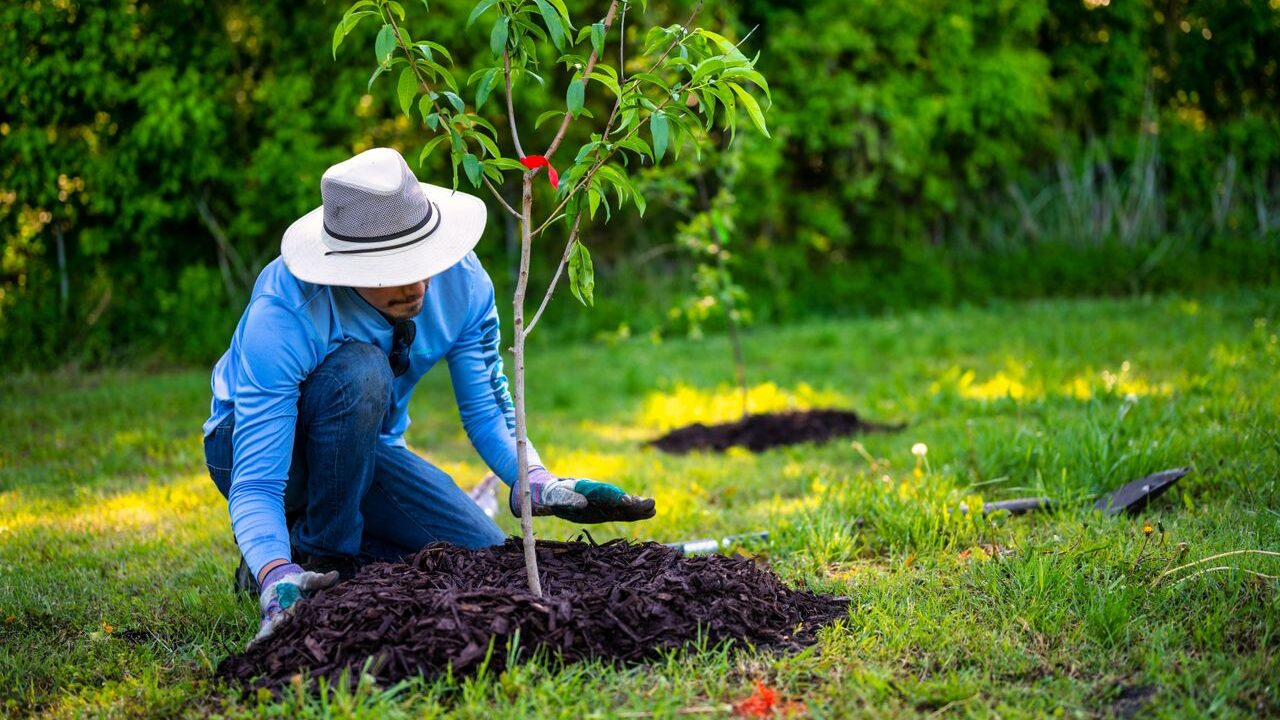
- Mulch 2–3 inches deep, keeping mulch pulled back a few inches from the stem to prevent rot.
- Water on a schedule for the first year — this is the single biggest factor in whether a new hedge establishes well.
Hedge Trimmer & Tool Comparison: What I’ve Actually Used
There’s no single “best” hedge trimmer — it depends on hedge size, how often you’re pruning, and honestly, your patience. Here’s how the main categories stack up based on actual use, not spec sheets.
| Tool Type | Best For | Noise/Effort | Typical Price Range | Honest Verdict |
|---|---|---|---|---|
| Manual hedge shears | Small hedges, detail work, boxwood balls | Quiet, physically tiring on long runs | $30–$70 | Best cut quality by far — worth keeping even if you buy powered tools |
| Corded electric trimmer | Small to mid-size hedges near an outlet | Moderate noise, lightweight | $40–$90 | Great value, but the cord is a genuine hassle around foundation beds full of downspouts and AC units |
| Cordless battery trimmer | Most residential foundation hedges | Moderate noise, very manageable weight | $100–$250 | My default recommendation for most homeowners — battery tech has closed the gap with gas almost entirely |
| Gas-powered trimmer | Large properties, thick or overgrown hedges | Loud, heavier, more effort to start/maintain | $150–$350 | Overkill for most foundation hedges; makes sense only for bigger properties or dense, mature growth |
| Long-reach pole hedge trimmer | Tall hedges, awkward angles under eaves | Moderate noise, awkward to control at first | $80–$200 | Underrated for foundation work specifically — great for reaching over low shrubs against a wall without stepping into the bed |
My actual working setup, for what it’s worth: a pair of good bypass hand shears for detail shaping and cleanup cuts, plus a mid-range cordless battery trimmer for the bulk of the work. I stopped using corded electric years ago — the number of times I’ve nearly clipped through a cord tangled in a downspout was enough to convince me. Gas trimmers are genuinely more powerful, but for a typical foundation hedge under 4 feet tall, that power is rarely necessary and the extra noise and maintenance aren’t worth it.
Ongoing Care and Pruning Schedule
| Plant Type | Best Pruning Window | Frequency | Notes |
|---|---|---|---|
| Boxwood, holly (evergreen broadleaf) | Late spring, after new growth hardens | 1–2x per year | Avoid shearing in late fall — new growth won’t harden before frost |
| Yew, arborvitae (evergreen conifer) | Late spring / early summer | 1x per year | Don’t cut back into bare wood on most conifers — it won’t regrow |
| Spirea, abelia (deciduous flowering) | Right after bloom finishes | 1x per year | Pruning before bloom removes flower buds |
| Hydrangea (panicle types) | Late winter / early spring, dormant | 1x per year | Blooms on new wood, so dormant pruning is safe |
| Loropetalum, distylium | Light shaping after flowering | As needed | Naturally dense, needs less frequent shearing |
Watering after establishment (roughly the first full growing season) should shift from frequent shallow watering to occasional deep watering — about an inch of water per week during active growth, less for drought-tolerant species like distylium or juniper. Fertilizing once a year in early spring with a balanced, slow-release shrub fertilizer is plenty for most foundation hedge species; more isn’t better, and over-fertilizing pushes soft, pest-prone growth.
Pest and Disease Management
The pests and diseases that show up in foundation beds are often worse than elsewhere in the yard, simply because airflow is restricted against a wall and reflected heat stresses plants. Watch for:
- Boxwood blight — dark leaf spots, defoliation, black streaking on stems. Sanitize tools between plants and avoid overhead watering.
- Boxwood leafminer — blistered, discolored leaves; larvae feed inside the leaf tissue. Systemic treatments applied at the right window work well.
- Bagworms on arborvitae and juniper — small cone-shaped bags hanging from branches. Hand-picking works for light infestations; catch them early.
- Scale insects — small bumps on stems, sticky honeydew residue, sooty mold following. Horticultural oil in dormant season is the standard treatment.
- Fungal leaf spot on photinia and viburnum — worse in humid, low-airflow conditions, which foundation beds provide in spades. Proper spacing for airflow does more to prevent this than any spray.
Seasonal Care Calendar
- Spring: Apply slow-release fertilizer, do the main structural pruning once new growth hardens, refresh mulch layer, check for winter dieback.
- Summer: Monitor watering closely, especially on south and west exposures, watch for pest activity, do light touch-up shearing if needed.
- Fall: Stop fertilizing by late summer so new growth has time to harden off, do a final light shaping if needed well before first frost, deep water before ground freezes in cold climates.
- Winter: Brush heavy wet snow off evergreens gently to prevent branch splay, avoid pruning (it stresses plants right before dormancy break), plan any replacements for spring.
Mistakes I See Over and Over
The single most common mistake is planting for the photo, not the decade. People buy the plant that looks lush and full at the nursery, without checking mature size, and end up locked into a maintenance treadmill within a few years just to keep windows visible.
The second is uniform shearing on plants that don’t want to be sheared into geometric shapes. Loropetalum and abelia, for instance, have a naturally graceful, slightly arching form — forcing them into boxy hedge shapes fights the plant’s habit constantly and looks stiff compared to letting them grow into a more natural, lightly shaped form.
The third — and this one is almost universal — is ignoring the north side of the house. People obsess over the front-facing beds and treat the shaded side wall as an afterthought, then wonder why the sun-loving plants they installed there look thin and stretched.
Where Foundation Hedge Design Is Heading
A few shifts I’m seeing repeatedly on real projects, not just in trend articles:
Native and near-native substitutes are replacing traditional exotics. Virginia sweetspire, inkberry, and native viburnum species are increasingly requested specifically because they support local pollinators and birds — something classic boxwood and juniper simply don’t offer.
Disease pressure is quietly reshaping plant lists. Boxwood blight has pushed a real, lasting shift toward alternatives like distylium and inkberry, and I expect that trend to keep accelerating rather than reverse, since the pathogen isn’t going away.
Looser, less rigidly sheared forms are gaining ground, especially on newer builds with more casual or modern architecture — a reaction against the very formal, tightly clipped look that dominated for decades.
Drought tolerance is becoming a non-negotiable filter, not just a nice-to-have, in a growing number of regions dealing with water restrictions — which is quietly pushing juniper, distylium, and other low-water species higher up everyone’s shortlist.
FAQs
How far should a foundation hedge be planted from the house? Generally 18 to 36 inches from the wall, measured with the plant’s mature width in mind, not its current nursery size.
What’s the fastest-growing plant for a foundation hedge? Dwarf spirea and panicle hydrangea both fill in quickly, often reaching a usable size within two growing seasons.
Can foundation hedges actually damage the house foundation? For most residential shrubs, root damage to poured concrete foundations is rare and overstated. The real risk is branches trapping moisture against siding, not roots cracking concrete.
What’s the best low-maintenance option for a foundation hedge? Distylium and inkberry holly both require minimal pruning and handle a range of sun conditions without much fuss.
What grows well on a shady, north-facing foundation bed? Dwarf yew handles deep shade better than almost any other evergreen hedge option, followed by certain Japanese holly cultivars.
How do I fix an overgrown foundation hedge that’s blocking windows? For most broadleaf evergreens, a hard renovation prune (cutting back significantly in late winter) can work, but conifers like yew and arborvitae usually won’t regrow from bare wood, so overgrown conifers often need replacement rather than renovation.
Does a foundation hedge need fertilizer every year? Once a year in early spring is sufficient for most species — more frequent feeding tends to cause soft, disease-prone growth rather than healthier plants.
Final Thoughts
The best foundation hedges I’ve ever seen weren’t the most expensive or exotic they were the ones where someone actually thought through mature size, sun exposure, and long-term maintenance before planting, rather than after. That’s really the whole secret. Foundation beds are unforgiving of impatience because they’re tight, visible, and close to a structure you can’t just relocate the way you can a shrub in the middle of a lawn.
If I had to leave you with one piece of advice, it’s this: buy the smaller plant, spaced correctly for its mature size, and be patient for two or three seasons while it fills in. Every regret I’ve seen and helped fix traces back to someone doing the opposite.
About the Author
Margaret Ellery is a horticultural researcher and landscape design consultant with a background in ornamental plant systems and residential site planning. Her work focuses on long-term plant performance in built environments — specifically how foundation plantings, screening hedges, and entry gardens hold up structurally and aesthetically over a 10-to-20-year horizon rather than at time of installation. She has consulted on residential and small commercial landscape projects across multiple USDA hardiness zones, with a particular research interest in disease-resistant shrub alternatives as traditional species like boxwood face increasing pathogen pressure. She writes to help homeowners make planting decisions based on realistic maintenance expectations rather than nursery-tag optimism.