
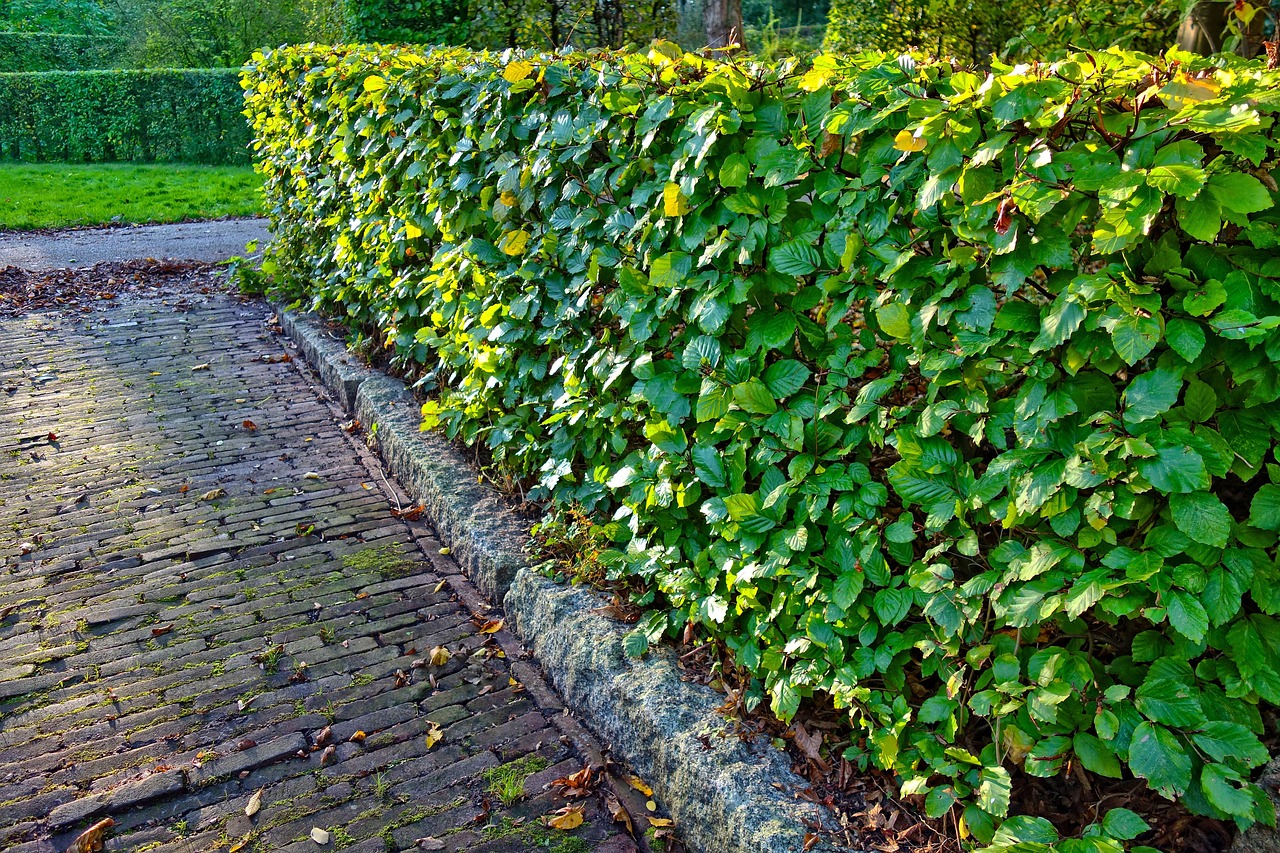
I didn’t plant my first Clusia hedge on purpose I inherited one. A previous owner had put in a row of small-leaf Clusia along a South Florida property line, and by the time I got the house, it hadn’t been touched in three years. It was twelve feet tall, leaning into the fence, and still somehow the healthiest, most pest-free plant on the entire property. That’s when I understood why this shrub took over as the default privacy hedge across South Florida and the Caribbean almost overnight, replacing a plant that used to dominate every subdivision: ficus.
If you’re considering Clusia for a privacy hedge, screen, or property-line planting, this guide covers what actually matters — which species to buy (and which gets mislabeled constantly at nurseries), how far apart to plant it, how to prune it without leaving it looking shredded, and the handful of mistakes that account for almost every “my Clusia hedge died” story I’ve heard.
Table of Contents
- What Is a Clusia Hedge, Exactly?
- Why Clusia Became the Default Privacy Hedge
- Clusia Guttifera vs. Clusia Rosea: Know What You’re Buying
- Climate, Sun, and Soil Requirements
- Planting Guide: Spacing, Depth, and Timing
- Design Tips for Shaping a Clusia Hedge
- Pruning Tool Comparison: What Actually Works on Clusia
- Ongoing Care and Feeding Schedule
- Pests, Disease, and the Yellow Leaf Problem
- Seasonal Care Calendar
- Mistakes That Account for Most Clusia Problems
- Where Clusia Hedging Is Headed
- FAQs
- Final Thoughts
- About the Author
What Is a Clusia Hedge, Exactly?
Clusia is a genus of roughly 150 to 300 tropical evergreen species, but only two show up regularly in hedge nurseries: Clusia guttifera, the small-leaf Clusia, and Clusia rosea, better known as the autograph tree or pitch apple. Both have thick, leathery, glossy leaves and a naturally dense growth habit that makes them excellent living walls without a lot of coaxing.
“Clusia hedge” in casual use almost always means Clusia guttifera. It’s the tighter, more compact of the two, bred for exactly this purpose — a clean, evergreen screen that holds a shape well.
Why Clusia Became the Default Privacy Hedge
You can’t really talk about Clusia’s popularity without talking about ficus. For decades, ficus hedges were the standard privacy screen across South Florida — fast, cheap, and dense. Then in the mid-2000s, the Singapore/fig whitefly arrived and tore through ficus hedges region-wide, turning healthy green walls into skeletal, defoliated messes within weeks in bad infestations. A huge number of homeowners ripped out dying ficus hedges and needed a fast replacement that wouldn’t repeat the problem.
That single pest event reshaped landscaping across the region, and Clusia is still riding that wave of demand today.
There’s a second reason it stuck around: it’s genuinely low-effort once established. Drought-tolerant, salt-tolerant, wind-tolerant, and resistant to most of the pests that plague other broadleaf evergreens — that combination is hard to find in a plant that also looks polished and formal when trimmed.
Clusia Guttifera vs. Clusia Rosea: Know What You’re Buying
This is the part most guides skip, and it’s the part that actually prevents future regret. The two species get sold almost interchangeably at some nurseries, and I’ve seen homeowners plant what they thought was a compact 6-foot hedge and end up with a small tree pushing 20 feet because they were sold Clusia rosea labeled generically as “Clusia hedge.”
| Feature | Clusia Guttifera (Small-Leaf) | Clusia Rosea (Autograph Tree) |
|---|---|---|
| Leaf size | 2–4 inches, narrow, tight | 4–6 inches, broad, paddle-shaped |
| Mature height (unpruned) | 15–25 ft | 20 ft, up to 30+ ft in ideal conditions |
| Maintained hedge height | 5–10 ft with regular trimming | Best kept as a screen 10 ft+ rather than a tight low hedge |
| Growth habit | Naturally tight, upright, dense | Looser, more tree-like, needs more shaping to stay hedge-like |
| Root behavior | Standard shrub root system | Hemiepiphytic — can behave like a strangler on host trees and grows aerial/surface roots aggressively in ideal conditions |
| Best use | Formal hedges, property lines, pool screens, tight spaces | Specimen tree, tall privacy screen, large open areas |
| Flowers/fruit | Rarely flowers outside the warmest zone 10 spots | Regularly produces pink-white flowers and toxic-fruited seed capsules — more litter to manage |
The root behavior line is worth sitting with. Clusia rosea is a hemiepiphyte in its native range, meaning it can start life growing on another tree or structure and send down roots that behave similarly to a strangler fig. That’s not a reason to avoid it, but it is a real reason to keep large Clusia rosea specimens well clear of pool decking, septic lines, and foundation walls, and to think of it more as a small tree you’re managing than a tidy shrub you’re shearing.
If your goal is a clean, low, formal hedge along a foundation or property line, ask specifically for Clusia guttifera by name, and don’t take “Clusia hedge” at face value on a nursery tag.
Climate, Sun, and Soil Requirements
Clusia is a tropical plant through and through, and its hardiness reflects that:
- USDA zones 10–11 are where it thrives without qualification. Zone 9b is workable in a protected microclimate but genuinely marginal.
- Cold tolerance bottoms out around 28–30°F. Below that, expect foliage burn, and a hard freeze can kill young plants outright. Established, mature hedges bounce back from brief light frost better than younger plantings do.
- Full sun to partial shade, with at least 4 to 6 hours of direct light for the densest growth. It’ll survive in more shade but gets noticeably looser and less full.
- Salt tolerance is genuinely excellent — this is one of the few hedge plants I’d recommend without hesitation for a direct coastal or beachfront property.
- Soil tolerance is wide. Sandy, alkaline, limestone-based soils (the norm across most of South Florida) are fine. The one non-negotiable is drainage — Clusia handles drought far better than it handles standing water.
Planting Guide: Spacing, Depth, and Timing
Spacing depends heavily on the container size you start with, since Clusia is almost always sold as nursery-grown material at a specific gallon size rather than as small starts. A commonly used spacing guideline, center to center:
| Container Size | Spacing (Center to Center) |
|---|---|
| 3-gallon | ~1.5 ft apart |
| 7-gallon | ~2 ft apart |
| 15-gallon | ~3 ft apart |
| 25-gallon | ~4 ft apart |
Tighter spacing closes the gaps faster but costs more up front; wider spacing is cheaper but leaves visible gaps for a longer stretch while the hedge fills in.
Planting steps:
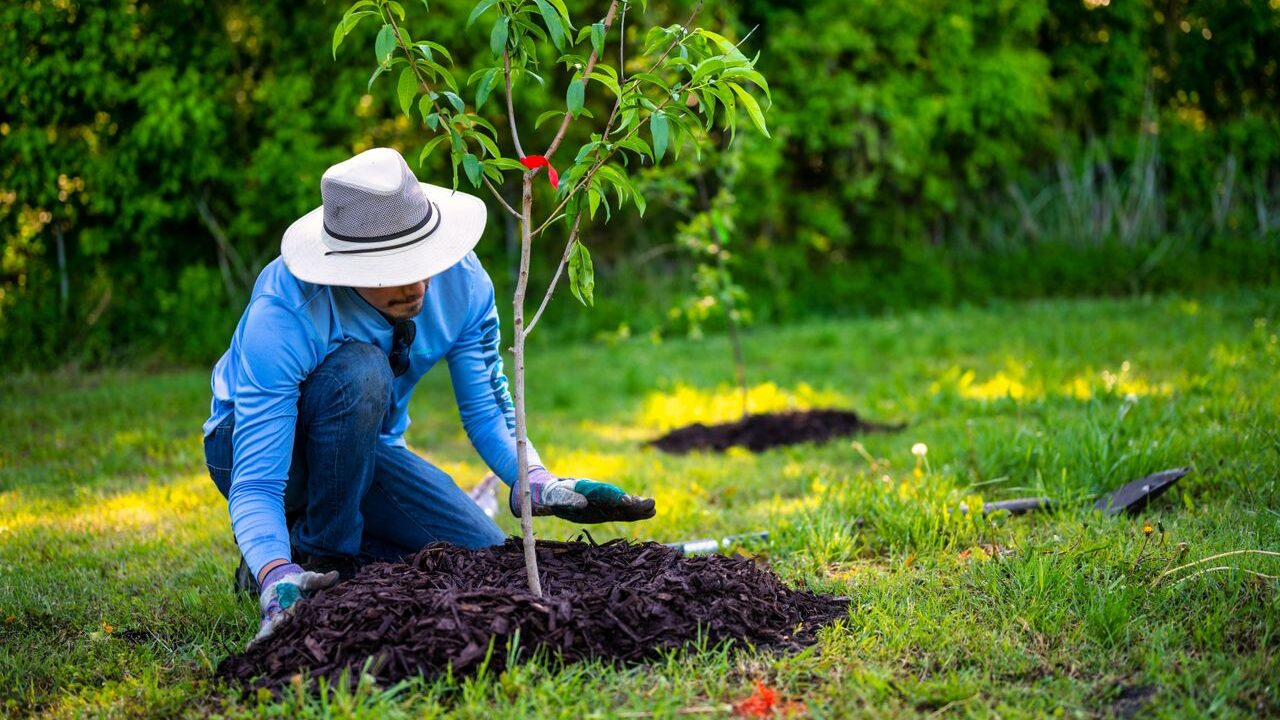
- Dig either a continuous trench or individually sized holes along a string line — a trench makes it easier to keep the hedge line straight.
- Dig each hole roughly 2 to 3 times wider than the root ball, and only as deep as the root ball itself, so it sits level to slightly proud of grade rather than sunken.
- Slide the plant out of its container and gently loosen any circling roots before placing it in the hole.
- Backfill with the native soil, firming gently to remove air pockets, and water in thoroughly.
- Mulch 2 to 3 inches deep, keeping it pulled back from the stems.
The best planting windows are during the rainy season or cooler months, avoiding the peak of summer heat stress and avoiding installation right before an expected cold snap while roots are still unestablished.
Design Tips for Shaping a Clusia Hedge
Decide early: formal wall or loose screen. Clusia takes shearing into a clean, square hedge extremely well, which is its most common look. But it also looks genuinely good left looser and only lightly shaped, especially if you’re going for a more tropical, naturalistic feel rather than a manicured one.
Keep Clusia rosea away from hardscape and pools. Given the root behavior discussed above, I don’t plant mature Clusia rosea within several feet of pool decking, patios, or underground utility lines.
Use it as a wind and noise buffer, not just a visual screen. Clusia’s dense, thick-leaved structure genuinely cuts wind and road noise more effectively than thinner-leaved hedge plants, which is part of why it’s a common choice along busy roads and open coastal lots.
Layer it, don’t just line it up. A single unbroken wall of Clusia works, but adding a lower band of a flowering groundcover or accent shrub in front breaks up the visual mass and softens the base, which otherwise can look heavy from ground level.
Think about single-species risk. Mixing in a second compatible species every so often, or at property corners, isn’t just aesthetic variety — it’s a hedge against your hedge failing all at once.
Pruning Tool Comparison: What Actually Works on Clusia
Here’s something almost no generic hedge guide mentions: Clusia’s thick, semi-succulent leaves bruise and brown visibly at the cut edge when sheared with a dull blade or an underpowered trimmer. You’ll notice it a few days after a trim — a faint brown line along every cut leaf edge. It grows out eventually, but it’s the difference between a hedge that looks crisp right after trimming and one that looks slightly beat-up for two weeks.
| Tool Type | Best For | Cut Quality on Clusia | Honest Verdict |
|---|---|---|---|
| Manual bypass hedge shears | Small hedges, detail shaping | Cleanest cuts, least leaf bruising | Best finish quality — worth using for visible, formal hedges even if it’s slower |
| Corded electric trimmer | Small to mid-size, near an outlet | Good if blades are sharp | Fine for light maintenance trims, struggles on thicker overgrown stems |
| Cordless battery trimmer | Most residential Clusia hedges | Good with a sharp, well-maintained blade | My default pick — enough power for Clusia’s thicker growth without the cord hassle |
| Gas-powered trimmer | Large, overgrown, or long hedge runs | Strong on thick growth, but dull stock blades bruise leaves fast | Only worth it for bigger properties; keep spare sharp blades on hand |
| Pole hedge trimmer | Tall, unmaintained Clusia pushing 10+ ft | Adequate for size reduction, less precise | Useful for the “it’s been three years, help” scenario, not for fine shaping |
The practical takeaway: whatever tool you use, sharp blades matter more on Clusia than on almost any other common hedge plant, purely because of how visibly the leaf tissue reacts to a dull cut. If your hedge always looks slightly ragged after trimming no matter what, it’s very likely a blade sharpness problem, not a technique problem.
Ongoing Care and Feeding Schedule
Watering: During the first three to six months after planting, water regularly to support root establishment. Once mature, Clusia is genuinely drought-tolerant and needs only occasional deep watering during extended dry stretches — overwatering an established hedge is a far more common problem than underwatering it.
Fertilizing: Two to three feedings a year — spring, early summer, and late summer — with a balanced fertilizer (a 10-10-10 or a slow-release equivalent) supports steady, healthy foliage without pushing excessive soft growth.
Mulching: A 2 to 3 inch mulch layer helps retain soil moisture and moderate temperature, which matters more in sandy coastal soils that drain and dry out fast.
Pruning frequency: One to two trims a year is typical for a maintained hedge. Clusia responds well to trimming and pushes new growth readily, so it’s forgiving if you fall behind — unlike conifers, it won’t leave permanent bare patches if you cut back into older wood.
Pests, Disease, and the Yellow Leaf Problem
Clusia’s pest resistance is one of its biggest selling points, and it largely holds up. It’s essentially immune to the whitefly that devastates ficus, and serious disease problems are uncommon. That said, it isn’t bulletproof:
- Scale insects, mealybugs, and aphids show up occasionally, usually on stressed or overcrowded plants. Neem oil or insecticidal soap handles light infestations; prune out and dispose of (don’t compost) heavily infested branches.
- Sooty mold can appear as a black coating on leaves, which is a secondary symptom of a scale or aphid infestation feeding on the plant and leaving behind honeydew, rather than a disease of its own.
- Root rot in poorly drained soil is the most common serious problem I see, and it’s almost always a watering or drainage issue rather than a disease introduced from outside.
- Yellowing leaves are most often linked to one of three causes: overwatering/poor drainage, iron deficiency from the high-pH limestone soils common across South Florida (which locks out iron even when it’s present in the soil), or simple transplant stress in a newly installed hedge. A chelated iron supplement resolves true iron chlorosis; the other two resolve with better drainage or time.
I treat it the same way I’d treat any ornamental fruit-bearing plant around pets or small children — not an emergency-level concern, but not something to actively encourage snacking on either.
Seasonal Care Calendar
Since Clusia grows in a subtropical climate without a hard four-season cycle, care follows the wet/dry season pattern more than a traditional spring-summer-fall-winter one:
- Dry season (roughly late fall through early spring): Monitor watering more closely since rainfall drops off, watch for any cold snap forecasts and be ready to cover young plants if temperatures threaten to dip near freezing, and do a light shaping trim if growth needs it.
- Wet season (roughly late spring through early fall): This is peak growth — the main pruning and fertilizing window falls here, since the plant has the energy reserves to push strong new growth after a trim.
- Ahead of hurricane season: A hedge that’s been kept reasonably trimmed sheds wind better than an overgrown, top-heavy one. It’s worth a shaping pass specifically before storm season if your hedge has gotten tall and loose.
- After a cold event: Resist the urge to prune off cold-damaged foliage immediately — wait until you can see clearly where live wood starts, since premature cutting can remove tissue that would have recovered on its own.
Mistakes That Account for Most Clusia Problems
The single most common mistake is buying the wrong species for the space — planting Clusia rosea where a tight, low Clusia guttifera hedge was actually needed, then fighting a losing battle to keep a small tree pruned into a foundation shrub shape indefinitely.
The second is treating “low maintenance” as “no maintenance.” Clusia is genuinely easier to keep than most hedge plants, but a hedge left completely untrimmed for years gets top-heavy, thins out at the base as the canopy shades out lower growth, and becomes much harder to bring back into shape than one that’s been lightly maintained annually.
The third is overwatering out of habit. Because Clusia looks lush and almost succulent, people assume it wants frequent watering the way thinner-leaved tropicals do. In reality, root rot from overwatering kills far more established Clusia hedges than drought ever does.
The fourth, and the one nobody warns you about, is dull trimmer blades. It’s a small thing, but it’s the difference between a hedge that looks sharp for weeks after a trim and one that looks slightly chewed-up every time you cut it.
Where Clusia Hedging Is Headed
A few real shifts I’m watching, not just trend-piece speculation:
The native-plant pushback is gaining a real audience. Clusia isn’t native to most of the areas it’s now planted in (with a rarely-used true native Clusia rosea variant being the exception in parts of Florida), and as native-landscaping advocacy grows louder, more homeowners and even some municipalities are starting to ask pointed questions about ecological value, not just curb appeal and low maintenance.
Monoculture risk is on more people’s radar after the ficus lesson. Landscapers who lived through the whitefly collapse are more cautious now about recommending any single species at the scale Clusia is currently being planted, and I expect more mixed-species hedge designs as a direct result of that institutional memory.
Water-use restrictions are quietly reinforcing Clusia’s popularity anyway, even amid the native-plant conversation, simply because its drought tolerance fits increasingly strict regional watering rules better than many thirstier alternatives.
Correct-species labeling is becoming a bigger conversation in the trade. As more homeowners get burned by an oversized Clusia rosea sold as a “hedge plant,” I expect (and hope) nurseries move toward clearer species-specific labeling rather than generic “Clusia hedge” tags.
FAQs
Is Clusia a fast-growing hedge?
Growth is generally slow to moderate, especially in the first year while roots establish. It picks up noticeably once established, but it’s not as fast as some fast-growing screening plants in year one.
How far apart should I plant Clusia for a hedge?
It depends on container size — roughly 1.5 feet apart for 3-gallon plants up to about 4 feet apart for 25-gallon specimens, measured center to center.
Can Clusia hedges handle hurricanes and strong wind?
Its dense, thick-leaved structure generally holds up well to wind compared to brittle, fast-growing plants, which is part of why it became popular in storm-prone regions — though an overgrown, top-heavy, untrimmed hedge is more vulnerable than a well-maintained one.
Is Clusia toxic to pets or children?
It isn’t on major formal toxicity lists, but the fruit and sap of Clusia rosea have a reputation for mild gastrointestinal irritation if ingested. Reasonable caution around ingestion is sensible, without treating it as a serious hazard.
What’s the real difference between Clusia guttifera and Clusia rosea?
Guttifera is the compact, small-leafed, true hedge plant. Rosea is a larger-leafed species that grows more like a small tree and has a more aggressive root system — better suited to open screening than tight foundation spaces.
Can Clusia grow outside of USDA zones 10–11?
Not reliably in the ground. It tolerates brief dips to around 28–30°F but suffers real damage below that, which rules out most of the continental US outside of South Florida and similarly mild coastal zones.
Why are my Clusia leaves turning yellow?
The most common causes are overwatering or poor drainage, iron deficiency in high-pH soil, or simple transplant stress in a newly installed hedge — root rot from overwatering is the most frequent serious cause.
How close can I safely plant Clusia to a pool or foundation?
Clusia guttifera is generally safe in tight spaces near hardscape.
Final Thoughts
Clusia earned its popularity honestly it’s one of the few hedge plants that genuinely lives up to the “low maintenance” label nurseries slap on everything. But the plant’s own success has created a bit of a trap: because it’s so forgiving, it gets planted on autopilot, without the species check, spacing plan, or long-term shape decision that actually determines whether it’s a well-kept privacy wall in ten years or an overgrown mess you’re paying someone to renovate.
If you take one thing from this guide, let it be this: confirm you’re actually getting Clusia guttifera if that’s what your space calls for, plant it at a spacing that matches your patience and your budget, and keep your trimmer blades sharp. That’s genuinely most of what separates a great Clusia hedge from a mediocre one.
About the Author
Margaret Ellery is a horticultural researcher and landscape design consultant specializing in long-term plant performance in built and coastal environments. Her recent work has focused on privacy hedge and screening plant selection across South Florida and the Caribbean, including how species substitution events — like the shift away from ficus following the whitefly outbreak — reshape regional landscaping over time. She consults on residential and coastal property projects, with a particular interest in balancing low-maintenance, storm-resilient plant choices against growing calls for native and ecologically valuable landscaping. She writes to help homeowners avoid the “sold the wrong species” problem that quietly causes most long-term hedge regret.