




A few years ago I sat in on a living room redesign for a family whose toddler had just learned to walk and immediately started using every hard edge in the room as a landing pad. The glass coffee table was the first thing to go. What replaced it wasn’t a rounded wood table, which would have been the obvious swap. It was a large upholstered ottoman with a tray on top. Nobody in that house has bumped a shin on it since, and it’s been used as a footrest, a second seat for game night, and, more than once, a step stool for reaching a high shelf.
That’s really the pitch for an ottoman coffee table in one story: it does the job of a coffee table and then keeps doing three or four more jobs a hard table never could. This guide covers the real styles, materials, and buying details that separate a genuinely good one from an overpriced footstool with a tray balanced on it.
Table of Contents
- What Makes an Ottoman Coffee Table Different
- The Real Benefits, Beyond Just Looking Nice
- Best Styles for Every Room
- Material Comparison: What Actually Holds Up
- Leather Isn’t One Thing: A Buying Trap Worth Knowing
- Brand Comparison: Where to Actually Buy One
- Storage Mechanisms Compared
- Sizing Guide: Getting the Proportions Right
- How to Style an Ottoman Coffee Table
- Common Mistakes
- Cost Breakdown
- Where Ottoman Coffee Tables Are Headed
- FAQs
- Final Thoughts
- About the Author
What Makes an Ottoman Coffee Table Different
Not every ottoman is built to double as a coffee table, and that distinction trips a lot of first-time buyers up. A footstool-style pouf sits low, is meant purely for propping up feet, and usually doesn’t have a flat enough top to hold drinks without a tray doing most of the work. An ottoman coffee table is built with a firmer, flatter cushion top, sized and heighted to sit where a traditional table would — meaning it can genuinely anchor the room, not just accessorize it.
The other defining feature, in a lot of the better designs, is storage. Many ottoman coffee tables have a lift-off or hinged top concealing a compartment for blankets, remotes, or board games — turning one piece of furniture into a table, a seat, a footrest, and a linen closet all at once.
The Real Benefits, Beyond Just Looking Nice
- Softer edges, genuinely fewer injuries. For homes with young kids, an upholstered ottoman is about as close to injury-proof furniture as a living room gets, especially compared to glass or sharp-cornered wood tables.
- It multitasks under real pressure. Extra guests over? It’s a seat. Movie night? It’s a footrest. Need to hide the mess before company arrives? The lid goes up and the clutter disappears.
- It’s forgiving of small spaces. A single ottoman coffee table can replace both a coffee table and a spare chair, which matters a lot in apartments and smaller living rooms.
- It’s easier to refresh than to replace. Swapping the tray, the throw pillow leaning against it, or even reupholstering the fabric is a far smaller project than buying an entirely new table.
- It softens a room visually as well as physically. A soft, rounded silhouette breaks up a room full of hard-edged furniture (sofa arms, TV console, bookshelves) in a way that feels intentional rather than accidental.
Best Styles for Every Room
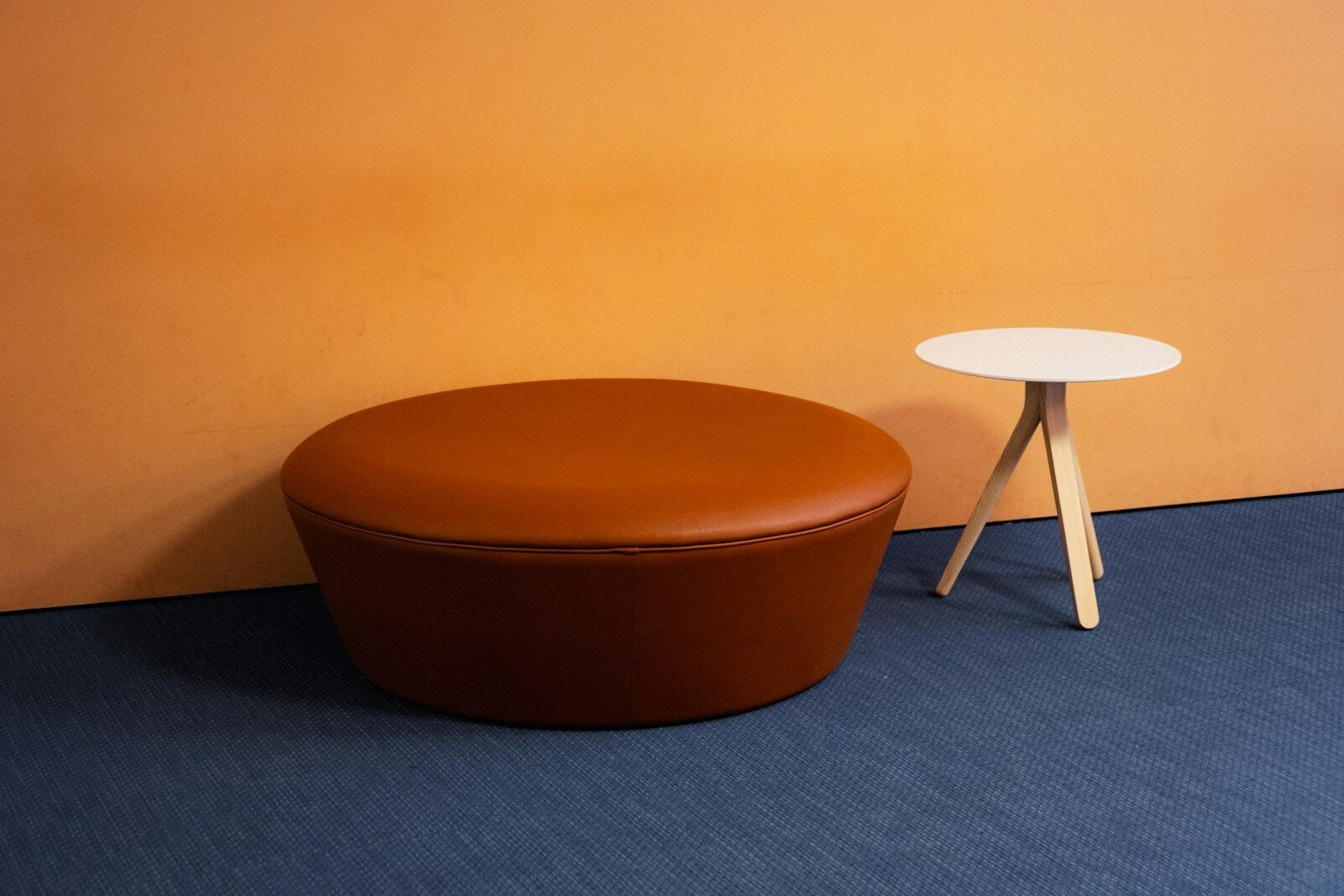
- Round leather or faux-leather pouf-style. The safest option for households with toddlers, and genuinely easy to wipe clean. Two different sizes grouped together also fills floor space nicely in an otherwise sparse room.
- Rectangular tufted storage ottoman. The classic choice, and usually the most versatile shape for tray styling since it mimics a traditional coffee table’s footprint most closely.
- Square bouclé or performance-fabric ottoman. Cozy and casual, well suited to family rooms where texture matters as much as function.
- Woven or rattan-look ottoman. A natural fit for coastal or boho living rooms, adding texture that a solid-color upholstered piece can’t.
- Pull-out table storage ottoman. A clever three-in-one design where the top lifts to reveal a slide-out wood surface, with additional storage underneath that. Particularly useful in studio apartments where the ottoman may need to become a real work or dining surface on demand.
- Two-piece ottoman sets. A pair of smaller ovals or rounds that can be pushed together as one coffee table or split apart when extra seating is needed — one of the more flexible options for smaller, multi-purpose living rooms.
Material Comparison: What Actually Holds Up
| Material | Durability | Feel | Cleaning | Best For |
|---|---|---|---|---|
| Top-grain/full-grain leather | Excellent — 15 to 20+ years with care | Firm, develops a patina over time | Wipes clean easily, resists pet hair | Long-term investment pieces, households with pets |
| Performance fabric (Crypton-style, performance velvet) | Very good | Soft, closer to traditional upholstery | Resists stains and spills, easy spot cleaning | Families with kids, high-use living rooms |
| Standard velvet | Moderate | Luxurious, plush | Shows pressure marks and wear more visibly than performance velvet | Lower-traffic formal rooms |
| Linen | Moderate | Breathable, textured | Prone to wrinkling, needs more careful cleaning | Casual living rooms with lighter daily use |
| Vinyl / faux leather | Good | Smooth, slightly less breathable than real leather | Highly water-resistant, wipes clean instantly | Playrooms, high-mess households on a budget |
| Bouclé | Moderate | Very soft, textural | Reasonably easy to spot clean, but texture traps debris | Cozy, low-to-moderate traffic living rooms |
My honest take: if this ottoman is going in front of a well-used sofa in a home with kids or pets, performance fabric or top-grain leather are the two materials actually built for that job. Standard velvet and linen look wonderful in photos, but they show wear fast under daily contact — better suited to a formal room nobody eats snacks in.
Leather Isn’t One Thing: A Buying Trap Worth Knowing
This is the detail most buying guides skip, and it’s the one that actually determines whether a “leather ottoman” is a 20-year investment or a two-year disappointment. “Leather” on a product listing isn’t a single material — it covers several genuinely different products at wildly different price points.
Top-grain and full-grain leather are the real thing: intact hide that develops a patina, resists most liquids when sealed, and can reasonably last 15 to 20 years. On an ottoman of any real size, expect this to push the price well past $1,000.
Bonded leather is shredded leather fiber glued to a fabric backing — a much cheaper product that looks similar in photos but wears very differently in daily use. It’s worth knowing that the FTC’s Leather Guides specifically require that products which only appear to be leather, including bonded materials, disclose that clearly rather than market themselves as simply “leather.” If a leather ottoman seems unusually inexpensive for its size, checking the listing for words like “bonded,” “faux,” or “vegan leather” will usually explain why.
Neither option is wrong — a faux or bonded leather ottoman in a playroom is a perfectly reasonable budget choice — but knowing which one you’re buying prevents the disappointment of expecting a decade of wear from a two-year product.
Brand Comparison: Where to Actually Buy One
| Brand | Known For | Typical Price | Honest Verdict |
|---|---|---|---|
| Article | Sleek, modern silhouettes, straightforward storage designs | $300–$700 | A strong pick for anyone wanting a clean, contemporary look without wading through dozens of customization options |
| West Elm | Wide fabric selection (linen, velvet, chenille, two-tone leather combos), sturdy wood-frame construction | $399–$700+ | The best pick if you want to fully customize fabric and finish to match existing furniture |
| Pottery Barn | Higher-end storage ottomans, including genuinely clever pull-out table designs | $500–$1,600+ | The pull-out table styles are a real standout for small apartments, though the price climbs quickly on the larger, more elaborate pieces |
| Simpli Home / SimpliHome | Budget-friendly, child-safety hinges standard on lift-top designs | $150–$350 | Excellent value for families prioritizing safety features on a tighter budget |
| Living Spaces / Joss & Main | Large marketplace selection across many sub-brands and price points | $150–$600 | Good for side-by-side comparison shopping, though build quality varies more since it’s an aggregator, not a single manufacturer |
My honest take: for most living rooms, West Elm or Article offer the best balance of style and construction quality without moving into four-figure territory. If a genuinely tiny apartment is the challenge you’re solving for, Pottery Barn’s pull-out table ottomans are worth the higher price simply because nothing else in this category does quite the same job.
Storage Mechanisms Compared
| Mechanism | How It Works | Pros | Cons |
|---|---|---|---|
| Removable lid | Top lifts entirely off | Full, unobstructed access to storage | Nowhere to set the lid down; easy to misplace or damage |
| Hinged lift-top | Top stays attached, swings open on a hinge | Nothing to misplace; child-safety hinges prevent slamming | Storage access is briefly interrupted while the tray/decor on top is cleared |
| Split lift-top | Two smaller panels lift independently | Can access part of the storage while leaving a tray or decor undisturbed on the other half | Slightly more moving parts to eventually wear out |
| Pull-out table | Lid lifts up and back to reveal a slide-out solid table, with storage beneath that | Genuinely triple-duty — seat, table, and storage in one footprint | Bulkier mechanism, and typically the most expensive category |
If there are young children in the house, a hinged lift-top with a dedicated child-safety hinge is worth prioritizing over a simple removable lid — it’s a small feature that prevents a genuinely common cause of pinched fingers.
Sizing Guide: Getting the Proportions Right
| Measurement | Rule of Thumb |
|---|---|
| Length | Roughly two-thirds the length of your sofa (an 84″ sofa pairs well with a 54″–56″ ottoman) |
| Height | Level with the sofa seat, or up to 2–4 inches lower — never taller than the seat cushions |
| Clearance from sofa | 14–18 inches, enough for comfortable leg extension without feeling disconnected |
| Clearance from other seating/walkways | 18–24 inches to keep the room easy to move through |
| Small living rooms | Keep the ottoman under 48 inches long so it doesn’t overwhelm the space |
The height rule is the one people get wrong most often. An ottoman taller than the sofa’s seat cushions doesn’t just look slightly off — it becomes genuinely uncomfortable to use, since reaching down and forward for a drink is a much more natural motion than reaching up and forward.
How to Style an Ottoman Coffee Table
The single most useful styling move is also the most functional one: add a tray. A flat wood, marble, or metal tray with slightly raised edges gives you a stable surface for drinks and glassware without losing the soft look of the ottoman underneath. Aim for a tray that covers roughly a third of the surface, centered rather than pushed to one side.
A few details that make the difference between “styled” and “just decorated”:
- Contrast the tray material with the ottoman fabric. A dark wood or metal tray on a light linen or bouclé ottoman looks intentional; a leather tray on a fabric base does the same in reverse.
- Skip woven trays on leather ottomans. They can scratch the surface over time — a smooth-bottomed tray is the safer choice there.
- Vary the height of what’s on the tray. A stack of two or three books, a low candle, and a small vase or plant reads as curated rather than cluttered — keep everything low enough that it doesn’t block sightlines across the room.
- Add a second small tray or box for the everyday clutter — remotes, chargers, coasters — so the “pretty” tray doesn’t end up doing double duty as a junk drawer.
- For round ottomans, either use one larger round tray or a small cluster of two or three trays in varying sizes, which tends to look more natural than a single square tray on a round base.
Common Mistakes
- Skipping the tray entirely. Without one, an ottoman “coffee table” isn’t actually usable as a table — cups and glasses will tip on the soft, cushioned surface.
- Buying “leather” without checking which kind. As covered above, bonded and faux leather are reasonable choices, but only if you’re buying them knowingly rather than expecting genuine hide durability at a fraction of the price.
- Getting the height wrong. An ottoman taller than the sofa seat looks and feels off no matter how nice the upholstery is.
- Choosing standard velvet or linen for a high-traffic family room. Both look beautiful in photos and show wear fast under daily use — performance fabric exists specifically to solve this.
- Overlooking the child-safety hinge on lift-top storage models in homes with young kids — it’s a small spec detail that prevents a genuinely common injury.
Cost Breakdown
| Type | Typical Price Range | Notes |
|---|---|---|
| Budget fabric storage ottoman | $150–$350 | Often includes child-safety hinges; good entry point |
| Mid-range performance fabric or faux leather ottoman | $300–$700 | The sweet spot for most family living rooms |
| Genuine top-grain leather ottoman | $1,000–$2,500+ | Long-term investment piece with real longevity |
| Pull-out table storage ottoman | $500–$1,600+ | Highest functionality per square foot, priced accordingly |
| Decorative tray (wood, marble, or metal) | $30–$150 | A near-mandatory add-on if the ottoman doesn’t include one |
| Two-piece ottoman set | $250–$800 | Price varies widely with fabric and size |
Where Ottoman Coffee Tables Are Headed
A few shifts are worth watching if you follow furniture trends closely. Modular, two-piece ottoman sets are gaining ground over single large pieces, largely because they solve the flexibility problem better — pushed together for a coffee table, split apart for extra seating when guests arrive. Performance fabrics are becoming the default rather than the upgrade, with more brands building stain-resistant, OEKO-TEX-certified textiles into their standard lines instead of charging a premium for them.
There’s also a growing shift toward honest material labeling, partly driven by consumers becoming more aware of the leather-grade distinctions covered above — expect more brands to clearly state “genuine leather,” “bonded leather,” or “vegan leather” upfront rather than relying on the word “leather” to do the marketing work alone. And the pull-out table category, still a relatively small niche, seems likely to keep growing as more people furnish smaller apartments that need every piece of furniture to earn its footprint several times over.
FAQs
Can an ottoman fully replace a coffee table? Yes, and many interior designers genuinely prefer it in casual living rooms — the tradeoff is surface structure. A traditional table offers a firmer, more permanent flat surface, while an ottoman offers comfort and flexibility in exchange for needing a tray to function the same way.
What’s the difference between top-grain and bonded leather? Top-grain and full-grain leather are made from intact hide and last 15–20 years with care. Bonded leather is shredded leather fiber glued to a fabric backing — it looks similar but wears out much faster, and is required by FTC guidelines to be disclosed as such rather than marketed simply as “leather.”
Is a storage ottoman sturdy enough to actually use as a coffee table? Yes, provided it has a firm cushioned top (not a soft pouf) and you add a tray for drinks and glassware — the tray, not the upholstery itself, is what makes it function like a traditional table surface.
What size ottoman coffee table do I need for my sofa? Roughly two-thirds the length of your sofa, sitting level with or slightly lower than the seat cushions, with 14–18 inches of clearance between the two pieces.
Are ottoman coffee tables safe for toddlers? Generally yes — upholstered, rounded designs are about as close to injury-proof as living room furniture gets. If it has a lift-top storage compartment, look specifically for a child-safety hinge.
Does a tray need to stay on the ottoman permanently, or can I remove it? It’s fully removable and meant to be — lift it off when you need to access storage underneath, then set it back for everyday use as a table surface.
Final Thoughts
An ottoman coffee table isn’t a compromise version of a “real” coffee table for a lot of living rooms, especially ones with kids, pets, or limited square footage, it’s genuinely the better tool for the job. The pieces that disappoint people are almost always the ones bought on looks alone, without checking the material grade, the storage mechanism, or whether the proportions actually fit the sofa in front of it. Get those details right, add a good tray, and it earns its place as the busiest, most-used piece of furniture in the room.
About the Author
This guide was researched and written by a home-decor and furniture content specialist who focuses on translating manufacturer specifications, material standards, and real product reviews into practical buying advice for homeowners. Research for this piece drew on published furniture retailer documentation, FTC leather labeling guidance, and independent product and design reviews from multiple furniture brands. All product and pricing information reflects publicly available information at the time of writing; always confirm current pricing, materials, and dimensions directly with the retailer before purchasing.