





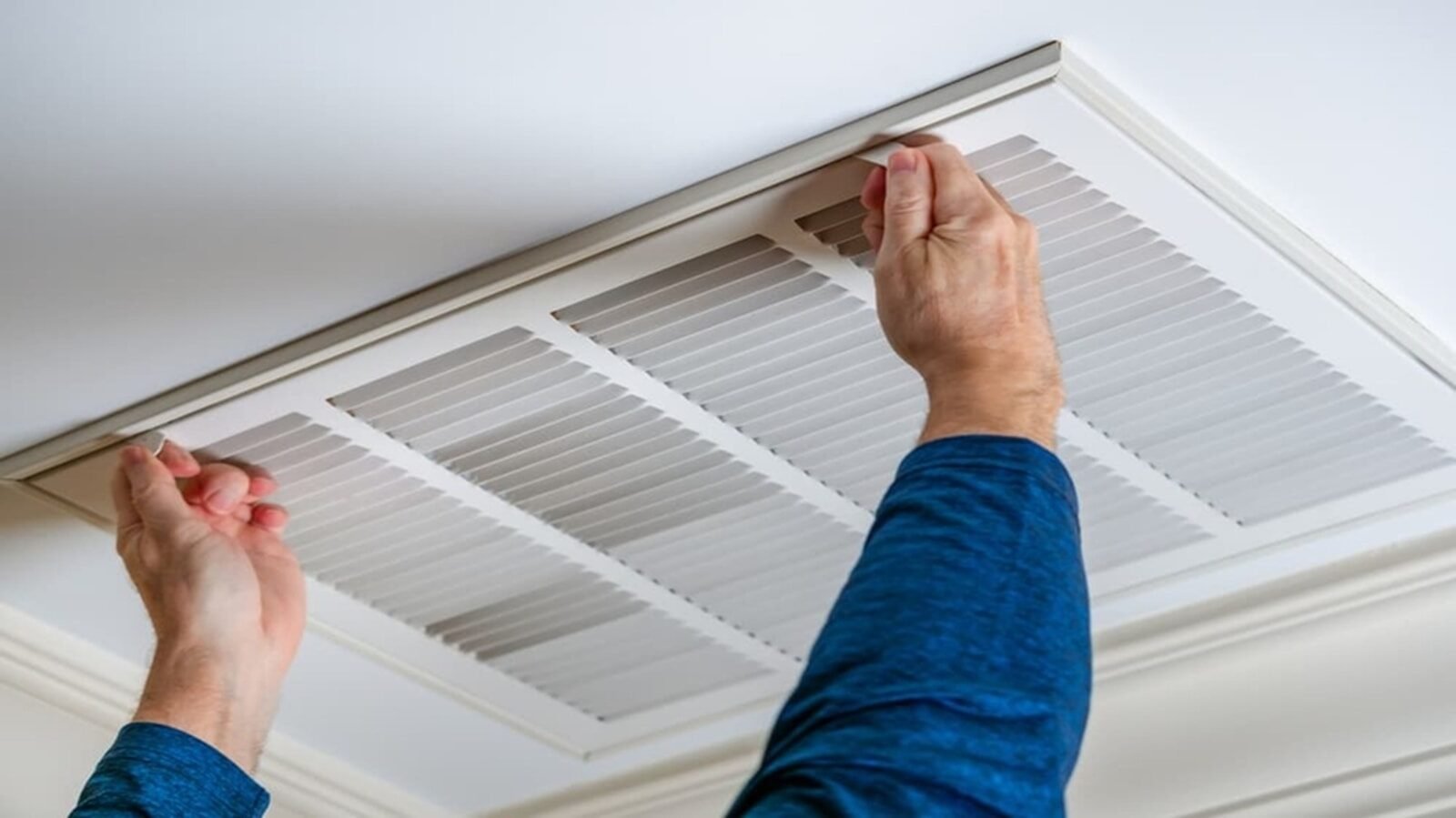
My old central air unit died on a Tuesday in July, which meant I went from “someday I should look into replacing this” to “get me quotes by Friday” in about six hours. What I didn’t expect was how much the ground had shifted since the last time anyone in my house thought about HVAC. Refrigerants have changed. The efficiency rating on the sticker isn’t calculated the way it used to be. And a tax credit I was fairly sure still existed had quietly expired months earlier.
If you’re starting this process now, you’re walking into a genuinely different landscape than the one described in most of the “central air cost” articles still floating around online, several of which are citing prices and incentives from two or three years ago. Here’s what I found once I actually dug into current data, contractor pricing, and the regulatory changes that are shaping quotes right now.
Table of Contents
- Quick Answer: What Central Air Actually Costs in 2026
- Central Air vs. the Alternatives
- What’s Actually Changed in 2026: SEER2 and the Refrigerant Transition
- Real Cost Breakdown: What Drives Your Quote
- Installation Costs by Scenario
- Brand Comparison: Carrier, Trane, Lennox, Goodman, Rheem, and More
- The Tax Credit Everyone Still Thinks Exists
- Financing a Central Air Renovation
- A Real Renovation, Broken Down Line by Line
- Upgrade Options Worth Considering
- Maintenance, Lifespan, and the Hidden Cost of Refrigerant
- Common Mistakes Homeowners Make
- Where This Is Heading: Trends Worth Watching
- FAQs
- Final Thoughts
- About the Author
Quick Answer: What Central Air Actually Costs in 2026
For a straightforward replacement in a home that already has working ductwork, expect $4,500 to $9,500 for a standard 14–16 SEER2 system, with a national average landing around $7,500, according to cost data compiled by FixUpFirst. If you’re installing central air where no ductwork exists, that number roughly doubles — figure $8,000 to $18,000 once new ducts are factored in. High-efficiency systems rated 18+ SEER2 typically run $8,000 to $16,000 installed, even with existing ducts, largely because of the more sophisticated inverter-driven compressors involved.
Two things are pushing 2026 prices in a different direction than older guides suggest: a mandatory refrigerant change that took full effect this year, and the quiet expiration of the federal tax credit most homeowners assume is still available. Both matter enough that they get their own sections below.
Central Air vs. the Alternatives
Before locking into “replace like with like,” it’s worth knowing what you’re actually choosing between.
| System | Typical Installed Cost | Best For | Trade-Off |
|---|---|---|---|
| Central air (existing ducts) | $4,500 – $9,500 | Whole-home cooling, homes with working ductwork already | Single thermostat zone unless you add zoning |
| Central air (new ductwork) | $8,000 – $18,000 | Homes without ducts that still want whole-home coverage | Ductwork installation is invasive and the biggest cost driver |
| Ductless mini-split | $2,000 – $14,500 | Additions, older homes, room-by-room control | Visible indoor units; multi-zone systems get expensive fast |
| Air-source heat pump | $2,000 – $12,000+ | Moderate climates wanting heating and cooling from one system | Less effective as primary heat in very cold climates |
The honest verdict, echoed across multiple installer comparisons including Angi’s head-to-head breakdown: central air still wins for larger homes that already have ductwork in decent shape, since running new ducts is expensive enough to close most of the efficiency gap mini-splits otherwise offer. If your ductwork is missing, badly leaky, or you’re only conditioning an addition or a couple of rooms, a mini-split frequently comes out ahead on total cost even though the per-unit price looks similar on paper.
What’s Actually Changed in 2026: SEER2 and the Refrigerant Transition
This is the part most homeowners researching a “quick AC swap” get blindsided by.
SEER2 replaced SEER as the official efficiency metric, and it isn’t just a rebrand — the testing procedure changed to simulate real ductwork static pressure instead of near-ideal lab conditions. A unit that would have tested at 14 SEER under the old method often lands closer to 13.4 SEER2 under the new one, meaning the numbers on old and new spec sheets genuinely aren’t apples-to-apples. Current federal minimums sit at roughly 14.3 SEER2 in northern states and 15 SEER2 in southern states, per efficiency standards outlined by Budget Heating.
R-410A is done. As of January 1, 2026, new HVAC installations are required to use low global-warming-potential refrigerants — mainly R-32 or R-454B — instead of the R-410A that’s dominated residential systems for two decades. Existing R-410A systems don’t need to be replaced and can still be serviced and recharged, but anything newly installed has to use one of the new refrigerants.
Here’s the detail that barely gets mentioned anywhere: your refrigerant choice isn’t really your choice — it’s the manufacturer’s, and it has real cost consequences down the line. Carrier, Trane, Lennox, and Rheem generally use R-454B, while Goodman, Amana, and Daikin have gone with R-32. Because of ongoing supply constraints, R-454B has been running $700 to $2,800 per 20-pound cylinder in 2026, compared to roughly $449 for R-32, according to brand-comparison pricing research from SEERCalc.pro. Refrigerant isn’t covered under standard warranties, so if you ever need a coil repaired or a system recharged, the brand you chose quietly determines how painful that service call is.
Real Cost Breakdown: What Drives Your Quote
Existing ductwork condition. This is the single biggest swing factor. A straightforward swap onto functional ducts is a different project entirely from running new supply and return lines through finished walls and ceilings.
System sizing. The rule of thumb — roughly one ton of cooling per 400 to 600 square feet — is a starting point, not a substitute for an actual Manual J load calculation. A contractor who quotes tonnage from square footage alone, without walking your attic, checking insulation, and counting windows, is guessing, and both oversized and undersized systems perform worse and cost more to run long-term.
Efficiency tier. Jumping from a baseline 14–15 SEER2 unit to an 18+ SEER2 variable-speed system adds real upfront cost — often 20 to 40% more per ton — in exchange for meaningfully lower operating costs over the system’s life.
Heat pump vs. straight AC. A heat pump version of the same system typically costs $500 to $2,500 more upfront but handles both heating and cooling, which can be worth it if you’re currently on electric resistance heat or an aging furnace you’d otherwise need to replace separately.
Electrical work. Older homes sometimes need a panel upgrade or new disconnect to support a modern system, adding $300 to $700 or more.
Region and labor market. Installed pricing in high-cost metros and states with stricter code requirements — California’s Title 24 energy code being the clearest example — runs meaningfully higher than national averages once permitting, mandatory field testing, and local rebate paperwork are factored in.
Installation Costs by Scenario
| Scenario | Typical Installed Cost |
|---|---|
| Replacement, existing functional ductwork, standard 14–16 SEER2 | $4,500 – $9,500 |
| Replacement, existing ductwork, high-efficiency 18+ SEER2 | $8,000 – $16,000 |
| Full install, new ductwork required | $8,000 – $18,000 |
| Heat pump conversion (replaces AC + furnace function) | $2,000 – $12,000+ |
| Ductless mini-split (single or multi-zone) | $2,000 – $14,500 |
These figures track closely with pooled contractor and national database pricing reported by HVAC Services Pro and HVAC Project Cost, both of which pull from multiple regional sources rather than a single market.
Brand Comparison: Carrier, Trane, Lennox, Goodman, Rheem, and More
| Brand | Price Tier | Reputation For | Refrigerant | Honest Verdict |
|---|---|---|---|---|
| Carrier | Premium | Innovation, variable-speed tech, humidity control | R-454B | Strong all-around choice; the modern inventor-of-AC brand still earns it |
| Trane / American Standard | Premium | Compressor durability, longevity | R-454B | Best pick if raw reliability is the priority over price |
| Lennox | Premium | Highest efficiency ceilings | R-454B | Excellent SEER2 numbers, but proprietary parts mean pricier repairs |
| Goodman / Amana | Budget–Mid | Value, simple serviceable components | R-32 | Owned by Daikin and has closed much of the old quality gap; strong pick for budget-conscious buyers |
| Rheem / Ruud | Mid | Reliability, broad parts availability | R-454B | Consistently well-reviewed by installers, often overlooked by homeowners |
| Daikin / York | Mid–Premium | Efficiency, strong warranty (Daikin) | R-32 | Daikin’s labor-inclusive warranty when installed by a certified dealer is genuinely unusual in this industry |
The one line that shows up in nearly every independent comparison I found, including a brand ranking from HVAC Base: installation quality affects long-term reliability more than the logo on the unit does. A mid-tier system installed correctly, sized properly, and commissioned with a real refrigerant charge check will consistently outperform a premium system installed carelessly. Choose your contractor with at least as much care as you choose your brand.
The Tax Credit Everyone Still Thinks Exists
This is worth its own section because getting it wrong can throw off your entire budget. The federal Section 25C Energy Efficient Home Improvement Credit — the one that offered up to $2,000 back on a qualifying heat pump and smaller amounts for high-efficiency AC — expired December 31, 2025, terminated under the One Big Beautiful Bill Act. For any HVAC system installed and placed in service in 2026, that federal credit simply isn’t available, a point confirmed directly by AC Direct’s current tax-credit guidance.
A lot of pricing calculators and older blog posts still reference the credit as if it’s active — some of the sources I checked while researching this guide hadn’t been updated to reflect the change. Don’t budget around a federal credit that no longer exists. What’s still worth checking:
- State-level rebate programs, several of which remain active independent of the federal credit
- Utility rebates, which vary widely by region and provider
- IRA-funded HOMES and HEAR programs, which continue to operate in some states through separate funding channels
Financing a Central Air Renovation
Most homeowners aren’t paying $8,000-plus in cash on short notice, especially when a system fails in the middle of a heat wave.
| Financing Type | Typical Timeline | Best For | Watch Out For |
|---|---|---|---|
| Personal loan | 1–3 days | Fast approval without home equity | Rates commonly 7–24% APR depending on credit |
| HELOC / home equity loan | 2–6 weeks | Lowest rates if you have equity and time | Too slow for an emergency mid-summer replacement |
| Contractor / manufacturer financing | Same day | Convenience, bundled with the sales process | “Same as cash” offers are often deferred interest, not true 0% |
| 0% APR credit card | Instant | Smaller jobs under roughly $5,000 | Interest often jumps to 18–30% if not paid off in the promo window |
If your system fails without warning, a personal loan or contractor financing will move fastest, per financing timelines compiled by CoolCallPro. If you have a few weeks of lead time and meaningful home equity, a HELOC will almost always beat contractor financing on total cost — the trade-off is simply time. Whatever route you take, verify explicitly whether a “same as cash” promotion is genuine 0% APR or deferred interest, since the latter can retroactively charge interest on the full original balance if you miss the payoff deadline, a distinction Wealthvieu’s financing breakdown flags clearly.
A Real Renovation, Broken Down Line by Line
Here’s how my own replacement actually broke down, for a 3-ton system in a roughly 1,800-square-foot home with existing, serviceable ductwork:
- Manual J load calculation and site assessment: included in quote (free with two of three contractors)
- Outdoor condenser (16 SEER2, R-454B): $2,600
- Indoor coil and air handler match: $1,400
- Refrigerant lines and line-set replacement: $450
- Electrical disconnect and whip: $380
- Permit: $220
- Labor (removal of old unit, install, commissioning): $2,100
- Duct sealing on two leaky joints found during install: $650
- New smart thermostat: $280
Total: roughly $8,080, right in the middle of the expected range for a standard replacement with existing ductwork. The duct sealing wasn’t in the original verbal estimate — the technician found it during a static pressure test before hookup, and I was glad they caught it, since leaky ducts alone can cut system efficiency by 20 to 30%. It’s a good example of why a written, itemized quote matters more than a verbal ballpark.
Upgrade Options Worth Considering
Zoning systems. If your home has hot upstairs bedrooms and a cold basement, a zoning system with multiple thermostats and motorized dampers solves that unevenness without needing a second full system. It adds cost upfront but pays back in comfort immediately.
Smart thermostats. A genuinely low-cost add-on at this point, and most current systems support them natively. Beyond convenience, scheduling and geofencing features meaningfully reduce runtime on days no one’s home.
Air quality add-ons. Because central air already moves conditioned air through ductwork, it’s a natural platform for whole-home humidifiers, dehumidifiers, and air purifiers in a way ductless systems generally can’t match — a genuine structural advantage for central air, noted in comparison guides from providers including Fire & Ice.
Heat pump conversion instead of straight AC replacement. If your furnace is also aging, replacing both with a single heat pump system is often more cost-effective than replacing them separately over the next few years, especially in moderate climates.
Maintenance, Lifespan, and the Hidden Cost of Refrigerant
Most central air systems last 12 to 20 years with reasonable maintenance, with premium brands like Trane and Carrier trending toward the higher end when properly cared for, according to reliability data referenced by HVAC Project Cost’s brand comparison. The maintenance basics haven’t changed: annual professional tune-ups, regular filter changes, and keeping the outdoor condenser clear of debris and overgrowth.
What has changed is the refrigerant cost picture described earlier. Because R-454B has run substantially more expensive than R-32 through 2026 due to supply constraints, any future service involving a refrigerant leak or recharge will cost measurably more on an R-454B system than an equivalent R-32 one. It’s a genuinely reasonable factor to weigh against brand reputation when comparing quotes, not just an afterthought.
Common Mistakes Homeowners Make
- Sizing by square footage alone, instead of insisting on an actual Manual J calculation
- Budgeting around the expired federal tax credit because an outdated article or calculator still lists it
- Ignoring ductwork condition and assuming a new unit will fix airflow problems that are actually coming from leaky or undersized ducts
- Choosing a brand without asking about the installer’s experience with that specific refrigerant type, since A2L refrigerants like R-454B and R-32 require updated handling protocols some technicians are still getting fully comfortable with
- Accepting a “same as cash” financing offer without confirming it’s true 0% APR
Where This Is Heading: Trends Worth Watching
Heat pumps are steadily displacing straight air conditioners in new installations, even in climates that see real winters, as inverter-driven cold-climate models have improved enough to serve as primary heat sources well below freezing.
Refrigerant costs should stabilize, eventually. The current price gap between R-454B and R-32 largely reflects a supply crunch during the transition year rather than a permanent structural difference, and most industry sources expect pricing to normalize as manufacturing capacity catches up.
State and utility rebate programs are becoming the primary financial incentive, filling the gap left by the expired federal 25C credit — expect more variation by state rather than a single predictable national program going forward.
Smart diagnostics are becoming standard, not premium. More new systems now report performance data directly to contractors, catching refrigerant leaks or airflow problems before they become comfort complaints or full breakdowns.
FAQs
Is central air still worth it over a mini-split for a whole house? Generally yes, if your ductwork is already in good shape — running new ducts for the first time is where mini-splits start to look more cost-competitive.
Do I need to replace my ductwork when I replace my AC? Not necessarily, but it should be inspected. Leaky ducts can cut system efficiency by 20 to 30%, so sealing existing issues is often a smarter investment than assuming new equipment alone will fix comfort problems.
Is there still a federal tax credit for a new central air system? No. The federal Section 25C credit expired December 31, 2025, and does not apply to systems installed in 2026. Check state and utility rebate programs instead.
Does the refrigerant type actually matter to me as a homeowner? Yes, mainly for future service costs. R-454B has generally cost more than R-32 through 2026 due to supply constraints, which affects the price of any future leak repair or recharge.
How long does a central air installation take? A straightforward replacement with existing ductwork typically takes a single day. A full installation requiring new ductwork can take one to two weeks depending on the home’s layout.
Should I upgrade to a heat pump instead of a straight AC replacement? If your furnace is also nearing the end of its life, it’s worth pricing out a heat pump conversion — consolidating both systems into one is often more cost-effective than replacing them on separate timelines.
Final Thoughts
If there’s one thing I’d want the next person staring down a dead central air unit to know, it’s that the “just replace it with the same thing” instinct isn’t wrong, exactly — it’s just operating on outdated assumptions about what “the same thing” costs and includes now. The refrigerant behind the unit changed, the efficiency math changed, and the incentive landscape changed, all within the last year or so. None of that makes the decision harder, but it does make it worth five extra minutes of research before you sign anything, especially if the quote in front of you is still citing a tax credit that quietly expired months ago.
About the Author
Author bio: This guide was researched and written by a home systems and energy-efficiency writer who tracks residential HVAC pricing, equipment standards, and regulatory changes across U.S. markets. The research process involved reviewing current contractor pricing data, cross-referencing federal regulatory guidance on the 2026 refrigerant transition and tax credit expiration, and comparing manufacturer specifications across major HVAC brands. The aim throughout is straightforward: help homeowners make a central air decision based on where the industry actually stands today, not where it stood a few product cycles ago.