



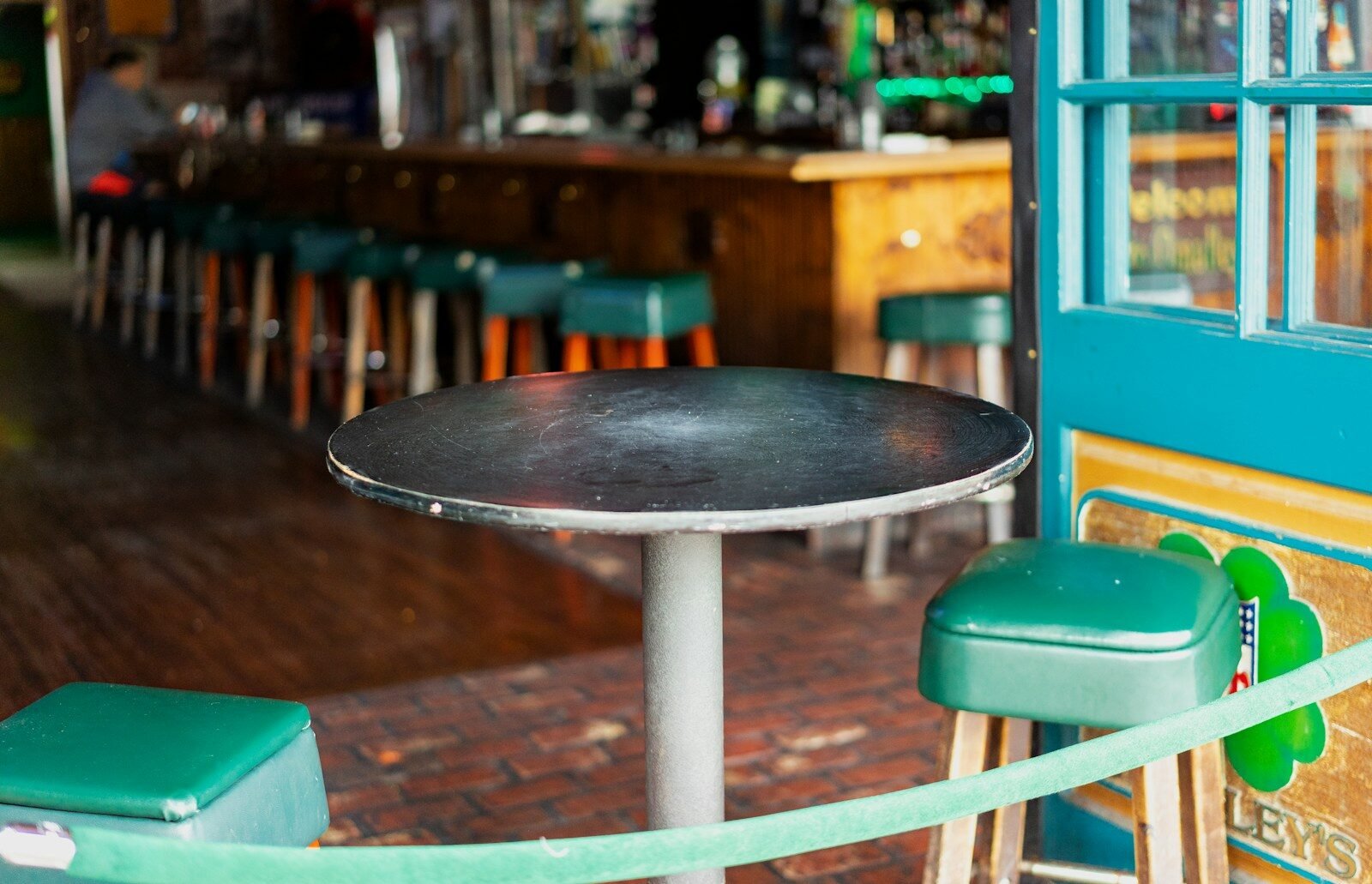
I bought my first pub table for the worst possible reason: it looked good in a photo. It was a glass-top number with a chrome base, and within four months it lived in a garage corner because it wobbled every time someone leaned on it and showed every fingerprint like it was auditioning for a crime scene. My second pub table, a solid acacia round I picked mostly because I liked the grain, is still in daily use six years later.
That gap between “looked right in a showroom” and “actually holds up in a real kitchen or patio” is basically the entire subject of this guide. Pub tables get treated like an afterthought purchase something you grab to fill a corner — when they’re actually one of the more failure-prone furniture categories out there, precisely because their height and narrow footprint punish bad construction in ways a regular dining table never has to deal with.
Table of Contents
- What Actually Makes a Table a “Pub Table”?
- Reading the Room: Which Style Fits Your Space
- Material Breakdown: What Pub Tables Are Actually Made Of
- Indoor vs. Outdoor Pub Tables: Don’t Mix These Up
- Real Product Comparison: Four Pub Tables I’d Actually Consider
- Sizing and Space Planning: The Math Nobody Explains
- Base Styles and Stability
- Choosing Stools to Match
- Maintenance by Material
- Buying Mistakes I See Constantly
- Where Pub Tables Are Headed
- FAQs
- Final Thoughts
- About the Author
What Actually Makes a Table a “Pub Table”?
The term gets used loosely, but there’s a real height distinction hiding underneath it, and getting it wrong is the single most common reason people end up returning a table.
- Standard dining height: around 28–30 inches, paired with regular dining chairs.
- Counter height: roughly 34–36 inches, matching a kitchen counter, paired with counter stools.
- Bar or pub height: typically 40–42 inches, paired with true bar stools.
“Pub table” gets applied to both counter-height and bar-height pieces depending on the retailer, which is genuinely annoying when you’re shopping — IKEA’s own bar table category explicitly notes that bar tables and pub tables are used interchangeably in their listings, and it’s worth double-checking the exact inch measurement rather than trusting the category name alone.
The clearance rule that actually matters: leave 10 to 12 inches between the seat of the stool and the underside of the tabletop. Go outside that range and either knees hit the table or arms can’t comfortably reach it. This is the single measurement people skip and regret.
Reading the Room: Which Style Fits Your Space
Industrial pub tables lean on blackened or powder-coated steel frames paired with reclaimed-look wood tops — think exposed bolts, trestle bases, visible weld seams. These read well in basements, converted garages, and lofts, and they tend to age gracefully because the “distressed” look doesn’t show new wear the way a pristine finish does.
Farmhouse styles use lighter wood tones, turned or tapered legs, and sometimes a lower shelf for baskets or barware storage. This is the safest choice if you’re not fully committed to a strong aesthetic direction, because it plays well with almost anything else in a room.
Mid-century pub tables show up with tapered splayed legs, often in walnut tones, sometimes paired with faux-marble or terrazzo-look tops on a tripod base — World Market’s Farley table is a good example of this look done at an accessible price point.
Traditional pub-style tables lean into the actual English pub aesthetic: dark stained solid wood, sometimes with a brass foot rail built into the base rather than relying on stool footrests. These are heavier, more expensive, and genuinely last decades if the wood is solid rather than veneered.
Round vs. square vs. rectangular is less about looks than traffic flow. Round tables let people rotate seating and don’t have “corner” seats that feel awkward, which matters a lot in a small space where people are constantly getting up and down. Rectangular tables seat more people per square foot of floor space and work better against a wall. Square tables are the compromise — fine for two to four people, but they get cramped fast beyond that.
Material Breakdown: What Pub Tables Are Actually Made Of
This is where most buying decisions actually get made, whether people realize it or not, because material determines both how the table looks in five years and how much it costs today.
| Material | Durability | Maintenance | Typical Price Range | Honest Verdict |
|---|---|---|---|---|
| Solid hardwood (oak, walnut, mahogany) | Excellent — can be refinished repeatedly | Low; occasional oiling or waxing | $$$–$$$$ | The best long-term value if you plan to keep the table for 10+ years. Shows genuine wood grain that engineered materials can’t replicate. |
| Engineered wood / MDF with veneer or laminate | Moderate; vulnerable to moisture and chipped edges | Low, but damage isn’t repairable the way solid wood is | $–$$ | Fine for a starter apartment or a table you expect to replace in a few years. Not worth it if you’re furnishing a permanent home. |
| Solid metal (steel, iron) frames | Excellent structurally, but finish can chip or rust outdoors without powder coating | Low indoors; requires rust-prevention outdoors | $$–$$$ | Great for stability — metal bases rarely wobble the way wood ones do over time. Pair with a wood or stone top rather than an all-metal design for warmth. |
| Glass tops | Poor for daily high-traffic use; scratches and shows fingerprints constantly | High; near-daily wiping in busy households | $$–$$$ | Looks striking in photos, genuinely high-maintenance in real life. I’d skip this if you have kids, pets, or host often. |
| Stone, concrete, or faux marble (often engineered marble over MDF or resin) | Very good if genuine stone; engineered versions can chip at edges | Low for sealed stone; moderate for engineered composites | $$–$$$$ | Real stone is stunning and essentially permanent. Faux-marble-over-MDF versions, common at mid-range retailers, look convincing but don’t take impact well at the edges. |
| Outdoor hardwoods (teak, eucalyptus, acacia) | Excellent when properly oiled; naturally weather-resistant | Moderate — oiling 2–3 times a year to maintain color | $$–$$$ | Teak is the gold standard for a reason — it weathers to an attractive silver-grey even if you skip maintenance entirely, which acacia and eucalyptus don’t do as gracefully. |
| HDPE poly lumber (recycled plastic lumber) | Excellent, doesn’t rot, fade-resistant options available | Very low; occasional soap and water | $$–$$$ | The best low-maintenance outdoor option if you don’t want the upkeep of real wood, though it doesn’t have the same warmth up close. |
| Wicker / rattan (synthetic resin versions for outdoor use) | Good if UV-treated; natural rattan degrades outdoors | Low for synthetic; moderate for natural fiber | $$–$$$ | Fine for a covered patio, risky for full sun and rain exposure unless the product is explicitly rated for it. |
Indoor vs. Outdoor Pub Tables: Don’t Mix These Up
This sounds obvious until you’re standing in a showroom comparing two similar-looking round wood tables, one of which will warp and crack after a single rainy season outside. A genuinely outdoor-rated wood table — like a solid teak patio pub table or a eucalyptus hardwood version — will specify the wood species and care instructions (typically wiping down and applying teak or hardwood oil two to three times a year). If a listing doesn’t mention weather resistance or maintenance oil at all, assume it’s an indoor piece.
Metal outdoor tables need to specify powder coating or a rust-resistant finish; a plain painted steel frame will rust through in a single wet season in most climates. Acacia-and-iron combination tables are common in outdoor lines because the wood handles moisture reasonably well and the iron frame adds stability against wind — but even these need occasional maintenance rather than none at all.
Real Product Comparison: Four Pub Tables I’d Actually Consider
I’m comparing actual current listings here rather than hypothetical specs, because the gap between marketing copy and reality only shows up when you look at specific products.
| Table | Material | Height | Price Range | Best For | My Verdict |
|---|---|---|---|---|---|
| Wayfair counter-height options (varies by listing) | Mostly engineered wood with metal frames | 34–40″ | $ | Renters, first apartments, quick furnishing | Huge selection makes it easy to match a specific look, but build quality varies wildly between listings — read the material description carefully, not just the photo. |
| IKEA NORDVIKEN | Solid wood/veneer combination | Bar height | $$ | Small kitchens needing built-in storage | The drawer is a genuinely useful touch most competitors skip. Some buyers report leg durability issues under heavy use — treat it as sturdy for normal use, not for leaning your full weight on repeatedly. |
| IKEA STENSELE | Metal frame, engineered top | Bar height | $$ | Anyone who wants documented durability | This is the one I’d point a skeptical buyer toward specifically because it’s tested to the ANSI/BIFMA X5.5 commercial furniture standard and EN 15372, meaning it’s rated for restaurant-level daily use, not just occasional home use. That’s a meaningfully higher bar than most home furniture lines bother clearing. |
| World Market Farley | Steel legs, faux-marble MDF top | Bar height | $$ | Style-focused small spaces, apartments | Genuinely striking for the price, but it’s an MDF top with a marble finish, not stone — treat spills and heat exposure carefully, and don’t expect it to take the abuse a solid wood or real stone top would. |
Sizing and Space Planning: The Math Nobody Explains
Retailers list a table’s footprint, but almost none of them tell you the clearance math that actually determines whether it’ll work in your space:
- Leave 36 inches of clear floor space around the table’s perimeter for stools to be pulled out and for people to walk past comfortably. In a tight apartment, 30 inches is a livable minimum, but it starts to feel cramped.
- Budget roughly 24 inches of table edge per seated person. A 36-inch round table comfortably seats three to four; stretching it to five means elbows will collide.
- Check your ceiling height before buying a bar-height table for a basement or converted space — a 42-inch table plus a stool puts an average adult’s eye line uncomfortably close to a low ceiling in a way that a showroom with 9-foot ceilings won’t reveal.
Base Styles and Stability
Four-leg bases are the most common and generally the most stable for square or rectangular tops, assuming the leg-to-floor connection is solid rather than relying purely on friction pads.
Trestle bases (a single beam connecting two leg supports) trade a small amount of stability for significantly better legroom, since there’s no leg directly under where a person sits.
Pedestal or tripod bases look sleek and work well for round tops, but they’re the design most prone to wobble on uneven flooring — a table that feels rock-solid on a showroom floor can develop a wobble on your slightly uneven kitchen tile. Look specifically for adjustable floor levelers on the base feet; their absence on a pedestal design is a real warning sign, not a minor omission.
The genuinely useful detail buried in spec sheets is a footrest ring or built-in footrest beam on the table itself rather than relying entirely on stool footrests — it matters more than it sounds like it should for anyone sitting at bar height for an extended period, and it’s a feature IKEA specifically calls out as a design consideration on several of its bar table listings.
Choosing Stools to Match
The math is simple but people consistently skip it: subtract 10 to 12 inches from your table height to get the correct stool seat height. A 36-inch counter-height table wants a 24-to-26-inch stool. A 42-inch bar-height table wants a 28-to-30-inch stool.
If your table doesn’t have a built-in footrest ring, prioritize stools with their own footrest bar — sitting at bar height with dangling feet for an entire meal is uncomfortable regardless of how good the table looks.
Maintenance by Material
Solid wood, indoor: dust regularly, wipe spills immediately, and apply furniture wax or oil once or twice a year depending on the finish.
Outdoor hardwoods (teak, eucalyptus, acacia): clean with a damp cloth and mild soap, and apply teak or hardwood oil two to three times a year to maintain color — skip this and the wood will still hold up structurally, but it’ll weather to a grey patina faster than intended, which some people actually prefer aesthetically.
Metal, indoor: occasional dusting; check screws and joints periodically since metal-frame wobble is almost always a loose fastener, not a structural failure.
Metal, outdoor: inspect for rust at joints and touch up powder coating chips promptly — small chips left untreated become rust points that spread underneath the finish.
Glass: glass cleaner and a microfiber cloth, realistically on a near-daily basis if the table sees regular use.
Engineered wood/MDF/laminate: wipe spills immediately; standing water or condensation rings are the main enemy since the core material swells once moisture gets past the surface layer.
Buying Mistakes I See Constantly
Buying the table before the stools, then discovering nothing matches the height correctly. Measure and shop for both together, or at minimum confirm your existing stool height before ordering a table.
Choosing a glass top for a household with kids or frequent gatherings. It photographs beautifully and is a genuine maintenance burden in daily use.
Ignoring weight capacity on outdoor pieces. Outdoor tables see people leaning on them, setting down coolers, and taking more abuse than indoor furniture — check the listed capacity rather than assuming all pub tables are built the same.
Skipping the ceiling-height check for bar-height tables in basements or converted spaces. This is the single most common regret I hear about after the fact, and it’s completely avoidable with one measurement before ordering.
Where Pub Tables Are Headed
A few shifts worth watching if you’re planning a purchase in the next year or two:
Certified sustainable sourcing is becoming a real differentiator, not just marketing language. FSC-certified hardwood and recycled-content composite tops are showing up more often at mid-range price points rather than being reserved for premium lines, which is a genuine shift from five years ago.
Multi-functional designs are gaining ground, particularly fold-down or extendable pub tables aimed at small apartments — a table that converts from a two-person high-top to a wider surface for gatherings solves a real space problem rather than being a gimmick.
Commercial-grade testing standards are trickling down into home furniture lines. The ANSI/BIFMA X5.5 standard was built for institutional and commercial furniture, but seeing it referenced on consumer home listings — as IKEA does with the STENSELE line — signals that manufacturers increasingly see durability testing as a selling point rather than an unnecessary cost, which is a good thing for buyers tired of replacing wobbly tables every few years.
Indoor-outdoor material crossover is expanding. Materials like weather-resistant engineered wood and UV-treated resin wicker, originally developed for patios, are increasingly showing up in indoor lines simply because they hold up better to daily household wear than some traditional indoor materials do.
FAQs
Is a pub table the same thing as a bar table? Functionally, yes — the terms are used interchangeably by most retailers, though “pub table” sometimes gets applied to counter-height (34–36″) pieces too. Always check the listed height in inches rather than relying on the category name.
How many people can a pub table realistically seat? Budget about 24 inches of edge per person. A 36-inch round table fits three to four comfortably; a 48-inch rectangular table fits four to six.
Can I put an indoor pub table on a covered patio? Only if it’s explicitly rated for outdoor or covered-outdoor use. Humidity alone, even without direct rain exposure, will warp untreated MDF and cause solid wood not finished for outdoor conditions to crack over time.
What’s the most durable material for a household with kids? Solid hardwood with a sealed finish or a genuine stone top handles daily wear best. Avoid glass and MDF-veneer combinations if you’re expecting regular impact and spills.
Do I need a footrest on the table itself if my stools already have one? Not strictly, but having both is more comfortable for longer sitting sessions, and a table-integrated footrest ring means guests using stools without their own footrest aren’t left with dangling feet.
Final Thoughts
The tables that actually earn their keep in a home aren’t usually the ones that photographed best in the showroom — they’re the ones where someone bothered to check the stool clearance, picked a base that won’t wobble on real flooring, and matched the material to how the space actually gets used. None of that is complicated once you know to look for it; it’s just information that doesn’t make it into most product listings, which is exactly why so many pub tables end up wobbly, scratched, or quietly replaced within a year.
If you take one thing from this guide, let it be the height math — table height minus 10 to 12 inches equals stool height — because it’s the single most common reason a perfectly nice table ends up feeling wrong the moment people actually try to sit at it.
About the Author
This guide was researched and written by a home furnishings writer who has spent years buying, returning, reviewing, and occasionally rescuing furniture from the “this looked better online” pile. Research for this piece drew on current manufacturer specifications and material documentation from IKEA, World Market, and Wayfair, along with commercial furniture testing standards published by the Business and Institutional Furniture Manufacturers Association (BIFMA), to ground style and material recommendations in verifiable specifications rather than showroom impressions alone.