




My first white bedstead was a chalk-paint DIY job on a battered pine frame I found on Facebook Marketplace for £20. It looked fantastic for about eight months, and then every corner started showing the honey-coloured wood underneath where the paint had chipped. My current one is a properly finished solid pine frame with a factory paint job, and five years on, it still looks the way it did on day one. The difference between those two beds taught me more about buying white furniture than any showroom visit ever did: with white, the finish quality matters more than almost anything else, because white shows every flaw a darker wood would happily hide.
Bedsteads are having a real moment in UK bedrooms right now, partly because smaller modern rooms respond so well to white’s light-bouncing effect, and partly because there’s a genuine style shift away from the heavy dark-wood suites that dominated bedroom furniture for years. This guide walks through what actually distinguishes a good white bedstead from a disappointing one, the styles worth knowing, and how to style one so your bedroom looks considered rather than clinical.
Table of Contents
- What Exactly Is a “Bedstead”?
- Why Choose White? The Real Benefits
- Styles: Finding the Right White Bedstead for Your Room
- Material Breakdown: What White Bedsteads Are Actually Made Of
- Real Product Comparison: Four White Bedsteads Worth a Look
- UK Bed Sizes: Getting the Measurements Right First
- Bedroom Design Ideas: Styling White Without Looking Clinical
- Keeping White Fresh: Maintenance by Material
- Buying Mistakes I See Constantly
- Where White Bedsteads Are Headed
- FAQs
- Final Thoughts
- About the Author
What Exactly Is a “Bedstead”?
Worth clearing this up before anything else, because it trips up a lot of first-time buyers browsing UK retailers. A bedstead is a bed frame with a proper headboard and footboard, standing clear of the floor on legs, with the mattress supported on a slatted base. It’s the traditional structure most people picture when they think “bed frame.”
A divan is different — the base itself is a solid upholstered box that sits directly on the floor, often with built-in drawers, and typically pairs with a separate headboard bought to match. An ottoman bed uses a gas-lift mechanism so the entire mattress platform lifts up to reveal storage underneath, and it can come with or without a footboard.
The distinction matters because it changes both the look and the practicality: bedsteads show more of the frame and tend to feel lighter and more furniture-like in a room, while divans and ottomans prioritise storage and a lower, more built-in appearance. Dunelm’s beds range sells all three side by side, which is a good place to see the visual difference before committing to one.
Why Choose White? The Real Benefits
It genuinely brightens dark rooms. Britain has a lot of north-facing bedrooms and terraced houses with small windows, and white furniture reflects what limited natural light there is rather than absorbing it the way dark wood does. This isn’t just decorating folklore — it’s the same principle interior designers use white ceilings for.
It’s the safest long-term style choice. Wall colours, bedding trends, and accent palettes change far more often than people replace a bed frame. White sits neutral underneath whatever else changes in the room, which matters if you’re not planning to redecorate every couple of years.
It photographs and resells well. If you ever move house or sell furniture on, white bed frames are consistently easier to place in a new buyer’s mind than a strongly coloured or heavily grained dark wood piece — it reads as “blank canvas” rather than “someone else’s taste.”
The honest caveat: an all-white bedstead with white walls and white bedding can genuinely tip into looking like a hospital room if you don’t introduce contrast somewhere. White works because of what you put around it, not despite it — more on that in the styling section below.
Styles: Finding the Right White Bedstead for Your Room
Shaker and Scandi-inspired frames use clean, straight lines with minimal ornamentation — flat panel headboards, simple turned or square legs. This is the most forgiving style for smaller or more minimalist bedrooms because it doesn’t compete visually with anything else in the room.
French and shabby-chic styles bring in carved detailing, curved headboards, and sometimes a slightly distressed or antiqued paint finish. These work beautifully in period properties with cornicing and higher ceilings, and can look oddly out of place in a boxy new-build room.
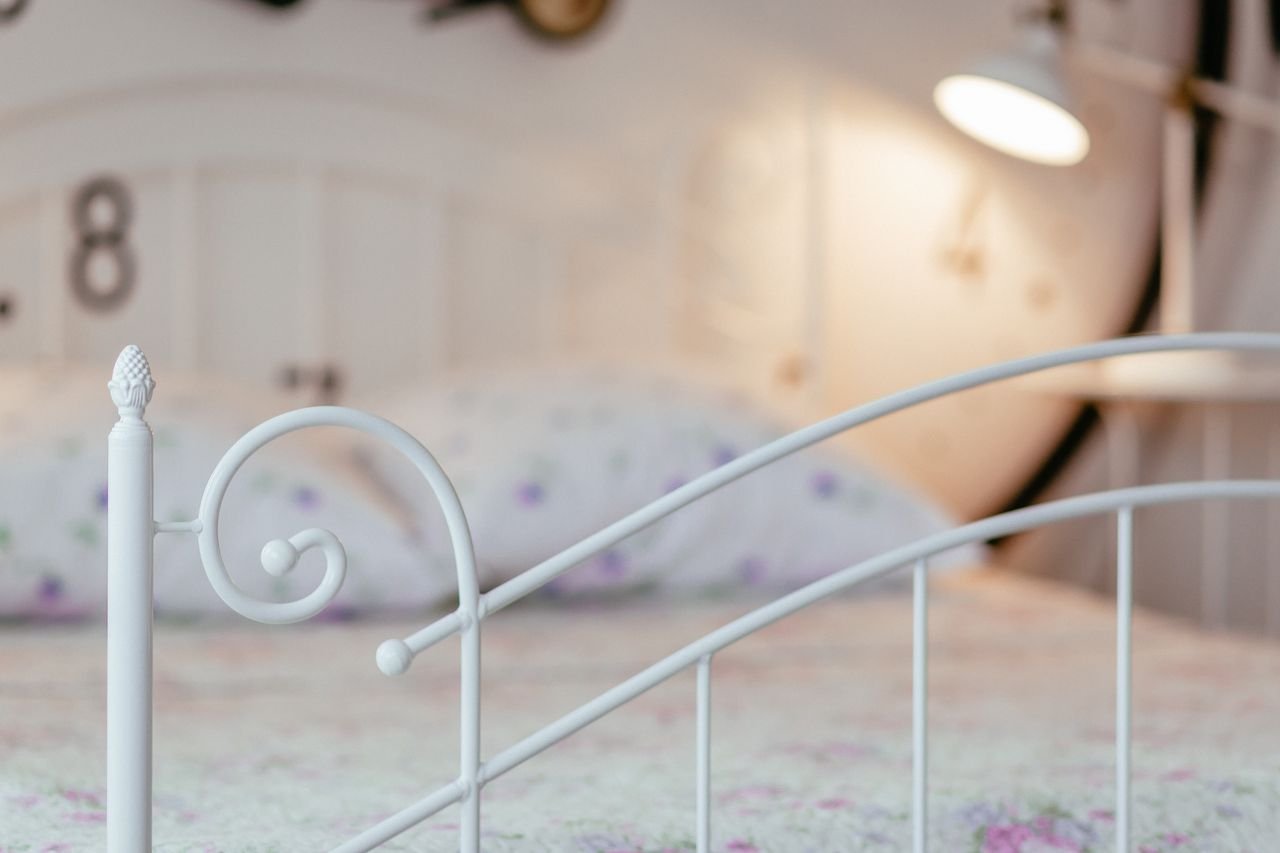
Industrial and metal bedsteads use powder-coated tubular steel or, at the higher end, genuinely hand-forged wrought iron. Heritage makers like the Wrought Iron & Brass Bed Co., working from a family workshop on the Sandringham Estate in Norfolk, still hand-forge and cold-bend every curve — a world away from the flat-pack metal frames most people picture, and priced accordingly.
Sleigh beds curve the head and footboard outward at the top, giving a softer, more traditional silhouette. They tend to need slightly more floor space front-to-back than a standard bedstead because of the curve, worth checking against your room dimensions before ordering.
Four-poster frames are the dramatic option — genuinely stunning in a larger room with decent ceiling height, genuinely overwhelming in a standard UK box room. Measure ceiling height carefully; older properties with lower ceilings can make a four-poster feel oppressive rather than grand.
Ottoman and storage bedsteads, like Dunelm’s Madrid range, solve a genuinely common UK problem: smaller bedrooms with nowhere to put spare bedding or off-season clothes. A white painted solid wood ottoman frame gets you the classic bedstead look with a storage cavity most people don’t think to look for until they’re already short on space.
Rattan and coastal-style frames use whitewashed cane or rattan headboards, often paired with a simple wood or metal base. These suit relaxed, seaside-inspired bedrooms but do need slightly more careful cleaning than solid wood, since natural fibre can trap dust in the weave.
Material Breakdown: What White Bedsteads Are Actually Made Of
| Material | Durability | Chip/Wear Risk | Typical Price Range | Honest Verdict |
|---|---|---|---|---|
| Solid pine, painted | Very good — sturdy, and dents can often be sanded and touched up | Moderate; paint can chip at corners and where a headboard meets a wall | £–££ | The best balance of durability and price if you don’t mind occasional touch-up work. This is what most mid-range UK bedstead brands use. |
| Rubberwood or MDF, painted | Good structurally | Higher; MDF edges chip more visibly than solid wood once the paint layer is breached | £–££ | Fine for a spare room or a first flat. Not what I’d choose for a bed you plan to keep for a decade. |
| Wood veneer over engineered core | Moderate; veneer can peel at edges over years | Moderate-high | £–££ | Looks convincing new, ages less gracefully than solid wood — watch for veneer separation at joints after a few years of use. |
| Powder-coated metal (steel) | Excellent structurally | Low if the coating is intact; chips expose bare metal to rust in damp rooms | ££–£££ | Genuinely low-maintenance and won’t warp or crack the way wood can. Worth checking coating thickness on budget options, since thin coatings chip more easily. |
| Hand-forged wrought iron | Excellent — built to outlast most other materials by decades | Very low | £££–££££ | The premium choice, and it shows in longevity — some UK makers offer lifetime guarantees on iron frames, which tells you how confident they are in the material itself. |
| Upholstered fabric or velvet in white/off-white | Good for the frame, fabric shows marks more than wood does | High for the fabric surface itself | ££–£££ | Beautiful for softening a room, but white fabric on a bed frame genuinely does show scuffs and pet hair faster than any solid material on this list. Go for a removable, washable cover if you can find one. |
| Whitewashed rattan/cane | Moderate; natural fibre can become brittle over many years | Low chip risk, but fibre can fray | ££–£££ | Suits a specific relaxed aesthetic well. Dust regularly — the woven texture holds dust in a way flat surfaces don’t. |
Real Product Comparison: Four White Bedsteads Worth a Look
| Bedstead | Material | Style | Best For | My Verdict |
|---|---|---|---|---|
| John Lewis Wilton | Solid pine | Simple, traditional slatted headboard | Buyers wanting genuine solid wood without a premium price tag | A dependable choice — solid wood construction at a realistic mid-range price, and John Lewis’s wider white bedstead range gives good size and style options if this particular design isn’t quite right. |
| Dunelm Madrid Ottoman | Rubberwood and MDF, painted white | Classic slatted bedstead with hidden storage | Smaller bedrooms needing extra storage without buying separate furniture | The piston ottoman mechanism genuinely works well day-to-day, and the classic white painted finish keeps it from looking like a “storage bed” first and a bedstead second — it just looks like a normal frame that happens to lift up. |
| Dunelm Captains Storage Bedstead | Engineered wood, white finish | Modern slatted headboard with integrated drawers | Households wanting drawer storage rather than under-mattress lift storage | The four drawers plus cupboard are genuinely more convenient for everyday access than an ottoman lift, since you’re not shifting the mattress to get to it — trade-off is a slightly bulkier footprint than a standard bedstead. |
| Wrought Iron & Brass Bed Co. | Hand-forged British iron | Victorian, Edwardian, and contemporary metal designs | Buyers wanting a genuine heritage piece built to last decades | This is the one I’d point someone toward if budget genuinely isn’t the deciding factor. Hand-forged in a Norfolk workshop with a lifetime guarantee — a completely different category from mass-produced metal frames, and it shows in both the price and the finish quality. |
UK Bed Sizes: Getting the Measurements Right First
UK bed sizing uses its own standard, distinct from US or European measurements, and it’s worth having these to hand before browsing:
| Size | Dimensions | Best For |
|---|---|---|
| Single | 90cm x 190cm | Children’s rooms, box rooms, solo sleepers |
| Small double | 120cm x 190cm | Guest rooms, single sleepers wanting extra room |
| Double | 135cm x 190cm | The most common UK bedroom size, suits most standard rooms |
| King size | 150cm x 200cm | Couples wanting more shoulder room, needs a larger bedroom |
| Super king | 180cm x 200cm | Master bedrooms with generous floor space |
Two measurements people consistently forget to check: headboard height, which can add real visual bulk in a room with a low window or a radiator positioned close to the bed wall, and overall footprint including footboard, which matters most for sleigh and four-poster styles where the frame extends noticeably beyond the mattress dimensions themselves. Always check the full frame dimensions on the product listing, not just the mattress size the bed is designed for.
Bedroom Design Ideas: Styling White Without Looking Clinical
Layer in natural texture. Linen or waffle-weave bedding, a chunky wool throw, a woven rattan bench at the foot of the bed — texture is what stops an all-white scheme from reading as flat or sterile. The white bedstead should be the calm backdrop, not the only interesting thing in the room.
Choose a warm white over a stark one where possible. Bedsteads described as “white” span a real range from bright, cool white through to warmer off-white and “chalk” finishes. A warm white against warm-toned walls avoids the slightly clinical look a bright cool white can create under standard room lighting.
Introduce one strong contrast colour. Deep navy, sage green, or terracotta walls behind a white bedstead create genuine visual interest without overwhelming the room — the white frame reads as a deliberate design choice rather than the absence of one.
Mix in metal accents. Brass or matte black bedside lamps, door handles, or picture frames against a white wooden or painted frame add just enough contrast to keep the room from feeling one-note, without needing to introduce another major colour.
Get a rug under the bed, not just beside it. A rug that extends at least 40–50cm beyond each side of the bed grounds the whole room and adds warmth that a white frame alone can’t provide, especially over cooler flooring like laminate or engineered wood.
Consider warm-toned bulbs over cool white ones. Lighting temperature genuinely changes how white furniture reads in a room — a soft warm white bulb (around 2700K) flatters a white bedstead far more than a cool daylight bulb, which can push the whole scheme toward looking sterile.
Keeping White Fresh: Maintenance by Material
Painted solid wood or MDF: dust regularly with a dry or slightly damp cloth, avoid abrasive cleaners that can dull the finish, and keep a matching touch-up paint pen on hand for the inevitable small chip at a corner or where a headboard meets the wall.
Metal frames: wipe down periodically; in older or damper UK properties, check joints and welds occasionally for any sign of surface rust starting under the coating, particularly if the bedroom has poor ventilation.
Upholstered fabric: treat with a fabric protector spray when new, and address spills or marks immediately rather than letting them set — white fabric genuinely doesn’t forgive delay the way a patterned fabric would.
Rattan and cane: a soft brush attachment on a vacuum, used regularly, keeps dust from building up in the weave — trying to wipe a woven surface with a damp cloth alone tends to just push dust further into the gaps rather than removing it.
Buying Mistakes I See Constantly
Not checking headboard height against a nearby window or radiator. A tall headboard behind a low window can block natural light exactly where you need it most, and one positioned right against a radiator can trap heat unpleasantly close to where you sleep.
Assuming all “white” listings will match. Retailers use everything from bright white to warm ivory under the same label. If you’re buying a headboard, bed frame, and bedside tables separately, order samples or check close-up product photography before assuming they’ll match on arrival.
Choosing a four-poster or tall sleigh bed without checking ceiling height. Older UK properties, especially converted lofts and Victorian terraces, can have ceiling heights that make a dramatic tall frame feel cramped rather than grand — measure first.
Forgetting to check base and slat compatibility with an existing mattress. Some ottoman and storage bedsteads use a solid sprung base rather than open slats, which changes how certain mattress types perform — check the base type specified against your mattress manufacturer’s recommendations.
Where White Bedsteads Are Headed
Warm whites and off-whites are steadily overtaking stark white as the default choice, reflecting a broader shift toward warmer, more textured “quiet luxury” interiors rather than the crisp, cool minimalism of a decade ago.
Sustainable sourcing is becoming a genuine selling point rather than a niche one. FSC-certified timber and water-based, low-VOC paint finishes are increasingly standard even at mid-range UK retailers, not just premium eco-focused brands.
Storage-integrated designs are only becoming more relevant as UK bedroom sizes, particularly in new-build flats and converted properties, keep shrinking — an ottoman or drawer-integrated bedstead solves a genuine space problem rather than being a nice-to-have extra.
Heritage and handmade metal beds are seeing a real resurgence, partly as a reaction against mass-produced flat-pack furniture. Makers like the Wrought Iron & Brass Bed Co. building a viable modern business around traditional blacksmithing techniques and lifetime guarantees is a good sign that buyers are increasingly willing to pay more for something built to genuinely last, rather than replacing a frame every few years.
FAQs
Will a white bedstead show marks more than other colours? Slightly, particularly scuffs from vacuum cleaners or shoes at floor level, but a good painted or powder-coated finish handles normal daily use well. Fabric-upholstered white frames show marks noticeably faster than solid wood or metal.
What’s the difference between white and “off-white” or “chalk white” listings? Pure white finishes lean cooler and brighter; off-white, bone, and chalk finishes carry a warmer undertone. If you’re pairing with warm wood flooring or warm-toned walls, an off-white finish will generally look more cohesive than a stark bright white.
Is a wooden or metal white bedstead better for a small bedroom? Metal frames generally have a slimmer visual profile since the material itself takes up less visual space than a solid wood headboard and footboard, which can help a small room feel less crowded — though a simple, low-profile wooden Shaker-style frame achieves a similar effect.
Can I repaint a white bedstead if it starts to look tired? Yes, for solid wood frames — light sanding followed by a furniture-grade paint gives most pine or rubberwood bedsteads a genuinely fresh finish. MDF and veneer frames are trickier to repaint well since the surface doesn’t sand as forgivingly.
Do white bedsteads work in period properties, or only modern ones? Both, provided the style matches the property rather than just the colour. A carved French-style or genuine wrought iron frame suits a period home far better than a flat-pack minimalist design would, even though both might be described as “white.”
Final Thoughts
The white bedsteads that actually earn their place in a bedroom for years, rather than getting swapped out after one house move, tend to share the same two qualities: a finish good enough to withstand daily contact without chipping within the first year, and a bit of thought put into what surrounds them — the wall colour, the lighting temperature, the texture in the bedding. White is a genuinely brilliant choice for brightening a room and staying flexible through years of changing taste, but it’s not a decision you can make on colour alone. Material quality and styling around it do the real work.
If there’s one thing worth checking before you buy, it’s the finish type and the headboard height together — get those two right, and almost any white bedstead style will genuinely work in almost any UK bedroom.
About the Author
This guide was researched and written by a home furnishings writer with a particular focus on UK bedroom design, drawing on years of buying, styling, and occasionally repainting bed frames in period and new-build properties alike. Research for this piece drew on current product specifications and material details from John Lewis & Partners, Dunelm, and heritage British bedmaker Wrought Iron & Brass Bed Co., to ground style and material recommendations in genuine UK retail specifications rather than showroom impressions alone.