

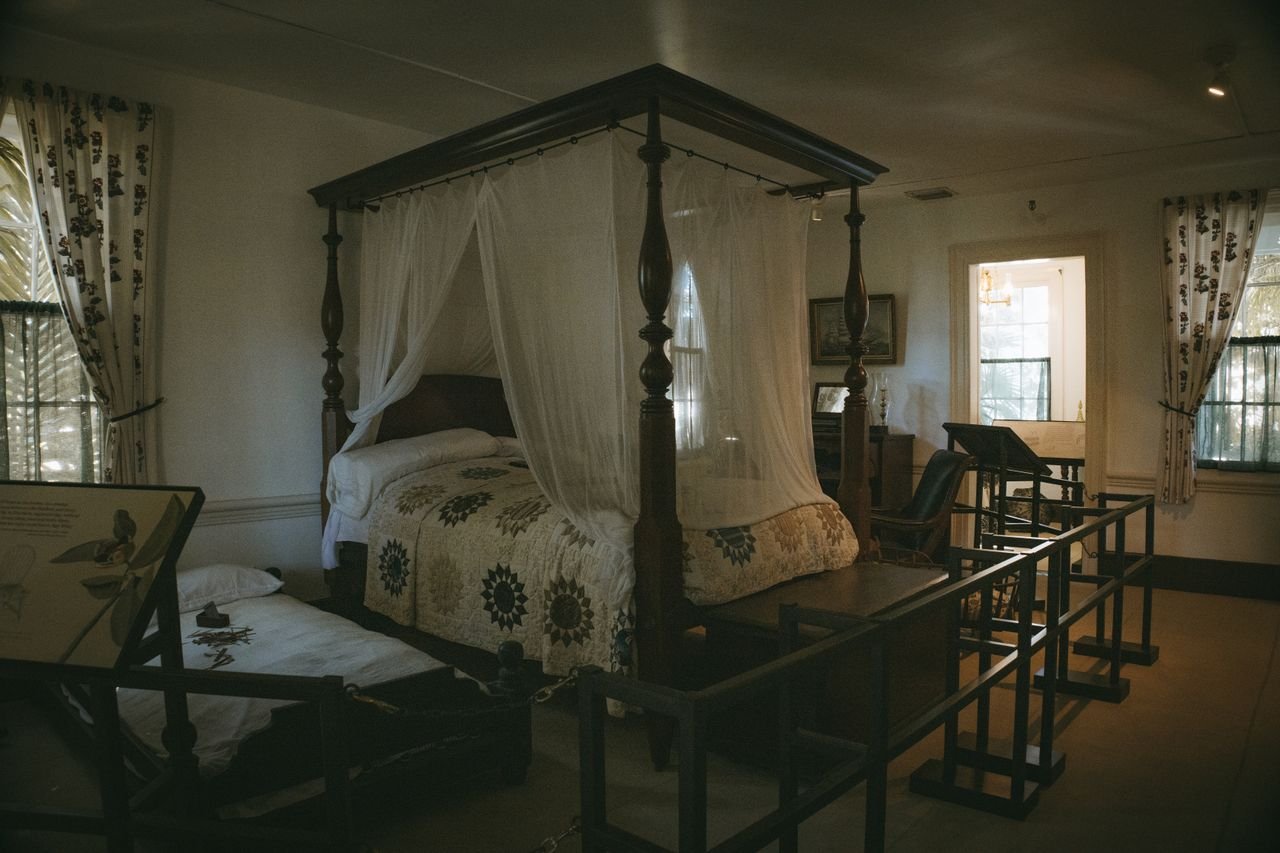



I almost bought the wrong four-poster bed once. I’d fallen for a heavily carved mahogany model online, measured my room for floor space, ordered it, and only thought to measure my ceiling height after the delivery confirmation email landed. Eight-foot ceiling, eighty-four-inch posts, and about four inches of clearance to spare technically fine, but it would have looked like the bed was wearing the ceiling as a hat. I canceled the order and started over, this time doing the math first.
That near-miss is basically the whole story of shopping for a four-poster bed: it’s one of the few furniture pieces where scale mistakes are genuinely hard to undo after delivery. This guide covers what I wish I’d known going in the real style categories, honest price comparisons across budget tiers, the room-size math that actually matters, and design ideas that work whether you’ve got a grand primary suite or a modest 10×12 bedroom.
Table of Contents
- What Exactly Is a Four-Poster Bed?
- A Quick, Genuinely Interesting History
- The Main Styles, Compared
- Materials: Wood vs. Metal vs. Mixed
- Real Price Comparison: Budget, Mid-Range, and Premium
- Room Size and Ceiling Height: The Math That Actually Matters
- The Real Benefits
- The Trade-Offs Nobody Mentions
- Canopy Curtains and Design Ideas
- Bedroom Design Ideas by Style
- A Buying Checklist
- FAQ
- Final Thoughts
- About the Author
What Exactly Is a Four-Poster Bed?
A four-poster bed has a vertical post rising from each corner of the frame that’s the entire definition. What trips people up is the difference between a four-poster and a canopy bed, and honestly, the furniture industry itself is inconsistent about it. The clearest distinction I’ve found: a true four-poster has posts standing alone, with no connecting frame across the top. A canopy bed adds a “tester” — the horizontal frame joining the tops of the posts — which is what a fabric canopy actually attaches to. Every canopy bed is technically a four-poster, but not every four-poster is a canopy bed.
This matters practically, not just semantically. If you want to hang curtains or a mosquito net and your bed doesn’t have a tester frame, you’ll need ceiling-mounted hooks or a separate canopy rail instead, which is a different installation project than simply draping fabric over an existing frame.
A Quick, Genuinely Interesting History
Four-poster beds emerged in medieval Europe, and their tall posts weren’t decorative at first — they were structural necessity. Stone castles were cold, drafty, and largely unheated, so posts supporting heavy fabric curtains let occupants effectively wall off a warm, private box around the mattress each night. The quality of that fabric, from rough wool to embroidered silk, became a direct signal of wealth, which is part of why the style became so tied to nobility and status through the Tudor and Stuart periods.
The single most famous surviving example is the Great Bed of Ware, an enormous oak four-poster built around 1590, roughly ten feet wide and reputedly able to sleep four couples at once. It was originally a novelty attraction at an inn in Ware, Hertfordshire, and became famous enough that Shakespeare referenced it in Twelfth Night in 1601. It’s now part of the permanent collection at London’s Victoria and Albert Museum, and it’s a genuinely wild object to see in person if you’re ever there — the scale is almost comedic by modern standards.
By the 19th century, the arrival of central heating quietly removed the main practical reason for heavy bed curtains, and four-posters shifted from necessity to pure style statement — which is essentially the role they still play today.
The Main Styles, Compared
“Four-poster bed” covers a much wider range of looks than most people assume walking into a furniture showroom. Here’s how the major categories actually differ:
| Style | Post Character | Best Room Type | Typical Material |
|---|---|---|---|
| Traditional carved | Thick, ornately turned or hand-carved | Formal, classic bedrooms with layered textiles | Solid oak, mahogany, cherry |
| Pencil post | Thin, tapered, minimal ornamentation | Colonial, farmhouse, low-ceiling rooms | Maple, pine, cherry |
| Rice-carved | Posts carved with rice-stalk and acorn motifs | Early American, New England colonial | Mahogany, cherry |
| Modern/metal minimalist | Slim iron or steel rods, no ornamentation | Contemporary, industrial, small bedrooms | Powder-coated steel, black iron |
| Storage four-poster | Any post style, paired with a platform base | Practical bedrooms needing extra storage | Engineered wood, veneer |
The pencil post deserves a special mention for anyone nervous about ceiling clearance — it’s genuinely the most forgiving option for standard 8-foot ceilings because the posts read as light and vertical rather than heavy and looming, even at full height.
Materials: Wood vs. Metal vs. Mixed
Solid wood (oak, mahogany, cherry, pine) is the traditional choice and generally the sturdiest, with reputable frames built using mortise-and-tenon joinery rated to support well over 500 pounds of combined mattress, bedding, and body weight. It’s also heavier to move, harder to reconfigure, and the most expensive category by a wide margin.
Metal (powder-coated steel or iron) has become genuinely popular in contemporary design over the past several years, largely because slim metal posts create the four-poster silhouette without the visual bulk of carved wood. It’s lighter to ship and assemble, generally less expensive, and holds up well — but it doesn’t carry the same heirloom quality, and the posts can feel visually thin in a large, high-ceilinged room built for a grander piece.
Mixed frames (upholstered headboard with metal or wood posts) are increasingly common in the mid-range market and split the difference reasonably well — you get a softer, more contemporary headboard with the architectural height of a four-poster.
Real Price Comparison: Budget, Mid-Range, and Premium
I checked current listings across several major retailers to build an honest picture of what you actually pay at each tier, since “four-poster bed” pricing spans an enormous range.
| Tier | Example Products | Price Range (Queen/King) | What You’re Getting |
|---|---|---|---|
| Budget | Walmart Euroco canopy frame, FLEXISPOT rattan-headboard frame | ~$225–$370 | Engineered wood or basic metal, functional but visually lighter-duty, assembly required |
| Mid-range | Wayfair Lark Manor four-poster, Liberty Furniture Summer House, Pemberly Row | ~$470–$1,000 | Solid wood or wood-veneer hybrids, better joinery, more finish options |
| Premium | Pottery Barn Summerville, Restoration Hardware collections | ~$1,500–$5,500+ | Solid hardwood, hand-finishing, heirloom-grade construction, higher weight capacity |
My honest verdict: the budget tier is genuinely fine for a guest room, a rental, or anyone testing whether they actually like the four-poster look before committing real money — just expect thinner posts and a less substantial feel when you lean against the frame. The mid-range tier is where I’d point most people furnishing a primary bedroom long-term; you get solid construction without paying for the brand markup that premium retailers charge for essentially the same joinery techniques. The premium tier earns its price mainly through finish quality and design exclusivity rather than dramatically better structural performance — it’s worth it if the specific aesthetic matters to you or you want a piece built to be passed down, but it’s not where the meaningful durability jump happens.
Room Size and Ceiling Height: The Math That Actually Matters
This is the section that would have saved me from my near-miss. Recommendations vary somewhat by retailer, but the consensus across furniture guides converges on similar numbers:
- Ceiling height: Most four-poster frames are built for 8–9 foot ceilings, with posts commonly standing 72–90 inches tall. Leave at least 8–12 inches of clearance between the top of the posts (or canopy) and the ceiling — tighter than that and the bed reads as cramped rather than grand, even if it technically fits.
- Floor space: A commonly cited minimum is roughly a 12×12 foot room for a queen four-poster, and 14×14 feet for a king, though some retailers list slightly smaller minimums depending on post thickness. The posts effectively expand the bed’s visual footprint well beyond the mattress dimensions, so measure the full frame width and depth, not just the mattress size.
- Clearance around the bed: Aim for at least 24 inches of walking space on the sides you’ll actually use for access, and don’t forget to measure doorways and stairwells against the length of the longest post section — delivery logistics are a real, frequently overlooked problem with these beds.
If your ceiling is a standard 8 feet and you’re set on a four-poster, a pencil post or slim metal frame will look intentional. A heavily carved traditional frame at the same height tends to look like it’s fighting the room.
The Real Benefits
Architectural presence without renovation. A four-poster is one of the few furniture purchases that genuinely changes how a room reads spatially — it draws the eye upward and gives an otherwise plain bedroom a sense of structure and intention.
Functional privacy and light control, if you want it. With curtains added to a tester frame or a separate canopy rail, you get adjustable warmth, privacy, and light-blocking that a standard bed simply can’t offer — genuinely useful for shared bedrooms, shift workers, or anyone sensitive to early morning light.
Structural durability. Well-built four-posters, particularly solid wood versions with proper mortise-and-tenon joinery, tend to be rated for high weight capacities and typically outlast comparable platform frames because the post-and-rail construction distributes load differently than a simple box frame.
No requirement to anchor against a wall. Because the frame is fully self-supporting on four points, four-poster beds work well as room dividers or centerpieces in larger, more open bedroom layouts where a standard headboard-against-the-wall setup would look awkward.
The Trade-Offs Nobody Mentions
Delivery and assembly are genuinely harder. Long post sections have to travel through doorways, stairwells, and hallway turns, and I’ve seen more than one online review mention needing to disassemble railings or take doors off hinges to get pieces upstairs. Measure your access points before you buy, not after delivery is scheduled.
Sheet changes take longer. Fitted sheets are harder to tuck around a frame with tall corner posts in the way, especially on the side pushed against a wall. It’s a minor annoyance, but it’s a real one you’ll notice weekly.
Posts and canopy frames collect dust. Carved wood posts in particular have more surface detail than a flat headboard, and a fabric canopy adds another textile surface that needs regular laundering or vacuuming.
Scale mistakes are expensive to fix. Unlike a rug or a lamp, an oversized four-poster in a small room is not something you casually replace. This is the single biggest reason to measure obsessively before ordering.
Cost, at the upper end. A genuinely high-quality solid wood four-poster from a premium retailer is a four-figure investment, sometimes well into five figures for designer or antique pieces — worth knowing before you fall in love with a floor-model showpiece.
Canopy Curtains and Design Ideas
If your frame has a tester (the connecting top frame) or you’re adding a separate canopy rail, fabric choice changes the entire mood of the bed:
- Sheer voile or lace filters light beautifully while keeping the frame’s structure visible — the go-to choice for coastal, boho, or romantic bedrooms that don’t want a heavy, closed-in feel.
- Velvet or heavy linen drapes create genuine warmth and a more dramatic, formal look, closer to the bed’s medieval function — well suited to traditional or “old money” interior styles.
- Functional mosquito netting is a practical option worth considering even outside insect-prone climates, since sheer polyester or cotton netting gives a similar visual softness to voile at a much lower price point.
- String lights woven through sheer curtains have become a popular contemporary touch, particularly in guest rooms and teen bedrooms, adding warmth without committing to heavier fabric.
- No curtains at all is a completely legitimate choice, especially with modern metal or pencil post frames, where the appeal is the architectural line of the posts themselves rather than fabric.
Bedroom Design Ideas by Style
Modern minimalist: Pair a slim black or brushed-steel four-poster with a low platform base, neutral bedding, and zero canopy fabric. Let the posts function as sculptural lines against plain walls.
Traditional/heirloom: A carved mahogany or oak four-poster works best with layered textiles — a quilted coverlet, a bed skirt, and heavier drapery — plus classic case furniture like a matching dresser or blanket chest.
Coastal/relaxed: Whitewashed or light pine pencil-post frames with airy white or linen voile canopies read as breezy rather than heavy, especially paired with woven textures and a muted, sandy palette.
Gothic/dramatic: Dark stained wood or black iron posts, deep jewel-toned or black velvet drapes, and warm, low lighting create a genuinely dramatic statement bedroom — this is the style where a heavier canopy fabric actually earns its visual weight.
Small-space adaptation: Stick to a pencil post or slim metal frame in a light finish, skip a full canopy in favor of a half-canopy over the headboard only, and keep surrounding furniture low-profile so the bed remains the singular vertical element in the room.
A Buying Checklist
- Measure ceiling height and confirm at least 8–12 inches of clearance above the tallest point of the frame
- Measure the full room footprint against the manufacturer’s recommended minimum, not just the mattress size
- Measure doorways, hallway turns, and stairwells against the longest individual post or rail section
- Decide on curtains/canopy before ordering — some frames need a tester, others need a separate rail
- Check listed weight capacity if you or your partner are on the heavier side, or if you sleep with pets
- Confirm whether assembly is DIY or delivery-included, especially for premium retailers where in-home assembly is often part of the price
FAQ
What’s the actual difference between a four-poster bed and a canopy bed? A four-poster has four standalone corner posts with no connecting top frame. A canopy bed adds a horizontal frame (a “tester”) joining the tops of the posts, which fabric can be directly attached to. All canopy beds are four-posters, but not all four-posters are canopy beds.
Do I need high ceilings for a four-poster bed? Not necessarily. Standard 8-foot ceilings can work well with slimmer styles like pencil post or modern metal frames — it’s ornate, thick, traditional posts that tend to look cramped in lower-ceilinged rooms.
Can a four-poster bed fit in a small bedroom? Yes, with the right choices: a slim frame, a light finish, minimal or no canopy fabric, and low-profile surrounding furniture. The vertical lines can actually make a small room feel taller rather than more cramped.
Are four-poster beds hard to assemble? Generally more involved than a standard platform bed, mainly because of the number of separate post and rail components. Many premium retailers include professional assembly with delivery; budget options are typically DIY.
Do four-poster beds need a box spring? It depends on the frame — most modern four-posters, including budget and mid-range options, are built as platform beds with slat support and don’t require a box spring. Always check the specific product’s mattress support requirements before buying.
Is a four-poster bed a good long-term investment? Solid wood versions with quality joinery genuinely do hold up for decades and are commonly passed down as heirloom furniture, which is a real practical argument for spending more upfront if you’re planning to keep it long-term.
Final Thoughts
A four-poster bed is one of the rare furniture pieces that still does exactly what it was originally invented to do — anchor a room, create a sense of enclosure, and turn an ordinary bedroom into something that feels deliberate. The style range now goes from thin, almost architectural steel frames to genuinely museum-worthy carved hardwood, which means there’s a version of this bed for nearly any bedroom, not just the grand primary suites it’s historically associated with. The one piece of advice I’d actually insist on: measure your ceiling before you fall in love with anything. Everything else — style, material, curtains or none — is a matter of taste, but clearance is a matter of physics.
About the Author
This guide was written by an interior design writer with a background in furniture retail and several years spent researching bedroom furniture trends, materials, and construction standards for home design publications. Product pricing and specifications referenced in this piece were checked against current retailer listings, with historical claims cross-verified against museum and academic sources.