


I killed three tomato plants in my first season. Not from neglect from attention. I watered them every single evening because that’s what the plant tag said to do, never once checking whether the soil six inches down was already soaked. By July, the roots had rotted and the leaves had gone that sickly yellow-green that every new gardener eventually learns to dread.
That failure taught me more than any gardening book did. Most of what goes wrong in a home garden isn’t a mystery pest or bad luck it’s a handful of basic misunderstandings about soil, water, and timing, repeated season after season. This guide is the version of that lesson I wish someone had handed me a decade ago: practical, occasionally opinionated, and built around the tools and habits that actually move the needle.
Table of Contents
- Start With the Soil, Not the Shopping List
- Know Your Zone and Read Your Light
- Watering Is a Skill, Not a Schedule
- Feeding Your Garden Without Overdoing It
- Mulch: The Cheapest Upgrade in Gardening
- Pest Control: Slow Down Before You Spray
- Pruning and Seasonal Maintenance, Simplified
- Mistakes I Made So You Don’t Have To
- Where Home Gardening Is Headed
- FAQs
- Final Thoughts
Start With the Soil, Not the Shopping List
Every gardening problem I’ve ever had traces back to soil I didn’t understand. New gardeners tend to buy plants first and figure out the dirt later, but it really should go the other way. Soil chemistry decides whether the fertilizer you buy even does anything, and it decides it silently — a plant struggling in the wrong pH doesn’t wilt dramatically, it just quietly underperforms for months while you blame the wrong thing.
There are three realistic ways to find out what’s actually in your soil, and they are not equal.
| Method | What it tells you | Cost & turnaround | Honest verdict |
|---|---|---|---|
| Luster Leaf Rapitest Soil Test Kit | pH, nitrogen, phosphorus, potassium via color-comparison capsules | Under $15, results in about 10 minutes | Good enough to catch a badly acidic or badly alkaline bed. The color-matching is genuinely fussy in bright sunlight, and I’ve gotten visibly different readings testing the same sample twice. Treat it as a rough compass, not a lab report. |
| Digital pH/moisture “3-in-1” meters (the cheap probe-style ones) | pH and moisture estimate only, no NPK data | $10–$20, instant | I own one and mostly use it for moisture, not pH — the pH readings drift and rarely match a real test. Fine as a $12 moisture gauge, misleading if you’re trusting it for fertilizer decisions. |
| MySoil mail-in lab test or a university extension lab (find yours through Cornell Cooperative Extension’s soil testing directory as an example) | 13 nutrients plus pH, with actual fertilizer recommendations | $20–$35, results in 6–14 days | This is the one that actually changes what you do. My extension office test came back showing phosphorus levels already too high from years of an all-purpose fertilizer — information a capsule kit would never have surfaced. If you’re serious about a vegetable garden, do this once and re-test every 2–3 years. |
My honest recommendation:
Keep a cheap moisture meter in the shed for day-to-day watering decisions, but if you’re establishing a new bed or a garden has been underperforming for more than a season, spend the $25 on a real lab test. It’s the single highest-value purchase in this entire article.
Know Your Zone and Read Your Light
Before buying a single plant, two pieces of information save more heartbreak than anything else: your hardiness zone and your actual sun exposure.
The USDA Plant Hardiness Zone Map tells you the coldest temperatures your area typically sees, which determines whether a perennial will survive winter or need to be treated as an annual. Worth noting for anyone gardening in the U.S.: the map was updated in late 2023, and many areas shifted half a zone warmer compared with the 2012 edition — a quiet but real signal of how much average winter lows have crept up over the past decade. If you haven’t checked your zone in a few years, it’s worth a two-minute recheck.
Sun exposure is the part people guess at instead of measuring, and guessing is usually wrong. I now actually track this with a cheap kitchen timer and a notepad for any new bed: check the spot every hour from 8 a.m. to 6 p.m. for one clear day, and count direct-light hours. It sounds tedious. It takes one day and prevents a whole season of stunted tomatoes planted in what turned out to be partial shade.
Watering Is a Skill, Not a Schedule
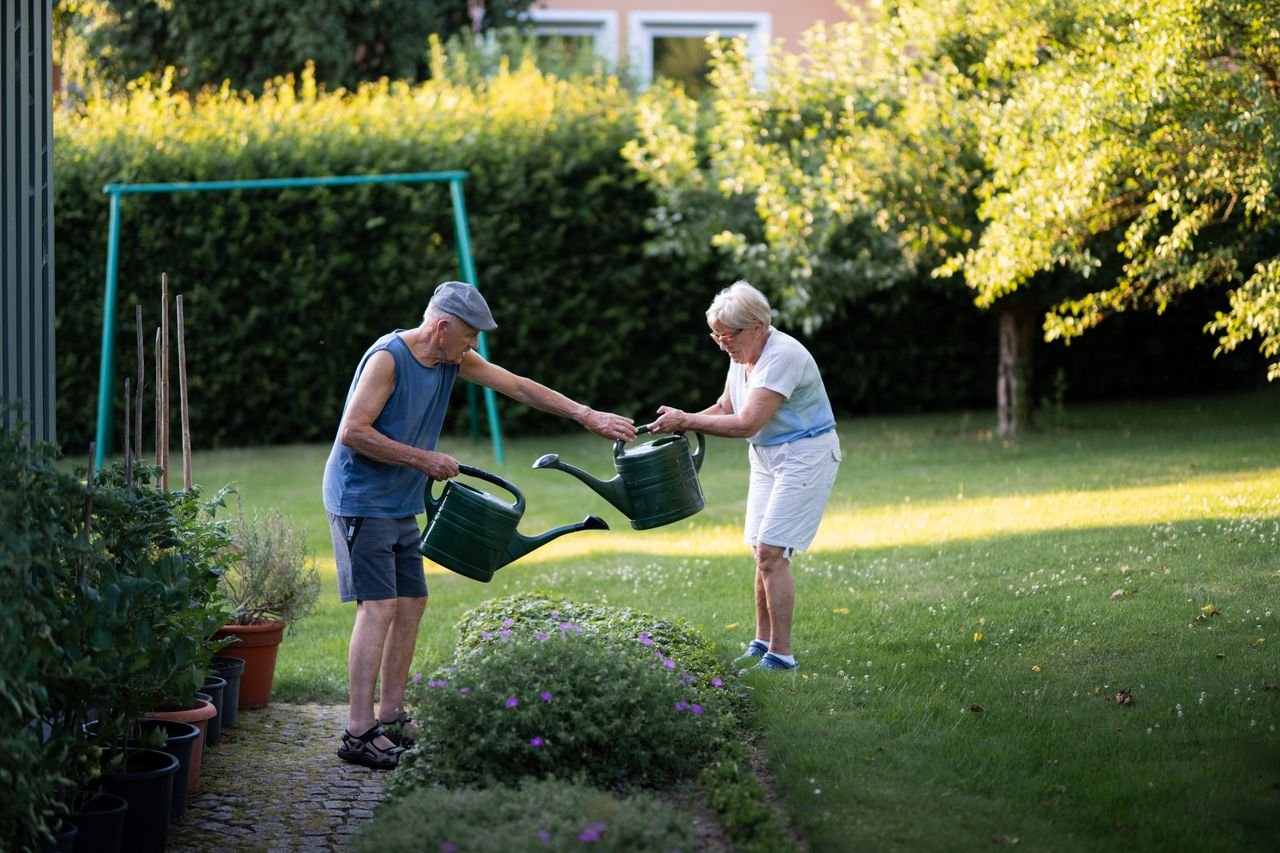
The instinct to water on a fixed schedule — every day, every other day — ignores the two things that actually determine whether a plant needs water: how much rain already fell, and how deep the moisture already is in the soil.
The fix is either behavioral or technological, and honestly, most gardens benefit from a mix of both.
The behavioral fix
Costs nothing: stick a finger two inches into the soil before watering. If it’s damp, skip it. This single habit would have saved my tomatoes.
The technological fix
Is where smart controllers earn their keep, especially if you’re watering an in-ground system or forget to check the forecast.
| Tool | Best for | What I actually think |
|---|---|---|
| Rachio 3 Smart Sprinkler Controller | Homes with an existing in-ground irrigation system | This is the one I’d point a homeowner toward first. It replaces your existing sprinkler timer, pulls live weather data to skip watering during rain or freezing temps, and installs in well under an hour without hiring anyone. Running around $170–$230 depending on the zone count (4/8/16-zone models), it isn’t cheap, but the water savings on a lawn-sized irrigation system pay it back over a couple of seasons in most climates. The app’s zone-editing (soil type, plant type, sun exposure) is more granular than it needs to be for a casual user, but you can ignore most of it and let the defaults run. |
| Orbit B-hyve Smart Hose Watering Timer | Container gardens, raised beds, or anyone without in-ground sprinklers | This is the better fit if you’re just automating a hose or a drip line to a few raised beds — it screws onto an outdoor faucet, no plumbing required, and the weather-based skip feature works the same way Rachio’s does at a noticeably lower price. The catch: the Bluetooth-only base models need you to be in range to change settings unless you add the separate Wi-Fi hub, which is an extra purchase people don’t always realize they need. |
| A plain mechanical hose timer (the dial kind, no app) | Anyone who just wants “off after 20 minutes” and nothing smarter | Genuinely underrated. It won’t skip watering for rain, but it solves the single biggest failure mode — forgetting the hose is running — for around $15. If your garden is small and you’re watering by hand anyway, don’t feel pressured into a smart device you don’t need. |
My verdict, if you want it in one line:
Get a smart controller if you have an in-ground system or you travel often enough that missed waterings are a real risk; otherwise, a $15 mechanical timer plus the finger-test habit will get you 90% of the benefit for a fraction of the cost.
Feeding Your Garden Without Overdoing It
Fertilizer is the area where more is almost never better, and I say that as someone who over-fertilized a rose bed so aggressively one spring that it produced enormous, floppy foliage and almost no blooms — classic excess nitrogen.
The organic-versus-synthetic debate gets more heated online than it needs to be in practice. Synthetic fertilizers (the blue-crystal, dissolve-in-water kind) act fast and are precise, which makes overdoing it easy. Organic, slow-release granular fertilizers like Espoma’s Plant-tone release nutrients gradually as soil microbes break them down, which is more forgiving for beginners because it’s much harder to burn roots with them. I switched almost entirely to slow-release organic feeds for exactly that reason — they’re more forgiving of a forgetful gardener, even if you sacrifice a little bit of the “instant green-up” effect synthetic feeds give you.
If your soil test (see the section above) came back with nutrient levels already adequate or high, skip fertilizing that nutrient entirely — this is precisely the kind of decision a $25 lab test earns back in unnecessary bag purchases.
Mulch: The Cheapest Upgrade in Gardening
If I had to pick one low-effort change that improved my garden more than anything else, it’s mulch. A 2–3 inch layer of organic mulch — shredded bark, straw, leaf mold, well-rotted compost — does three things simultaneously: it slows soil moisture loss (meaning less watering), it suppresses weed germination by blocking light, and as it breaks down it slowly feeds the soil food web.
The RHS’s guidance on mulching is worth reading if you want the deeper reasoning, but the practical version is straightforward: apply it in a ring around plants without letting it touch the stems directly (piled mulch against a stem traps moisture and invites rot), refresh it once or twice a year as it decomposes, and avoid dyed or treated wood mulches near edible plants.
The mistake I made for years was applying mulch too thin — an inch or less — which looks tidy but does almost nothing for weed suppression or moisture retention. Go thicker than feels necessary; 3 inches is the sweet spot for most beds.
Pest Control: Slow Down Before You Spray
The instinct when you spot chewed leaves is to reach for the strongest spray on the shelf. Resist it. The EPA’s framework for Integrated Pest Management is built around a genuinely useful idea for home gardeners: identify what’s actually causing the damage before treating anything, because a lot of garden damage is cosmetic and doesn’t threaten the plant’s survival, and plenty of insects in your garden are beneficial predators you’d be killing along with the pest.
When treatment is actually warranted, here’s how the common options compare, based on what I’ve used across several seasons of vegetable growing:
| Product | Works well against | Trade-offs |
|---|---|---|
| Bonide Neem Oil Concentrate | Aphids, mites, whiteflies, powdery mildew | My go-to for roses and squash. It’s a contact insecticide and mild fungicide in one, but it must hit the pest directly to work, needs reapplication every 7–14 days, and it’s toxic to bees if sprayed on open blooms — always spray in the evening after pollinators have finished for the day. |
| Harris Food Grade Diatomaceous Earth | Slugs, ants, and other soft-bodied crawling pests | A fine powder of fossilized algae that physically damages insect exoskeletons on contact — no chemical toxicity involved. The catch is it needs to stay dry to work, so it’s basically useless outdoors after rain or heavy dew until you reapply, and it doesn’t discriminate between “pest” and “beneficial ground insect,” so use it sparingly and locally rather than as a broad dusting. |
| Insecticidal soap (widely available, various brands) | Soft-bodied insects like aphids and mealybugs | Gentler than neem, breaks down fast, and is my preferred first response for houseplants. Weaker against anything with a hard shell, and like neem it only works on direct contact, not as a residual barrier. |
The honest verdict across all three:
None of them are “set and forget.” They’re contact treatments that require you to actually see the pest and hit it directly, reapplied on a schedule which is precisely why identifying the actual problem first (the EPA’s first IPM step) saves you from spraying something that won’t even work on what you’re dealing with.
Pruning and Seasonal Maintenance, Simplified
Pruning intimidates new gardeners more than almost anything else, mostly because the “rules” vary so much by plant. A simplified version that covers most home garden situations:
- Spring-flowering shrubs (lilac, forsythia) get pruned right after they finish blooming — prune them in late winter instead and you’ll cut off the buds that would have flowered.
- Summer-flowering shrubs and most perennials get cut back in late winter or very early spring, before new growth starts.
- Deadheading — removing spent flowers — encourages many annuals and repeat-blooming perennials to keep producing. Skip it on plants you want to self-seed or that you’re growing for seed heads (coneflower left standing feeds birds through winter).
- Diseased or damaged wood gets removed any time you see it, no seasonal rule required. Sanitize pruners with rubbing alcohol between cuts on diseased plants so you’re not spreading the problem.
Mistakes I Made So You Don’t Have To
A few specific, avoidable errors from my own garden, because generic advice rarely sticks the way a real failure does:
- Planting too close together based on the seed packet spacing “in ideal conditions.” My squash plants doubled the spacing guide’s stated spread because I skipped a soil test and unknowingly had rich, fertile ground — great growth, terrible airflow, and powdery mildew by August.
- Watering the leaves instead of the soil. Overhead watering in the evening leaves foliage wet overnight, which is close to an open invitation for fungal disease. Water at the base, in the morning if possible.
- Buying fertilizer before testing soil. I fed a bed that turned out to already be nutrient-rich, pushed it further out of balance, and spent a season fixing a problem I created.
- Ignoring “full sun” labels and hoping for the best. Hope is not a light meter.
Where Home Gardening Is Headed
A few shifts are worth watching if you want to stay ahead of the curve rather than reacting to it:
Soil sensors are getting cheap enough to matter. Wireless soil-moisture and nutrient sensors that feed data directly into an irrigation controller — rather than relying on a generic weather forecast — are moving from expensive commercial agriculture tools into consumer price ranges. Expect smart controllers like Rachio’s lineup to lean further into hyperlocal, sensor-driven data over the next few years rather than just regional weather feeds.
Native and climate-adapted planting is going from niche to mainstream. As hardiness zones continue shifting warmer, more nurseries and extension offices are steering home gardeners toward regionally native plants that tolerate the swings — drought one year, heavy rain the next — rather than plants that only thrived under the old, more stable averages.
Plant-ID and diagnosis apps are closing the “what’s wrong with my plant” gap, using photo recognition to flag common pests and diseases in seconds rather than requiring a trip to the extension office.
No-dig and low-till gardening is gaining traction at the home scale, I’ve converted two of my own beds to no-dig over the past two years, topping with compost rather than turning the soil, and the difference in how the soil holds moisture through a dry week has been noticeable.
FAQs
How often should I really water my garden? There’s no universal number — it depends on soil type, plant, and weather. The finger test (two inches down, water only if dry) is more reliable than any fixed schedule you’ll find online.
Do I need a soil test if my plants already look healthy? Not urgently, but a baseline test every 2–3 years is cheap insurance, especially before you plant something new or after a season of disappointing results.
Is organic fertilizer actually better than synthetic? Neither is inherently “better” — they solve different problems. Organic is slower and harder to overdo; synthetic is faster and more precise but easier to misuse. For beginners, organic’s forgiveness usually wins.
What’s the single best thing a beginner can do this week? Mulch. It’s cheap, fast, and forgiving of imperfect technique in a way that fertilizing and pruning are not.
Are smart irrigation controllers worth the money for a small yard? Only if you have an in-ground system already or travel often enough that missed waterings are a real risk. For a small bed or container garden, a $15 mechanical timer plus manual checking covers most of the same benefit.
Final Thoughts
What makes gardening feel hard isn’t any single step; it’s that most of us start by guessing at all five simultaneously, the way I did with those three tomato plants. Pick one habit from this list, get it right this season, and add the next one when it feels boring rather than urgent.
About the Author
Maya Whitfield spent four years as a soil conservation technician before shifting to garden writing, and now splits her time between a quarter-acre vegetable plot and researching practical, evidence-based advice for home growers at Homenumental. Her work focuses on translating agricultural science and extension-office research into gardening habits that hold up in an ordinary backyard, not just a test plot.