



A friend handed me a pot of this a few years ago with a shrug and “it’s some kind of flat fern, I think.” No tag, no species name, just a dense clump of glossy, sword-shaped fronds lying almost flat against each other instead of arching up the way a Boston fern does. It took me longer than I’d like to admit to figure out what I actually had — and once I did, I understood why the name causes so much confusion in the first place.
This guide untangles that confusion, then walks through exactly how to keep the plant alive and thriving, whether you picked one up from a florist’s cooler or a nursery pot.
Table of Contents
- What “Flat Fern” Actually Refers To
- Where This Plant Comes From
- Flat Fern vs. Other Common Ferns
- Getting Started: Potting and Placement
- Light, Water, and Humidity
- Feeding Schedule
- Repotting and Propagation
- Common Problems and How to Fix Them
- The Outdoor Planting Caveat
- Mistakes I’ve Made With Mine
- FAQs
- Final Thoughts
What “Flat Fern” Actually Refers To
“Flat fern” isn’t a formal botanical name — it’s a trade name, and trade names are where a lot of plant-buying confusion starts. In the floral and floriculture industry, where the term shows up most consistently (including in floriculture identification references used for horticulture education), Flat Fern refers to a cultivar of Nephrolepis cordifolia, a relative of the familiar Boston fern. The name comes from the way its fronds lie relatively flat and rigid compared to the softer, more feathery, arching habit of true Boston fern (Nephrolepis exaltata).
You’ll also see Nephrolepis cordifolia sold under a long list of other common names — fishbone fern, tuberous sword fern, ladder fern, herringbone fern, erect sword fern, and narrow sword fern among them. If you’ve bought a “lemon button fern” (the compact cultivar N. cordifolia ‘Duffii’), you’ve technically owned a close relative of the same plant sold as Flat Fern in the cut-foliage trade.
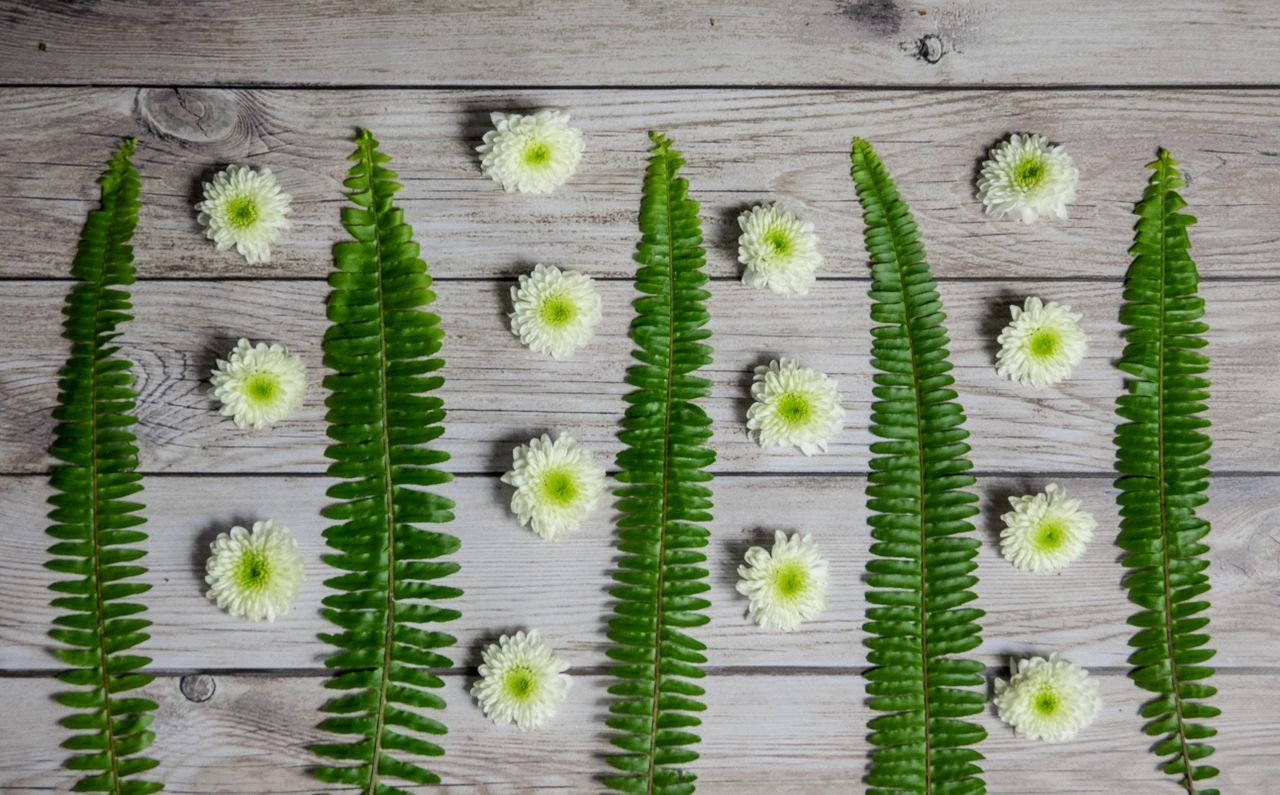
The practical takeaway: if a tag or a florist calls something “flat fern” and it has stiff, upright, sword-shaped fronds with tiny round leaflets running up either side of a central stem, you’re almost certainly looking at Nephrolepis cordifolia.
Where This Plant Comes From
Nephrolepis cordifolia is native to tropical and subtropical regions across northeastern Australia and Asia, where it grows in rainforest understory, along stream banks, and as an epiphyte on trees and rocks.
That same toughness and adaptability — thriving as ground cover, on rocks, or perched in the crook of a tree — is exactly why it makes such an easygoing houseplant almost anywhere in the world.
Flat Fern vs. Other Common Ferns
Because so many ferns get sold under overlapping common names, it helps to see Flat Fern next to the plants it’s most often confused with.
| Fern | Frond shape | Light needs | Ease of care | Watch out for |
|---|---|---|---|---|
| Flat Fern (Nephrolepis cordifolia) | Stiff, upright, sword-shaped fronds, 2–3 ft | Bright indirect light; tolerates more sun and dry air than most ferns | Genuinely easy — one of the more forgiving ferns for beginners | Spreads aggressively via underground tubers; invasive if planted outdoors in warm, humid regions |
| Boston Fern (Nephrolepis exaltata) | Soft, arching, feathery fronds | Bright indirect light, consistently high humidity | Moderate — notoriously fussy about humidity and even watering | Crispy, browning tips the moment humidity drops |
| Leatherleaf Fern (Rumohra adiantiformis) | Broad, triangular, glossy and stiff | Partial to full shade | Easy outdoors in the right zone; the classic florist “filler” green | Slow to establish; won’t tolerate full sun |
| Bird’s Nest Fern (Asplenium nidus) | Wide, wavy, undivided single fronds forming a rosette | Medium to low indirect light | Easy, but sensitive to overwatering and cold drafts | Never mist or pool water in the central “nest” — it rots the crown |
The honest verdict: if you want the look of a lush, structured fern without babying it through every humidity dip, Flat Fern is the more forgiving choice over a true Boston fern. If you specifically want the soft, cascading look for a hanging basket, Boston fern is still worth the extra fussing — Flat Fern’s stiffer, more upright fronds don’t drape the same way.
Getting Started: Potting and Placement
Flat Fern isn’t picky about containers, but a few choices make ongoing care noticeably easier:
- Pot material: unglazed terracotta helps excess moisture evaporate, which matters more than people expect since this fern is far more likely to suffer from overwatering than under-watering.
- Drainage: non-negotiable. A pot without a drainage hole is the single most common reason a healthy fern develops root rot within a few months.
- Potting mix: a standard well-draining houseplant mix works, but amending it with extra perlite or orchid bark improves aeration — this plant’s rhizomes and small tubers dislike sitting in dense, compacted soil.
- Placement: an east- or north-facing window gives the bright, indirect light this fern prefers without the leaf-scorch risk of a hot south-facing sill. Bathrooms and kitchens with a window work particularly well thanks to the ambient humidity.
Light, Water, and Humidity
This is the part where Flat Fern earns its reputation as an easier houseplant fern, but “easier” doesn’t mean “no attention needed.”
Light: Bright, indirect light is ideal — a spot near a window without direct midday sun. Unlike many ferns, Nephrolepis cordifolia tolerates a few hours of gentle direct sun and even holds up reasonably well in slightly lower light, though growth slows and fronds thin out the darker the spot gets.
Water: Let the top inch or so of soil dry out between waterings, then water thoroughly until it drains from the bottom of the pot. The most common mistake — and one I made for an entire season — is watering on a fixed schedule instead of checking the soil first. Overwatering shows up as yellowing fronds and a musty smell from the pot; underwatering shows up as crisp, browning frond tips and a generally droopy appearance. Both look similar enough at a glance that people often “fix” the wrong problem, so always check the actual soil moisture before deciding which direction to correct.
Humidity: This fern appreciates humidity but tolerates average indoor air far better than a true Boston fern does. If your home runs dry in winter, a pebble tray under the pot or an occasional light misting helps, but it’s rarely a make-or-break requirement the way it is for its fussier relatives.
Feeding Schedule
Ferns in general are light feeders, and Flat Fern is no exception. Overfeeding is a far more common problem than underfeeding, showing up as scorched, brown frond edges. A balanced, water-soluble liquid houseplant fertilizer diluted to about half the label’s recommended strength, applied every 4–6 weeks during spring and summer, is enough to support steady growth. Skip feeding entirely in fall and winter when growth naturally slows, and hold off for at least a month after repotting or dividing the plant.
Repotting and Propagation
Repot every 1–2 years, or sooner if you notice roots circling the bottom of the pot or water running straight through without being absorbed — both signs the plant has outgrown its container. Move up one pot size at a time rather than jumping several sizes at once, which can leave excess unused soil holding moisture around roots that don’t need it yet.
Propagation is refreshingly simple compared to many houseplants, because Nephrolepis cordifolia does most of the work itself:
- Remove the plant from its pot during the growing season and gently separate the root mass by hand or with a clean knife, making sure each division keeps some healthy roots, a few fronds, and ideally one of the small underground tubers attached.
- Pot each division into fresh, well-draining mix at the same depth it was growing before.
- Water thoroughly, then keep the soil evenly moist (not soggy) for the first few weeks while new roots establish.
- Hold off on fertilizing until you see clear signs of new frond growth, usually within a month.
Common Problems and How to Fix Them
| Symptom | Likely cause | What to do |
|---|---|---|
| Yellowing fronds, soggy or foul-smelling soil | Overwatering / root rot | Let the soil dry out fully, trim any mushy roots, and repot into fresh, well-draining mix |
| Crispy, browning frond tips | Underwatering or low humidity | Water more consistently and increase ambient humidity slightly |
| Small brown or tan bumps along stems and frond undersides that don’t wipe off easily | Scale insects | Wipe affected areas with a cotton ball dipped in rubbing alcohol, or treat with insecticidal soap |
| Fine white, cottony clusters in leaf joints | Mealybugs | Same alcohol-wipe approach as scale, repeated every few days until they’re gone |
| Fine speckling or webbing, especially in dry conditions | Spider mites | Increase humidity and rinse fronds under lukewarm water; insecticidal soap for persistent infestations |
For the record, none of these pests are unique to Flat Fern — they’re the same short list that shows up across most indoor ferns, and a rinse under the tap followed by an alcohol-wipe check every few weeks catches most infestations before they become a real problem.
One safety note worth mentioning if you have pets: while I couldn’t find species-specific ASPCA data for Nephrolepis cordifolia directly, its close relative the Boston fern is listed by the ASPCA as non-toxic to both cats and dogs, and Nephrolepis as a genus is generally considered pet-safe. As always, discouraging pets from chewing on any houseplant is still good practice regardless of toxicity status.
The Outdoor Planting Caveat
This is the section I’d genuinely urge you not to skip, especially if you live somewhere warm and humid.
Nephrolepis cordifolia has escaped cultivation and become a documented invasive species in several regions, most notably Florida, where it’s classified as a Category I invasive plant by the Florida Exotic Pest Plant Council and has been found spreading across more than twenty counties. It also behaves aggressively in parts of New Zealand and other subtropical and tropical regions outside its native range.
If you’re in a warm-winter climate (roughly USDA zones 8b and warmer — check your specific zone on the USDA Plant Hardiness Zone Map) and you’re tempted to plant a division outdoors as ground cover, don’t. Keep it contained, either in a pot indoors or, if you want it outside, in a container on a patio where it can’t spread by rhizome into surrounding soil. Gardeners further north don’t have this concern in the same way, since the plant isn’t reliably winter-hardy much below about 25°F and won’t persist outdoors year-round in colder zones regardless.
Mistakes I’ve Made With Mine
A few specific ones, in the interest of saving you the trouble:
- Assuming it needed the same humidity coddling as my Boston fern. It didn’t, and I wasted effort misting a plant that was already perfectly content.
- Watering on a weekly schedule instead of checking the soil. This is the same lesson that applies to nearly every houseplant, and I keep having to relearn it.
- Skipping the alcohol-wipe check for scale until I had a real infestation. A thirty-second check every couple of weeks is much easier than treating an established colony.
- Almost planting a division in a shaded corner of my backyard before learning about its invasive status in warm climates. I live somewhere cold enough that it wouldn’t have survived winter anyway, but it was a good reminder to check a plant’s regional behavior before putting it in open ground.
FAQs
Is Flat Fern the same plant as Boston fern? No, though they’re closely related. Flat Fern is a common trade name for Nephrolepis cordifolia; Boston fern is Nephrolepis exaltata. They’re in the same genus and look superficially similar, but Flat Fern has stiffer, more upright fronds and is noticeably more tolerant of average indoor conditions.
Why are my fern’s fronds turning brown at the tips? Almost always underwatering or low humidity. Check the soil moisture first — if it’s already damp, the cause is more likely dry air than lack of water.
Can I grow Flat Fern outdoors? Only in a container, and only with awareness of its invasive status in warm, humid climates. Never plant it directly in open ground in USDA zones 8b and warmer.
How often should I repot? Roughly every 1–2 years, or whenever roots are visibly circling the pot or water runs through without being absorbed.
Is it safe for pets? Nephrolepis as a genus is generally considered non-toxic, and the closely related Boston fern is specifically listed as non-toxic by the ASPCA, though it’s still sensible to discourage pets from chewing on any houseplant.
Final Thoughts
The name “Flat Fern” tells you almost nothing on its own — it’s a florist’s shorthand, not a species — but once you know it usually points to Nephrolepis cordifolia, the rest of the plant’s care falls into place quickly. This is one of the few ferns forgiving enough to survive a beginner’s mistakes while still delivering the lush, structured look people want ferns for in the first place. Just keep it in a pot, and keep an eye on where those tubers are heading.
About the Author
Maya Whitfield spent four years as a soil conservation technician before shifting to garden writing, and now splits her time between a quarter-acre vegetable plot and researching practical, evidence-based advice for home growers at Homenumental. Her work focuses on translating agricultural science and extension-office research into plant care that holds up in an ordinary home, not just a botanical garden.