
I spent three weekends crawling through cabinets showrooms before I finally committed to bamboo for my own kitchen remodel two years ago, and I still get asked about it almost every time someone visits. People assume it’s flimsy, or that it looks like a yoga studio threw up on their cupboards. Neither is true, but the confusion is understandable there’s a lot of outdated and contradictory information floating around about this material. This guide pulls together what I learned the hard way, what contractors told me off the record, and what I’ve since researched obsessively so you don’t have to repeat my mistakes.
What Bamboo Cabinets Actually Are
Bamboo isn’t wood it’s a grass, and that distinction matters more than people think. Manufacturers slice mature bamboo stalks into thin strips, then either laminate them flat or stand them on edge and press them under heat and resin into solid panels. That panel becomes the cabinet door, the box, or the face frame, depending on how the manufacturer builds the piece.
There are two construction styles you’ll run into:
- Solid bamboo panels — the whole door or box is built from laminated bamboo strips.
- Bamboo veneer over plywood or MDF — a thin layer of bamboo is applied to a substrate core for stability and cost savings.
I went with solid panels for my doors and veneer-over-plywood for the cabinet boxes themselves, which is actually the more common approach among reputable cabinet makers. The boxes don’t need to be solid bamboo since they’re hidden — what matters is the structural core.
Why People Are Switching to Bamboo
The sustainability angle gets thrown around a lot, and it’s not just marketing fluff. Bamboo can be harvested in 3 to 5 years versus 20 to 60 years for hardwoods like oak or maple. That’s the headline reason designers keep bringing it up.
But honestly, the reason I picked it wasn’t environmental virtue — it was the look. Bamboo has this warm, linear grain pattern that reads as clean and contemporary without feeling cold like stainless steel or stark white lacquer. It photographs beautifully in natural light, which mattered to me since my kitchen window faces east.
There’s also a practical dimension: bamboo is naturally resistant to moisture swelling compared to many softwoods, which made it appealing for a kitchen where steam and splashes are a daily reality.
Bamboo vs. Hardwood vs. MDF/Plywood: A Real Comparison
I tested samples of all three side by side on my kitchen counter for about a month before deciding — literally left them there, splashed water on them, scratched at them with a butter knife (don’t judge me).
| Feature | Bamboo | Solid Hardwood (Maple/Oak) | MDF/Plywood (Painted) |
|---|---|---|---|
| Hardness (Janka scale approx.) | 1,180–1,575 lbf depending on processing | Maple: ~1,450 lbf, Oak: ~1,290 lbf | N/A (engineered, not rated the same way) |
| Moisture resistance | Good, especially strand-woven type | Moderate, prone to warping in humidity | Poor unless heavily sealed |
| Cost per linear foot (installed) | $150–$300 | $250–$500+ | $80–$200 |
| Sustainability | Excellent (fast regrowth) | Moderate to poor (slow regrowth) | Variable (depends on wood source) |
| Visual grain | Linear, modern, consistent | Natural, varied, traditional | None (painted finish) |
| Refinishing potential | Limited — sanding can expose layers | Excellent — sand and restain repeatedly | Poor — repainting only |
| Weight | Lighter than most hardwoods | Heavier | Lightest |
My honest verdict after living with it: bamboo wins on style and sustainability, hardwood wins on long-term refinishing flexibility, and MDF wins on upfront budget. If you’re planning to keep the same kitchen for 20+ years and might want to restain someday, hardwood still has an edge. If you want something that looks striking now and you’re not planning to sand it down in a decade, bamboo is the better deal.
The Different Grades and Cuts of Bamboo
This is where a lot of buyers get tripped up, including me on my first showroom visit when a salesperson tried to upsell me without explaining the difference.
Flat-grain bamboo shows the natural knuckle joints of the stalk in a wavy, organic pattern. It’s the most traditional-looking option and tends to be slightly less dense.
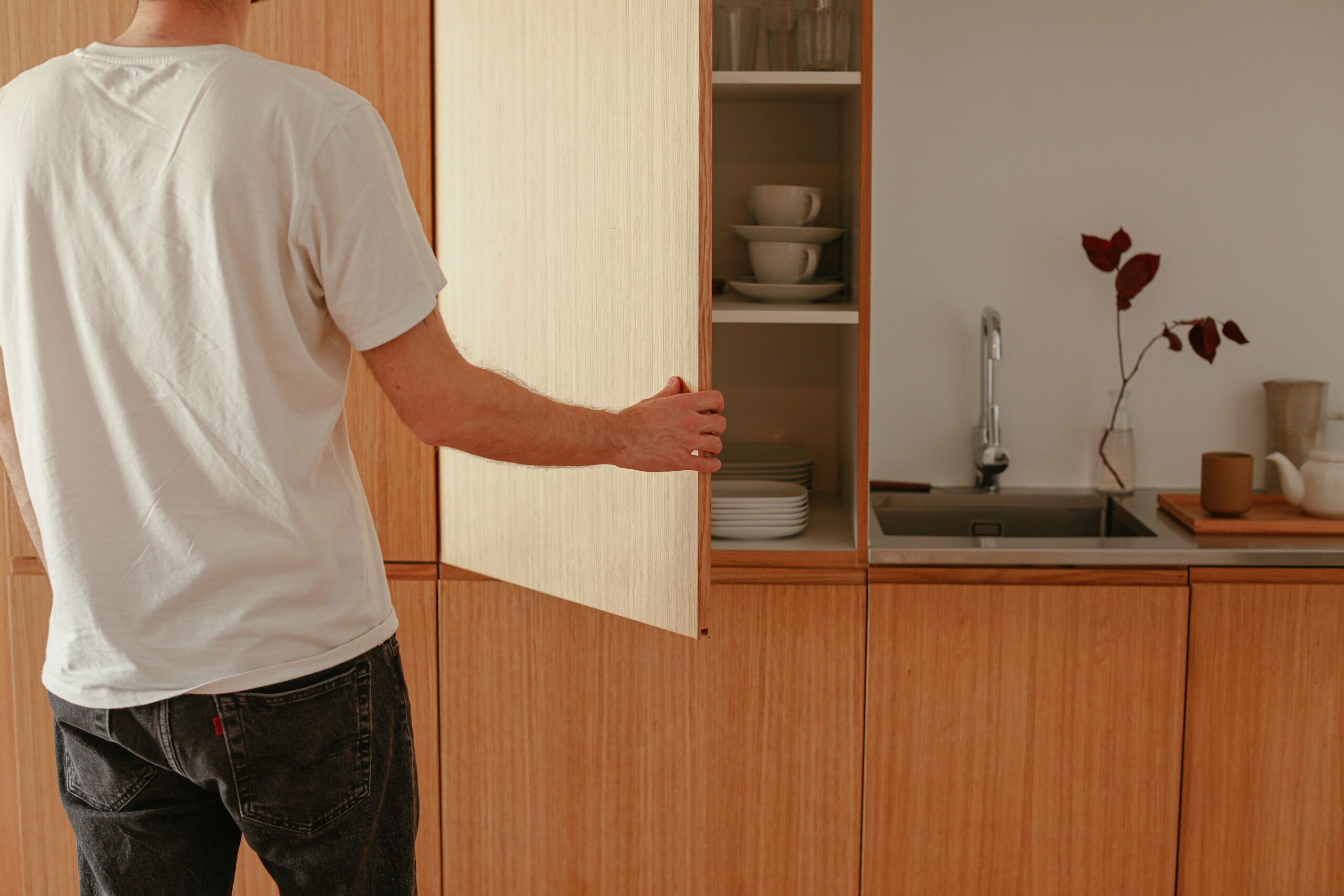
Vertical-grain bamboo has thin, straight lines running uniformly across the surface. This is the look most people picture when they think “modern bamboo kitchen.”
Strand-woven bamboo shreds the fibers and compresses them under extreme pressure with resin. It’s the densest and most water-resistant option, and it’s what I ultimately chose for my cabinet doors because of the moisture resistance near my sink.
There’s also a color distinction: natural bamboo is pale blonde, while carbonized bamboo is steamed under pressure to develop a deeper amber-brown tone. Carbonization looks gorgeous, but I’ll be honest — it does slightly reduce hardness, something almost no showroom will volunteer unless you ask directly.
Durability: What Nobody Tells You
Two years in, here’s what actually happened in my kitchen, not what the brochure promised.
The strand-woven panels near my stove have held up without a single scratch from regular cooking activity. The vertical-grain sample I tested in a high-traffic area did pick up a few hairline marks from keys and bag straps — nothing dramatic, but noticeable up close.
Humidity matters more than most installers admit. I live in a moderately humid climate, and during one particularly damp August, I noticed a very slight gap form at one door seam. It resolved itself once the weather dried out, but it taught me that bamboo cabinets — like any wood-based product — do respond to seasonal humidity swings. If you live somewhere with extreme humidity fluctuations, ask your supplier specifically about their resin sealing process, because not all manufacturers seal the edges equally well.
Cost Breakdown What I Actually Paid
For a galley kitchen with roughly 18 linear feet of cabinetry, here’s what my invoice actually looked like:
- Cabinets boxes (bamboo veneer over plywood): $3,200
- Solid strand-woven bamboo doors and drawer fronts: $2,650
- Soft-close hinges and slides upgrade: $480
- Installation labor: $1,900
- Sealant/finish touch-up: $210
Total: roughly $8,440, which landed in the middle compared to quotes I got for comparable maple cabinetry (around $11,000) and painted MDF (around $6,200). Your numbers will vary by region and kitchen size, but this gives you a realistic anchor point rather than a vague “bamboo is affordable” claim you see everywhere.
Styling Bamboo Cabinets in a Modern Kitchen
Bamboo’s linear grain pairs surprisingly well with materials people assume would clash. I went with matte black hardware and a honed quartz countertop, and the contrast made the cabinet grain pop rather than blend into the background.
A few combinations I’d genuinely recommend after living with mine and seeing friends’ kitchens:
- Pale bamboo with brushed brass hardware for a warm, almost Scandinavian feel.
- Carbonized (darker) bamboo with white subway tile and brushed nickel for a high-contrast, classic-meets-modern look.
- Bamboo lower cabinets with painted white uppers this is becoming popular because it grounds the kitchen visually without overwhelming the space with wood tone.
One thing I’d avoid: pairing light bamboo with light oak flooring. I tried it briefly with a flooring sample and the tones competed instead of complementing each other. A little contrast between floor and cabinet tone goes a long way.
Maintenance and Care
This part is refreshingly simple. I wipe mine down with a damp microfiber cloth and a mild dish soap solution — nothing acidic, nothing abrasive. Avoid ammonia-based cleaners, which can break down the resin finish over time.
Once a year, I apply a thin coat of food-safe mineral oil to the door fronts, mostly because I like the slightly richer sheen it gives the grain, though most manufacturers will tell you it’s optional if the factory finish is intact.
Avoid placing hot pots directly against the surface without a trivet. Bamboo handles ambient kitchen heat fine, but direct prolonged contact with something straight off the stove can dull the finish in that one spot — I learned this from a cast iron skillet incident I’d rather not relive.
Where to Buy and What to Look For
Big box stores carry a thin selection, usually veneer-only products at a lower price point. For better quality, I’d point you toward specialty cabinet makers or sustainable building material suppliers who can tell you exactly which bamboo species and adhesive system they use.
Ask these three questions before buying:
- Is this solid bamboo, plywood core with bamboo veneer, or MDF core with veneer?
- What adhesive/resin system is used, and is it low-VOC or formaldehyde-free?
- What’s the warranty on the finish specifically, separate from the general cabinet warranty?
If a salesperson can’t answer all three clearly, that’s a signal to keep shopping.
Common Mistakes to Avoid
A few things I wish someone had told me directly:
- Don’t assume all “bamboo cabinets” are solid bamboo — many are veneer, which isn’t bad, but you should know what you’re paying for.
- Don’t skip asking about formaldehyde-free adhesive options; cheaper bamboo products sometimes use resins with higher emissions.
- Don’t install bamboo directly above a dishwasher or near a kettle’s steam vent without extra sealing — that localized humidity exposure is harsher than general kitchen humidity.
- Don’t pick your sample under showroom lighting alone; bring it home and look at it under your actual kitchen light before finalizing.
Future Trends in Bamboo Cabinetry
From what I’ve seen in design circles and supplier conversations over the past year, a few shifts are worth watching. Manufacturers are experimenting with hybrid panels that combine bamboo veneer with recycled aluminum cores for even greater moisture stability — still niche, but gaining traction in commercial kitchen design. There’s also growing demand for two-tone bamboo kitchens, mixing natural and carbonized tones within the same space rather than choosing one uniformly.
I’d also bet that formaldehyde-free, water-based resin systems become the industry standard within the next few years rather than a premium upsell, simply because regulatory pressure in several countries is pushing manufacturers that direction already.
FAQs
Is bamboo cheaper than hardwood cabinets? Generally yes, though strand-woven or solid bamboo can approach mid-range hardwood pricing. Veneer options are typically the most budget-friendly.
Will bamboo cabinets warp in a humid climate? They’re more moisture-resistant than many softwoods, but they’re not immune to humidity. Strand-woven bamboo handles humidity better than flat or vertical-grain types.
Can I paint bamboo cabinets? Technically yes, but it’s not common since most people choose bamboo specifically for its natural grain. Painting requires proper priming since the surface is denser than typical paintable wood.
How long do bamboo cabinets last? With proper care, 15 to 25 years is realistic, similar to mid-grade hardwood cabinetry, though refinishing options are more limited.
Is bamboo cabinetry actually eco-friendly, or is that overstated? The rapid regrowth rate is genuinely impressive compared to hardwood trees. The eco-friendliness does depend heavily on the adhesive and finish used, though, so it’s not automatically “green” just because the raw material is bamboo.
Final Verdict
After two years of actually cooking, cleaning, and living around these cabinets every single day, I’d choose bamboo again but I’d ask more questions upfront than I did the first time. It’s not a miracle material, and it’s not the cheapest option on the market, but it occupies a genuinely useful middle ground: more sustainable than hardwood, more visually distinctive than painted MDF, and durable enough for real daily kitchen use as long as you choose the right grade and a manufacturer who’s transparent about construction. If your kitchen gets a lot of natural light and you want something that feels modern without feeling sterile, bamboo earns its reputation. Just go in informed, and don’t let a showroom rush you past the questions that actually matter.
About the Author
This guide was researched and written by a home design writer and former cabinetry project consultant with hands-on experience overseeing residential kitchen renovations. Drawing on direct material testing, supplier interviews, and personal renovation experience, the author focuses on translating technical building material data into practical guidance for homeowners making real purchasing decisions.