



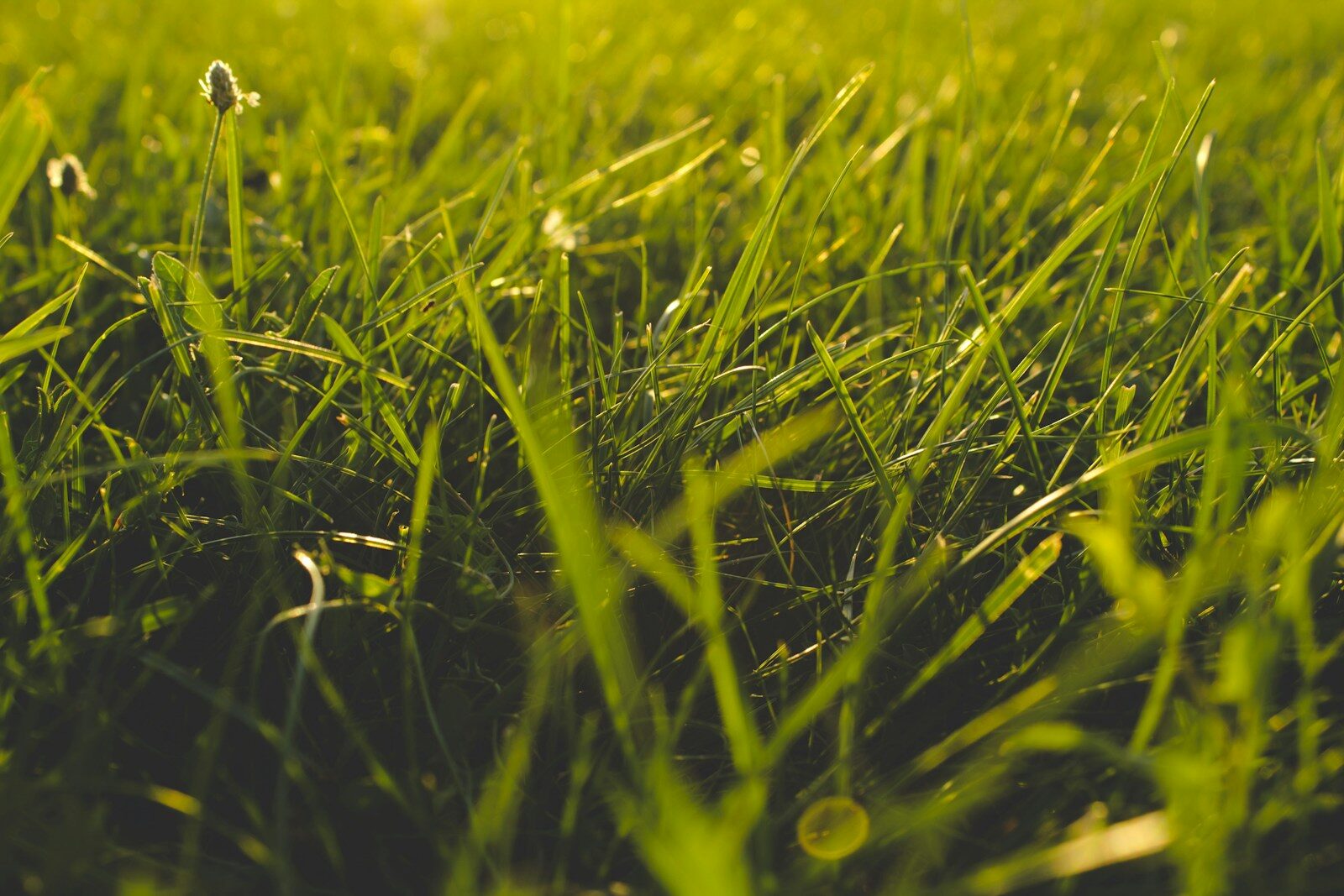
Three weeks into my first June as a homeowner, my front lawn looked like it had been spray-painted in patches deep green in some spots, a jaundiced straw color in others. My neighbor, who’d been mowing his lawn since disco was still cool, took one look and said, “That’s not one problem. That’s at least three.” He was right. It took me a full season, a soil test, and a fair amount of trial and error to figure out that my “yellow grass problem” was actually a watering issue, a nitrogen deficiency, and a patch of grub damage all happening in the same 800 square feet.
That experience is basically why this guide exists. Most articles on yellowing grass hand you a list of five generic causes and call it a day. That’s not enough, because yellow grass is a symptom, not a diagnosis — and treating the wrong cause can actually make things worse. This guide walks through how to actually read what your lawn is telling you, which tools are worth buying and which aren’t, and how to build a lawn that stops yellowing in the first place.
Table of Contents
- Yellow Grass Is a Symptom, Not a Diagnosis
- How to Read Your Lawn’s Yellowing Pattern
- Cause 1: Underwatering and Drought Stress
- Cause 2: Overwatering and Root Suffocation
- Cause 3: Nitrogen and Nutrient Deficiency
- Cause 4: Dog Urine Spots
- Cause 5: Fungal Disease
- Cause 6: Grubs and Insect Damage
- Cause 7: Compacted Soil
- Cause 8: Mowing Mistakes
- Cause 9: Fertilizer or Chemical Burn
- Cause 10: Natural Dormancy vs. Actually Dying
- Tool Comparisons: What’s Actually Worth Buying
- Your Fix Plan, Matched to Your Cause
- Prevention: Building a Lawn That Stops Yellowing
- Where Lawn Care Is Headed
- FAQs
- Final Thoughts
Yellow Grass Is a Symptom, Not a Diagnosis
Grass turns yellow for one basic biological reason: it’s losing chlorophyll, the pigment that makes it green and lets it photosynthesize. But dozens of different stressors can trigger that same chlorophyll breakdown — drought, drowning, disease, insects, poor soil, bad mowing habits, or simply going dormant for the season.
The mistake I see homeowners make over and over (myself included, that first summer) is grabbing a bag of fertilizer or cranking up the sprinklers the moment yellow shows up, without figuring out which of those causes is actually in play. If your grass is yellow because it’s drowning, more water is the last thing it needs. If it’s yellow from grub damage, fertilizer won’t touch the actual problem sitting an inch below the surface.
So before you fix anything, you diagnose. That’s the next step.
How to Read Your Lawn’s Yellowing Pattern
Get down on your knees and actually look at the grass, not just the color from a distance. The pattern tells you almost everything.
- Uniform yellowing across the whole lawn → usually nutrient deficiency, seasonal dormancy, or a watering system that’s under-delivering everywhere.
- Circular or irregular patches → classic sign of fungal disease or grub activity.
- Small, round spots with a dark green ring around a dead center → almost always dog urine.
- Yellowing that follows straight lines or a grid pattern → sprinkler coverage gaps, or in rare cases, chemical drift from a spot-spray application.
- Yellowing that starts at the edges of the lawn near driveways or sidewalks → heat and moisture stress, since pavement radiates heat into the surrounding soil.
- Grass that pulls up easily, like a loose carpet, with the roots barely attached → grub damage.
- Grass that’s yellow but firmly rooted and slightly springy → more likely a nutrient or water issue, not pests.
I’d also recommend doing the “tug test”: grab a handful of yellow grass and pull. Healthy roots resist. Grass sitting on a grub buffet comes up in your hand like a toupee.
Cause 1: Underwatering and Drought Stress
This is the most common cause, and also the most misdiagnosed, because people assume any yellow grass needs water when sometimes it’s the opposite. True drought-stressed grass has a specific look: it turns a dull blue-gray before it goes yellow, and footprints stay visible in the lawn for longer than usual because the blades have lost their spring-back.
Cool-season grasses like Kentucky bluegrass and fescue typically need about 1 to 1.5 inches of water per week, including rainfall, during the growing season. Warm-season grasses like Bermuda and zoysia are more drought-tolerant but still show stress in extended dry spells above 90°F.
How I confirm it: I push a screwdriver into the soil. If it goes in easily to about six inches, moisture is fine. If it stops after an inch or two, the soil is bone dry and that’s your answer.
Cause 2: Overwatering and Root Suffocation
Overwatering is sneakier than underwatering because the lawn often looks fine on top right up until it doesn’t. Constantly saturated soil pushes oxygen out of the root zone, and roots that can’t breathe start to rot. The grass yellows not from lack of water but because the roots have essentially stopped functioning.
A telltale sign is a spongy, squishy feel underfoot even a day or two after the last watering, sometimes paired with a faint sour or musty smell and visible fungal threads in the thatch layer. Overwatering is especially common with in-ground sprinkler systems left on a fixed schedule that never adjusts for rainfall.
Cause 3: Nitrogen and Nutrient Deficiency
Nitrogen deficiency shows up as an even, pale yellow-green across the whole lawn, often starting with the older, lower blades of grass since nitrogen is a mobile nutrient the plant pulls from older tissue to feed new growth. If your lawn has a washed-out, tired look rather than distinct patches, this is a strong candidate.
Iron deficiency causes something that looks similar but slightly different — a yellowing that shows up between the leaf veins first, giving a striped appearance, most common in lawns with high soil pH or heavy clay.
This is genuinely the one cause where a $15 soil test kit saves you real money, because guessing at fertilizer is how people end up with the next problem on this list.
Cause 4: Dog Urine Spots
If you own a dog, you already know this one. Concentrated nitrogen and salts in dog urine essentially “fertilizer-burn” a small circular area, killing the center while the surrounding grass, which gets a diluted dose of the same nitrogen, greens up unusually dark. That dark ring around a dead center is the giveaway.
Female dogs tend to cause more visible spots than males, since males often mark vertically on fences or bushes rather than squatting directly on the lawn.
Cause 5: Fungal Disease
Lawn fungus loves the same conditions that cause overwatering problems: prolonged moisture, poor airflow, and warm temperatures. Common culprits include brown patch, dollar spot, and rust, each with a slightly different look — brown patch forms large circular patches with a smoke-colored ring at the edge, dollar spot creates small silver-dollar-sized bleached spots, and rust gives blades an orange, powdery coating that rubs off on your shoes.
Fungal issues spike after periods of high humidity combined with evening watering, which leaves grass blades wet overnight — exactly the environment fungal spores need to establish.
Cause 6: Grubs and Insect Damage
Grubs are the larvae of beetles (Japanese beetles and June bugs being the usual suspects), and they live just below the surface eating grass roots. Because the roots are destroyed, the grass yellows, then browns, and pulls up in loose patches like a rug.
You’ll often find raccoon or skunk damage alongside grub infestations, since those animals dig up lawns hunting for the same grubs — if your yellow patches come with torn-up divots, that’s a strong clue.
Cause 7: Compacted Soil
Heavily walked or driven-over areas — near a gate, along a common path to the mailbox, or where kids play — develop compacted soil that water and air struggle to penetrate. Grass in these zones yellows and thins even when the rest of the lawn looks fine, because roots simply can’t establish in dense, compressed dirt.
A simple test: if a screwdriver won’t push into the soil at all in that spot, but goes in easily nearby, compaction is your answer.
Cause 8: Mowing Mistakes
This one surprises people. Mowing too short (scalping) removes too much leaf surface for the plant to photosynthesize effectively, causing a yellow, stressed look across the whole lawn. Dull mower blades cause a different problem — they tear rather than cut, leaving ragged, bruised tips that turn yellow-brown within a day or two, giving the whole lawn a hazy tan cast when viewed from a distance.
The general rule I follow is the “one-third rule”: never cut more than a third of the grass blade’s height in a single mow.
Cause 9: Fertilizer or Chemical Burn
More fertilizer is not better. Over-application, especially of fast-release nitrogen products in hot weather, draws moisture out of the grass through osmosis and literally burns the blades. This shows up as yellow or brown streaks that closely follow the pattern of your spreader path — straight lines, or overlapping arcs if you used a broadcast spreader carelessly.
Herbicide drift from a neighbor’s yard or an over-applied weed killer can cause similar streaking, usually with more irregular, wind-blown edges.
Cause 10: Natural Dormancy vs. Actually Dying
Here’s something a lot of guides skip entirely: sometimes yellow (or straw-brown) grass isn’t a problem at all. Cool-season grasses go dormant in extreme summer heat as a survival mechanism, and warm-season grasses go dormant with the first frost. Dormant grass is still alive; the crown just below the soil surface stays alive and green even as the blades brown off.
The test that actually works: pull a few blades from the dormant-looking area. If the base near the soil is white or pale green and firm, it’s dormant, not dead. If the whole plant, including the crown, is dry, brittle, and pulls out with no resistance, it’s dead and needs reseeding.
Tool Comparisons: What’s Actually Worth Buying
I’ve bought, used, and in a couple of cases returned most of the mainstream lawn diagnostic and maintenance tools over the years. Here’s the honest rundown, not the “best of” list you get from a company trying to sell you something.
Soil Test Kits
| Tool | Price Range | Turnaround | Accuracy | Honest Verdict |
|---|---|---|---|---|
| Luster Leaf Rapitest (capsule-based) | $15–20 | Instant | Rough estimate — good for spotting big swings in pH, N, P, K but not precise numbers | Fine as a first screening tool, but I’ve had two capsules read differently on soil from the same spot. Treat it as a smoke detector, not a lab report. |
| University extension office mail-in test | $10–25 | 1–3 weeks | High — lab-grade analysis with actual nutrient concentrations | This is what I actually trust and recommend to anyone serious about fixing their lawn long-term. Slower, but worth the wait. |
| Digital pH/moisture meter (probe-style) | $10–15 | Instant | Inconsistent — many budget probes are notoriously unreliable without battery power, and battery-free versions often drift | Handy for a quick moisture check before watering decisions. I would not trust the pH reading on the cheap ones; I’ve tested three side by side in the same bed and gotten three different numbers. |
Smart Sprinkler Controllers
| Tool | Price Range | Best For | Honest Verdict |
|---|---|---|---|
| Rachio 3 | $200–230 | Homeowners who want weather-based auto-adjustment and zone-specific scheduling | The one I’d actually recommend. The weather-skip feature genuinely prevented overwatering during a wet spring for me, and the app is intuitive without a steep learning curve. |
| Orbit B-hyve | $80–150 | Budget-conscious buyers who still want app control | Solid value, but the app has historically been buggier and less reliable with rain-delay logic than Rachio. Works, but expect the occasional missed skip. |
| RainMachine | $200–300 | Privacy-focused users (it can run schedules locally without cloud dependency) | Great niche pick if you don’t want your sprinkler system phoning home, but the interface feels dated next to Rachio, and setup takes longer. |
Spreaders (for Fertilizer and Seed)
| Tool | Price Range | Coverage Style | Honest Verdict |
|---|---|---|---|
| Scotts Elite Drop Spreader | $60–80 | Precise, straight-line drop | More accurate near edges and beds, less prone to overlap-burn, but slower for large lawns. This is what stopped my fertilizer-streaking problem. |
| Scotts Wizz Handheld Broadcast | $30–40 | Wide arc, battery-powered | Fast and fine for small to mid-size lawns, but the wider throw makes overlap streaking more likely if you don’t walk consistent, overlapping passes. |
| Push broadcast spreader (generic/Agri-Fab) | $50–100 | Wide arc, manual | Good middle ground for larger properties, but calibration varies a lot between brands — always do a test pass on pavement first to check actual spread rate before running it over live grass. |
If I had to pick one tool from this entire list to buy first, it’s the extension office soil test. Everything else is optimization; the soil test tells you what you’re actually optimizing for.
Your Fix Plan, Matched to Your Cause
- Drought stress: Deep-water 1–1.5 inches per week, early morning, in fewer but longer sessions rather than daily light sprinkles that only wet the surface.
- Overwatering: Cut watering back immediately, aerate compacted or waterlogged sections, and let the top few inches dry out between waterings.
- Nitrogen deficiency: Apply a balanced slow-release fertilizer (something like a 20-5-10 ratio for most lawns) based on your actual soil test numbers, not a guess.
- Dog spots: Flush the spot with water immediately after your dog goes, and reseed dead centers in early fall or spring.
- Fungal disease: Improve airflow (mow at proper height, avoid overwatering), water only in early morning so blades dry by midday, and apply a fungicide only if cultural fixes don’t resolve it within two weeks.
- Grubs: Confirm with the tug test, then treat with a grub control product timed to early summer when larvae are small and most vulnerable.
- Compaction: Core aerate in early fall (cool-season) or late spring (warm-season), then overseed the aerated area.
- Mowing damage: Sharpen blades every 8–10 hours of mowing time, and never cut more than a third of blade height at once.
- Fertilizer burn: Water the burned area heavily to dilute and flush excess salts, and switch to a slow-release product going forward.
- Dormancy: Do nothing but keep it minimally watered (about a quarter inch every few weeks) to keep the dormant crown alive; it’ll green back up on its own schedule.
Prevention: Building a Lawn That Stops Yellowing
The single biggest shift that changed my lawn wasn’t a product — it was switching from reactive to seasonal thinking. Lawns don’t fail randomly; they fail at predictable points in the calendar, and getting ahead of those points prevents most of the causes above before they start.
Early spring: soil test, first light feeding, pre-emergent if crabgrass has been an issue.
Late spring into summer: raise your mowing height as temperatures climb (taller grass shades its own roots and holds moisture better), and switch to deep, infrequent watering before heat stress sets in rather than after.
Early fall: this is the single best window for core aeration and overseeding in most of the U.S., since cooler nights and warm soil are ideal for root establishment.
Late fall: a final feeding with a fertilizer higher in potassium helps root systems store energy for winter, which pays off as faster, healthier green-up the following spring.
The lawns that never seem to have a yellowing problem aren’t the ones with the fanciest sprinkler system — they’re the ones where someone is paying attention to this rhythm instead of just reacting when things already look bad.
Where Lawn Care Is Headed
A few shifts I’m watching closely, both as someone who cares for my own lawn and as someone who reads the turf science literature:
Soil sensors are getting cheap enough to be practical. Wireless soil moisture and temperature sensors that talk directly to smart sprinkler controllers used to be a commercial-grade luxury; consumer versions are now affordable enough that I expect them to become a standard add-on rather than a novelty within the next few years.
Climate-adapted grass varieties are expanding fast. Turf breeders have been pushing hard on drought-tolerant tall fescue blends and improved zoysia cultivars that hold color further into cooler and hotter extremes than older varieties, which matters as more regions see wider seasonal temperature swings.
Biological and slow-release fertilizers are gaining ground over fast-release synthetic options, partly due to runoff regulations in some states and partly because they simply cause fewer burn incidents — which, as this guide has hopefully shown, is one of the more common self-inflicted causes of yellow grass.
Robotic mowers are quietly solving the mowing-height problem. Because they mow small amounts frequently rather than a big cut once a week, they naturally avoid the scalping and clumping issues that stress grass, and I expect their adoption to keep climbing as prices come down.
FAQs
Will yellow grass turn green again on its own? Sometimes, yes — especially if it’s dormant rather than dead, or if the cause was a temporary watering imbalance you’ve since corrected. Damage from grubs or disease usually needs active treatment and, in bad patches, reseeding.
How long does it take grass to recover after fixing the cause? Nutrient and watering fixes typically show visible improvement in 1–2 weeks. Reseeded patches take 3–4 weeks to fill in under good conditions, longer in cooler weather.
Is yellow grass always a sign of a dying lawn? No. Dormancy, minor nutrient swings, and short-term watering imbalances are all reversible and don’t mean the lawn is dying.
Should I fertilize yellow grass immediately? Not without knowing the cause. Fertilizing overwatered, fungal, or already chemical-burned grass usually makes things worse, not better.
Can I fix multiple causes at once? Yes, and honestly you often need to, since causes frequently overlap — my own first-summer lawn is a good example of that. Diagnose each patch individually rather than applying one blanket fix to the whole yard.
What’s the fastest way to at least stop it from getting worse? Pull back on watering frequency, check for the tug-test grub signal, and hold off on any fertilizer or chemical application until you know what you’re actually dealing with.
Final Thoughts
If there’s one thing I’d want someone to take from this guide, it’s that yellow grass is rarely a single-cause problem and almost never fixed by throwing more of one thing at it — more water, more fertilizer, more chemicals. The lawns that come back fastest are the ones where someone actually got down on their knees, looked at the pattern, did the tug test, and matched the fix to the cause instead of guessing.
My own lawn took most of a season to sort out, and honestly, that patience taught me more about how grass actually works than any product label ever did. Yours will get there too — probably faster than mine did, now that you know what to look for.
About the Author
Meredith Cole is a certified professional agronomist and lawn care consultant with over a decade of hands-on turf management experience across residential and small-commercial properties in the Midwest. Her background combines formal soil science training with years of practical, on-the-ground troubleshooting — the kind that comes from actually digging up the problem patches, not just reading about them. She writes about lawn health, soil biology, and sustainable landscaping practices, with a focus on giving homeowners diagnostic tools rather than one-size-fits-all fixes.