

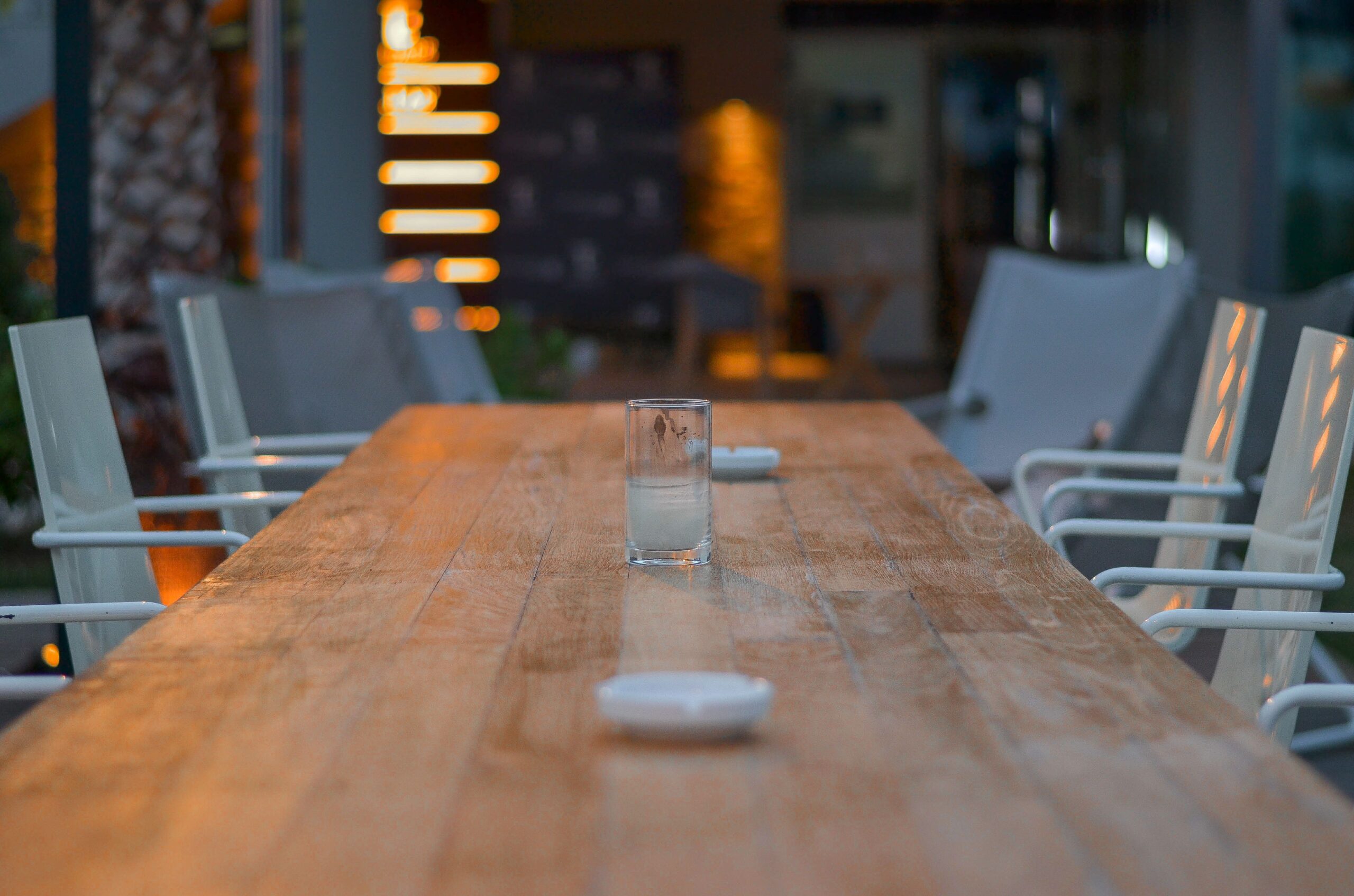
There’s a moment that most people describe the same way: you walk into a room, spot a wooden Top table, and something in you just settles. Not because it’s particularly ornate or expensive sometimes it’s a beat-up farmhouse piece with water rings and the ghost of a hundred meals baked into its grain. That quality, that warmth that no resin, laminate, or stone surface has ever quite managed to replicate, is what makes the wooden top table the perennial centerpiece of homes, restaurants, and workspaces around the world.
But “wooden top table” covers an enormous amount of territory. A sleek walnut dining table with a hand-rubbed oil finish is technically in the same category as a rough pine potting bench. Choosing well means understanding what separates them — not just aesthetically, but also how they age, how much work they demand, and how they interact with the specific conditions of your space.
This guide cuts through the marketing noise. What follows is practical, opinionated, and detailed enough, actually, to help you decide.
The Wood Itself: Species, Grain & Character
Before you think about finish or style, you need to understand the material. Wood species behave very differently from one another — in hardness, porosity, movement with humidity, and how they respond to staining and finishing. Choosing the wrong species for your context isn’t just an aesthetic problem; it’s a maintenance problem that compounds over the years.
White Oak — The Gold Standard for Good Reason
The White oak and red oak dominate the Western furniture market, and not without justification. White oak, in particular, has tight, closed pores that naturally resist moisture — it’s the same wood used for whisky barrels. It’s hard enough to resist everyday scratching, takes stain evenly, and has a pronounced grain character that reads as warm without being rustic. If you’re choosing your first serious wooden top table and have no strong preference, white oak is an extremely safe answer.
Red oak is more porous and slightly softer, which means it takes darker stains beautifully but requires more sealing in kitchens or anywhere moisture is involved. It’s also typically less expensive, which makes it a popular option for larger tables where budget matters.
Black Walnut — The Designer’s Choice
American black walnut occupies a special place in contemporary furniture design. Its natural color — a deep chocolatey brown with purple undertones that warm to a richer tone over time — is stunning with almost no finishing intervention. A well-oiled walnut tabletop can genuinely look better at fifteen years than it did when new, as the color mellows and deepens with exposure to light.
The catch: walnut is expensive, and it’s on the softer side for a hardwood. It dents more easily than oak or maple. For a coffee table or side table, this is rarely a problem. For a dining table with small children, you should go in with eyes open.
Hard Maple — Underrated and Underused
Hard maple is one of the most dimensionally stable hardwoods available, which is why it’s been the material of choice for butcher blocks and bowling alley floors for over a century. As a table top, it’s extraordinarily durable, has a fine, subtle grain that works beautifully in both Scandinavian-minimalist and industrial contexts, and takes paint or a natural finish with equal grace.
The subtle grain can read as “plain” to people who want drama. But for a workspace, a kitchen island, or a desk that handles heavy daily use, maple is often the smartest choice for the room.
Teak — The Outdoor King
Teak is in a class of its own when it comes to outdoor wooden-top tables. Its naturally high oil content makes it genuinely weather-resistant without any surface finish treatment at all — teak patio furniture left untreated simply weathers to a silver-gray that many people actually prefer. With periodic teak oil applications, it stays closer to its original warm golden-brown. It is expensive, and some of that expense should go toward sourcing certified plantation teak rather than old-growth material.
Pine — The Honest Softwood
Pine gets dismissed by furniture purists, but it has a genuine case in the right contexts. A thick-topped pine farmhouse table will outlast a thin-veneered “hardwood” piece from a flat-pack retailer by decades. Softwoods accumulate character — every dent and scratch tells a story — which is part of their appeal in rustic, cottage, or Wabi-Sabi-influenced interiors. The trade-off is real, though: pine requires more diligent maintenance and won’t tolerate heavy commercial use.
Acacia — The Live-Edge Favorite
Acacia has become one of the most popular species for live-edge dining tables over the past several years, and for good reason. It’s genuinely hard and durable, has dramatic grain variation with striking natural color contrasts between heartwood and sapwood, and is significantly more affordable than walnut or teak at comparable sizes. The wide boards common in acacia slabs make it ideal for statement dining tables. Its one weakness is that the color contrast between heartwood and sapwood can look a little busy — something to preview in person before committing.
Construction: What’s Under the Top
The wood species gets most of the attention, but how the top is constructed often determines longevity more than which species was used.
Solid Wood Tops
A solid wood top is exactly what it sounds like — planks of lumber, glued edge-to-edge to form the panel. The quality of this construction depends heavily on the moisture content of the lumber when glued (ideally 6–8% for interior use), the width of individual planks (narrower planks move less with changes in humidity), and the direction of the annual rings in adjacent boards.
Well-made, solid wood tops will expand and contract seasonally with humidity — this is normal and healthy. A table that doesn’t allow for this movement will eventually crack or buckle. Good furniture makers account for this with breadboard ends, figure-8 fasteners, or slotted screw holes that let the top float on the base.
Live-Edge Slabs
Live-edge tables — where the natural edge of the tree is preserved on one or both sides of the top — have dominated upscale interior design for most of the past decade and show no sign of fading in 2026. The appeal is obvious: no two are identical, and the organic silhouette brings an unmistakable energy to a space.
What’s less discussed is the care required. Wide slabs move more with humidity than narrower glued panels. Voids and cracks that make the piece beautiful require attention — typically filled with resin, which can yellow or crack over time if cheap materials are used. A live-edge table from a skilled maker using quality epoxy fill and properly dried lumber is a lifetime piece. A live-edge table made quickly from green wood will develop problems within a few years.
Veneered and Engineered Tops
High-quality veneer work — a real wood veneer bonded to a stable plywood core — can be extraordinarily beautiful and is actually more dimensionally stable than solid wood in high-humidity or climate-controlled commercial environments. The key qualifier is “high-quality.” Thin veneer on particleboard is a different product entirely: it chips at edges, swells with moisture, and can’t be sanded or refinished meaningfully.
For modern-style tables with very flat, seamless tops — the kind common in contemporary Scandinavian furniture — veneered construction is often the architecturally correct answer, not a compromise.
Table Styles: Matching Aesthetic to Architecture
Farmhouse and Rustic
Thick, often knotty pine or oak tops with visible grain and a finish that emphasizes rather than conceals the wood’s character. Reclaimed wood fits naturally here. The style has been popular long enough that there’s real price variation — from mass-produced pieces with artificially distressed surfaces to genuinely reclaimed barn wood with a century of character baked in. The latter is worth the premium if authenticity matters to you.
Mid-Century Modern
Walnut is the canonical species here. That warm, dark chocolate tone with clean, tapered legs immediately reads as the aesthetic. Teak was the original material for much authentic mid-century Scandinavian work. The tops tend to be lower and more horizontal, with a smooth finish and minimal visible hardware. Danish oil or wax finishes on walnut top tables in this style age particularly beautifully over time.
Industrial
Reclaimed wood paired with steel bases. The appeal is the contrast — raw, aged wood against cold metal. Thickness matters here; a two-to-three-inch top reads as intentional and structural. Pipe legs, hairpin legs, and cast iron frames all work in this idiom. The finish tends to be minimal — often just an oil to bring out color and provide light protection, letting the wood show its honest age.
Contemporary and Minimalist
This is where maple and white oak earn their place, particularly in quarter-sawn form, which produces the gorgeous ray-fleck pattern distinctive of high-end contemporary furniture. Lighter, more linear, with clean joints and a matte or satin finish that doesn’t interfere with the wood’s subtle color. The trend in 2026 continues toward lighter-toned woods, thinner profiles, and bases that disappear under the top rather than competing with it.
Live-Edge and Organic Modern
Acacia, walnut, and cherry are the most common species. The base matters enormously — heavy steel or timber bases anchor a live-edge top; delicate legs make it look unresolved. This style works best when there’s restraint elsewhere in the room; the table should be the statement piece, not one of several.
Finishes: The Decision That Changes Everything
The finish is the interface between the wood and the world. It determines the look, the maintenance requirements, the durability, and how the table ages over time.
Hard Wax Oil
(e.g., Rubio Monocoat, Osmo) is the current favourite among furniture makers and serious buyers alike. It penetrates the wood rather than sitting on top of it, which means it looks and feels closest to bare wood — a finish that makes the surface feel alive rather than coated. It’s also the easiest to repair: a scratched area can be spot-treated with a rag and product in twenty minutes without needing to refinish the entire top. The trade-off is that it requires annual maintenance — a fresh coat on a dining table.
Matte Polyurethane
Is the most durable surface finish available for residential use. It forms a hard film over the wood that resists moisture, heat, and abrasion better than any penetrating oil. The aesthetic downside is that it can look slightly plastic, and gloss versions amplify this significantly. Matte and satin formulations are dramatically better. When a hard wax oil finish is deeply damaged, it’s easy to repair. When a polyurethane finish is deeply damaged, refinishing is a bigger project — sand back, recoat, repeat.
Danish Oil is beautiful on walnut and other darker woods, richly enhancing grain and color. Its protection level is moderate at best, which means it needs reapplication every six to twelve months on any surface that sees actual use. It’s more appropriate for decorative or low-traffic tables than a primary dining surface.
Water-Based Lacquer is clear, non-yellowing, and dries fast. It’s the correct choice for maple and other light-toned woods where you want the natural colour preserved without the amber tint introduced by oil-based finishes. Durability is good. It’s slightly less warm-looking than oil finishes, which suits the contemporary aesthetic perfectly.
Epoxy/Resin Coating has become popular for bar tops and kitchen surfaces that need maximum durability and water resistance. The thick, glass-like surface looks striking but polarises opinion. Hot items can damage the surface, UV exposure can cause yellowing over time, and the aesthetic reads as very contemporary — not a neutral choice. On the right table, in the right setting, it’s genuinely impressive.
One note on gloss levels that doesn’t get said often enough: there is rarely a good reason to use a high-gloss finish on a residential wooden table top in 2026. Matte and satin finishes show the wood honestly, hide minor scratches far better, and look significantly more considered. The high-gloss aesthetic belongs to the 1980s.
Maintenance: What You’re Actually Signing Up For
The honest conversation that rarely happens in showrooms is about ongoing care. A wooden top table is not a zero-maintenance object, and the gap between a well-maintained table and a neglected one of equal initial quality is striking after five years.
For oil and wax finishes, the annual routine is simple: clean thoroughly, apply a thin coat of the appropriate maintenance product, buff off, and done. An hour of work per year keeps a table looking genuinely beautiful.
For polyurethane finishes, day-to-day maintenance is easier — wipe clean, avoid standing water — but when the finish eventually dulls, light scuff-sanding and a fresh coat of compatible finish every five to eight years is realistic for a dining table in active use.
What damages wooden tops most in everyday use: standing water from glasses without coasters, excessive heat from dishes placed directly on the surface, and cleaning with harsh chemicals like bleach or ammonia-based products. Simple pH-neutral soap and water are the correct cleaners for almost every finished wood surface.
For outdoor wooden-top tables, plan to clean and re-oil them annually. Teak is the most forgiving species for outdoor use, but any outdoor table benefits from covering or bringing it inside during extended wet seasons.
What’s Happening in 2026: Trends Worth Knowing
The furniture market in 2025–2026 reflects a broader cultural shift toward pieces that feel considered and lasting rather than disposable. A few specific trends in wooden top tables are worth knowing:
Quarter-sawn and rift-sawn cuts continue gaining traction over flat-sawn for premium pieces. The medullary ray figure in quarter-sawn white oak — that distinctive fleck pattern that catches light differently at every angle — has become something of a signature aesthetic in high-end residential interiors.
Lighter wood tones are dominating over the dark-stained finishes that were ubiquitous in the 2010s. Natural maple, lighter white oak, and ash reflect the broader Scandinavian and Japanese influence on contemporary interior design.
Sustainably sourced and certified wood has moved from niche to mainstream expectation. FSC (Forest Stewardship Council) certification is increasingly a purchasing factor, and reclaimed wood continues to command premium pricing in the residential market.
Thicker tops and honest joinery signal quality in ways that resonate with buyers who’ve been burned by thin-topped fast furniture. A solid oak top with a visible butterfly spline or mortise-and-tenon joinery communicates craftsmanship in a way that mass-produced alternatives simply cannot replicate.
Frequently Asked Questions
What’s the most durable wooden for a dining table that gets daily family use?
Hard maple and white oak are the practical answers for most households. Maple is marginally harder, and white oak is slightly more moisture-resistant due to its closed-pore structure. Either species with a high-quality hard wax oil or matte polyurethane finish will withstand years of daily use without significant degradation.
How do I know if a table top is solid wood or veneer?
Look at the edge. Solid wood shows continuous grain running through the full thickness of the top. Veneered tops show a visible layered structure at the edge, or sometimes an edge-banding strip in a slightly different material. Neither is inherently inferior — it depends entirely on the quality of execution.
My wooden table has white water rings. Can they be removed?
Usually, yes. White water rings are moisture trapped in the finish rather than in the wood itself, and they often come out with a light rub using 0000-grade steel wool, along with a small amount of the table’s finish. Dark water stains have penetrated the wood and require sanding back and refinishing that area. Prevention — coasters, immediate spill wiping — is always easier.
Is a live-edge table practical for everyday use? Yes, with realistic expectations. The organic edges adapt quickly in daily use. The practical considerations are cleaning (crevices can trap crumbs) and protecting the finish from heat and moisture. A quality epoxy fill on any voids makes the surface hygienic and easy to clean. They’re not meaningfully fussier than any other solid wood top.
What’s the best wooden top table for a home office desk? Hard maple or white oak at 38–50mm thickness, with a matte water-based lacquer or hard wax oil finish. The stability of maple matters for a surface where you’ll have electronics and items that need to stay put. Avoid soft woods like pine or paulownia for a desk that sees hours of daily arm contact — they show wear quickly in those conditions.
Should I oil a new wooden table when I receive it? It depends on the existing finish. A table with polyurethane or Lacquer needs no additional treatment — applying Oil over a film finish does nothing useful. A table sold as “oiled” or “raw” should get one or two additional coats of compatible Oil before heavy use. Always ask what finish was applied before adding anything.
Conclusion
There’s something worth sitting with in the choice of a wooden top table: it’s one of the few purchases where buying better almost always means buying less. A solid oak dining table from a skilled maker, maintained with reasonable care, will outlast the house it’s in. That same table might cost three or four times as much as a particleboard-core alternative, but amortized over twenty years, it’s one of the more economical purchases you’ll make for a home.
The decision isn’t complicated once you work through it honestly. Choose your species based on how hard the surface needs to be and what aesthetic direction you’re working with. It Choose your construction method based on your budget and the scale of the piece. Choose your finish based on how much ongoing maintenance you’re genuinely willing to do — not how much you intend to do when you’re feeling optimistic in a showroom.
And then find a maker who can actually execute at the level the material deserves. Local craftspeople, small domestic studios, and established heritage furniture brands all have a role to play here. What they share is an understanding that wood is not a surface — it’s a living material with a history and a future, and the best wooden top tables treat it that way.
The wooden top table is not a trend. It’s the honest, warm, evolving center of a room — the place where meals happen, work gets done, and conversations stretch into the evening.