




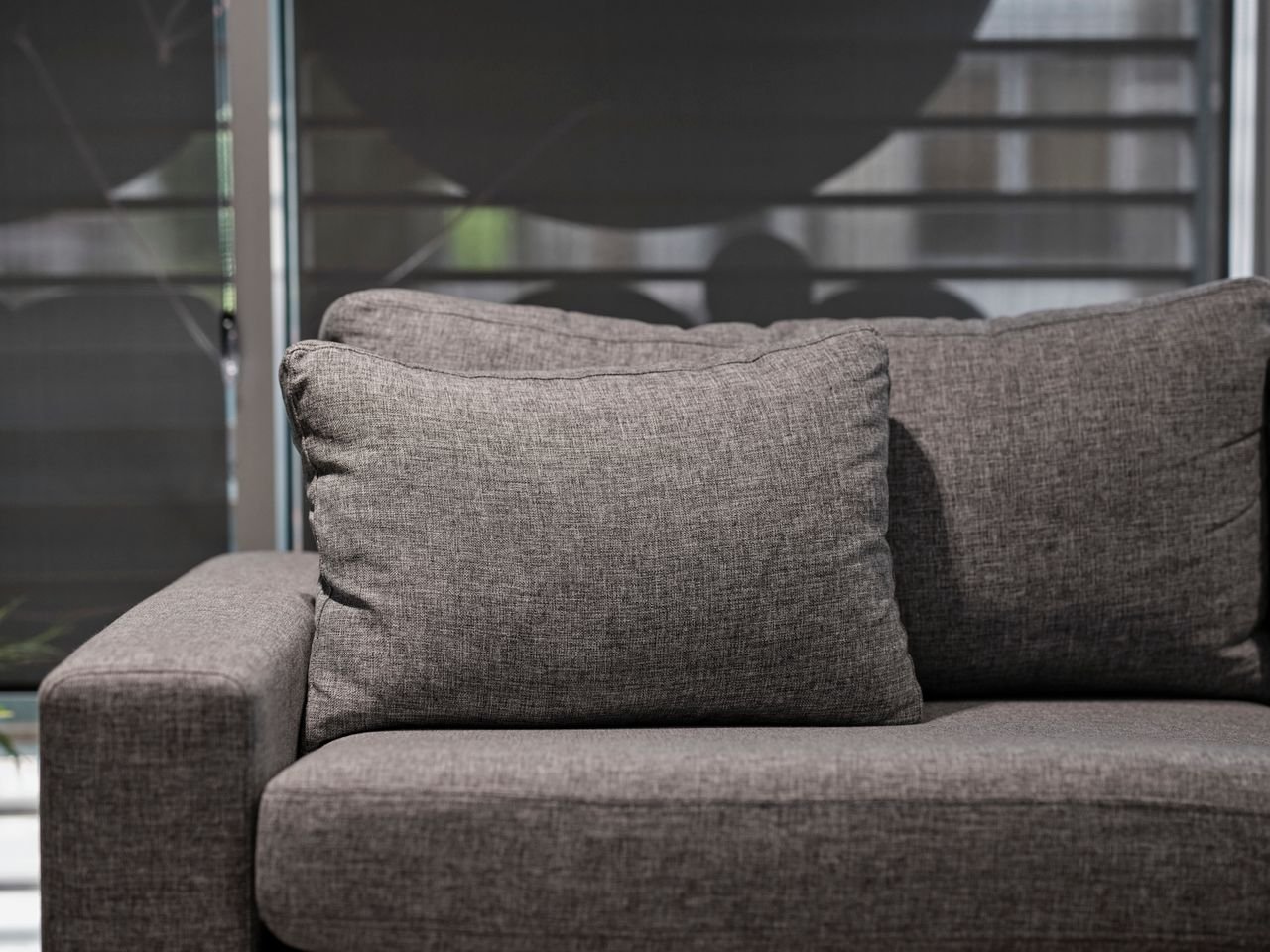
I once bought a sofa entirely because of how it looked in a showroom photo — low-slung mid-century arms, perfect taupe linen, exactly the silhouette I wanted. Three months later, the seat cushions had gone flat enough that sitting down felt like hitting the floor, and the frame creaked every time anyone shifted position. I replaced it with something far less photogenic and much more comfortable, and that gap between “looks right” and “sits right” is basically the entire subject of this guide.
A sofa is one of the only pieces of furniture you actually touch with your whole body for hours at a stretch, which makes it a strange thing that most people shop for it the same way they’d shop for a coffee table — on looks and price, with construction quality as an afterthought. That’s exactly backwards, and it’s why so many sofas start sagging, squeaking, or looking tired within a year or two of purchase.
Table of Contents
- What Actually Makes a Sofa Comfortable?
- Frame Construction: The Part You Never See But Always Feel
- Cushion Fill Comparison
- Sofa Styles: Matching Shape to How You Actually Live
- Upholstery Fabric and Leather: Reading the Actual Durability Numbers
- Real Product Comparison: Four Sofas I’d Actually Consider
- Sizing and Space Planning: Getting It Through the Door
- Testing a Sofa Before You Buy
- Maintenance by Material
- Buying Mistakes I See Constantly
- Where Sofas Are Headed
- FAQs
- Final Thoughts
- About the Author
What Actually Makes a Sofa Comfortable?
Comfort isn’t one thing — it’s four things working together, and a sofa can nail one and completely miss the others.
Frame construction determines whether the sofa still feels solid in year five or starts creaking and sagging by year two. This is the part almost nobody checks before buying, because you genuinely can’t see it under the upholstery.
Cushion fill determines how the seat feels the moment you sit down and, more importantly, how it feels after eighteen months of regular use — some fills hold their shape far longer than others.
Seat depth and height determine whether you’re actually comfortable in the sofa or just comfortable looking at it. Seat depths on the market range roughly from 19 to 24+ inches; shallow depths suit upright sitting and shorter people, while deep seats favor lounging and taller frames, but a deep seat can leave shorter people unable to sit back and reach the floor at the same time.
Back support and pitch — the angle and height of the backrest — determine whether the sofa actually supports your lower back or just looks like it does. A gorgeous low-back sofa can be genuinely uncomfortable for anyone who wants to sit upright and read or work rather than recline.
Frame Construction: The Part You Never See But Always Feel
This is where sofa quality is actually decided, long before fabric or cushion choice enters the picture.
Kiln-dried hardwood frames
Are the standard for genuinely durable sofas. Kiln-drying removes moisture from the wood before construction, which prevents warping and cracking over years of temperature and humidity changes in a home — a detail West Elm calls out specifically on its Harmony collection, built with an engineered hardwood frame using slot-and-tenon joinery and high-gauge sinuous springs for seat support.
8-way hand-tied springs
Are the traditional high-end support system, where coil springs are individually tied in eight directions for support that flexes evenly and resists sagging for decades. It’s genuinely rare and expensive to find outside premium and custom upholstery lines.
Sinuous (zigzag) springs
Are the far more common modern alternative — continuous S-shaped wire springs running front to back. Done well with quality-gauge wire, these perform close to hand-tied springs at a fraction of the cost, which is why most mid-range sofas, including West Elm’s Harmony line, use them.
Particleboard, fiberboard, and plywood frames
Show up heavily in budget and flat-pack furniture. IKEA is refreshingly transparent about this — the KIVIK sofa’s frame materials are explicitly listed as a mix of fiberboard, moisture-resistant particleboard, plywood, and solid pine. This isn’t automatically bad — IKEA backs the KIVIK series with a 10-year warranty and tests it to support users up to 242 pounds — but it’s a genuinely different durability tier than a solid hardwood frame, and it shows up first at stress points like arm attachments and frame corners after years of use.
| Frame Type | Durability | Typical Price Tier | Honest Verdict |
|---|---|---|---|
| Kiln-dried hardwood, 8-way hand-tied springs | Excellent — often decades | $$$$ | The gold standard, genuinely worth it if you’re keeping the sofa long-term. Rare outside premium/custom lines. |
| Kiln-dried hardwood, sinuous springs | Very good | $$–$$$ | The realistic sweet spot for most buyers — solid frame durability without hand-tied pricing. |
| Mixed engineered wood (particleboard/fiberboard/plywood) | Moderate | $–$$ | Fine for a first apartment or a sofa you expect to replace within 5–10 years. Watch for warranty length as a signal of manufacturer confidence. |
| Metal frame | Excellent structurally, but less common for full upholstered sofas | $$–$$$ | More typical for sofa beds and modular systems where mechanical durability under repeated folding matters more than in a stationary sofa. |
Cushion Fill Comparison
| Fill Type | Firmness Feel | Shape Retention | Maintenance | Honest Verdict |
|---|---|---|---|---|
| High-resiliency (HR) polyurethane foam | Medium-firm, consistent | Very good | Low | The most reliable everyday choice — holds its shape far longer than standard foam and doesn’t need regular fluffing. |
| Memory foam | Soft, body-conforming | Good, though can soften with heavy daily use | Low | Comfortable for lounging, but can feel too soft for people who want to sit upright for long periods, like working from a laptop. |
| Down and feather blend | Very soft, plush sink-in feel | Poor without maintenance — needs regular fluffing | High | Luxurious immediately after purchase, but genuinely requires daily fluffing to avoid looking flat and lumpy. Best as a back-cushion fill rather than the seat itself. |
| Polyester fiber | Soft, lightweight | Poor — flattens fastest of all common fills | Moderate | The most common back-cushion filler at lower price points; fine for pillows, disappointing as primary seat support. |
| Hybrid (foam core wrapped in fiber or down) | Firm support with a soft outer feel | Very good | Low-moderate | Generally the best real-world compromise — you get the shape retention of foam with a softer surface feel. This is what West Elm’s Harmony seat cushions use: fiber-wrapped high-resiliency foam cores, with back cushions blending polyester fiber, duck feather, and duck down. |
La-Z-Boy takes a related but distinct approach with its ComfortCore system — a multi-layer foam construction using softer foam on top of firmer, denser foam underneath, aimed specifically at resisting the sag that flat single-density foam develops over years of daily sitting.
Sofa Styles: Matching Shape to How You Actually Live
Sectionals and modular systems
Have become the default choice for a real reason: flexibility. Modular pieces like Article’s Beta collection or West Elm’s Harmony Modular line let you configure individual armless and corner pieces into a layout that matches your specific room, and reconfigure it entirely if you move. This flexibility comes at the cost of visible seams between sections that a one-piece sofa doesn’t have.
Chesterfield
Sofas bring the classic deep-buttoned back, rolled arms at the same height as the backrest, and typically leather or a leather-look upholstery. Striking in a study or formal living room, genuinely firm-seated and less suited to sprawling out compared to a deep-cushioned modern sofa.
Mid-century
Styles use tapered wood legs, track arms (thin, straight-lined arms rather than rolled ones), and often a lower overall profile. This is the style most prone to looking dated fastest if trends shift, though a well-made frame underneath outlasts the trend cycle regardless.
Camelback, Lawson, and tuxedo
These traditional shapes tend to age well precisely because they’re not chasing a current trend.
Sleeper sofas solve a real space problem in smaller homes, but the mechanism quality varies enormously and this is genuinely worth testing in person before buying — pull-out mattress frames can be smooth and simple or, based on plenty of real owner feedback on models like the IKEA KIVIK sleeper, fussier to open and close than the product photos suggest. If overnight guest use is more than occasional, it’s worth the extra time testing the mechanism in a store rather than trusting the listing alone.
Loveseats and apartment-size sofas (typically under 70 inches wide) are the right call for smaller rooms where a standard 84-plus-inch sofa would overwhelm the space — measure your room before falling for a style that simply won’t fit.
Upholstery Fabric and Leather: Reading the Actual Durability Numbers
As a real-world reference point, IKEA lists its KIVIK sofa cover as tested to 55,000 abrasion cycles, while noting that 15,000 cycles is the general threshold for everyday home use and 30,000-plus indicates strong durability — genuinely useful numbers to compare against any fabric sofa you’re considering, since not every retailer publishes them as clearly.
Performance fabrics (a category that includes many polyester and polyester-blend weaves, often treated for stain resistance) have become the practical default for households with kids or pets — Article, for example, upholsters much of its lineup in what it calls “premier stain-repellant fabric” specifically for that reason.
Natural fibers — linen, cotton, wool blends — look and feel genuinely different from performance synthetics, with a texture and drape that’s hard to fully replicate, but they generally show stains and wear faster and need more careful cleaning.
Leather splits mainly into top-grain (durable, develops a natural patina, most expensive) and bonded or “leather match” (a blend of genuine leather scraps and synthetic backing, cheaper but prone to peeling within a few years). If a leather listing doesn’t specify top-grain or full-grain, assume it’s a blended or bonded product and budget your expectations accordingly.
One safety detail worth knowing: U.S. upholstered furniture is required to carry a label stating compliance with federal smolder-resistance requirements under CPSC regulations governing upholstered furniture flammability. It’s not a fabric quality indicator, but it’s worth glancing at the tag on any sofa, new or secondhand, particularly older pieces that may predate current standards.
Real Product Comparison: Four Sofas I’d Actually Consider
| Sofa | Frame & Cushion | Price Tier | Best For | My Verdict |
|---|---|---|---|---|
| Article Sven / Timber / Beta | Solid-wood legs, mix of foam-core cushions across the lineup | $$ | Buyers wanting mid-century style with modern modular flexibility | Consistently good value for the construction quality, and the modular Beta line genuinely reconfigures well as your space changes — just budget for the $49 return shipping fee if it’s not right, since that’s a real cost of ordering sight-unseen. |
| West Elm Harmony | Kiln-dried engineered hardwood, sinuous springs, fiber-wrapped HR foam + down-blend back cushions | $$$ | Buyers prioritizing genuine plush comfort with real construction quality behind it | This is the one I’d point a comfort-first buyer toward — the deep seat and cushion construction genuinely deliver on “sink-in” comfort without the fast flattening that lower-tier foam shows within a year. |
| IKEA KIVIK | Mixed engineered wood frame, high-resilience and standard foam depending on component | $ | Renters, first apartments, anyone prioritizing budget and modularity | Genuinely good value for the price point, backed by a real 10-year warranty, but the frame materials are a step down from solid hardwood — treat it as very good for its price tier rather than a like-for-like competitor to premium lines. |
| La-Z-Boy stationary sofas | Kiln-dried hardwood frame, multi-density ComfortCore foam system | $$–$$$ | Buyers wanting proven everyday durability over trend-forward styling | The ComfortCore layered-density approach is specifically engineered against the sag that flat single-density foam develops — a genuinely practical choice for a household that uses its sofa daily rather than occasionally. |
Sizing and Space Planning: Getting It Through the Door
The single most common sofa-buying disaster has nothing to do with comfort at all — it’s ordering a sofa that physically can’t get into the room. Measure your narrowest access point (front door, hallway turns, stairwell width and turning radius, and the room’s own doorway) against the sofa’s boxed dimensions, not just its assembled dimensions, before ordering anything that doesn’t arrive flat-packed.
For the room itself: leave at least 30 to 36 inches of walking clearance in front of a sofa where people will regularly pass, and roughly 14 to 18 inches between a sofa and a coffee table so people can comfortably reach the table without straining forward. For sectionals specifically, sketch the actual footprint on your floor with painter’s tape before ordering — sectional dimensions look deceptively modest on a spec sheet until you see the full L-shape mapped out in your actual room.
Testing a Sofa Before You Buy
Sit for a full ten minutes, not ten seconds. Cushions that feel great on first contact can reveal pressure points or inadequate lower-back support once you’ve actually settled in the way you would watching a movie.
Press down firmly on the seat cushion and watch how it rebounds. A cushion that stays compressed or recovers very slowly is a preview of how it’ll perform after a year of daily sitting.
Test the arm height if you plan to lean or rest your head there. Arm height varies significantly between styles, and it matters far more in daily use than most people expect before they own the piece.
Maintenance by Material
Performance and synthetic fabrics: most spot-clean easily with mild soap and water; check the manufacturer’s cleaning code (W for water-based cleaner, S for solvent-based only, WS for either, X for vacuum only, no liquid) before applying anything.
Natural fiber fabrics: blot spills immediately rather than rubbing, and consider a fabric protector treatment at purchase, since these fibers generally absorb stains faster than treated synthetics.
Leather: dust regularly and condition every few months with a leather-specific product to prevent cracking, especially in rooms with dry heating in winter.
Down and feather cushions: fluff and rotate daily if you want them to keep their shape — this isn’t optional maintenance, it’s the actual mechanism by which they avoid looking flat.
Foam cushions generally: rotate and flip periodically if the design allows it, to even out wear from a favorite sitting spot.
Buying Mistakes I See Constantly
Buying for the showroom, not the room. A sofa that looks proportionate in a 400-square-foot showroom vignette can dominate a smaller living room entirely — always cross-check dimensions against your actual space, not your impression of the space.
Skipping the doorway and stairwell measurement. This is genuinely the most common regret I hear about, and it’s completely avoidable with a tape measure before ordering.
Assuming a low price and a low price with a long warranty mean the same thing about durability. A 10-year warranty on a budget frame, like IKEA offers on KIVIK, is a genuine signal of manufacturer confidence worth factoring in — the absence of any meaningful warranty on an equally cheap competitor is a signal too, just the opposite kind.
Ordering a sectional based on a spec sheet alone. Tape out the actual footprint on your floor. What reads as “compact” in inches on a page can surprise you once it’s mapped out at full scale.
Where Sofas Are Headed
Modular, customizable systems are becoming the default rather than the exception. What used to be a premium category — build-your-own sectional configurations — is now standard at multiple price points, from Article’s Beta line to West Elm’s Harmony Modular collection, reflecting how often people move or reconfigure living spaces compared to a generation ago.
Performance fabric is quietly becoming the standard rather than the upgrade. Stain-repellant, easy-clean weaves that once cost noticeably more are increasingly the default option across price tiers, as manufacturers respond to how much of the market has kids or pets.
Sustainability claims are getting more specific and verifiable, moving from vague “eco-friendly” marketing toward disclosed foam densities, certified wood sourcing, and recycled-content fiber fills that buyers can actually compare rather than take on faith.
Direct-to-consumer pricing continues to compress the gap between “premium construction” and “affordable,” with brands increasingly disclosing frame and fill materials upfront the way IKEA and West Elm both do — a genuinely good trend for buyers who want to compare real construction quality rather than relying on showroom feel alone.
FAQs
How long should a good sofa actually last? A well-constructed sofa with a kiln-dried hardwood frame and quality foam or hybrid cushions typically lasts 10 to 15 years with normal use. Budget frames with engineered wood and lower-density foam are more realistically a 5 to 8 year piece, even with a generous warranty.
Is a firmer or softer sofa better for my back? Neither universally — it depends on how you use it. A medium-firm cushion with good back support suits upright activities like reading or working, while a softer, deeper cushion suits lounging and TV-watching. If you do both regularly, a hybrid fill construction is generally the safer middle ground.
Are sectional sofas actually better value than a sofa and separate chairs? Often yes for seating capacity per dollar and for creating a defined lounging zone, but sectionals are harder to rearrange later and commit more of a room’s footprint to one furniture piece than a sofa-plus-chairs combination would.
What’s the real difference between a $600 sofa and a $2,500 sofa? Almost always frame material and construction method, cushion fill quality, and fabric durability — the visible upholstery and silhouette can look remarkably similar across that price range, but the parts you can’t see are where the price difference actually lives.
Do I need to worry about flammability standards when buying a sofa? In the U.S., upholstered furniture must meet federal smolder-resistance labeling requirements, and checking for that label is a reasonable basic safety check — particularly on older or secondhand pieces that may predate current standards.
Final Thoughts
The sofas that hold up — the ones still comfortable and solid five or ten years in — are almost never the ones chosen purely on how they photographed in a showroom or an online listing. They’re the ones where someone checked what the frame was actually made of, understood what the cushion fill would feel like after a year of daily use rather than just on day one, and measured the room and the doorway before falling in love with a specific style.
None of that requires expertise,
About the Author
This guide was researched and written by a home furnishings writer who has spent years buying, testing, and occasionally returning sofas across budget and premium tiers alike. Research for this piece drew on current construction and material specifications from West Elm, IKEA, Article, and La-Z-Boy, alongside federal flammability labeling requirements published by the U.S. Consumer Product Safety Commission, to ground comfort and durability recommendations in verifiable specifications rather than showroom impressions alone.