




I still remember the first rattan chair I brought home. It was a simple peacock-style accent piece I found at a secondhand shop, slightly dusty but solid. I set it by a sunny window, added a linen cushion, and suddenly the whole corner felt lighter and more inviting. That chair has followed me through three apartments and two houses. It has held late-night reading sessions, guests who never wanted to leave, and the occasional cat who claimed it as territory. Rattan has that quiet ability to make a space feel lived-in without trying too hard.
This guide comes from years of living with, cleaning, repairing, and recommending rattan chairs. I’ll explain exactly what rattan is, how it differs from similar materials, the styles that work best in real homes, the honest truth about comfort, and the practical care that keeps these pieces looking good for years.
Table of Contents
- What Exactly Is Rattan?
- Rattan vs. Wicker, Cane, and Bamboo
- Natural Rattan vs. Synthetic (PE) Rattan
- Popular Styles of Rattan Chairs
- Comfort: What to Expect and How to Improve It
- Benefits and Limitations
- Care and Maintenance That Actually Works
- Honest Product and Method Comparisons
- Real-World Lessons from My Own Chairs
- Future Trends
- Frequently Asked Questions
- Final Thoughts
- About the Author
What Exactly Is Rattan?
Rattan is not a single plant. It is a group of roughly 600 species of climbing palms in the subfamily Calamoideae, native to tropical regions of Southeast Asia, Africa, and parts of Australia. The long, solid stems grow as vines that climb trees, reaching impressive lengths while remaining flexible enough to be steamed and bent into furniture shapes.
Once harvested, the outer skin (often called cane) can be peeled and used for finer weaving, while the solid core provides strength for frames and structural elements. Unlike bamboo, which is hollow, rattan is solid throughout, giving it greater density and resilience when properly prepared.
Rattan has been used for furniture and baskets for centuries. Evidence appears in ancient Egyptian tombs, and by the 19th century it had become a major material in European and American furniture production. Companies like Heywood-Wakefield built entire businesses around it. In the mid-20th century, designers such as Franco Albini and Nanna Ditzel elevated it into sculptural mid-century pieces that still feel contemporary today.
A clear, reliable overview of the material appears on Wikipedia’s rattan page: Rattan.
Rattan vs. Wicker, Cane, and Bamboo
This is the source of most confusion, so let’s clear it up simply.
Rattan is the raw material—the plant itself.
Wicker is a weaving technique. You can weave rattan, willow, bamboo, or synthetic fibers in a wicker style.
Cane usually refers to the thin outer peel of the rattan vine, often used for finer seat and back panels.
Bamboo is a different plant entirely—hollow, jointed, and less flexible when bent.
When someone says “rattan chair,” they usually mean a chair whose frame or woven elements are made from the rattan plant. When they say “wicker chair,” they are describing the woven appearance, which may or may not use actual rattan. Many outdoor pieces labeled “rattan” today are actually synthetic resin woven in a rattan-like style.
A helpful breakdown of these distinctions can be found here: Rattan and Wicker – What Is the Difference?.
Natural Rattan vs. Synthetic (PE) Rattan
Natural rattan has a warm, irregular texture and subtle color variations that synthetic materials struggle to match. It feels lighter and more organic. However, it is sensitive to prolonged moisture, direct sun, and extreme humidity. Left outdoors unprotected, it can become brittle, mold, or crack.
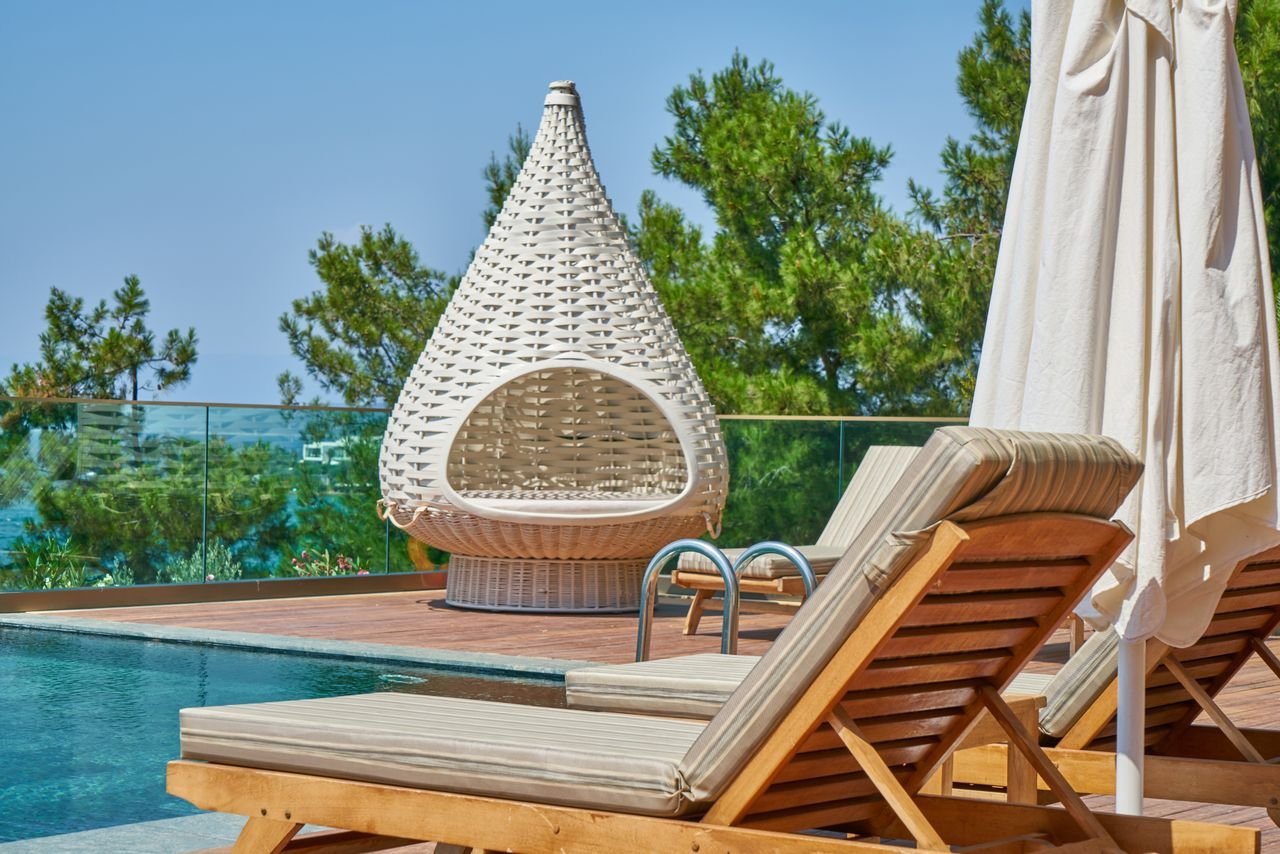
Synthetic PE (polyethylene) rattan is designed to mimic the look of natural material while resisting rain, UV rays, and temperature swings. High-quality PE rattan is UV-stabilized, does not absorb water, and requires far less maintenance. The best versions look surprisingly realistic, though close inspection still reveals a more uniform surface.
For indoor use or covered porches, I still prefer natural rattan. For fully exposed outdoor seating, PE rattan is the practical choice. Many modern sets combine aluminum frames with PE weaving for strength and weather resistance.
Popular Styles of Rattan Chairs
Rattan adapts to many aesthetics because the material itself is so workable.
Bohemian and coastal styles lean into the natural texture. Peacock chairs with their dramatic fan backs, papasan chairs, and open-weave lounge chairs fit this look. These pieces feel relaxed and slightly exotic without needing additional decoration.
Mid-century modern interpretations keep the lines cleaner. Think Franco Albini’s Margherita chair or simpler tapered-leg dining chairs with woven seats and backs. The material’s organic quality softens the geometric forms typical of the era.
French bistro and café style remains iconic. The classic woven bistro chair, popularized by makers like Maison Drucker, is lightweight, stackable, and instantly recognizable. These work equally well indoors or on a covered patio.
Contemporary and minimalist designs often use tighter weaves, lighter natural finishes, or painted rattan in soft neutrals. Some current pieces combine rattan with metal or solid wood frames for a hybrid look.
Outdoor lounge and dining sets increasingly use PE rattan in modular or deep-seating configurations. The better ones balance structure with comfort through thoughtful cushion design.
I’ve mixed a mid-century rattan lounge chair with a more traditional wooden dining table without any visual conflict. The material’s honesty helps it bridge styles.
Comfort: What to Expect and How to Improve It
Rattan chairs are rarely as soft as upholstered furniture out of the box. The woven surface has some give, and the natural flexibility of the material allows slight movement under weight, which many people find more comfortable than rigid wood or plastic. Still, long sitting sessions usually benefit from a good cushion.
A well-designed rattan chair distributes weight across the weave rather than creating pressure points. Seat depth and back angle matter more than the material itself. Shallow seats feel formal; deeper ones invite lounging. Papasan chairs are famously enveloping but can be hard to get out of once you’re settled.
I keep a selection of removable cushions with outdoor fabric for my porch chairs and linen or cotton for indoor ones. The right cushion transforms the experience. Some people add a thin foam pad under the main cushion for extra support without changing the look.
Benefits and Limitations
Benefits
- Lightweight yet surprisingly strong when well constructed
- Naturally breathable, which feels cooler in warm weather
- Distinctive texture that adds visual interest without pattern overload
- Relatively sustainable when sourced from managed forests (rattan grows quickly compared with many hardwoods)
- Repairable in many cases—loose wraps can be tightened and damaged sections replaced by skilled craftspeople
Limitations
- Natural rattan does not love constant outdoor exposure
- Can squeak or loosen over time if the weave is not maintained
- Dust and pet hair collect easily in the open weave
- Quality varies widely; cheap frames can feel flimsy
When the construction is solid—good joinery, consistent weaving, and a stable frame—rattan chairs deliver years of service with modest care.
Care and Maintenance That Actually Works
Dust is the main enemy. Weekly vacuuming with a soft brush attachment or a quick wipe with a dry microfiber cloth prevents buildup in the weave. For deeper cleaning, use a slightly damp cloth with mild soap and water. Work in sections, rinse with a clean damp cloth, and dry thoroughly. Never soak the furniture.
Avoid harsh chemicals, silicone sprays, and oil-based polishes that can leave residue or attract more dirt. For natural rattan, occasional light application of a linseed-oil-based emulsion can help condition the material, but this is optional and should be done sparingly.
Keep natural rattan out of prolonged direct sun and high humidity when possible. If mold appears, treat it promptly with a diluted bleach solution, then dry the piece completely outdoors if conditions allow.
Synthetic PE rattan is simpler: hose it down or wipe with soapy water and let it air dry. Covers help during long periods of non-use, especially in harsh climates.
A thorough care guide with practical steps is available here: The Ultimate Guide to Caring for Rattan and Wicker Furniture.
Honest Product and Method Comparisons
I’ve tested several approaches on both natural and synthetic pieces.
Dry dusting vs. damp cleaning
Weekly dry dusting is essential and prevents most problems. Monthly damp cleaning with mild soap keeps the material looking fresh without risking saturation. Over-wetting natural rattan is the fastest way to cause problems.
Linseed-oil emulsion vs. commercial furniture polish
A homemade mix of linseed oil, water, and a touch of turpentine can nourish natural rattan and restore a subtle sheen. Commercial silicone polishes often leave a film that collects dust. I prefer the traditional emulsion for natural pieces and skip polish entirely on PE rattan.
Protective covers vs. permanent outdoor placement
For natural rattan, covers or storage during wet or extreme seasons extend life dramatically. Quality PE rattan can stay outdoors year-round in most climates, though covers still reduce fading and dirt buildup.
No single product replaces consistent, gentle habits. The best results come from matching the care method to the material.
Real-World Lessons from My Own Chairs
My original peacock chair has needed only occasional tightening of a few wraps and regular dusting. The natural color has deepened slightly, which I prefer. A set of PE rattan dining chairs on my covered porch has survived five years of weather with nothing more than seasonal hosing and cushion storage in winter.
The biggest lesson is that quality of construction matters more than the label. A well-made natural rattan chair indoors will outlast a poorly constructed synthetic piece outdoors every time.
Future Trends
Sustainability remains central. Buyers increasingly ask about sourcing and whether the rattan comes from managed forests. Designers continue to experiment with hybrid pieces—rattan combined with recycled aluminum, solid wood, or recycled plastics. Cleaner, more architectural weaves are appearing alongside the classic open styles. Modular outdoor systems using high-grade PE rattan are growing in popularity for smaller outdoor spaces.
The material’s ability to feel both timeless and current keeps it relevant.
Frequently Asked Questions
Is a rattan chair comfortable for everyday use?
Yes, especially with a good cushion. The slight flex of the material is often more forgiving than solid wood.
Can I leave a rattan chair outside?
Natural rattan is best under cover. High-quality PE rattan is designed for full outdoor exposure.
How long do rattan chairs last?
Well-made natural pieces can last decades indoors with proper care. Quality PE outdoor chairs commonly last 8–15 years depending on climate and maintenance.
Does rattan attract insects?
Properly finished and kept dry, it does not. Moisture is a bigger risk than insects.
Can rattan be repaired?
Yes. Loose weaving can be re-wrapped, and damaged sections replaced by someone familiar with the material.
Final Thoughts
A rattan chair is more than a trend piece. When chosen carefully and cared for simply, it becomes one of those quiet, reliable elements that makes a home feel finished. The material carries a sense of lightness and honesty that few others match. Whether you prefer a sculptural mid-century form, a classic bistro chair, or a deep outdoor lounge, rattan offers a combination of style, reasonable comfort, and character that continues to earn its place.
My own chairs have taught me that the best ones are the ones you actually use—not the ones you protect so carefully they never become part of daily life. Treat the material with basic respect, and it will return the favor for years.
About the Author
Marcus Hale is an independent furniture researcher and restorer with more than twelve years of hands-on experience selecting, maintaining, and documenting natural and synthetic woven furniture. His work focuses on practical performance in real homes rather than short-term trends, drawing from direct observation, restoration projects, and conversations with makers and long-term owners.