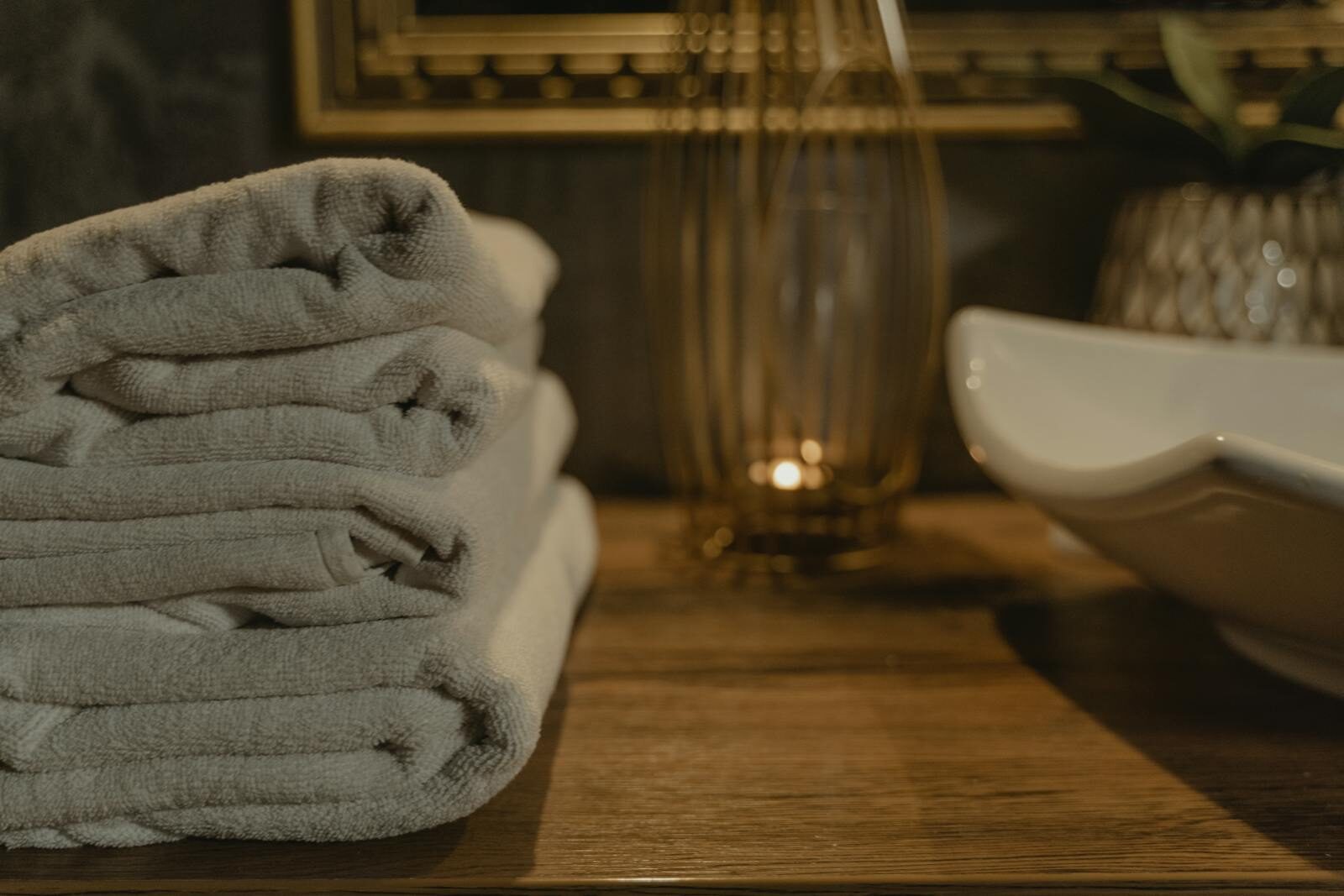
There’s a very specific kind of luxury that doesn’t include a five-star hotel or a spa membership. It lives in your own bathroom, takes about sixty seconds to appreciate and costs far less than most people think. It’s getting out of a hot shower with a towel that’s really hot not hot from lying in a sunbeam, but hot from a special device that’s been working silently on one simple task while you were bathing.I almost got my first towel warmer by accident. This goes back to a bathroom renovation I undertook a few years ago – the contractor threw in a heated towel rail as part of the package and I thought almost nothing of it at the time. Within two weeks it was the thing I talked about most when friends would ask about the renovation. Not the new tile, not the double sinks. The towel heater.
I’ve learned since that that reaction is perfectly typical. Towel warmers occupy an odd place in home upgrades: small enough that many people overlook them, yet so consequential that almost everyone who has one considers it a must-have. This guide is for the people on the “before” side of that experience trying to figure out what kind to buy, how much to spend, and if it’s really worth it.
Sure it is. But the details are key.
What is a Towel Warmer Really For (Aside from the Obvious)
The headline feature is the warm towel, but towel warmers do more than that and understanding the full picture helps justify the investment.
They cut bathroom moisture and mildew. A towel warmer prevents damp towels from sitting cold and wet on a rail, the very condition that breeds mildew and the accompanying musty smell. Towels dry quicker, smell better and will last longer. If you have ever had to rewash towels because they smelt damp after 24 hours on a regular rail, this alone is worth the cost.
They give the bathroom a cosy, ambient warmth. A hardwired electric or hydronic towel warmer is a secondary heat source. In a small bathroom, a unit sized right can raise the temperature of the air quite a bit — enough to make stepping out of a shower dramatically less painful in winter.
They make towels last longer. Towels that dry completely between uses don’t wear out as quickly as towels that stay damp. The fabric remains softer, the fibres remain strong, and you change less often.
They’re the single highest-impact “spa feeling” upgrade per dollar. This is a subjective statement, but I believe it. A warm towel soaks you, warms you and comforts you in a way a new faucet or upgraded showerhead simply can’t.
Towel Warmers Types: The Real Comparison
There are four meaningful categories, which differ in installation complexity, running costs, performance and aesthetics. Knowing the differences before you buy can save you a lot of regret.
Electric Towel Warmers Hardwired
They plug into your home’s electrical system through a dedicated connection not a standard outlet, but a hardwired connection that is put in by an electrician. The end result is a tidy, cord-free installation that looks completely built-in.
Hardwired models are the gold standard in permanent upgrades to your bathroom. They can be wired to a timer or smart switch so that they warm up automatically, before your usual shower time, and turn off automatically afterwards. They are available in heated towel rail (flat bars, ladder style), panel radiator, and rings and hooks.
Pros: Easy installation, no visible cord, compatible with smart home systems, may include thermostat for temperature control, may also function as bathroom heater.
Cons: Requires an electrician (adds to upfront cost), more difficult to move if you remodel, more investment up-front than plug-in alternatives.
Best for: Permanent bathroom installations, folks doing a renovation, and those who want the full spa-hotel experience.
Cost: $200 to $800+ for the unit; $100 to $300 for professional installation (depending on complexity).
Electric Towel Warmer Plug In
They connect to a regular electrical outlet and anyone can install them. They’re the most accessible entry-point into towel warming and perform way better than their “budget” reputation would have you believe.
The main disadvantage is aesthetic – the cord. Some units do this better than others, neatly running the cord along the wall or through a hidden channel. But in a bathroom where the outlet is awkwardly placed, the cord can become an aesthetic eyesore.
Modern plug in warmers have made a lot of progress in quality and design in the last several years. Brands such as Amba, Warmrails and Runtal have plug-in models that now heat and look as good as their hard-wired counterparts.
Cons: No electrician required, portable (can take it with you when you move), less expensive to buy, easy to install.
Cons: Can be an eyesore if not properly managed, occupies an outlet, may not be as aesthetically integrated.
Best for: Renters, those not ready to commit to a hardwired installation, anyone wanting to try towel warming before a permanent upgrade.
Prices range from $80 to $400, depending on size and brand.
Hot Water (Hydronic) Towel Heaters
These hook up to your home’s central heating system, and use hot water (the same system that heats your radiators) to heat the towel rail. Once installed, they don’t require any electricity to run.
Hydronic towel warmers are the most common towel warmers in Europe, where wet central heating is the norm. They’re less common in North America where forced-air heating dominates but in homes with boiler-based systems they’re an elegant, efficient option.
The only downside is that they only generate heat when the central heating is on. In shoulder seasons when you’re not running the full heating system, a hydronic warmer may not be usable unless you install a dual fuel version (hydronic with an electric backup element) that runs on whichever system is active.
Pros: No incremental electricity cost when system is operating, works seamlessly with home heating, creates true radiator-level warmth, very durable.
Cons: Needs a plumber to install, only works when heating is on (unless dual-fuel), installation is more complicated.
Best for: Homes with wet central heating systems, full bathroom renovation, European style bathroom design.
Price Range: $150-$600 for the unit. Plumbing installation is around $200-$500 depending on system complexity.
Freestanding & Bucket Style Towel Warmers
A stand-alone unit rests on the floor and does not need wall mounting or complicated installation. Another more recent category is the bucket-style warmer a heated vessel, on which towels are draped or placed — that has become popular via design-forward home goods brands.
They really do help people with limited wall space, or tenants who can’t drill holes into walls, or those who want to warm one or two specific towels instead of a whole rail. In particular, the bucket warmer has become a design object in its own right – several versions are now deliberately sculptural, meant to be seen rather than hidden.
Pros: No installation necessary, portable, some models are visually interesting objects, good for small bathrooms or targeted warming.
Disadvantages It takes up floor space, generally dries fewer towels than a wall-mounted system and may not have the integrated look of a fixed installation.
Best for: Renters, small bathrooms, apartments, people who want a warming solution that doesn’t require installation.
Cost: $50-$250.
What to Really Look For When Buying
Once you’ve determined your type, the specific purchase decision comes down to a few factors that are often not given enough attention in product listings.
Efficiency of Power and Heating
Wattage on electric towel warmers determines how quickly the unit warms and the amount of ambient heat it emits. A unit under 60 watts will warm towels but not meaningfully heat the room. A 100 to 150 watt unit will heat towels quickly and give a noticeable amount of ambient warmth to a small bathroom. For larger bathrooms or if you need proper secondary heating, consider 200+ watts.
Don’t be misled by very low wattage units that are marketed as “energy efficient”. There is a real trade-off: lower wattage means slower heating and less benefit from the ambient. A 60 watt unit running for hours uses the same energy as a 120 watt unit for half the time. The efficiency argument is often a red herring.
Bar Spacing and Towel Capacity
Bars or rails must be spaced sufficiently to allow air circulation. Bars that are too close together trap moisture between towels, rather than drying them. The minimum between bars is 3.5-4 inches in practical terms. Bath sheets (larger than a standard bath towel)? Look for 5″ bar spacing.
Choose how many towels you wish to warm at one time and make your selection. A couple’s bathroom probably needs at least 4 bars. 6-8 for a family bathroom.
Material & Finishing
Stainless Steel (304-grade) is the best standard material. It is truly rust resistant and durable. It comes in polished, brushed and matte finishes. Chrome plated steel is common at lower price points, it looks close to stainless but the plating can chip or corrode in humid environments over time.
Since 2021, matte black towel warmers have been the dominant trend and are still very popular in 2026 – they work brilliantly against light tiles and feel more modern than chrome. Brushed and unlacquered brass (which develops a natural patina) is often used in warmer, earthier bathroom schemes. Bathrooms are shifting more into tonal, natural material palettes in 2025-2026 with gunmetal and bronze finishes gaining ground.
Timer & Intelligent Control
A towel warmer that runs constantly uses real energy and doesn’t have to. A mechanical timer that runs for 24 hours costs next to nothing and pays for itself quickly. Even better, if you have a smart plug or dedicated smart switch you can schedule from your phone, so your warming begins 30 minutes before your usual shower time, and switches off after.
Today, most premium towel warmer brands come standard with built-in digital timers and temp controls. If you are hard wiring it you might want to specify a unit with a simple timer at the very least. With a 100 watt draw and 2 hours of use per day, average US electricity prices (in 2026 around $0.16/kWh) would put the running cost at about $12 a year. Truly insignificant.
Best Towel Warmer Brands To Know In 2026
This is not a ranked product list – models change frequently and availability varies by region. But these brands are known for real quality, and they’re good places to start your research.
Amba Products: Always one of the top in design quality and performance in both plug-in and hardwired categories. Their Jeeves and Radiant series provide clean, architectural aesthetics at honest price points.
Runtal: A Swiss brand with decades of experience in panel radiators and towel warmers. Great build quality, comes in a large variety of finishes and one of the few brands to have true custom sizing.
WarmlyYours: Electric radiant heating products including towel warmers. Good warranty terms, powerful technical support, from entry level to premium installations.
Myson: Good on hydronic and dual-fuel. Well respected in the UK and European markets for integration with heating in the bathroom.
Mr. Steam: They’re best known for their steam shower systems, but their towel warming accessories are high-end and meant to be integrated into full spa bathroom builds.
Errors to Avoid.
Buying a unit too small for the wall space. A small warmer on a large wall seems tentative and decoratively adrift. Size matters. A towel warmer should feel right on the wall it’s occupying.
Putting it in a spot you can’t get to. The warmer must be close enough to where you stand after bathing to be within natural reach. Put on the wrong wall, or too far away from the shower, it’s inconvenient enough that it’s not used regularly.
Electric models: no IP ratings. Bathrooms are moisture zones and electrical products fitted in these areas must have specific ingress protection (IP) ratings. In the UK requirements for zones are covered by BS 7671. In the US, electrical installations in bathrooms come under NEC Article 410. You’ll want to make sure any electric towel warmer you install meets the requirements for where it’s going – the manufacturer specs will state the IP rating clearly.
Selecting a finish that does not match your existing fixtures. If your faucets and hardware are brushed nickel, then a towel warmer in chrome will clash. If they’re black matte, a polished stainless warmer will feel inconsistent. The towel warmer is a big, visible piece of bathroom hardware, and it needs to speak the same finish language as the rest of the room.
FAQ’s (Frequently Asked Questions)
How long does it take for a towel warmer to warm a towel?
Most electric towel warmers take 10-20 minutes to come up to operating temperature. A 100 watt unit wrapped in a thick bath towel will be genuinely warm, not just less cold, in 15-20 minutes after turning on. Not at all . I have a timer that goes off 20 minutes before i take a shower normally .
Can you leave towel warmers on all night?
Quality electric towel warmers are designed to run continuously and have an overheat protection feature. It’s safe to leave one on overnight technically, but it’s unnecessary and wasteful when you can do it more efficiently with a timer.
Can a towel warmer warm a bathroom?
A 100 watt unit in a small bathroom (40-60 sq ft) will add decent ambient warmth – not substituting a primary heater, but noticeably better comfort. If you want it as a secondary heat source in a larger bathroom then look for 150-200 watts minimum.
Towel warmers can do more than warm towels.
Yes. Great for robes, hand towels, baby towels, gym clothes and damp delicates. Some use them to warm pyjamas in winter – a small luxury with a disproportionate effect on the comfort of the evening.
What’s the difference between a towel warmer and a heated towel rail?
In practice the terms are used interchangeably. Technically, ‘heated towel rail’ usually refers to a simple bar design, while ‘towel warmer’ refers to more advanced heating technology. The difference isn’t uniform across brands.
Does it need professional installation?
Plug-in and Freestanding Models: None. For hardwired electric models: Yes. An electrician is required in most jurisdictions. Hydronic models: Yes you will need a licensed plumber.
A Final Word
There’s a reason the warm towel has become shorthand for the spa experience: It’s not about extravagance — it’s about that specific moment of transition when your body is most vulnerable to sensation: freshly bathed, steam-warmed, reaching for something that should feel good. At that moment a cold towel is a minor disappointment. A hot one is a tiny gesture of real caring.
The interesting thing about towel warmers, having thought about home comfort in some depth and lived with one for years, is that they are a certain category of upgrade: the kind that changes a daily ritual, rather than just a space. New tiles transform the look of a bathroom. Every single morning a towel warmer changes the feel of the bathroom, and of you in it.
That’s a different and more personal sort of value. I’ve found it to be more durable as well.