



I’ve lost count of how many front doors I’ve stood in front of around Gunnersbury Lane and Bollo Lane, key in one hand, WD-40 in the other, trying to work out whether a swollen Victorian door needs planing or a full rehang. Acton Town has a peculiar mix of housing — flat-fronted early Victorian terraces, Edwardian bay-fronted semis, 1930s inter-war houses, and now the newer blocks going up around the Acton Gardens regeneration — and each one throws up a completely different door problem. What works for a warped timber door on Mill Hill Road will do nothing for a uPVC door on a 1990s infill flat near the station.
Table of Contents
- Why Acton Town’s Housing Mix Changes the Door Conversation
- The Door Problems I Actually See on These Streets
- Repair or Replace? A Practical Decision Framework
- Door Types Compared: Timber vs. uPVC vs. Composite vs. Steel
- What Door Repairs Actually Cost in 2026
- Conservation Areas and Planning Rules Around Acton Town
- Building Regulations You Can’t Skip
- Fire Doors and Flat Entrances: A Note for Converted Terraces and New Blocks
- DIY Fixes vs. When to Call a Professional
- Choosing a Door Repair Tradesperson in Acton Town
- Maintenance That Actually Prevents Repeat Callouts
- My Honest Verdict
- FAQs
- Final Thoughts
Why Acton Town’s Housing Mix Changes the Door Conversation
Acton Town sits in the southwest corner of Acton, W3, right where the Piccadilly and District line station meets Gunnersbury Lane and Bollo Lane, close to the boundary with Chiswick and Gunnersbury.
South of the high street, streets like Mill Hill Road and Avenue Road sit within the Mill Hill Park conservation area and still carry a lot of original flat-fronted early Victorian and later Victorian joinery.
Further out you’ll find Edwardian bay-fronted terraces, solid 1930s semis with their characteristic sunburst-panel front doors, and — closer to the station and along the old South Acton estate — a wave of newer flats built as part of the Acton Gardens regeneration, one of London’s larger residential renewal schemes. That range means I genuinely see four completely different door “eras” on a single afternoon’s work here, and each one comes with its own failure points, repair logic, and — as we’ll get into — different rules around what you’re allowed to change.
The Door Problems I Actually See on These Streets
Victorian and Edwardian timber front doors
Are usually the most rewarding to repair and the most misunderstood. These doors are typically solid, high-quality joinery — often better timber than anything you’d buy new today — but decades of paint layers, movement, and London’s damp winters take their toll.
The classic symptoms: the door swells and sticks in autumn and winter, then eases again in a dry summer; the bottom rail has started to rot where it meets the threshold; brass furniture is loose because the screw holes have worn oversized; and the letterbox draught is bad enough that you can feel it from the hallway. Almost none of this requires a new door. It requires careful planing, splicing in new timber at the rot-prone bottom rail, re-hanging on new hinges, and proper draught-proofing.
1930s semis around the western edges of Acton Town often still have their original hardwood doors with decorative glazing, and the most common issue I find is dropped hinges from decades of use, plus old mortice locks that have simply worn out. These doors are usually structurally sound; they just need mechanical attention.
uPVC doors fitted in the 1990s and 2000s
Common on flat conversions and rear extensions across the area — are now hitting the age where gearboxes and multi-point locking mechanisms start failing.
The classic complaint: the door needs the handle lifted hard before the key will turn, or it locks at the top and bottom but not in the middle. This is almost always the gearbox, not the whole door.
Newer composite and fire-rated doors in developments like Acton Gardens tend to have different problems entirely — usually adjustment issues with hinges or the compression seal rather than anything structural, since the doors themselves are young. For flats in these blocks, fire door compliance is a separate and important consideration, which I’ll cover later.
Repair or Replace? A Practical Decision Framework
I use a rough mental checklist on every job, and it holds up well regardless of door type:
- Is the damage structural or cosmetic? A cracked panel, chipped paint, or a stiff lock is cosmetic or mechanical — repairable. Rot that’s spread beyond the bottom rail into the stiles, or a frame that’s pulled away from the brickwork, is structural — that tips toward replacement.
- Is the problem isolated or systemic? One faulty hinge is a repair. A door with a failing gearbox, a misted double-glazed unit, worn draught seals, and a warped frame all at once is usually cheaper to replace than to fix piece by piece.
- How old is the door, and what’s it made of? A well-built Victorian timber door can be repaired almost indefinitely — that’s the whole point of solid joinery. A budget uPVC door from the early 2000s nearing the end of its typical 20–25 year lifespan is often not worth sinking further money into.
- Does the property sit in a conservation area? If it does, replacing a period door with something off-the-shelf may not even be straightforward from a planning perspective — more on that below — which pushes the economics back toward careful repair.
As a general rule of thumb echoed across UK trade guidance: replacement becomes the smarter call when the frame has visible rot, the panel is cracked or impact-damaged, the door is over 20 years old with multiple components failing, or you’re after a genuine step up in security or insulation. Anything short of that, repair is usually the better financial and, for period homes, aesthetic decision.
Door Types Compared: Timber vs. uPVC vs. Composite vs. Steel
| Factor | Timber | uPVC | Composite | Steel |
|---|---|---|---|---|
| Typical installed cost | £450–£3,000+ | £400–£800 | £800–£1,600 | £400–£900 |
| Repairability | Excellent — can be planed, spliced, re-hung indefinitely | Moderate — gearboxes and hinges repairable, panels less so | Moderate — hinges and locks repairable, GRP skin cracks are harder to fix | Good for hardware, poor for dents |
| Thermal performance (U-value) | Weakest, around 2.0–2.5 W/m²K unless upgraded | Good | Very good, most rated A-energy or better | Good |
| Maintenance | Needs repainting/varnishing every 3–5 years | Very low | Very low | Low, watch for rust at edges |
| Best suited to | Period and conservation-area properties | Budget-conscious rear or side doors | Front doors wanting security plus low upkeep | High-security applications |
| Typical lifespan | 50+ years with upkeep | 20–25 years | 25–35 years | 20–30 years |
These figures line up with the ranges reported across current UK installer data, including BookaBuilderUK’s 2026 front door cost breakdown and Axiom Eco Homes’ door type comparison. The honest takeaway for Acton Town specifically: if your house predates 1930, your existing timber door is very likely worth repairing rather than replacing, both for cost and for keeping the property in character. If you’re dealing with a 1990s uPVC door on a rear extension, replacement is often genuinely the more sensible long-term option once two or three components have failed.
What Door Repairs Actually Cost in 2026
Based on current UK trade pricing data, here’s what you should realistically expect to pay:
| Repair | Typical Cost | Notes |
|---|---|---|
| uPVC handle replacement | Around £55 | Quick job, usually under an hour |
| uPVC door seal replacement | Around £16 | Cheap fix, big draught improvement |
| Hinge repair or replacement (per hinge) | Around £14–£120 | Varies hugely by door weight and hinge type |
| uPVC multi-point lock/gearbox replacement | £120–£250 | Most common uPVC door repair I see |
| uPVC frame repair (minor) | Around £200 | Avoids full frame replacement |
| Composite door lock mechanism repair | £50–£200 | Depends on fault complexity |
| Composite door crack repair | £60–£150 | Only viable for smaller, non-structural cracks |
| Composite door warping/dropped hinge repair | £120–£280 | One of the pricier composite fixes |
| Timber door rehang, plane, and draught-proof | £150–£400 | Highly variable by extent of rot and joinery involved |
| Full front door replacement, installed | £450–£2,500+ | Depends heavily on material, glazing, and frame condition |
These figures are drawn from current Checkatrade cost guides for uPVC and composite door repairs, cross-checked against HomeRepairGuide’s 2026 UK pricing data. London labour rates typically sit at the upper end of these ranges rather than the lower end, so budget accordingly — a job quoted at £150 nationally might land closer to £200–£220 with a London-based tradesperson factoring in travel and parking around the station.
Conservation Areas and Planning Rules Around Acton Town
This is the part homeowners in this specific area genuinely need to get right before ordering a new door, because getting it wrong can mean an expensive undo.
Streets close to the station — particularly around Mill Hill Road and Avenue Road — sit inside the Mill Hill Park conservation area, and the wider Acton Town Centre conservation area covers streets further north around the High Street and Market Place. Being inside a conservation area doesn’t automatically mean you need planning permission to replace a front door — in most conservation areas, a like-for-like replacement in similar material and design is treated as permitted development. The complication is Article 4 Directions, which some — but not all — conservation areas carry. Where a council has applied one, it removes those automatic permitted development rights, meaning even a straightforward swap can require a full planning application.
Ealing Council currently has Article 4 Directions covering a specific, limited number of its 30 conservation areas — not all of them, and coverage genuinely varies street by street. Rather than guess, the reliable move is to check your property directly against Ealing Council’s conservation areas page or search the address on the council’s planning application map before you commit to a new door.
Building Regulations You Can’t Skip
Regardless of conservation area status, replacing an external door in England is notifiable building work. In practice, this is handled one of two ways: either your installer is registered with a competent person scheme — FENSA or CERTASS are the two main ones — and self-certifies the work, or you go through Ealing Council’s Building Control department directly and pay for a building notice and inspection.
A FENSA or CERTASS-registered installer will confirm your new door meets the current Part L thermal performance standard, and register the certificate against your address. Keep that certificate.
One important distinction: FENSA and building regulations generally apply to replacement, not repair. If you’re having a door mended, re-hung, or its hardware replaced rather than swapped out entirely, none of this applies — it’s only full replacement into an existing opening that triggers the certification requirement.
Fire Doors and Flat Entrances: A Note for Converted Terraces and New Blocks
If you live in a flat — whether that’s a converted Victorian terrace with two or three flats sharing a stairwell, or a newer block near Acton Gardens — your front door isn’t just a security and weather barrier, it’s part of the building’s fire strategy.
Under the Fire Safety (England) Regulations 2022, buildings with two or more flats and shared common parts are subject to specific fire door duties. In buildings over 11 metres, the responsible person (usually the freeholder or managing agent) must carry out annual checks of flat entrance doors and quarterly checks of doors in communal areas.
DIY Fixes vs. When to Call a Professional
Some door problems are genuinely within reach for a reasonably confident homeowner:
- Tightening loose hinge screws, or packing worn screw holes with wooden matchsticks and wood glue before re-driving the screw
- Replacing a worn brush seal or draught excluder strip
- Adjusting a uPVC door’s hinges laterally with an Allen key if the door has started to drop slightly
- Sanding down and repainting a timber door where the finish has worn through, before it becomes a moisture problem
Where I’d always bring in a professional:
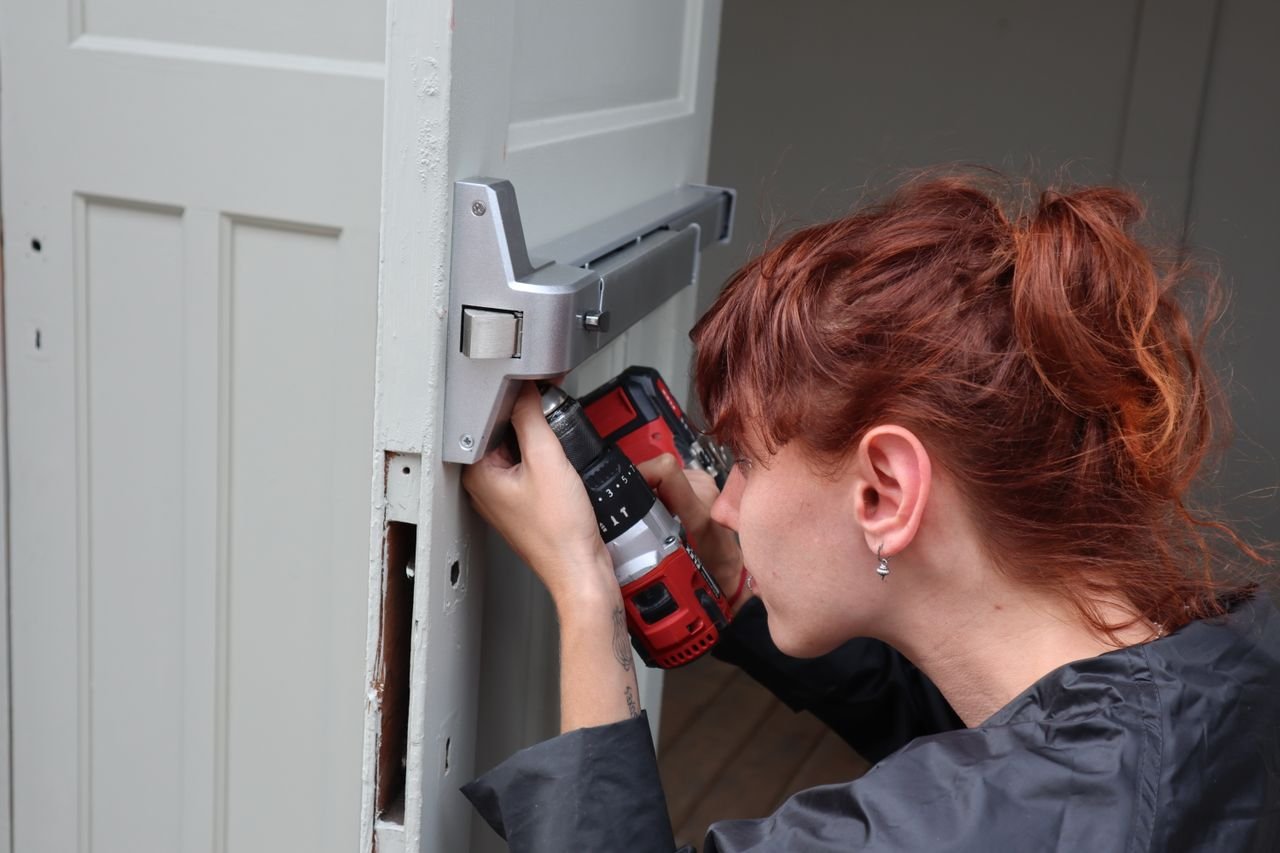
- Anything involving a multi-point locking mechanism or gearbox — these are fiddly, and getting them wrong can leave a door that won’t lock at all
- Structural timber repairs involving splicing in new wood at a rotten bottom rail
- Any full replacement, both for the building regulations paperwork and because a poorly fitted frame causes problems for years
- Fire door work on a flat entrance, full stop — this needs proper certification, not a best guess
Choosing a Door Repair Tradesperson in Acton Town
A few things I’d actually check, beyond just picking whoever answers the phone first:
- Ask directly whether they’re FENSA or CERTASS registered if the job involves full replacement. If they’re not, ask how building regulations compliance will be handled.
- Look for TrustMark registration — it’s the UK’s only government-endorsed quality scheme covering home improvement trades, and registered businesses are independently vetted on technical competence and trading practices.
- Get at least two quotes for anything beyond a simple hardware fix. Door repair pricing genuinely varies by tradesperson, and a second opinion sometimes reveals that what one company wants to fully replace, another can competently repair.
- Ask what happens if they open up the frame and find rot goes deeper than expected. A good tradesperson will give you a clear process for how that’s priced, rather than a vague “we’ll sort it.”
- For period doors specifically, ask to see previous joinery repair work, not just replacement installs — repairing old timber well is a genuinely different skill from fitting a new composite door.
Maintenance That Actually Prevents Repeat Callouts
- Repaint or re-varnish timber front doors every three to five years, paying particular attention to the bottom rail and the threshold, where water sits longest.
- Lubricate hinges and multi-point lock mechanisms on uPVC and composite doors roughly once a year with a silicone-based spray, not household oil, which attracts grit.
- Check and adjust the compression around the door seal seasonally — London’s timber doors especially will swell in winter and shrink back in summer, and a five-minute hinge adjustment twice a year avoids a much bigger fix later.
- Keep an eye on the threshold and any weep holes on uPVC doors clear of leaves and debris, particularly given how many mature street trees line the roads around Acton Park and the Common.
- Don’t ignore a letterbox draught. It’s cheap to fix now and genuinely adds up in heating costs across a London winter if left for years.
My Honest Verdict
For the majority of homes around Acton Town — and especially the Victorian and Edwardian stock near the station — repair is very often the right call, both financially and for keeping the property’s character intact, particularly if you’re anywhere near the Mill Hill Park conservation area.
If you’re in a flat, the calculation changes: fire safety compliance and freeholder consent become as important as cost, and that’s not a decision to make purely on a like-for-like price comparison.
FAQs
Do I need planning permission to replace my front door in Acton Town?
Usually not, provided the new door is similar in material and design to the existing one and your property isn’t covered by an Article 4 Direction. Given that parts of Acton Town sit within or near the Mill Hill Park and Acton Town Centre conservation areas, it’s worth checking your specific address against Ealing Council’s conservation area records before ordering.
How much does a typical door repair cost in this area?
Small mechanical repairs — a handle, a seal, a hinge — usually run £15–£120. Lock and gearbox repairs are typically £120–£250. Full replacement, installed, generally runs £450–£2,500+ depending on material and complexity, with London labour rates often landing at the upper end of national averages.
Is it worth repairing a Victorian front door, or should I just replace it?
In most cases, repair. Original Victorian and Edwardian doors are usually made from better timber than modern off-the-shelf replacements, and skilled joinery repair — splicing rot, re-hanging, draught-proofing — can extend their life for decades. Replacement generally only makes sense if rot has spread extensively through the frame itself.
Do I need a FENSA certificate for a door repair?
No — FENSA and building regulations certification apply to full replacement of a door into an existing opening, not to repairs. If you’re only fixing hardware, hinges, or having timber spliced and re-hung, no certification is required.
My flat’s entrance door needs work — who’s responsible? This depends on your lease and the building’s fire risk assessment. In blocks with shared common parts, the freeholder or managing agent, as the “responsible person” under fire safety regulations, generally holds the duty to maintain flat entrance doors, though leaseholders are often required to keep their own door in good repair under the terms of the lease. Check your lease and speak to the managing agent before arranging independent work.
How long does a typical door repair take? Simple mechanical fixes — a gearbox, a hinge, a seal — are usually done within an hour or two on-site. Timber door rehanging or splicing repairs typically take half a day to a full day depending on the extent of the rot. Full replacements usually take two to four hours for a straightforward like-for-like swap.
Final Thoughts
Doors in a place like Acton Town aren’t a uniform problem with a uniform answer, and that’s really the point of this guide. A Victorian front door on Mill Hill Road deserves a completely different conversation than a uPVC rear door on a 1990s conversion or a fire-rated flat entrance near Acton Gardens. The homeowners who get the best outcomes — and spend the least money over time — are the ones who diagnose the actual problem first, check what their conservation area status actually requires before assuming the worst, and bring in a tradesperson who’s honest about when a repair will genuinely hold and when it’s just delaying the inevitable.
About the Author
Author Bio: This guide was researched and written by a joinery and residential building specialist with over a decade of hands-on experience repairing and installing doors across West London’s period and modern housing stock, including extensive work in the Ealing borough. Their background combines direct trade experience — timber joinery repair, uPVC and composite door servicing, and building regulations compliance — with ongoing research into UK planning policy, conservation area regulations, and fire safety legislation as it applies to residential buildings.