


The first time I picked up a parawood dining chair in a warehouse showroom, I genuinely thought the sales tag had a typo. “Parawood” sounded like something synthetic a paraffin-adjacent composite, maybe, or a trademarked plastic blend. It took a supplier catalog and a fairly deep rabbit hole later to learn it’s real, solid timber, and that the story behind how it ended up in half the flat-pack and ready-to-finish furniture on the market is genuinely stranger than the name suggests.
Here’s everything worth knowing before your next furniture purchase.
Table of Contents
- What Parawood Actually Is
- The Strange History Nobody Mentions
- Parawood vs. Rubberwood vs. Malaysian Oak — Same Wood, Different Marketing
- Parawood’s Physical Properties
- Common Uses of Parawood
- The Honest Pros of Parawood
- The Honest Cons of Parawood
- Is Parawood Actually Eco-Friendly? The Nuanced Answer
- Parawood vs. Other Common Furniture Woods
- How to Care for Parawood Furniture
- How to Spot Real Solid Parawood When Shopping
- My Honest Verdict
- FAQs
- Final Thoughts
What Parawood Actually Is
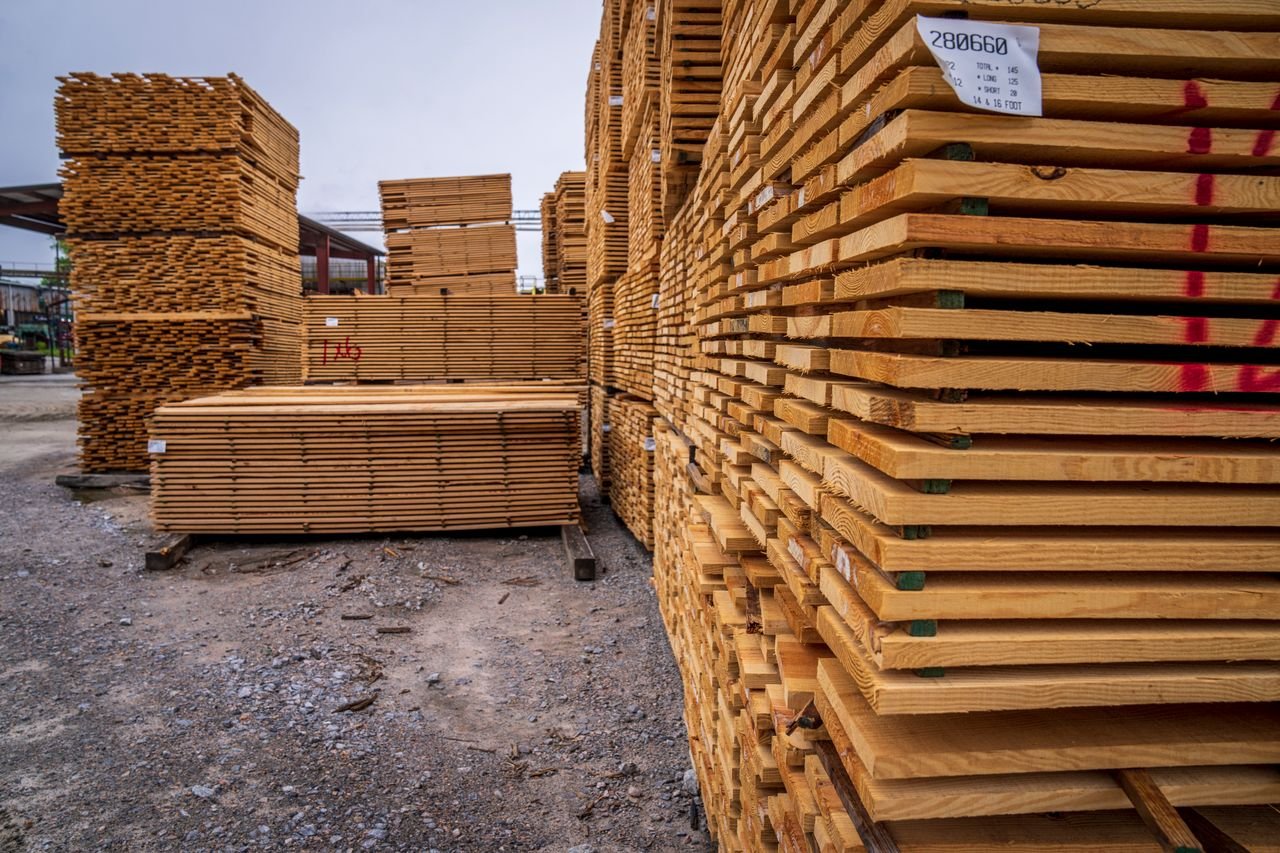
Parawood is timber harvested from the Pará rubber tree, Hevea brasiliensis — the same tree that produces natural latex and rubber. It’s a genuine hardwood, pale cream to light honey in color, with a fine, straight grain that’s become a staple in mid-priced and ready-to-finish furniture. It is not a synthetic material, not a composite, and not related in any way to actual rubber once it’s milled into lumber — the name refers entirely to the tree’s original purpose, not the finished wood’s properties.
Here’s the detail most furniture buyers never learn, and it’s genuinely the most useful thing to understand about this wood: rubber trees aren’t grown for timber first. They’re planted and tapped for latex for roughly 25 to 30 years, and only once the latex yield drops too low to be commercially worthwhile are the trees felled and milled into lumber, with new saplings planted in their place. This sequencing is the entire reason parawood exists as a furniture material in commercial volume — it’s essentially a second life for a tree that was already being farmed for something else. Parawood Americas describes this cycle plainly: trees are generally harvested once their latex-producing years are behind them, and the plantation is then replanted.
The Strange History Nobody Mentions
Most articles about parawood skip straight to pros and cons, which is a shame, because the backstory genuinely explains why this “Southeast Asian” wood comes from a tree that’s native to an entirely different continent.
Hevea brasiliensis is native to the Amazon basin in Brazil — the clue is right there in the species name. Rubber plantations didn’t exist in Malaysia, Thailand, or Indonesia at all until the late 1800s.
Only around 2,700 of those seeds actually germinated, but that was enough. Within a few decades, Southeast Asian rubber plantations had overtaken Brazil’s wild rubber industry entirely, which is the entire reason the global rubberwood and parawood furniture supply chain today runs almost exclusively through Thailand, Malaysia, Indonesia, and Vietnam rather than South America. It’s a strange bit of botanical history sitting quietly underneath an awful lot of flat-pack furniture, and I think it’s worth knowing before you write the wood off as some anonymous “plantation filler” material — it has a genuinely unusual backstory most buyers never hear.
Parawood vs. Rubberwood vs. Malaysian Oak — Same Wood, Different Marketing
This trips up a lot of shoppers, so it’s worth being direct about it: parawood, rubberwood, Hevea wood, plantation hardwood, and — somewhat misleadingly — “Malaysian Oak” all refer to the same species, Hevea brasiliensis. In 2002, Malaysia’s Ministry of Primary Industries specifically marketed the wood under the “Malaysian Oak” name to make it sound more premium to Western furniture buyers, despite the wood having no botanical relationship to actual oak whatsoever.
It isn’t. Different suppliers and regions favor different names for what is, underneath the marketing, identical timber.
Parawood’s Physical Properties
Parawood sits in the middle of the hardness spectrum for hardwoods — tougher than most softwoods, but softer than premium cabinet-grade species. According to data catalogued by The Wood Database and referenced across supplier documentation, parawood typically measures:
- Janka hardness: roughly 890–960 lbf
- Density: approximately 37 lb/ft³ (around 595 kg/m³) when dried
- Grain: straight, fine, and relatively uniform, with minimal figure or dramatic grain pattern
- Color: pale cream to light golden-brown, which darkens slightly with age and UV exposure
- Shrinkage: notably low compared to many tropical hardwoods, which makes it dimensionally stable once properly kiln-dried
That combination — decent hardness, low shrinkage, and a light, even color that takes stain and paint uniformly — is exactly why furniture manufacturers gravitated toward it for legs, frames, and structural components rather than just decorative use.
Common Uses of Parawood
Parawood shows up in a genuinely wide range of products, not just budget furniture:
- Dining tables, chairs, and bar stools — probably its single most common application
- Bed frames, bookcases, and dressers, particularly in the ready-to-finish and unfinished furniture segment
- Table and chair legs, sold separately to furniture makers and DIY builders
- Kitchenware — cutting boards, knife blocks, salad bowls, and serving trays, thanks to its tight grain and smooth finish
- Flooring and decorative wall paneling, though far less commonly than its furniture applications
- Toys and children’s furniture, where its durability and smooth, splinter-resistant surface are genuine advantages
- Plywood cores and engineered wood components, where it’s valued for consistency rather than visible grain
The Honest Pros of Parawood
It’s genuinely solid hardwood, not a synthetic substitute. For buyers comparing furniture that’s “solid parawood” against particleboard or MDF at a similar price point, real timber wins on longevity, repairability, and how it ages — assuming it’s properly finished and maintained.
It takes stain and paint exceptionally evenly. Because the grain is fine and consistent with minimal color variation, parawood is one of the more forgiving woods for DIY finishing projects. This is a big part of why it dominates the unfinished and ready-to-finish furniture segment.
It’s dimensionally stable once kiln-dried. Low shrinkage means parawood furniture is less prone to the cracking and joint separation that plagues furniture made from wetter, less carefully processed timber.
It genuinely repurposes a byproduct rather than requiring fresh logging of a tree grown purely for lumber. Whatever the more complicated sustainability picture (more on that shortly), it’s true that a rubber tree gets roughly three decades of latex production before it’s ever cut for wood — that’s a meaningfully different lifecycle than a tree felled purely for timber.
It’s genuinely affordable relative to premium hardwoods like walnut, cherry, or hard maple, without being a downgrade to engineered wood.
The Honest Cons of Parawood
Raw, untreated parawood is genuinely vulnerable to insects and fungal decay.
This isn’t a minor footnote — it’s the reason parawood furniture wasn’t widely commercially viable until plantations developed reliable chemical treatment and kiln-drying processes in the 1980s. Improperly treated or poorly dried parawood can develop mold, blue-stain fungus, or insect damage far more readily than denser hardwoods.
It’s not naturally water-resistant.
Rubberwood is not waterproof, and standing water or prolonged humidity exposure can damage the wood over time even with a decent finish.
Furniture pieces are often glued and finger-jointed from smaller boards,
Since individual rubber tree trunks don’t yield the wide, clear boards you’d get from a mature oak or walnut.
Adhesives and finishes can be a genuine formaldehyde and VOC concern, particularly in cheaper mass-market pieces. This isn’t unique to parawood — it applies to any engineered or glued-up wood product — but because parawood furniture so often involves finger-jointing and laminated panels, it’s worth specifically checking for CARB Phase 2 compliance or low-formaldehyde certification rather than assuming “solid wood” automatically means low-emission.
It’s softer than premium cabinet hardwoods. At roughly 900–960 lbf on the Janka scale, parawood will dent and scratch more readily than hard maple or white oak under genuinely rough daily use — dropped tools, dragged furniture, pet claws.
Quality varies enormously by supplier. Because “parawood” and “rubberwood” cover such a wide range of plantation sources and processing standards, a poorly kiln-dried or inadequately treated batch behaves very differently from a well-processed one, and this variance is honestly bigger than with more tightly regulated premium hardwoods.
Is Parawood Actually Eco-Friendly? The Nuanced Answer
This is where I think most parawood guides oversimplify things, so I want to give it real space rather than a one-line “yes, it’s sustainable” answer.
The case for parawood being genuinely eco-friendly is straightforward and largely accurate: a rubber tree spends 25–30 years producing latex before it’s ever cut for lumber, meaning the wood is essentially a second, useful output from a tree that was already being farmed. Before parawood became commercially popular, spent rubber trees were often simply left to rot or were burned, releasing their stored carbon rather than being converted into a durable product. Using the tree twice is a genuine improvement over that baseline.
But the fuller picture is more complicated, and it’s worth knowing before you assume every parawood label is an automatic sustainability win. As global demand for rubberwood furniture has grown, some environmental researchers — including analysis referencing The Nature Conservancy and National Geographic — have flagged that new rubber plantations are increasingly being established by clearing patches of virgin rainforest rather than simply replanting existing plantation land, and that the resulting monoculture plantations don’t replicate the ecological function of the forest they replace. It’s also worth knowing that the majority of rubberwood in the global supply chain is not independently FSC chain-of-custody certified, meaning the sustainability claim on a given piece of furniture often rests more on the material’s general reputation than on verifiable, audited sourcing for that specific batch of wood.
My honest take: parawood’s reuse-of-a-byproduct story is real and meaningfully better than felling old-growth hardwood purely for furniture. But “rubberwood” or “parawood” printed on a tag isn’t, by itself, proof of responsible sourcing. If sustainability is a genuine priority in your purchase rather than just a nice-to-have narrative, look specifically for FSC chain-of-custody certification on the piece, not just the species name.
Parawood vs. Other Common Furniture Woods
| Factor | Parawood | Red Oak | Hard Maple | Pine | MDF/Particleboard |
|---|---|---|---|---|---|
| Janka hardness (lbf) | ~890–960 | ~1,290 | ~1,450 | ~380–870 (varies by species) | Not applicable (engineered) |
| Real solid wood? | Yes | Yes | Yes | Yes | No — composite |
| Typical cost | Low–moderate | Moderate–high | High | Low | Very low |
| Grain character | Subtle, uniform | Pronounced, open grain | Fine, subtle | Visible knots common | None — no natural grain |
| Water resistance | Poor, unless sealed | Moderate | Moderate | Poor | Very poor — swells badly |
| Best for | Painted/stained furniture, legs, frames | Traditional furniture wanting visible grain | High-wear surfaces, cabinetry | Rustic or budget builds | Budget flat-pack, hidden panels |
| Repairable/refinishable | Yes | Yes, extensively | Yes, extensively | Yes, to a point | No |
The practical takeaway: parawood sits in a genuinely useful middle ground. It’s real, solid, refinishable hardwood — a meaningful step up from MDF or particleboard in longevity and repairability — while costing noticeably less than premium species like oak or maple. Where it loses out is against those harder, denser woods in raw durability and against nothing, because it isn’t actually competing with softwoods like pine on cost so much as offering a harder, more stable alternative at a similar price point.
How to Care for Parawood Furniture
- Wipe up spills promptly. Given parawood’s poor natural water resistance, standing liquid is genuinely the fastest way to damage a piece.
- Use coasters and placemats on tabletops, particularly for anything hot, since heat can affect both the finish and the wood underneath over repeated exposure.
- Dust regularly with a dry or barely damp cloth rather than soaking the surface during cleaning.
- Avoid placing parawood furniture in direct, prolonged sunlight, which will unevenly lighten or yellow the pale coloring over time.
- Re-oil or re-wax exposed wood surfaces periodically if the piece has an oil or wax finish rather than a hard lacquer, to maintain the moisture barrier.
- Keep humidity reasonably stable in the room where possible — like most solid wood, parawood will move slightly with seasonal humidity swings, and consistent conditions reduce joint stress over years of use.
How to Spot Real Solid Parawood When Shopping
A few practical checks:
- Read the material description carefully. “Solid parawood” should mean the structural components are genuine timber throughout. “Rubberwood solids and veneers” often means only certain parts — typically legs and frames — are solid, while larger flat surfaces are a veneer over an engineered core.
- Check the weight. Solid parawood furniture feels noticeably heavier and denser than comparable pieces built from MDF or particleboard with a wood-look laminate.
- Look at the end grain on legs or edges, if visible. Real solid wood shows genuine grain continuity; a printed or laminated surface won’t show consistent grain when you look at a cut edge.
- Ask about formaldehyde compliance for glued or engineered components, especially for children’s furniture, where indoor air quality matters more.
- Don’t assume “eco-friendly” marketing language means FSC-certified. If sourcing verification actually matters to your decision, ask the retailer directly whether the specific product carries FSC chain-of-custody certification, rather than relying on the general reputation of the species.
My Honest Verdict
Parawood earns its popularity honestly. It’s real, solid, workable hardwood that takes finishing beautifully, costs meaningfully less than premium cabinet species, and — when properly kiln-dried and treated — holds up perfectly well to normal household use for years. For painted furniture, unfinished DIY projects, table and chair legs, and everyday dining furniture, it’s a genuinely sound choice, not a compromise dressed up with a friendlier name.
Where I’d push back on the marketing: don’t buy it purely because a tag says “eco-friendly” without checking for actual certification if that matters to you, don’t expect it to shrug off water exposure the way a well-sealed hardwood might, and don’t assume every “rubberwood” listing means solid wood throughout — check the specific construction. Go in with realistic expectations on hardness and water resistance, and parawood is one of the more sensible mid-range hardwood choices on the market.
FAQs
Is parawood good quality, or is it a cheap wood? It’s genuine solid hardwood, not a downgrade material like particleboard or MDF. It’s more affordable than premium species like oak or walnut because rubber trees are widely plantation-grown across Southeast Asia, not because the wood itself is inferior — it’s simply softer and less dense than the priciest cabinet-grade hardwoods.
Is parawood the same as rubberwood? Yes. Parawood, rubberwood, Hevea wood, plantation hardwood, and the marketing term “Malaysian Oak” all refer to timber from the same tree, Hevea brasiliensis. The different names largely reflect regional marketing preferences rather than any difference in the wood itself.
Is parawood durable enough for a dining table? Yes, for normal household use. At roughly 900–960 lbf on the Janka hardness scale, it’s tougher than pine and holds up well to everyday dining use, though it will dent more readily than hard maple or white oak under genuinely heavy abuse.
Is parawood waterproof? No. Parawood is not naturally water-resistant, and prolonged exposure to moisture or standing liquid can damage both the finish and the wood beneath it. A quality sealed finish and prompt spill cleanup are both necessary for longevity.
Is parawood actually sustainable? Partly, and it depends on sourcing. The core premise — using a tree after its 25–30 year latex-producing life rather than burning or discarding it — is a genuine sustainability positive. Look for actual certification if verified sourcing matters to your purchase.
Final Thoughts
Parawood is one of those materials that suffers from an image problem it doesn’t really deserve. The name sounds synthetic, the backstory involving a rubber tree throws people off, and its ubiquity in budget furniture has made it an easy shorthand for “cheap” in some buyers’ minds. None of that reflects what it actually is: a genuine, workable, reasonably durable hardwood with a genuinely fascinating colonial-era backstory hiding underneath the flat-pack furniture aisle.
The smartest way to shop for it is the same advice that applies to buying any wood furniture: check the actual construction rather than trusting the species name alone, understand its real limitations around water and hardness before you commit it to heavy daily use, and don’t take sustainability marketing at face value without checking for genuine certification. Treated that way, parawood is a perfectly sensible, honest choice — not a wood you settle for, but one you choose deliberately once you understand what you’re actually getting.
About the Author
Author Bio: This guide was researched and written by a furniture materials researcher and former furniture retail buyer with over a decade of experience sourcing, specifying, and evaluating solid wood and engineered wood products for residential furniture lines. Their work focuses on translating supplier and manufacturer material specifications into clear, practical guidance for everyday furniture buyers, drawing on direct sourcing experience alongside ongoing research into timber science, sustainability certification, and furniture manufacturing practices. All botanical, historical, and material property claims in this guide were independently verified against supplier documentation, wood science references, and historical records at the time of publication.