


A locksmith friend of mine has a line he repeats to almost every homeowner who calls him after a break-in: “Your lock probably wasn’t the problem.” Most of the time, he’s right. The lock survived. The house didn’t.
That conversation changed how I think about home security, and it’s the reason this guide isn’t just “here are five locks to buy.” It’s about understanding what actually stops a break-in, what’s marketing, and where most people spend money in the wrong place.
Table of Contents
- Why Locks Are Still Your First Line of Defense
- Understanding Lock Grades: What ANSI Grade 1, 2, and 3 Actually Mean
- Deadbolts vs. Doorknob Locks: Why the Deadbolt Does the Real Work
- The Weak Point Nobody Talks About: Strike Plates and Door Frames
- Pick-Resistant and Bump-Proof Locks, Explained
- Smart Locks vs. Traditional Locks: An Honest Comparison
- Are Smart Locks Actually a Security Risk?
- How to Choose the Right Lock for Your Door
- Installation: DIY vs. Calling a Locksmith
- Beyond the Lock: What Else Actually Matters
- Where Lock Technology Is Heading
- Frequently Asked Questions
- Final Thoughts
Why Locks Are Still Your First Line of Defense
It’s tempting to assume burglars are methodical planners who study your schedule and defeat your security system. In reality, most are opportunists looking for the path of least resistance.
That last point matters more than people expect. Roughly 62% of burglaries do involve forced entry, per home invasion data from Get Safe and Sound, which means the physical strength of your lock and door frame genuinely matters for well over half of all attempts.
The practical takeaway: upgrading your locks isn’t about defending against a master criminal. It’s about removing your house from the “easy target” category, since research on convicted burglars has consistently shown that visible security measures are enough to make many of them move on to a different house entirely.
Understanding Lock Grades: What ANSI Grade 1, 2, and 3 Actually Mean
The American National Standards Institute, working with the Builders Hardware Manufacturers Association, tests locks for cycle life, impact resistance, and load strength, then assigns a grade from 1 to 3. Here’s what the numbers actually mean, based on ANSI grading specifications compiled by Acme Locksmith and a breakdown of grade differences from iveise:
| Grade | Deadbolt Cycle Test | Strike Impact Test | Typical Use | Should You Buy It? |
|---|---|---|---|---|
| Grade 1 | 250,000 cycles | 10 hammer strikes | Commercial buildings, increasingly available for residential entry doors | Best protection available; worth it for your front and back doors |
| Grade 2 | 150,000 cycles | 5 hammer strikes | Light commercial, quality residential entries | Solid minimum standard for any exterior door |
| Grade 3 | Lower cycle/impact minimums | Basic strike resistance | Builder-grade standard, interior doors | Avoid on exterior doors; it’s the bare legal minimum, not a security feature |
One important nuance: ANSI grades measure physical durability against brute force — cycles, strikes, and weight — not resistance to picking or bumping. A Grade 1 deadbolt can still use the same basic pin-tumbler cylinder as a Grade 3 one underneath, as noted in this grading explainer. Grade tells you how hard it is to kick or pry the lock apart. It doesn’t tell you how easy it is to pick. You need both pieces of information, which is why the next two sections matter just as much as the grade sticker.
Worth knowing: several sources note that insurers increasingly expect Grade 2 or better on exterior doors, and in some cases inadequate hardware has been cited as a factor in disputed claims, according to this compliance guide. It’s worth a quick call to your homeowner’s or renter’s insurance provider to ask what they actually require.
Deadbolts vs. Doorknob Locks: Why the Deadbolt Does the Real Work
If your exterior door only has a knob lock, you don’t really have a security lock you have a privacy latch. This is why every serious home security recommendation — and every ANSI Grade 1 or 2 hardware set worth buying — treats the deadbolt as the actual security device and the knob or lever as a secondary convenience latch.
A few details that matter more than people expect:
- Bolt throw length: Look for at least a 1-inch throw. Anything shorter gives an intruder less material to break through.
- Single-cylinder vs. double-cylinder: Single-cylinder deadbolts (key outside, thumb-turn inside) are standard and recommended by most fire codes for quick exit. Double-cylinder deadbolts (key on both sides) stop someone from reaching through a broken sidelight window to unlock it from inside, but they’re a fire-safety tradeoff — you need a key to get out, which is a real hazard in an emergency and restricted or banned in some jurisdictions.
The Weak Point Nobody Talks About: Strike Plates and Door Frames
This is the section I’d put at the very top if I thought more people would read it there, because it’s the single most underrated home security upgrade that exists.
Here’s the uncomfortable truth: in most kick-in break-ins, the lock never fails. The door frame does. Under the force of a kick, as explained by Ready Lock, a company specializing in strike plate reinforcement, the thin trim board simply splits and blows out, and it doesn’t matter how many deadbolts you’ve installed on the door if the frame around them fails first.
The fix is inexpensive and often overlooked: replace the standard strike plate with a reinforced box strike, and use 3-inch screws instead of the stock ¾-inch ones. Those longer screws bite through the door jamb and into the actual framing stud behind it, which distributes kick force across the house’s structure instead of a thin strip of trim, according to this breakdown of strike plate mechanics. Some homeowners go a step further and install a metal wrap-around jamb reinforcement kit, which protects the entire frame rather than just the strike area.
My honest verdict: if you can only make one security upgrade this month and your budget is under $30, skip the fancy smart lock and buy a reinforced strike plate with long screws instead. It’s genuinely one of the highest-value, lowest-cost security upgrades available, and almost nobody does it.
Pick-Resistant and Bump-Proof Locks, Explained
It requires minimal skill, which is part of why it became such a widely discussed vulnerability, as covered in this overview of bump key security.
Standard pin-tumbler locks — the kind on most builder-grade deadbolts — are broadly vulnerable to both picking and bumping. High-security cylinders address this with more complex internal mechanisms:
- Medeco locks use pins that must be raised to the correct height and rotated to a precise angle simultaneously, engaging a sidebar mechanism that a standard pick or bump key can’t manipulate.
- Mul-T-Lock and similar brands use comparable telescoping or dual-locking pin systems.
- Many high-security cylinders also add anti-drill pins — small hardened steel inserts that shatter drill bits rather than allowing a hole to be bored through the cylinder.
The honest caveat here, and it’s an important one: no lock is unpickable. Security researchers, including Marc Weber Tobias, have demonstrated that even Medeco’s well-regarded Biaxial cylinder can be vulnerable to advanced bumping and picking techniques under the right conditions, as documented on Lockwiki’s technical breakdown. What high-security cylinders actually buy you isn’t invincibility — it’s time and specialized skill.
My take after looking into this: for the average home, a good Grade 1 or 2 deadbolt with a reinforced strike plate solves the realistic threat model. High-security cylinders make the most sense for rental properties with high tenant turnover, home offices with sensitive documents, or anyone who’s had a key lost or stolen and doesn’t want to rekey every lock in the house.
Smart Locks vs. Traditional Locks: An Honest Comparison
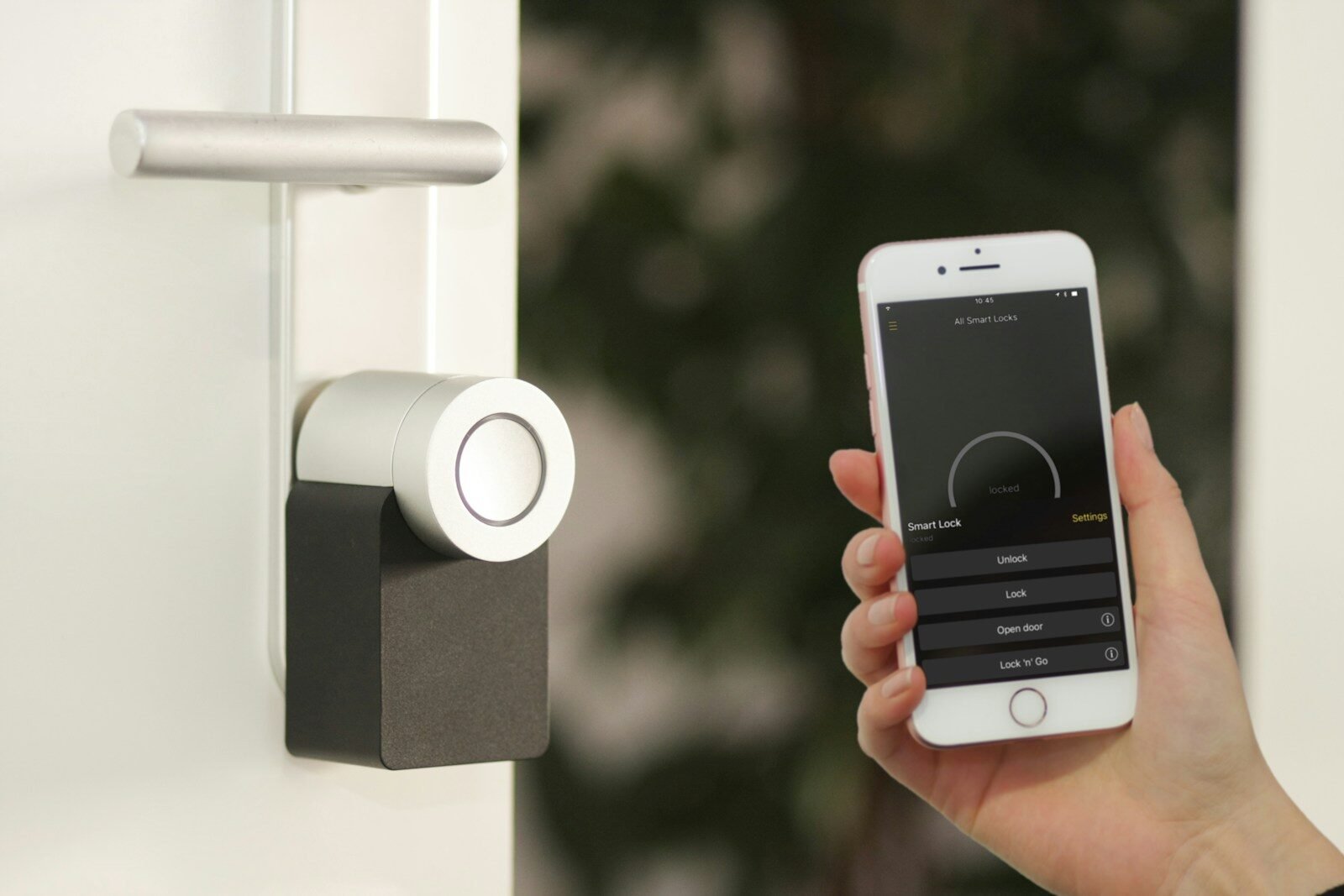
Smart locks have moved from novelty to mainstream fast — roughly 11% of U.S. households now use one, according to smart lock adoption data from GVLock.
| Lock | Type | Physical Grade | Standout Feature | Price Range | Honest Verdict |
|---|---|---|---|---|---|
| Schlage Encode Plus | Wi-Fi smart deadbolt | BHMA Grade 1 with built-in alarm | Apple Home Key support, strongest physical hardware in its class | $250–$300 | Best pick if physical security is your top priority — Schlage doesn’t compromise the lock body to add the tech. |
| Yale Assure Lock 2 | Bluetooth/Wi-Fi module, multiple unlock methods | BHMA Grade 2 | Broadest smart home compatibility (Alexa, Google Home, HomeKit, Matter) | $200–$280 | Best all-rounder for most households; slightly lower grade than Schlage but excellent ecosystem support, per Tom’s Guide testing. |
| Kwikset Halo Touch | Wi-Fi with fingerprint scanner | Grade 2/3 depending on model | Biometric access for up to 50 fingerprints | $130–$200 | Great value and genuinely convenient for families, though the plastic-heavy body feels less premium up close. |
| Level Lock / Level Lock Pro | Bluetooth, fits inside existing deadbolt | Uses your existing hardware’s grade | Completely invisible from outside — looks like a normal lock | $250–$330 | Ideal if you want smart features without changing your door’s appearance, but you’re limited by whatever grade deadbolt you already have installed. |
| Ultraloq U-Bolt Pro | Wi-Fi, fingerprint, keypad | Grade 2 | Strong value for multi-property or rental use | $150–$220 | Excellent price-to-feature ratio; app polish lags slightly behind Yale and Schlage. |
Real-world impressions worth knowing before you buy: reviewers consistently note that Schlage prioritizes the mechanical lock body first and treats the smart features as an addition, which shows in its BHMA Grade 1 rating — a genuine rarity in the smart lock category, according to testing by SmartLockMfg. Yale, by contrast, leads with software polish and cross-platform compatibility, which is why it tops several 2026 buying guides including Tom’s Guide’s roundup despite sitting one grade below Schlage.
Are Smart Locks Actually a Security Risk?
This deserves an honest, non-alarmist answer, because the coverage online swings between “totally fine” and “never connect a lock to the internet,” and neither extreme is accurate.
Real vulnerabilities have been found. A notable example: the Chirp Systems smart lock app used in many apartment buildings had a flaw serious enough to receive a 9.1 out of 10 severity score, potentially allowing unauthorized remote control of locks, according to security research covered by GVLock. Independent researchers have also documented issues in mainstream consumer brands — a 2025 academic paper on Master Lock’s smart locks (a brand under the same parent company as Yale and August) identified session-replay and access-control weaknesses that the manufacturer acknowledged and began addressing, as detailed in this USENIX security paper. Bluetooth itself has known structural weaknesses that make relay and interception attacks technically possible at close range, a point security researchers have raised for years, referenced in this analysis of Bluetooth lock risks.
Here’s the balanced read: these attacks generally require proximity, technical sophistication, or a specific known vulnerability in an unpatched device — not the profile of a typical opportunistic burglar walking down your street. The realistic risk for most households is less “sophisticated remote hack” and more mundane failure points: weak or reused PIN codes, never updating the lock’s firmware, or giving app access to a device you later lose. Multiple security reviews agree the practical fix is straightforward — keep firmware current, use a unique strong PIN rather than a birthday or address, enable two-factor authentication where offered, and choose brands with a track record of promptly patching disclosed vulnerabilities.
My honest verdict: a smart lock from an established brand (Schlage, Yale, Kwikset, August, Level) with good digital hygiene is not meaningfully riskier than a traditional lock for the average home, and the convenience — remote guest access, activity logs, no more hidden spare keys — is a real, tangible upgrade. A no-name budget smart lock from an unfamiliar brand with no update history is a different story, and that’s where the scarier headlines tend to come from.
How to Choose the Right Lock for Your Door
After going through all of this, here’s the decision process I’d actually walk a friend through:
Start with the door itself, not the lock.
A hollow-core door or a rotted frame undermines even the best lock. Solid-core or metal doors are worth prioritizing first.
Buy at minimum a Grade 2 deadbolt for every exterior door.
Grade 1 if your budget allows, especially for the front door.
Immediately upgrade the strike plate and screws, regardless of what lock you choose. This is the highest-value, lowest-cost step in this entire guide.
Decide if you actually want “smart” features, or if you’re buying one because it’s trendy. Remote access and activity logs are genuinely useful for rentals, multi-person households, or frequent guests; a household of two who never travels may get little practical benefit.
Match the lock to the door’s bore and backset measurements before ordering — this trips up more first-time buyers than anything else on this list.
Consider rekeying instead of full replacement if your existing hardware is already Grade 1 or 2 and you just want a fresh set of keys — most quality deadbolts can be rekeyed by a locksmith for a fraction of the cost of a new lock.
Installation: DIY vs. Calling a Locksmith
Standard deadbolt and smart lock installation is genuinely a manageable weekend project for most people — the tools involved are usually just a drill, a screwdriver, and the included template, and most manufacturers publish step-by-step installation guides. Where I’d draw the line and call a professional:
- Strike plate and frame reinforcement, especially if it involves a jamb wrap kit, since misaligned reinforcement can actually make a door harder to close properly.
- Any situation where the existing door or frame shows rot, splitting, or previous forced-entry damage — reinforcing a compromised frame without repairing it first won’t hold.
- High-security cylinder installation, since these often require precise fitting and, in some cases, licensed access to purchase the hardware at all.
- Multi-point locking systems on French or patio doors, which involve more complex hardware than a standard bore-and-backset deadbolt.
Beyond the Lock: What Else Actually Matters
A great lock on a weak door, or a fortress of a front door next to an unsecured back door, doesn’t add up to real security. A few adjacent upgrades worth knowing about, even though this guide is focused on locks specifically:
- Secure every entry point, not just the front door. Back doors account for roughly 22% of break-ins and often receive far less attention, per burglary statistics from Get Safe and Sound.
- Reinforce or laminate glass near door locks, especially sidelights, since a double-cylinder deadbolt only helps if the glass next to it can’t simply be broken to reach the thumb-turn.
- Visible security deterrents matter psychologically. Studies on convicted burglars have repeatedly found that visible cameras and alarm signage cause many to reconsider or move to a different target entirely.
- Don’t neglect hinges. On out-swinging doors, exposed hinge pins can sometimes be removed to lift the door free of its frame entirely, regardless of how good the lock is — non-removable pin (NRP) hinges close this gap cheaply.
Where Lock Technology Is Heading
A few trends worth watching if you’re planning to upgrade in the next couple of years rather than right now:
Matter-standard interoperability is becoming the norm rather than the exception, meaning locks from different brands will increasingly work seamlessly across Alexa, Google Home, and Apple Home without brand lock-in — a real improvement over the fragmented smart home landscape of a few years ago.
Apple Home Key and NFC-based unlocking are expanding beyond early adopters like Schlage and Level into more of the mid-range market, letting a phone or watch tap-to-unlock even with a dead battery, since the credential is stored in the device’s secure element rather than relying on live connectivity.
Biometric access is getting more sophisticated, moving from basic fingerprint pads toward 3D fingerprint sensors designed to resist spoofing with fake prints or photographs — a direct response to early biometric locks that were criticized for being easy to fool.
My honest prediction: within the next few product cycles, the “physical security first, smart features second” approach that Schlage currently champions is likely to become the industry standard rather than a differentiator, as more manufacturers realize that a beautifully designed app means nothing if the underlying hardware is Grade 3.
Frequently Asked Questions
Is a smart lock actually more secure than a traditional deadbolt?
Not automatically. Physical security still comes down to the ANSI grade of the hardware itself. A Grade 1 smart lock like the Schlage Encode Plus is more secure than a cheap traditional Grade 3 deadbolt, but a low-grade smart lock isn’t inherently safer than a solid traditional one — it just adds convenience features.
Do I need a double-cylinder deadbolt?
Only if you have glass near your door lock that someone could break to reach a thumb-turn, and even then, check local fire codes first — some jurisdictions restrict or prohibit them because they can trap occupants during an emergency if the key isn’t readily accessible.
How often should I rekey my locks?
Anytime you move into a new home, after losing a key, after a roommate or tenant moves out, or after any repair person has had unsupervised access to a spare key. Many Grade 1 and 2 deadbolts can be rekeyed relatively cheaply rather than fully replaced.
Are bump-proof locks worth the extra cost for an average home?
For most households, a Grade 1 or 2 deadbolt paired with a reinforced strike plate covers the realistic threat. High-security bump-resistant cylinders make more sense for rentals, businesses, or anyone with a specific reason to worry about unauthorized key duplication.
What’s the single cheapest security upgrade with the biggest impact? Replacing your existing strike plate screws with 3-inch screws that reach the framing stud. It costs under $15 in most hardware stores and directly addresses the way most forced-entry break-ins actually succeed.
Can burglars really pick a lock in seconds like in movies? Rarely, for a genuinely locked, quality deadbolt. Real lock picking takes practice and specific tools, and most convicted burglars in surveys admit they avoid picking entirely in favor of unlocked doors, weak frames, or unattended windows — the boring stuff, not cinematic lock-picking.
Final Thoughts
If there’s one thing I’d want someone to walk away with, it’s this: the lock itself is only one part of a system, and it’s often not even the weakest part. A Grade 1 deadbolt screwed into a strike plate held by two short screws is, functionally, a Grade 3 door. Start with the frame, buy at least Grade 2 hardware for every exterior door, decide honestly whether smart features fit how you actually live, and treat high-security cylinders as a tool for specific situations rather than a default requirement. None of this makes a home unbreakable — nothing does — but it moves your house solidly out of the “easiest target on the street” category, which, based on how most burglaries actually happen, is most of what good security is really about.
About the Author
Marcus Webb is a home security researcher and writer who covers residential hardware, lock technology, and physical security standards.He writes to help homeowners tell the difference between security upgrades that genuinely reduce risk and features that just look reassuring on a product box.