




The first sleigh bed I ever helped someone choose wasn’t for a grand primary suite it was for a 10-by-11-foot studio bedroom, and the buyer was convinced a curved wood headboard would swallow the room whole. It didn’t. What actually happened is that the low, rounded lines made the space feel finished instead of cramped, in a way a flat platform frame never had. That’s the thing about sleigh beds people underestimate: the silhouette does a lot of visual work, for better or worse, depending on how you match it to the room.
This guide walks through what actually separates one sleigh bed from another, what they cost in 2026, and the buying details that matter more than the finish color ever will.
Table of Contents
- What Actually Makes a Bed a “Sleigh Bed”
- Sleigh Bed Styles to Know
- Materials: What They’re Made Of and Why It Matters
- The Real Benefits of a Sleigh Bed
- Sizing and Fit: Which Size for Which Room
- Do You Actually Need a Box Spring?
- What Sleigh Beds Really Cost
- Design Ideas by Bedroom Style
- Buying Tips: What to Actually Check Before You Buy
- Common Mistakes
- Maintenance and Care
- Where Sleigh Bed Design Is Heading
- FAQs
- Final Thoughts
- About the Author
What Actually Makes a Bed a “Sleigh Bed”
A sleigh bed is defined by one detail, not a whole style: the head and footboard curve or scroll outward and slightly downward, echoing the shape of a horse-drawn sleigh or, if you trace it back far enough, an ancient Greco-Roman couch. Everything else about the bed can vary wildly.
It comes directly from the French Empire style that took hold under Napoleon in the early 1800s, a Neoclassical movement that borrowed heavily from the curved, sweeping furniture forms depicted in ancient Roman and Greek art. Napoleon reportedly liked the look enough to have it applied to his own beds, and the style spread from France into America not long after, where it merged with the Greek Revival aesthetic already popular at the time.
What I find genuinely useful about knowing this history isn’t trivia value — it’s that it explains why sleigh beds still read as “classic” even in a stripped-down modern version. The curve itself is doing 200 years of design work before you’ve added a single throw pillow.
Sleigh Bed Styles to Know
Modern sleigh beds split into a handful of distinct categories, and mixing them up is the single most common reason people end up disappointed with an online purchase.
Traditional wood sleigh beds
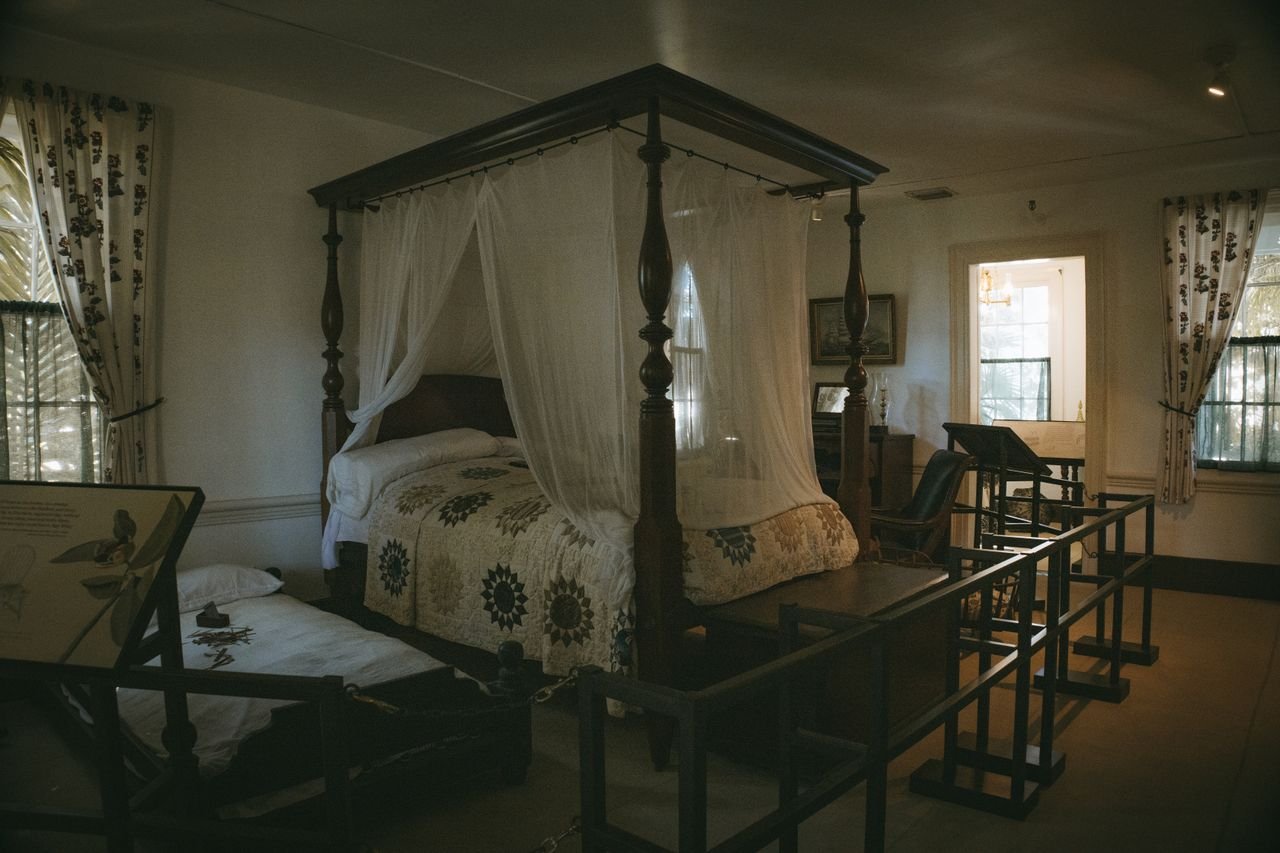
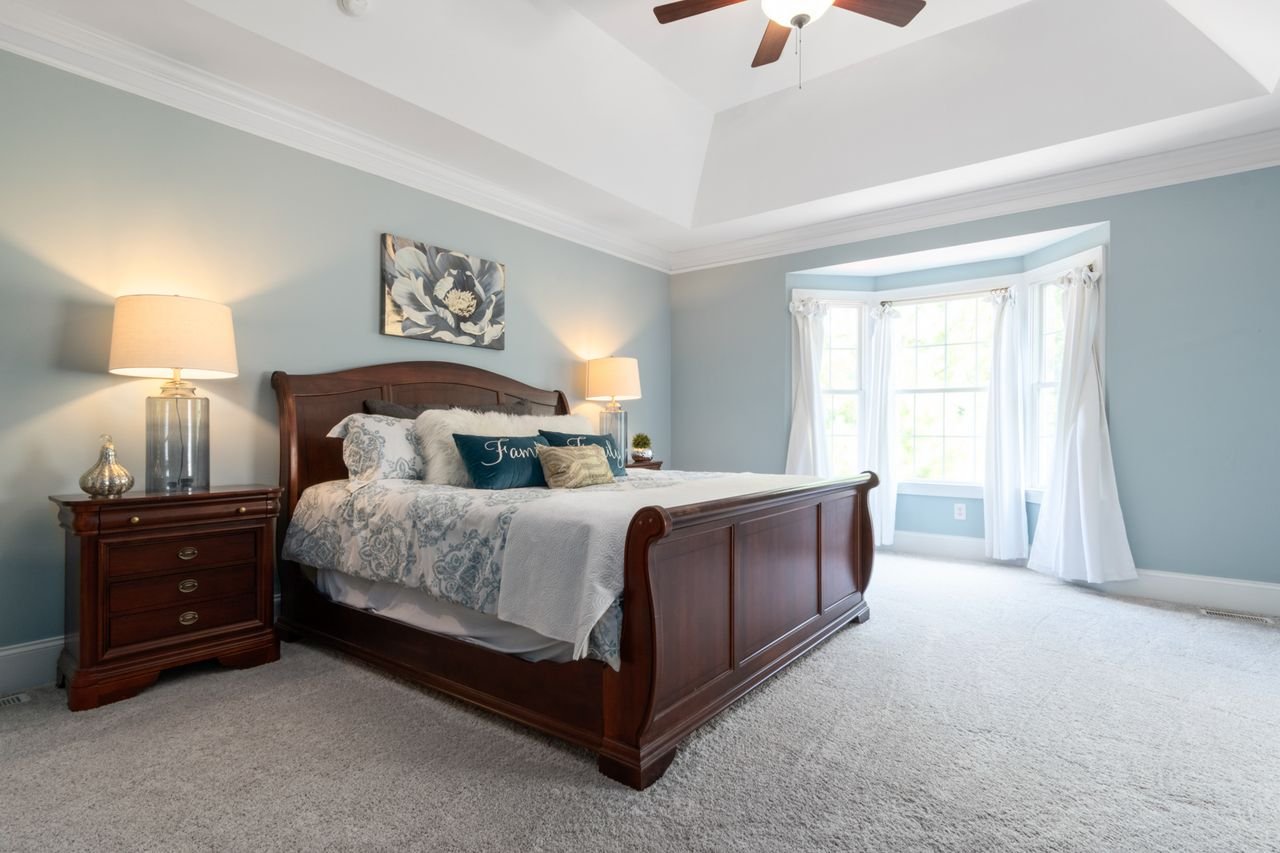
Are the style most people picture first: solid mahogany, cherry, or oak with a tall, deeply scrolled headboard and matching footboard. These read as formal and substantial, and they’re heavy enough that two people should plan on handling assembly.
Upholstered sleigh beds
Trade solid wood curves for a padded, fabric-wrapped frame — often velvet, boucle, linen, or faux leather over a foam-filled shape.
Low-profile (platform) sleigh beds
Keep the curved silhouette but drop the frame height dramatically, sitting closer to the floor in a style that’s become one of the defining bed shapes of 2026, especially in Japandi-influenced and minimalist bedrooms. This is the category to look at if you love the curve but not the bulk.
Storage sleigh beds build drawers into the base, which raises the mattress height noticeably — typically 14 to 20 inches off the floor instead of the standard 8 to 11 — in exchange for genuinely useful under-bed storage in a room without a dresser to spare.
Painted and farmhouse sleigh beds apply the same curved silhouette in painted wood or a distressed finish, which reads considerably more casual than a dark, high-gloss traditional frame.
| Style | Visual weight | Typical use case | Watch out for |
|---|---|---|---|
| Traditional wood | Heavy, formal | Primary suites, larger rooms | Can overwhelm low ceilings or small footprints |
| Upholstered | Soft, plush | Rooms wanting warmth and a literal backrest | Fabric shows wear faster than wood; harder to clean |
| Low-profile platform | Light, modern | Small bedrooms, minimalist or Japandi rooms | Less under-bed clearance for storage |
| Storage | Heavy, functional | Rooms without space for a separate dresser | Raises mattress height; harder to make the bed |
| Painted/farmhouse | Casual, light | Cottage, coastal, farmhouse interiors | Painted finishes chip more visibly than stain |
My honest verdict: if you’re buying online without seeing the piece in person, the low-profile and upholstered categories are the safest bets, because a small curve difference matters less when the frame is already visually light. Traditional carved wood sleigh beds are where photos most often oversell the piece — the scale reads very differently in a real room than in a styled product shot.
Materials: What They’re Made Of and Why It Matters
Wood species affects more than color. It affects how the bed sounds when you sit on the edge of it, how it handles humidity swings, and how visible dents and scratches will be a decade from now.
| Material | Character | Best for |
|---|---|---|
| Oak | Tight grain, very durable, takes stain evenly | Traditional and transitional rooms |
| Cherry/Mahogany | Rich, dark tones; classic Empire-style look | Formal primary suites |
| Walnut | Warm, contemporary tone without staining | Modern and transitional spaces |
| Hickory | Rustic, highly durable, pronounced grain | Farmhouse and lodge-style rooms |
| Pine | Lighter, more affordable, softer | Budget-friendly and cottage styles |
| Engineered wood/veneer | Real wood surface over a composite core | Budget or humid-climate rooms |
| Upholstery (velvet, boucle, linen, faux leather) | Soft, tactile, wide color range | Modern and glam styles |
Amish and small-shop furniture makers tend to offer the widest real hardwood selection — walnut for a contemporary feel, hickory for rustic warmth, and elm for a more unusual feathery grain texture that takes darker stains particularly well — which is worth knowing if a big-box retailer’s finish options all start to look the same after enough scrolling.
The Real Benefits of a Sleigh Bed
Beyond the obvious style appeal, there are a few practical advantages that don’t get talked about enough.
It’s structurally self-contained. Unlike a headboard-only frame that has to be bolted to a separate metal rail system, a true sleigh bed’s head and footboard are part of one connected frame, which generally means less rattling and shifting over years of use.
It doubles as a backrest. Especially with upholstered versions, the footboard-free or low-footboard designs let you actually lean against the headboard to read or work from bed — something a decorative-only headboard often can’t do comfortably.
It’s genuinely sturdy. Manufacturer weight ratings for modern sleigh-style platform frames commonly land between 600 and 1,000 pounds, well above what a standard metal frame with a mattress and two adults typically needs.
It has real resale and longevity value. Solid wood sleigh beds, particularly from established furniture makers, hold value on the secondhand market in a way that particleboard bed-in-a-box frames simply don’t — a well-kept vintage Ethan Allen or Restoration Hardware sleigh bed can still fetch a meaningful percentage of its original retail price years later.
It photographs and anchors a room. For anyone who treats their bedroom as a design centerpiece rather than a purely functional space, the curved silhouette gives a room an obvious focal point without needing art or an accent wall to do the same job.
Sizing and Fit
Standard US mattress dimensions don’t change based on bed style, but headboard height and footboard depth do — and that’s where a sleigh bed eats more visual and physical room than a simple platform frame.
| Size | Mattress dimensions | Recommended minimum room size |
|---|---|---|
| Twin | 38″ x 75″ | 7′ x 10′ |
| Full | 54″ x 75″ | 9′ x 10′ |
| Queen | 60″ x 80″ | 10′ x 10′ |
| King | 76″ x 80″ | 12′ x 12′ |
| California King | 72″ x 84″ | 12′ x 12′ (longer, narrower footprint) |
Headboard height varies more with sleigh beds than with almost any other style. Traditional sleigh headboards commonly reach around 59 inches, while low-profile versions sit closer to 44 inches — a difference that matters enormously if your headboard wall has a window, sconce, or sloped ceiling to work around. Measure that wall before you fall in love with a tall traditional frame.
Mattress height off the floor is the other detail people skip. Most solid wood sleigh beds sit the mattress 8 to 11 inches up; low platform versions drop closer to 4½ inches; storage sleigh beds push it up to 14–20 inches.
Do You Actually Need a Box Spring?
The honest answer is: it depends entirely on how the specific bed is built, and this is where a lot of online reviews contradict each other for good reason — they’re describing different frames.
Older, traditional sleigh bed designs were often built with just side rails and minimal center support, expecting a box spring to do the structural work of holding the mattress flat. If you buy a vintage or antique-style sleigh bed like this, an innerspring mattress on a box spring is still usually the right call, and some mattress warranties specifically require a box spring or approved foundation to stay valid.
Most sleigh beds made in the last several years are a different animal. They ship with a dense slat kit — commonly a dozen or more plywood or solid wood slats plus center support legs — engineered specifically to support memory foam and hybrid mattresses without any box spring at all.
My rule of thumb: check the slat spacing before you assume either way.
What Sleigh Beds Really Cost
Price ranges vary more with brand and construction quality than with size, which surprises a lot of first-time buyers.
| Tier | Typical price (queen) | What you’re getting |
|---|---|---|
| Budget | $250–$700 | Engineered wood or metal frame, faux leather or basic fabric, assembly required |
| Mid-range | $800–$2,000 | Solid wood or better-quality upholstery, name-brand retailers like Wayfair and Pottery Barn |
| Premium | $2,000–$4,500+ | Established furniture brands like Ethan Allen or Restoration Hardware, kiln-dried solid hardwood, tighter joinery |
| Custom/Amish | $1,800–$4,000+ | Made-to-order solid hardwood, choice of species and finish, white-glove delivery |
King-size frames typically run 20–40% more than queen equivalents in the same collection, mostly because footboard and headboard material scales up along with mattress width.
What actually moves the price, beyond size:
- Solid wood vs. veneer. A queen frame in true solid mahogany can cost two to three times its engineered-wood equivalent in the same silhouette.
- Upholstery grade. Genuine leather and higher thread-count performance fabrics add several hundred dollars over base polyester blends.
- Included hardware. Beds that include a full slat kit and center support legs cost more up front but save you the $150–$300 you’d otherwise spend on a separate foundation.
- Delivery and assembly. Solid wood sleigh beds are genuinely heavy — white-glove delivery with in-home setup is worth budgeting for rather than treating as an optional upsell.
Design Ideas by Bedroom Style
Traditional or French chateau. Lean into the history dark mahogany or cherry, a tall scrolled headboard, brass or bronze hardware, and layered linens in cream or soft gold.
Modern minimalist. A low-profile platform sleigh bed in pale oak or a matte upholstered neutral keeps the curve without the visual weight — pair it with simple, unfussy bedding and let the silhouette be the only ornamentation in the room.
Farmhouse. A painted or hickory sleigh bed with a slightly distressed finish reads warm and lived-in rather than formal, especially paired with woven textures and a mix of matte metal hardware finishes.
Coastal. Whitewashed or pale wood sleigh frames, kept low-profile, avoid the “heavy furniture” trap that coastal bedrooms are usually trying to escape — save the curve for the headboard only and skip a matching tall footboard.
Small bedrooms.A lighter wood tone or upholstered frame in a room-matching neutral visually recedes far more than a dark, high-contrast traditional frame. A low-profile silhouette with a shorter headboard also keeps sightlines open across the room, which matters more in a small footprint than the headboard height itself.
Buying Tips
A few details matter more than they get credit for when you’re comparing listings:
- Joinery type. Mortise-and-tenon or dowel joints, ideally reinforced with corner brackets, hold up to years of daily stress far better than staples or basic screw-and-cam construction hidden under upholstery.
- Slat count and spacing. More slats with tighter spacing means better long-term mattress support and less sagging, particularly for memory foam.
- Center support legs. For queen and larger frames especially, a center support beam with its own legs — not just perimeter rails — prevents the classic middle-of-the-bed sag over time.
- Stated weight capacity. Don’t assume; check the actual rated number, especially for upholstered frames on a metal sub-frame rather than solid wood.
- Real photos vs. rendered images. Search the model name plus “review photos” before buying anything upholstered online — fabric color and texture shift more than people expect between a listing photo and daylight in your own room.
- Footboard height, if you sit on the edge of the bed. A tall traditional footboard can genuinely get in the way of putting on shoes or reaching under the bed; a low-profile or footboard-free design avoids this entirely.
Common Mistakes
- Buying a tall traditional headboard for a room with a low ceiling or a window behind the bed. Measure the wall, not just the floor space, before ordering.
- Assuming every sleigh bed skips the box spring. Older or more traditional constructions often still need one — check the specific listing rather than going by general “sleigh beds don’t need a box spring” advice.
- Underestimating delivery logistics. Solid wood queen and king frames can weigh well over 150 pounds in pieces; confirm whether delivery includes carrying it upstairs and assembling it, especially in a walk-up apartment.
- Matching wood tone but ignoring style era. A modern low-profile platform sleigh bed next to ornately carved traditional nightstands tends to look like a mismatched showroom floor rather than an intentional room.
- Skipping the return policy check on upholstered pieces. Fabric beds are the hardest furniture category to return once assembled — confirm the window and condition requirements before you build it.
Maintenance and Care
Solid wood frames need very little upkeep beyond an occasional dusting and a wood-appropriate polish every year or two to keep the finish from drying out, especially in low-humidity winter climates. Avoid placing a wood sleigh bed directly against a cold exterior wall without a gap, since sustained temperature and humidity differences can encourage warping over years.
For any bed using a slat foundation, periodically check that slats haven’t shifted out of their brackets, particularly after moving the bed or after heavier-than-usual use — a single displaced slat is a common, easily fixed cause of a sudden new creak or soft spot.
Where Sleigh Bed Design Is Heading
A few shifts worth watching if you’re furnishing for the long term rather than just the next season:
The curve is getting quieter. Instead of the deep, ornate scrolls of a classic Empire reproduction, current sleigh silhouettes use a smaller, more restrained curve in lighter materials, reading as a subtle nod to the traditional shape rather than a full historical statement piece.
Low-profile is winning over tall traditional. The platform-height sleigh bed has moved from a niche modern option to arguably the dominant version of the style, driven by smaller urban bedrooms and a broader shift toward grounded, close-to-the-floor furniture silhouettes.
Testing and comparison content is getting more rigorous. Buying guides are increasingly built around actually assembling and living with multiple frames side by side rather than summarizing spec sheets, comparing real curve depth, slat quality, and assembly clarity across competing low-profile models rather than taking manufacturer claims at face value — a trend I’d like to see more of across furniture shopping generally, since photos alone have never told the whole story on a piece this size.
Mixed-material frames are increasing. Rather than committing to all-wood or all-upholstered, more current designs pair a wood-framed base with an upholstered headboard, or vice versa, splitting the difference between warmth and easy maintenance.
FAQs
Are sleigh beds too heavy or formal for a small bedroom? Not inherently — a low-profile or upholstered sleigh bed in a light, room-matching tone reads far softer than a dark traditional carved frame, and the curved silhouette can actually make a small room feel more finished than a plain rectangular platform bed does.
Do sleigh beds work with adjustable bed bases? Generally no, or only with significant modification — the enclosed footboard and fixed frame height on most sleigh beds aren’t designed to accommodate the moving parts of an adjustable base. If an adjustable base is a priority, look specifically for sleigh-style headboards sold separately from a standard adjustable frame rather than a full enclosed sleigh bed.
How long does a good solid wood sleigh bed actually last? With reasonable care, a solid hardwood sleigh bed from an established maker can easily last 25 years or more — it’s one of the few furniture categories where buying secondhand from a reputable brand is often a genuinely smart move rather than a compromise.
Can two people assemble a sleigh bed alone? For upholstered or engineered-wood frames, usually yes. For solid hardwood queen and king frames, plan on needing help or professional assembly — the headboard and footboard alone can each weigh 50-plus pounds, and aligning the frame square without a second set of hands is genuinely difficult.
Is a sleigh bed a good investment compared to a standard platform bed? If you value the style and plan to keep it for years, yes — solid wood sleigh beds hold resale value better than most furniture categories. If you move frequently or prioritize easy disassembly, the weight and bulk of a traditional sleigh bed can become a genuine logistical downside worth weighing against a simpler frame.
Final Thoughts
A sleigh bed is one of the rare pieces of furniture that’s been essentially unchanged in concept for two centuries and still doesn’t feel dated — which says less about nostalgia and more about how well a simple curved silhouette actually works in a bedroom. The mistakes people make with them are almost never about the style itself; they’re about buying the wrong version of it for their specific room, ceiling height, and daily habits.
If I had one piece of advice for anyone shopping for their first one, it’s the same thing that studio-apartment buyer taught me: measure the actual wall and walk the actual floor space before you fall for a photo.Your job is just making sure the scale is right for the room it’s landing in.
About the Author
The analysis here draws on current 2026 retail pricing, manufacturer construction specifications, and documented furniture history, cross-checked against real listings and buyer feedback rather than showroom marketing alone.