



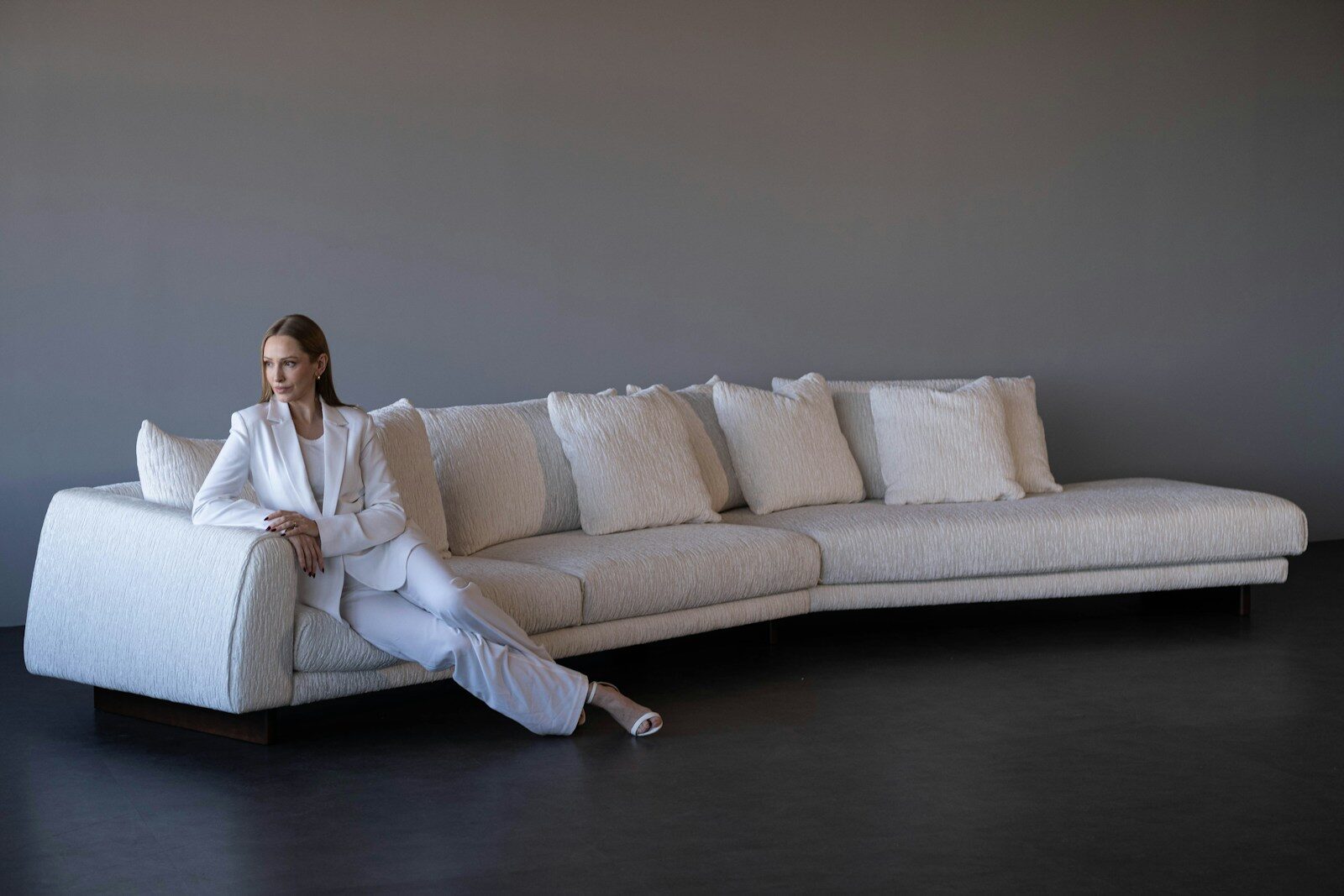
There’s a specific type of sofa that has quietly redefined what living rooms look like in the 2020s low-slung, deeply cushioned, upholstered in warm earthy neutrals, with a silhouette that seems to belong simultaneously in a Marrakech riad and a minimalist Copenhagen apartment. If you’ve been scrolling through interior design accounts lately and kept pausing on the same kind of couch without knowing exactly what to call it, you’ve been looking at the dune aesthetic.
The term “dune couch” refers both to a design sensibility soft, organic, sand-inspired and to specific product lines from furniture brands that have leaned fully into this direction. Understanding the difference matters before you spend money, because the style has become popular enough that it now spans a spectrum from genuinely considered furniture design to cheap imitations that borrow the visual language without the substance behind it.
This guide covers everything: what makes a dune couch what it is, how to evaluate one properly, which materials actually hold up over time, and how to integrate this style of seating into different kinds of living spaces. Whether you’re starting from scratch or trying to identify whether the couch you’ve been eyeing is worth its price tag, there’s something useful ahead.
What Exactly Is a Dune Couch?
The name comes from the visual language, not a single manufacturer. Dune-style sofas take their design cues from natural landscape forms the gentle undulation of sand, eroded stone, coastal terrain. In practical furniture terms, this translates to several recurring characteristics:
Rounded, organic silhouettes. Hard angles and squared-off edges are deliberately avoided. The arms, back, and even the legs (when visible) tend toward curves rather than right angles. The whole piece has a sense of softness even before you’ve touched it.
Low profiles. Dune couches sit closer to the floor than a conventional sofa, typically between 30–40cm seat height. This creates the deeply relaxed, horizontal feeling that photographs so well and feels so good once you’ve surrendered to it though it also means getting up requires slightly more effort, a tradeoff worth knowing about in advance.
Deep seating. Seat depth on a dune-style sofa usually runs 60–80cm, compared to 50–60cm on a conventional sofa. That extra depth is what gives dune couches their signature “sink in and stay” quality. It also means you’ll want to sit properly into the back, which some people find uncomfortable without a scatter cushion for lower back support.
Neutral, textured upholstery. Oatmeal, sand, warm cream, terracotta, dusty rose, mushroom — the colour palette is deliberately earthy and soft. Chunky boucle, textured linen, brushed cotton, and velvet in matte tones are the dominant fabrics. High-gloss or synthetic-looking materials are antithetical to the aesthetic.
Modular or sectional configurations. Many dune couches are designed as modular systems — individual pieces that can be arranged and rearranged. This suits the organic, non-prescriptive nature of the design: there’s no single “correct” configuration, just what works in your space.
Why the Dune Aesthetic Took Over (And Why It’s Not Going Away)
Design trends don’t emerge from nowhere. The dune sofa’s ascent over the past four years is directly connected to several shifts in how people think about home, comfort, and visual culture.
The pandemic years accelerated a reorientation toward the home as sanctuary rather than showcase. People stopped wanting their living rooms to look impressive to visitors and started wanting them to feel genuinely good to be inside. Dune couches are the furniture embodiment of that shift they’re designed for feeling, not performance.
At the same time, the broader movement away from harsh minimalism (the cold, sharp, grey-and-white aesthetic that dominated from roughly 2012 to 2020) toward what designers now call “warm minimalism” or “organic modernism” created a perfect context for dune furniture. These sofas are minimal in the sense that they’re undecorated and uncomplicated no tufting, no visible buttons, no fussy piping but they’re warm in their materials, curves, and palette.
Social media accelerated the diffusion of this aesthetic in ways that earlier furniture trends never experienced. A single well-photographed living room with a boucle dune sofa and warm evening light can reach millions of people. That kind of visual transmission compressed what might have been a gradual shift into something closer to a collective decision.
In 2026, dune couches are no longer a trend announcement they’re a settled fixture of contemporary interior design. Which is both good (they’re easier to find and buy than three years ago) and challenging (the market now includes a significant number of aesthetically convincing imitations that won’t hold up over time).
Frame Construction: The Invisible Factor That Determines Everything
The visual language of a dune couch is easy to replicate. The underlying construction that determines whether it remains comfortable and structurally sound after five years of daily use is not.
Hardwood frames are the benchmark. Kiln-dried solid hardwood beech, birch, oak doesn’t warp, crack, or loosen over time the way cheaper alternatives do. Quality brands will specify the frame material. If a listing says “wood” without further detail, assume the worst and either ask or move on.
Engineered wood (plywood and MDF) is not inherently inferior as a frame material when used correctly. Quality furniture-grade plywood has excellent structural properties and is widely used in high-end sofas. The problem is that MDF and low-grade particle board common in budget furniture absorb moisture, degrade at joints, and break down much faster under sustained weight. The distinction between “plywood” and “particle board” is meaningful; insist on specifics.
Joint quality matters as much as the wood used. Corner blocks, dowel joints, and mortise-and-tenon construction are all signs of quality framing. Staple-only construction is a warning sign that the frame will loosen over time, particularly at the corners where stress concentrates.
Seat suspension is where many dune couches underperform relative to their price. Eight-way hand-tied springs are the gold standard each spring individually tied in eight directions, creating even, responsive support across the seat. Sinuous (S-spring) wire systems are adequate when properly tensioned and used at sufficient density. Webbing-only suspension is acceptable in low-use furniture but compresses and sags with regular use. Know which system you’re buying before committing.
Cushion Fill: What Makes a Dune Couch Actually Comfortable
The deep, generous cushions of a dune couch are its defining sensory feature. What they’re filled with determines whether that plush appearance translates into years of comfortable seating or a gradual, disappointing deflation.
High-resilience (HR) foam is the minimum standard for seat cushions worth buying. It compresses under weight and returns to its original shape reliably which is what “resilience” means in this context. The higher the density (kg/m³), the better. Look for 30–40kg/m³ in seat cushions. Anything lower will show compression and body impressions within months.
Foam with fibre wrap adds a softer layer over the HR foam core, creating the gentle rounded appearance that characterises quality cushions rather than the hard-edged look of foam alone. The fibre wrap compresses gradually over time as it lofts, which is why new sofas often feel firmer than they photograph — they need breaking in.
Feather and down fill is luxuriously soft and has the characteristic plush appearance that makes dune couches photograph so beautifully. The tradeoff is maintenance: feather cushions require regular plumping (daily in heavy use situations, weekly at minimum) to maintain their shape. A feather-filled sofa that’s left alone looks deflated within days. If you want the look without the upkeep, a foam-and-fibre alternative is more practical.
Foam-down combinations a foam core encased in a feather-and-down layer — are the most popular solution in the £1,000–£3,000 price range for a reason. They deliver a softer, more upscale feel than foam alone while being significantly more maintenance-free than pure feather fill.
Fabric Choices: Boucle vs. Linen vs. Velvet
The upholstery is the most visible element of a dune couch and the choice that most directly communicates the aesthetic. Each main option has real-world implications beyond appearance.
Boucle
Boucle the looped, slightly textured knit fabric that has become almost synonymous with the dune aesthetic remains the most popular choice in 2026 despite having been everywhere for the past four years. It earns its popularity: the texture catches light in a way that gives dune couches their characteristically warm, tactile quality, and it’s more forgiving of everyday marks and casual use than it looks.
The concerns with boucle are real but manageable. The looped structure can snag on sharp objects (belt buckles, pet claws, jewellery). It pills with abrasion over time. And it’s relatively difficult to spot-clean because the texture traps particles. If you have pets, particularly cats with claws, boucle will show the damage. For pet owners, a performance weave in boucle-like textures tighter construction, synthetic reinforcement is worth investigating.
Linen and Linen Blends
Natural linen upholstery has a more sophisticated, less trend-specific quality than boucle — it looked good before dune sofas became mainstream and will continue to look good after the specific aesthetic cycle moves on. It breathes better than synthetic alternatives, develops a genuinely beautiful lived-in patina, and photographs as elegant rather than trendy.
The honest downsides: linen marks easily (water leaves visible rings if not treated promptly), wrinkles with use, and fades with prolonged UV exposure. Solution-dyed linen blends significantly reduce the fading problem. A protectant treatment applied after purchase addresses most liquid marking risks.
Performance Fabrics
The category that has grown most in the dune couch space over the past two years is performance upholstery — fabrics engineered to look and feel like natural textiles while offering dramatically better stain, abrasion, and fade resistance. Brands like Crypton, Sunbrella (now offering indoor collections), and various proprietary performance weaves are increasingly available in the warm, earthy aesthetics appropriate to dune couches.
For households with children, pets, or simply high-traffic living rooms, a performance boucle-look or linen-look fabric is often a smarter investment than the natural material version. The feel is slightly different — marginally less “natural” to the touch but the practical difference in how the sofa looks five years from purchase is substantial.
Velvet
Matte velvet in dusty, earthy tones mushroom, sage, terracotta, warm grey works beautifully in the dune aesthetic and adds a depth and richness to the surface that boucle and linen don’t replicate. Velvet is also more durable against pet claws than boucle, as long as you choose a cut-pile velvet rather than a loop-pile.
The maintenance reality of velvet is its directional nature velvet has a nap (direction of the pile) that must be considered when cleaning and that shows impressions and traffic patterns over time. It also marks with moisture. The payoff is a surface that catches light in a genuinely beautiful way and retains a sense of luxury even as it ages.
Fitting a Dune Couch to Your Living Room
Small Spaces
The low profile of dune couches is genuinely helpful in small rooms the eye travels over rather than stopping at the furniture, which reads as spatial generosity. However, the deep seat and modular sprawl that characterise many dune sofas can overwhelm a small room if you’re not careful about scale.
The answer in a small space is to choose a two-seater or compact three-seater dune sofa (look for 170–200cm total width) rather than a full sectional. Pair it with a glass or acrylic coffee table to maintain visual openness, and choose a lighter colourway cream or oatmeal to maximise the sense of space.
Open-Plan Rooms
The large, modular configurations that dune couches are built for come into their own in open-plan spaces. A generous L-shape or U-shape sectional creates the “room within a room” effect that’s essential in open-plan living defining the lounge zone without walls. The organic, rounded silhouette of a dune sectional is particularly effective here because it doesn’t impose hard lines that compete with architectural geometry.
Rooms with Existing Wood and Warm Tones
Dune couches were almost designed to live alongside warm wood tones — walnut floors, oak dining furniture, rattan accessories. The earthy fabric palette and organic forms create a dialogue with natural wood that feels considered and cohesive.
Rooms with Darker or More Dramatic Palettes
Dune sofas in lighter tones (cream, oatmeal, sand) create striking contrast in darker rooms — deep navy walls, charcoal plaster, forest green joinery. The contrast works because the soft form of the sofa balances the visual weight of dark colour. Choose a slightly off-white rather than pure bright white to avoid a jarring quality that pure white can create against saturated backgrounds.
Budget Reality: What Different Price Points Get You
Under £800 / $950: The look is achievable, but frame and cushion quality will compromise longevity. Acceptable for a first home, a room in transition, or a low-use space. Don’t expect it to last a decade.
£800–£2,000 / $950–$2,400: The quality range where most good dune couches live. Solid frames, HR foam seats, reasonable fabric construction. Brands like MADE (now fully relaunched), Loaf, and La Redoute’s upper range occupy this territory.
£2,000–£4,500 / $2,400–$5,400: Meaningful material upgrades — hardwood frames, better suspension, higher-grade foam, more interesting fabric options. This is where comfort becomes genuinely exceptional rather than merely adequate. Brands like Sofology’s premium lines, Arlo & Jacob, and DFS’s designer collaborations compete here.
£4,500 and above / $5,400+: Artisanal and designer territory. Brands like HAY, Menu (Audo Copenhagen), Normann Copenhagen, and independent furniture makers work in this space. The difference isn’t purely cosmetic — you’re buying better craftsmanship, longer warranties, modular systems with genuine flexibility, and often the ability to custom-specify dimensions and upholstery.
Questions Worth Asking Before You Buy
These aren’t always answered in product listings, but any reputable retailer should be able to respond to them:
- What is the frame material, and is it kiln-dried?
- What type of seat suspension is used?
- What is the foam density in the seat cushions?
- Is the upholstery removable and washable?
- What is the warranty coverage, and does it cover cushion fill?
- If modular, can additional pieces be purchased separately in future?
Frequently Asked Questions
Are dune couches practical for everyday family use? They can be, with the right fabric choice. Boucle in a natural fibre is not ideal for high-traffic family use. A performance fabric version of the same aesthetic is far more practical. Deep seating also means young children may struggle to sit comfortably without additional cushions.
Do dune couches suit smaller rooms? A compact dune sofa works well in a smaller room the low profile helps visually. Avoid oversized sectionals in rooms under 20 square metres, where they’ll dominate rather than anchor the space.
How do I clean a boucle dune couch? Vacuum regularly with an upholstery attachment to prevent fibre buildup. Spot-clean marks immediately with a barely damp cloth never saturate. For deeper cleaning, professional upholstery cleaning is safest. Avoid brushing boucle, which can worsen pilling.
Do dune couches go out of style quickly? The specific trend-peak has already passed which actually works in the style’s favour. Furniture that was cutting-edge in 2022 and is still widely present in thoughtful interiors in 2026 has demonstrated staying power. The organic, warm aesthetic is broad enough to be a genuine design direction rather than a passing micro-trend.
What’s the delivery and setup process like for modular versions? Modular dune couches are typically delivered in multiple boxes that can fit through standard doorways one of the practical advantages of modular systems. Assembly involves connecting the modules with joining brackets or bolts, usually straightforward but worth having a second person for. Always measure your doorways and stairwells against the individual module dimensions, not the assembled footprint.
2026 Trends in the Dune Couch Space
Colour evolution: The palette has expanded beyond the original sand-and-cream spectrum. Warm terracotta, deep clay, muted sage, and dusty rose are growing in the dune aesthetic alongside the classic neutrals. This broadening is a sign of maturity — the style has enough identity to accommodate colour without losing its character.
Performance materials going mainstream: The expectation that a designer-looking sofa should also be genuinely practical has arrived. Most serious furniture brands now offer at least one performance fabric option across their dune-inspired ranges.
Swivel bases: The 2025–2026 period has seen a marked increase in dune-style chairs and compact sofas on swivel bases — allowing rotation within the room without physically moving the piece. The combination of organic dune form and a swivel pedestal base is one of the most useful design developments in the category.
Sustainability standards rising: Traceable timber sourcing, recycled foam cores, and naturally dyed fabrics are becoming commercial expectations rather than premium add-ons. Brands that can’t demonstrate supply chain transparency are being asked to do so with increasing frequency by an informed buying public.
Conclusion
The dune couch earned its place in contemporary interiors through something genuine it offers a quality of physical and visual comfort that more conventional sofas don’t replicate in the same way. That combination of deeply soft seating, warm tactile materials, and organic form addresses something real about how people want to feel at home.
What this guide has tried to do is separate the meaningful substance of that appeal from the visual shorthand. A boucle-upholstered sofa with a sagging suspension and a particle board frame borrows the aesthetic without delivering the experience. A genuinely well-made dune couch — solid frame, proper suspension, quality fill, durable fabric is furniture you’ll keep choosing to sit in for years.
The buying process asks more of you than pointing at something beautiful and clicking purchase. It asks you to look underneath the surface literally, at the frame construction; practically, at the fabric performance; honestly, at how it will serve your actual life rather than an idealised version of it.
Do that work once, choose well, and what you get in return is a piece of furniture that makes the room it lives in feel like somewhere you genuinely want to be. In 2026, with all the ways home has come to matter, that’s worth taking seriously.