


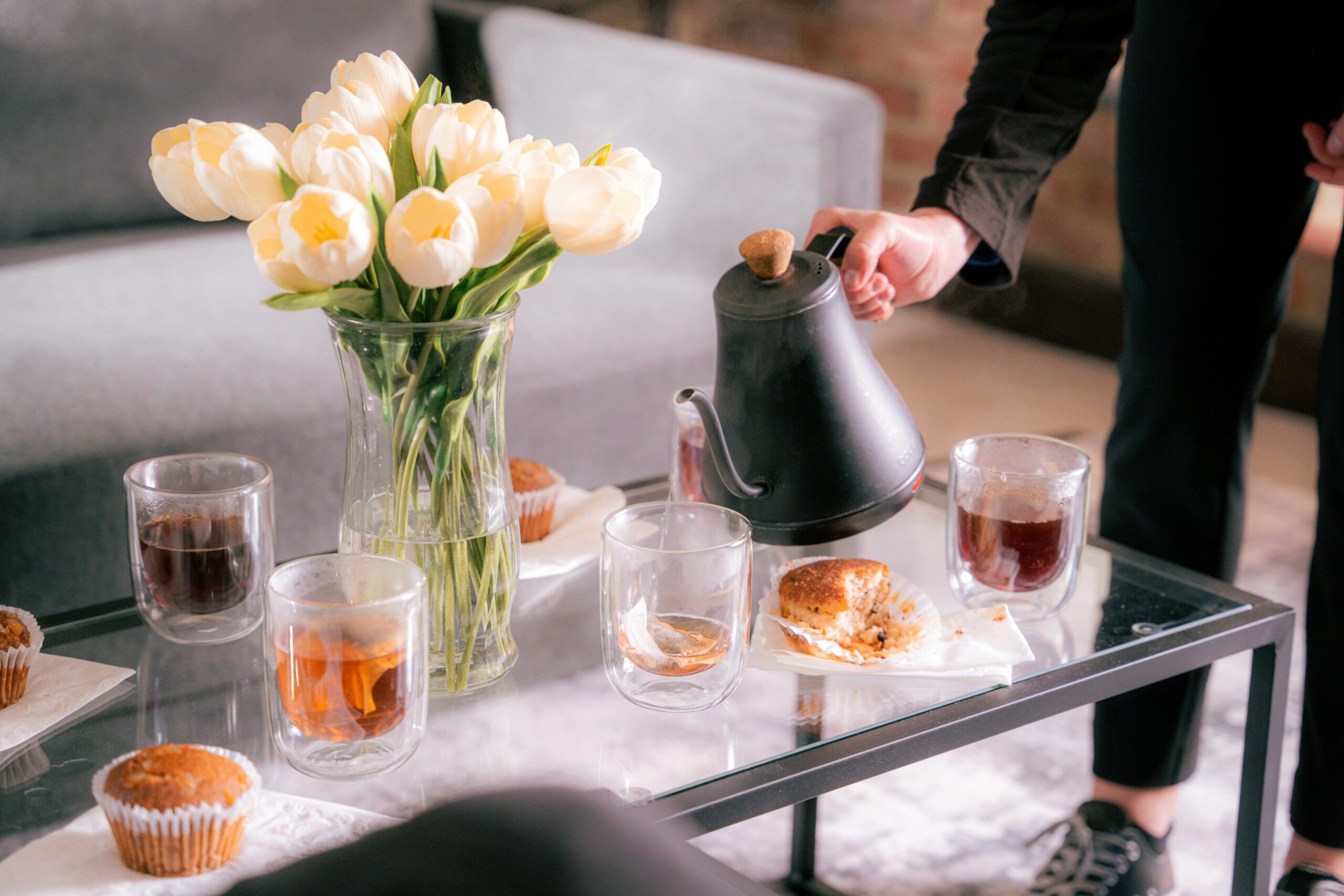
Most people have a moment when they finally clear the old, bulky wooden coffee table out of the living room and slide a glass one in its place. The room breathes suddenly. Light is something else. The sofa no longer feels boxed in. It’s not magic. It’s good design, doing its job without being obtrusive.
But here’s the thing no one tells you before you buy, glass coffee tables are not one size fits all. They range from a $90 tempered slab on metal legs to a $4,000 sculptural piece with a cast brass base. And the difference is far more important than most people think when they’re scrolling through options at 11pm.
This guide is for anyone trying to figure that out whether you’re furnishing your first flat, redesigning a family home, or just tired of a living room that looks like it was assembled by committee.
Glass Coffee Tables Deserve More Credit Than They Get
Glass furniture suffers from a reputation problem. It’s something people associate with 1990s hotel lobbies and fragile surfaces and the constant terror of fingerprints. That part is true. Most of it isn’t.
The truth is, the technology for tempered glass has come a long way in 2026. The glass used in quality coffee tables today (generally 10mm to 15mm thick, heat treated tempered glass) is four to five times stronger than ordinary annealed glass. When it does break (which takes real force) it breaks into small relatively harmless bits, not jagged shards. That’s intentional.
What glass brings to the table that wood, stone and metal cannot is visual continuity. A glass top in a smaller living room tricks the eye into thinking there is more space because the eye travels through it instead of stopping at the surface. Designers use this trick all the time in tight urban apartments. Ever wonder why that 600-square-foot apartment in the architecture magazine looks so spacious? A glass coffee table probably.
Know Your Glass Types Before You Purchase
Not all glass is created equal, and manufacturers don’t always make that clear.
Tempered Glass is the standard to go for quality coffee table. Only type worth buying. It undergoes a rapid heating and cooling process that creates internal compression that dramatically increases strength. Minimum thickness of 10mm for a regular coffee table. If it’s not marked “tempered,” that’s a red flag.
Frosted or Etched Glass is not clear, it is matte and translucent. It hides fingerprints better, which makes it actually practical for high use households. The visual effect is softer and often fits better to Scandinavian or minimalistic interiors than crystal clear glass.
Tinted Glass smoked, bronze, or grey tints was a huge trend in 2024 and is still hot in 2026. Smoked glass especially occupies a sweet spot. It’s sophisticated, it’s a little moody, and it doesn’t show dirt and prints as much as clear glass does. If you’ve ever walked into a living room that just felt effortlessly cool but you couldn’t quite put your finger on why, there was likely a smoked glass surface somewhere in it.
Bent or Curved Glass is used in more fancy, sculptural designs. This process of manufacturing is costly so you will only see it in designer pieces. It is a beautiful piece but it does limit the use of the table as the surface is not perfectly flat on the whole top.
The Base Materials: The Part People Think About Last (But Should Not)
It’s the glass top that gets the attention but it’s the base that defines the tables character and weight distribution and the process of ageing.
Metal Bases are the most versatile match to glass tops, whether in brass, brushed nickel, matte black or chrome. Brass has made a lasting comeback and there is no sign of it slowing down. The warm brass base under clear or smoked glass feels elevated but not ostentatious. Matte black is the safe modern choice, it goes with almost everything and photographs well, which is important if you care about your home’s aesthetic in photos.
Wooden Bases with glass tops make a hybrid that is warmer feeling than an all-glass table. This combo is especially successful in transitional interiors homes that are not exactly contemporary or traditionally rustic. There’s something so nice about the juxtaposition of warm natural wood grain and cool glass. Walnut and clear glass is a combo that interior designers have loved for years for a good reason.
Marble or stone bases with glass tops became mainstream in 2023, and they’ve only grown in popularity since. The material contrast is visually interesting – two “luxe” materials that somehow don’t compete with one another. These combinations tend to be heavy, which is both a stability advantage and a logistical disadvantage if you ever have to move them.
Acrylic or Lucite bases carry the notion of “visual lightness” to its logical conclusion. A whole table disappears almost in a room, which sounds gimmicky but actually works remarkably well in maximalist interiors where you need a resting surface that doesn’t add visual noise. It’s also the most polarising aesthetic choice on this list—people either love it or it looks cheap to them.
Select a Glass Coffee Table that Complements Your Home’s Style
This is where most buying guides turn generic. The truth is that a glass table can work in just about any style — but only if you’re deliberate about which glass, which base, which shape and which scale.
Contemporary and Modern Homes
This is the classic territory of glass tables. No ornament, no skirts or carved legs, just clean lines. It’s a good place for a rectangular or oval clear glass top on geometric metal legs – round tube, angular flat bar or a sculptural base. 2026. Contemporary interiors are defined by organic and curved shapes, as opposed to the rigid right-angled aesthetic of early 2010s modernism. A round glass top on an asymmetric base of metal has a freshness a perfect rectangle lacks.
Mid Century Modern
Here you want a glass top with tapered wooden legs, preferably walnut or teak. The glass should be clear; the warmth is coming from the wood, and you don’t want tinted glass competing with that palette. Round or oval tops are generally more period appropriate than rectangular ones, echoing the organic curves that characterised MCM design.
Maximalism and Eclectic Spaces
Maximalism doesn’t mean a glass table won’t work, it just means you need a glass table that can hold its own visually. A thick clear glass top and an ornate brass or gold base (think stacked spheres, sculptural forms, something with personality) makes a statement without being overpowering. The glass top actually helps here, giving the eye a “resting point” amidst the surrounding richness.
Bohemian & Organic Home Decor
This is the hardest one to fit. Cold, corporate glass tables feel out of place in spaces rooted in texture and organic warmth. The answer is a glass top with a base that has natural character – driftwood-inspired forms, raw metal, woven rattan elements or an irregular stone base. Frosted glass also functions better here than clear glass, because its softer quality is less likely to conflict with handmade textiles and natural fibres.
Classic & Traditional Homes
Glass tables are under-utilized in traditional interiors, and this is a missed opportunity. A heavy beveled-edge glass top on an ornate iron base, or a round glass top on a pedestal with classical detailing, can update a traditional room without sacrificing its character. The trick is in the weight: contemporary is read in thin, frameless glass. A glass top with visible edge-detailing, thickness and a substantial base reads as formal.
Practical considerations
Size and Dimensions
As a rule of thumb, the coffee table should be about two-thirds the length of the sofa it is facing. That’s a good rule of thumb but the more important rule is clearance: you need at least 18 inches between the edge of the table and the seat of the sofa to allow comfortable seating. Most people buy tables that are too big for the space they want to put them in. If you are uncertain, measure the dimensions on your floor with tape before you buy.
Size
Most coffee tables are 16 to 18 inches tall. If your sofa is especially low-sitting (many modern low-profile sofas are), err on the shorter side. The table’s surface should be approximately level with or slightly below the cushions of your sofa, not above. If your table is too tall, you’ll have an awkward reaching angle that you’ll notice every single day.
Profile of the Edge
Cleanest and most modern look is flat, polished edges. Bevelled edges give detail and catch light in a way that can be beautiful but they also tend to read as more traditional or formal. Pencil edge profiles (a small rounded polish on the top edge) are subtle and practical – they’re slightly more forgiving on contact than a perfectly sharp flat edge.
Maintenance Realities
Glass coffee tables are more likely to show fingerprints and water rings than wood. But the cleaning solution is super simple: a microfibre cloth and a spray of diluted white vinegar or any glass cleaner. Turns out glass surfaces are more annoying to maintain than the surfaces that actually contain dirt. Carved wooden legs, textured metal bases, upholstered ottomans, etc.
What to Seek (and Skip) When Shopping
Looking for:
- Tempered glass specifications (if not specified in listing, ask)
- Clear glass: minimum thickness 10mm or minimum thickness of 8mm for frosted or tinted versions as a result of laminating
- Base stable that doesn’t wobble when the table is built
- Good finishing on metal bases rough welds and uneven powder coating are signs of poor assembly product
- A company or retailer that sells replacement glass panels as this is the part most likely to be replaced at some point
**Avoid:
- Listings that use vague terms like “thick” to describe the thickness of glass without any measurement
- Bases that have small feet that are far apart and are top heavy are not stable
- Tempered glass less than 8mm, large surface areas (40 inches or over)
- Suspiciously low-priced options from unknown manufacturers with no reviews about long-term durability
Budget Ranges: What the Money Buys You
Under $200: You’re in mass-market territory. Perfectly usable for a first flat or a room that will change. Thinner glass (often 6-8mm), simpler base construction, limited finish options. IKEA’s VITTSJÖ and several Amazon-native brands offer reasonable quality for this price.
$200–$600: The quality jump is real. – Thicker glass – Better welding – More considered proportions – Options for smoked or tinted glass Here is the range in which most living rooms are designed to solve their problem.
$600-$1,500: You’re buying furniture with design in mind. This is the space that brands like West Elm’s premium lines, CB2 and other mid-to-high retailers live in. Better materials, more consistent design, a build that will last longer.
$1,500 and up: Designer and artisanal land. Tables with custom bases, hand-forged metalwork or designer collab pieces. Part of the value here is aesthetic, part is ownership of something made with real care. If that matters to you it is worth it.
Design Trends Influencing Glass Coffee Table in 2026
A few shifts worth knowing if you want a table that feels current rather than like it was purchased five years ago:
Organic and biomorphic shapes are now the default, replacing the strict rectangle. Oval, round, kidney and freeform amoeba-shaped tops are everywhere, in part because they go better with the curved sofas that defined interior design from 2023 onwards.
Smoked and bronze-colored glass still holds. Clear glass looks cleaner, tinted glass looks more thought out. And that distinction is making a lot of buying decisions today.
Many modern living rooms are moving away from the single-centerpiece look and are using mixed-height tables with a taller drink table next to a lower main coffee table. Glass works especially well in this format as multiple transparent surfaces do not visually crowd a space.
Sustainable framing with recycled metal, reclaimed wood or responsibly sourced materials has gone from a niche concern to a mainstream expectation in the mid- to high-price range.
Questions that are frequently asked
Is a glass coffee table kid- or pet-friendly?
The truth is, tempered glass of good quality is a lot safer than people think. The bigger issue is the corners on the table, and this is the same concern with any hard surfaced furniture. With round or oval tops that worry is eliminated altogether. If you have very small children, rubber edge guards are cheap insurance.
How do I stop the glass from sliding on the base?
Good quality tables usually have rubber pads or stops. If yours did not come with them, you can immediately solve the problem with small clear rubber furniture pads from any hardware store.
Can I place hot drinks directly on glass?
Tempered glass is pretty good at handling heat, but if you touch really hot mugs or pots with it, it can sometimes crack from thermal shock. Either way, it’s a good habit to get into using coasters.
Can glass be scratched?
In fact glass is harder than most of the materials that touch it on a daily basis. It can scratch metal objects but the casual use of cups, remotes, books and so on should not cause any visible scratching on quality tempered glass.
How long do glass coffee table last?
With reasonable care the glass part of a good table should last forever. The base is the part that usually wears out over time. So a table with a base that can be replaced or repaired is one that deserves to be prioritised for longevity.
TL;DR
The best glass coffee table is not the most expensive, or the most impressive one in the showroom photo it’s the one that makes your living room feel like itself. It sounds vague until you sit in front of the right one and then it makes complete sense.
There is something about the transparency of glass, something that seems a simple physical property, that makes a room feel more generous, more considered, more composed. It’s why the same rooms that seemed fine before are now suddenly better than fine after a glass table – not because anything was wrong but because something is quietly right now.
Take your time with this choice. Mark out the dimensions. Consider the light in your room throughout the day. Look at the relationship between the base material and the space it’s in. “The technical details are important, but so is trusting your gut when you see something really good in your own context.
A well-made glass coffee table isn’t just a table — it’s the table that makes all the other tables in the room look like they were built to be there all along.