





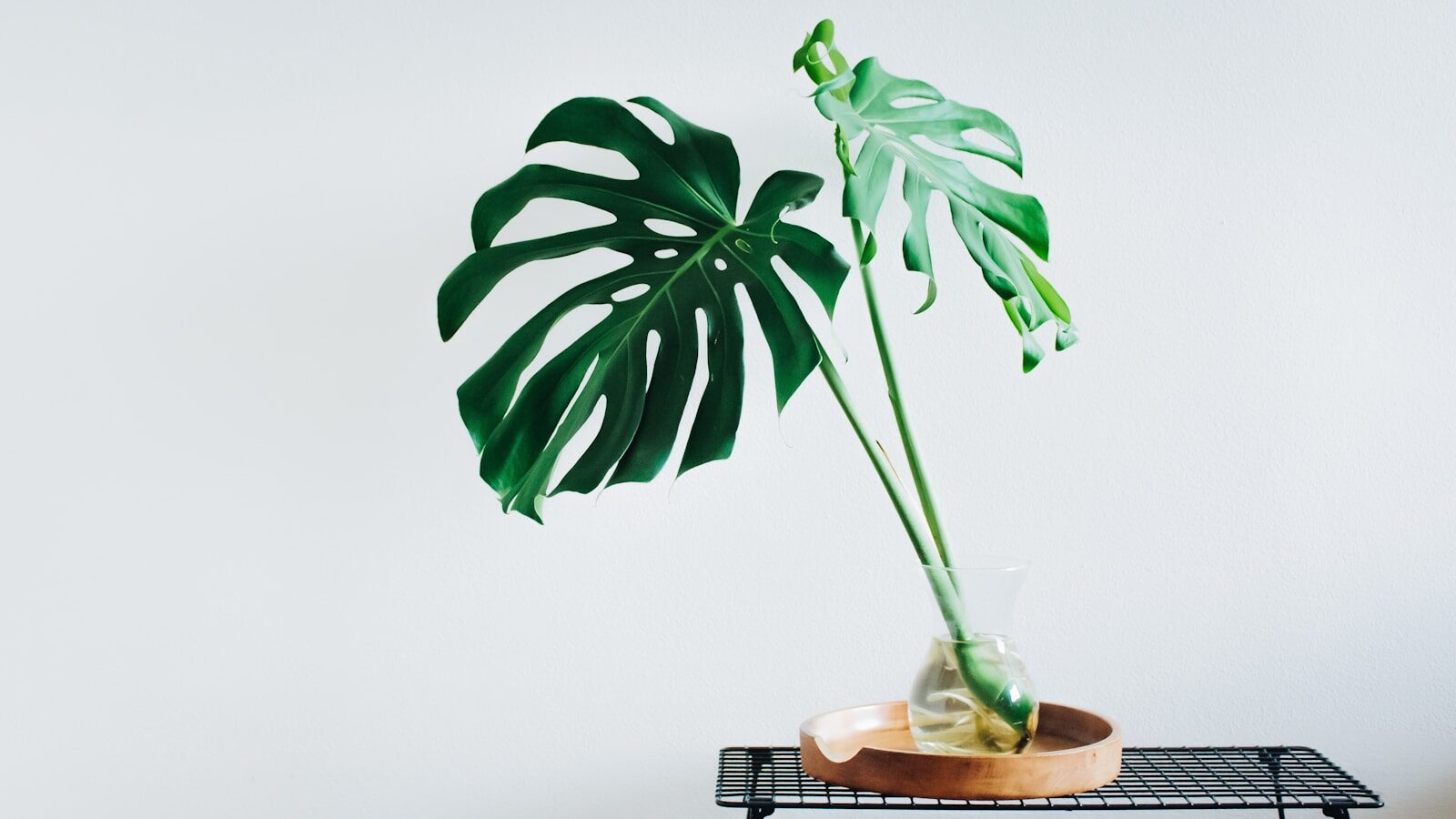
There’s a peculiar feeling you get when you first see a Monstera Mint in person. It doesn’t look like it belongs in a houseplant nursery — it looks like someone painted fog onto a tropical leaf. The pale, cool-toned marbling on deep green fenestrated foliage is the kind of thing you photograph before you even think to check the price tag. And then you check the price tag.
That experience is very common for anyone who’s wandered into the variegated aroid section of a serious plant shop. The Monstera Mint has been quietly gaining ground among collectors since around 2022. Still, by 2025 and into 2026, it has carved out a real identity of its own — distinct from the Thai Constellation hype, different from the Albo drama, and arguably more interesting than both if you know what you’re looking for.
This guide covers everything: what it actually is, how it differs from lookalikes, where its variegation comes from, what you’ll pay and why, how to care for it without losing the very thing that makes it special, and whether it’s genuinely worth the money or just a trend.
What Exactly Is a Monstera Mint?
The Monstera Mint is a variegated cultivar of Monstera deliciosa, the same species behind the iconic Swiss cheese plant that started appearing on every café wall in the mid-2010s. What makes the Mint distinct is its coloring — rather than the bright white sections of an Albo or the creamy yellow speckles of a Thai Constellation, the Mint’s variegation leans toward pale, cool greens and washed-out minty whites. Some leaves look almost frosted. Others show subtle streaking that resembles watercolor on canvas.
The “mint” in the name refers precisely to that color temperature. It’s not neon, it’s not stark white — it sits in the space between pale sage and near-white, and under the right light, it genuinely glows. That optical quality is one of the big reasons collectors are drawn to it.
Like all variegated Monstera, the Mint’s unusual coloring comes down to reduced or absent chlorophyll in portions of the leaf tissue. Those cells don’t produce the green pigment that most plant cells do, and what remains visually is that haunting pale color. Biologically, it’s inefficient — the plant is running with less photosynthetic capacity than a fully green Monstera — but aesthetically, it’s exceptional.
The Variegation Question: Is It Stable or Not?
This is the single most important thing to understand before buying any variegated Monstera, and it trips up many buyers.
The Monstera Mint’s variegation is chimeric, meaning it arises from a genetic mutation rather than being engineered through tissue culture (as Thai Constellation is). This has one significant consequence: it is not stable. Every new leaf the plant puts out is a gamble. You might get a leaf with gorgeous, balanced marbling. You might get a leaf that’s almost entirely green. In some cases — and this happens more often than sellers tend to advertise — the plant can revert fully to producing plain green foliage.
Reversion usually happens when the plant isn’t getting enough light. The green cells outcompete the variegated ones because they’re more productive for the plant’s survival. The plant isn’t “deciding” to revert — it’s just following the logic of natural selection on a cellular level. Once reversion happens, it rarely reverses. You’re left with a Monstera deliciosa that costs considerably more than a standard one.
This isn’t a reason to avoid the Mint — it’s a reason to go in with clear expectations. The instability is part of what makes each plant unique. No two Monstera Mints produce identical leaves. That’s genuinely appealing to a lot of collectors, who would find the predictable speckle of a Thai Constellation boring by comparison.
If you want certainty, buy a Thai Constellation. If you want character, buy a Mint — but care for it properly so the character actually shows up.
Monstera Mint vs. Thai Constellation vs. Albo: The Key Differences
Since all three are frequently discussed together, it’s worth laying out how they actually compare:
Variegation Color and Type The Albo has brilliant white, sector-style variegation — bold chunks of white that can take up half a leaf. The Thai Constellation has creamy yellowish-white speckles distributed across the leaf, resembling a star map. The Mint’s variegation falls within a cooler, paler green-white range with a softer, more diffuse appearance. Less dramatic than an Albo, more subtle than a Thai.
Stability Thai Constellation clearly wins this category. Its lab-produced variegation is consistent and doesn’t revert. Both the Albo and Mint are chimeric, meaning they can revert, though many growers report the Mint as slightly less volatile than the Albo under stable conditions.
Price As of mid-2026, well-rooted Monstera Mint plants in a 4-inch pot typically sell between $50 and $100 in US markets, with mature specimens pushing $120 or more. This puts it slightly below the Albo’s price range but above a standard Thai Constellation. It’s not cheap, but it’s no longer the eye-watering investment it was in 2022 when the hype was at its peak.
Availability: The Mint has become meaningfully easier to find than it was even a year ago. It’s available through specialist nurseries online (Plant Proper, Sun Grove, Canopy Plant Co., Rare Plant Fairy), on Etsy and Whatnot, and occasionally in larger retailers. Supply has improved without the price collapsing, which suggests genuine, sustained demand rather than speculative bubble behavior.
Light: The Mint’s Most Critical Need
If there’s one variable that determines whether your Monstera Mint thrives or fades, it’s light. Not dramatically — you’re not running grow lights on a 16-hour cycle — but consistently.
Bright, indirect light is non-negotiable. An east-facing window is ideal: morning sun is gentle, and the plant receives several hours of direct exposure without the intensity that would scorch the variegated tissue. A spot a few feet back from a south or west window, filtered by a sheer curtain, also works well.
What you want to avoid is the “looks fine from across the room” trap, where a plant technically survives in medium light but loses its variegation over months. The mint-toned sections of the leaf contain less chlorophyll, so the plant is already working with reduced photosynthetic capacity. Low light forces it to prioritize. It will start producing greener leaves to compensate, and once that pattern establishes, it rarely goes back.
Direct afternoon sun is the other extreme to avoid. The variegated sections are more sensitive to burning than fully green tissue. A leaf with 30% pale variegation is significantly more vulnerable to sun scorch than a standard Monstera leaf.
A practical rule: if you can comfortably read a book by the window’s natural light without straining, it’s likely adequate for the Mint.
Watering and Soil
The Monstera Mint doesn’t need radically different watering care from other aroids, but getting it right matters more because a stressed plant is more likely to revert.
Water when the top two to three inches of soil feel dry. This isn’t a weekly-on-the-calendar situation — it’s an observation-based practice that shifts with the seasons. In peak summer, this might mean watering every five to seven days. In a cooler, darker winter, the same pot might need watering every ten to fourteen days.
The soil itself is more important than most beginner guides acknowledge. Standard potting mix holds too much moisture for aroids, especially variegated ones, which may grow slightly more slowly. A mix that drains quickly but holds enough moisture to prevent complete dry-out is the target. Practically, this means adding perlite or pumice (roughly 30-40% by volume) to a good-quality tropical potting mix. Coco coir as a base is excellent. Avoid any mix with heavy bark fines that compress over time and create anaerobic conditions at the root zone.
Drainage holes are mandatory. This isn’t a decorative tip — roots that sit in standing water will rot, and a Monstera Mint losing its root system to rot is a very expensive mistake.
Humidity and Temperature
Native to tropical rainforests of Central and South America, Monsteras evolved in environments with consistent warmth and high ambient humidity. In most homes, the challenge isn’t temperature — it’s humidity.
Comfortable growing temperature is between 65–85°F (18–29°C). Most well-heated homes in temperate climates fall within this range year-round. The real risk is cold drafts: keep the plant away from air-conditioning vents, exterior doors, and windows that let in cold air in winter. A single cold shock doesn’t usually kill a Monstera, but it can trigger a stress response that leads to poor new growth.
Humidity ideally sits above 50%. In dry climates or during the winter heating season, this can be genuinely hard to achieve without intervention. A pebble tray with water beneath the pot, clustering plants together, or running a small humidifier nearby all make a measurable difference. Misting is less effective than commonly claimed — it raises humidity briefly but doesn’t sustain it.
If you have a bathroom or kitchen with decent natural light, either can be a surprisingly good location for this plant.
Fertilizing Without Overdoing It
Variegated plants are generally more sensitive to fertilizer overload than their fully green counterparts, for a simple reason: their reduced chlorophyll means they grow more slowly, and slower-growing plants can’t process excess nutrients as quickly. Salt buildup in the soil from over-fertilizing causes tip burn and root damage.
During spring and summer (the active growing season), feed once a month with a balanced liquid fertilizer diluted to half strength. Something in the 20-20-20 range or a formulation specifically designed for tropical aroids works well. Stop feeding entirely in fall and winter — the plant’s growth slows dramatically in lower light and cooler temperatures, and unused fertilizer accumulates as waste.
Some experienced growers prefer slow-release granular fertilizers applied at the beginning of spring, then one or two diluted liquid feeds mid-season. Either approach works; consistency matters more than formula.
Propagation: Rewarding but Requires Patience
Propagating a Monstera Mint is both exciting and anxiety-inducing in equal measure. The technique is the same as any Monstera — stem cuttings with at least one node and ideally one leaf — but the variable is the variegation.
Because the Mint is chimeric, you cannot predict what variegation a cutting will express. A cutting taken from a heavily variegated section of the parent plant has a better chance of producing variegated offspring, but it’s not guaranteed. This is genuinely different from propagating a Thai Constellation, where every cutting reliably produces variegated leaves.
For propagation, take a cutting just below a node using clean, sharp scissors or a blade. Let the cut end callous for an hour or so before placing it in water, sphagnum moss, or a mix of perlite and coco coir. Water propagation is slower, but it lets you monitor root development visually. Sphagnum moss tends to produce roots faster and of higher quality.
Keep the cutting warm, humid, and in bright indirect light while rooting. Avoid direct sun on unrooted cuttings — it stresses them before they have a root system to compensate.
Expect roots in four to eight weeks under good conditions. Don’t rush the transition to soil — wait until roots are at least two to three inches long.
Common Problems and How to Fix Them
Yellowing leaves: Usually overwatering or insufficient light. Check soil moisture and drainage first, then assess light levels.
Brown, crispy leaf edges: Low humidity or sun scorch. Move the plant slightly away from any direct sun exposure, and consider increasing ambient humidity.
Reverting to green: This is the heartbreak of the Mint. The primary cause is inadequate light. If your plant starts producing fully green leaves, move it to a brighter spot immediately. Trim back the green growth to nodes where variegated leaves emerged in the past. Sometimes — not always — this encourages the plant to push variegated new growth again.
Root rot: Usually a combination of heavy soil and overwatering. If you catch it early (mushy, brown roots, soggy soil smell), trim the affected roots with sterile scissors, treat with a diluted hydrogen peroxide solution, repot into fresh, well-draining mix, and hold off on watering for several days.
Is the Monstera Mint Worth Buying in 2026?
Honestly — yes, with caveats.
The Mint has settled into a more realistic price range compared to peak hype years. You’re not gambling $300 on a cutting anymore. At $60–$100 for a rooted plant, you’re buying something that requires real care but delivers genuinely striking results when properly cared for.
What makes it worth the investment isn’t the rarity per se — it’s the experience of watching each new leaf unfurl. With a standard Monstera, you know roughly what you’ll get. With a Mint, every new leaf is a genuine reveal. That variability, which is technically a liability from a horticultural stability standpoint, translates into something closer to watching a painting be made in real time.
For collectors who want consistency, the Thai Constellation is the safer bet. And For collectors who want personality and unpredictability, the Mint is more compelling than the Albo (which is both more expensive and more volatile) and more interesting than the Thai (which is predictable to the point of feeling mass-produced).
For beginners, it’s worth considering, but only if you can commit to the light requirements. The risk of reversion is real, and losing variegation on an $80 plant because it was placed too far from a window is a painful lesson. Start with a less expensive variegated plant first, build your confidence with aroids, then invest in a Mint.
FAQs
Is Monstera Mint the same as Monstera adansonii mint? No. There’s a separate plant marketed as Monstera adansonii Mint (a trailing species with smaller fenestrated leaves), which causes significant confusion. The Monstera Mint discussed in this article refers to the variegated Monstera deliciosa cultivar. Always confirm the species name before buying.
Can a reverted Monstera Mint regain its variegation? Rarely, and not reliably. Once the plant’s cellular balance tips toward all-green tissue, it tends to stay there. Prevention (good light) is far more effective than intervention after the fact. Some growers have had success cutting back to older nodes, but results vary considerably.
How fast does Monstera Mint grow? Slower than a standard Monstera deliciosa due to reduced chlorophyll. In good conditions (bright light, warm temperature, regular fertilization), expect one or two new leaves per month during the growing season. In winter, growth may pause entirely.
Should I give my Monstera Mint a moss pole? Yes, eventually. As a climbing plant, Monstera produces larger, more dramatically fenestrated leaves when given something to climb. A moss pole, a coco coir pole, or even a simple wooden stake helps the plant direct its energy upward. Fenestrations (the holes and splits the plant is famous for) become more pronounced in mature, supported specimens.
Where can I buy a genuine Monstera Mint? Reputable specialist nurseries — both online and brick-and-mortar — are the safest option. Platforms like Etsy have good sellers alongside questionable ones; always check reviews carefully and look for clear photos of the actual plant being sold, not stock images. As of mid-2026, nurseries like Plant Proper, Sun Grove, and Canopy Plant Co. have sold verified Mint specimens with positive buyer feedback.
A Final Thought
The Monstera Mint is the kind of plant that asks something of you. Not in a demanding, high-maintenance way — but in the way that anything beautiful and slightly unpredictable asks you to pay attention. You can’t put it in a corner and ignore it. You have to observe it, respond to what it does, and accept that some of what it produces will surprise you — occasionally in disappointing ways, but more often in ways that make you glad you chose it over something easier and less interesting.
In a world increasingly filled with mass-produced Thai Constellations that look identical to each other across thousands of households, there’s something genuinely refreshing about a plant that refuses to be perfectly consistent. The Monstera Mint earns its reputation — make sure you earn its best expression in return.