


I’ve spent the better part of two decades crawling across flat and low-slope roof some brand new, others that had already failed twice in five years. I’ve seen liquid coatings peel like old wallpaper after a single monsoon season, torch-on membranes lift at the seams because someone skipped the primer, and perfectly good systems ruined by clogged drains that no one checked. The difference between a roof that stays dry for twenty-five years and one that starts leaking in three usually comes down to three things: the right method for the climate and substrate, careful surface prep, and a realistic maintenance habit. This guide is the practical version of what I’ve learned on the job and from talking with contractors who actually stand behind their work.
Table of Contents
- Why Roof Waterproofing Matters More Than Most People Realize
- Understanding Your Roof Type and Climate Challenges
- Best Waterproofing Methods Compared
- Materials Deep Dive: Liquid Systems, Sheet Membranes, and Coatings
- Step-by-Step Application Principles That Prevent Failure
- Honest Material and System Comparisons with Real-World Verdicts
- Essential Maintenance and Inspection Practices
- Common Mistakes That Shorten System Life
- Cost Considerations and When to Call a Professional
- Emerging Trends Worth Watching
- Frequently Asked Questions
- Closing Thoughts
Why Roof Waterproofing Matters More Than Most People Realize
Water is relentless. On a pitched roof with good shingles and flashing, gravity does most of the work. On a flat or low-slope roof—the kind found on many commercial buildings, modern homes, and apartment blocks—water sits. Even a quarter-inch of ponding can eventually find a weak point. Once it gets under the membrane or coating, it migrates, saturates insulation, rusts metal decks, and shows up as stains on ceilings months later. I’ve opened up roofs where the plywood had turned to soft cardboard while the surface still looked mostly intact.
Good waterproofing does more than stop leaks. It protects the structure, improves energy performance when reflective coatings are used, and can add decades to the life of the roof deck. Done poorly, it becomes an expensive temporary patch that fails when you need it most.
Understanding Your Roof Type and Climate Challenges
Most serious waterproofing decisions involve flat or low-slope roofs (generally under 3:12 pitch). These can be concrete decks, metal decks with insulation, plywood, or existing membranes. Pitched roofs usually rely on overlapping shingles, tiles, or metal panels plus proper flashing; waterproofing there is more about sealing penetrations and valleys than creating a continuous membrane.
Climate changes the equation. In hot, sunny regions with intense UV, reflective white or light-colored systems last longer and keep interior temperatures lower. In areas with freeze-thaw cycles, flexibility becomes critical so the material doesn’t crack. Coastal or high-humidity zones demand excellent resistance to ponding water and salt air. Hurricane or high-wind regions need systems that stay adhered under uplift pressure. Always match the product to the local weather rather than buying whatever is cheapest at the big-box store.
Best Waterproofing Methods Compared
There are three broad approaches that dominate professional work today.
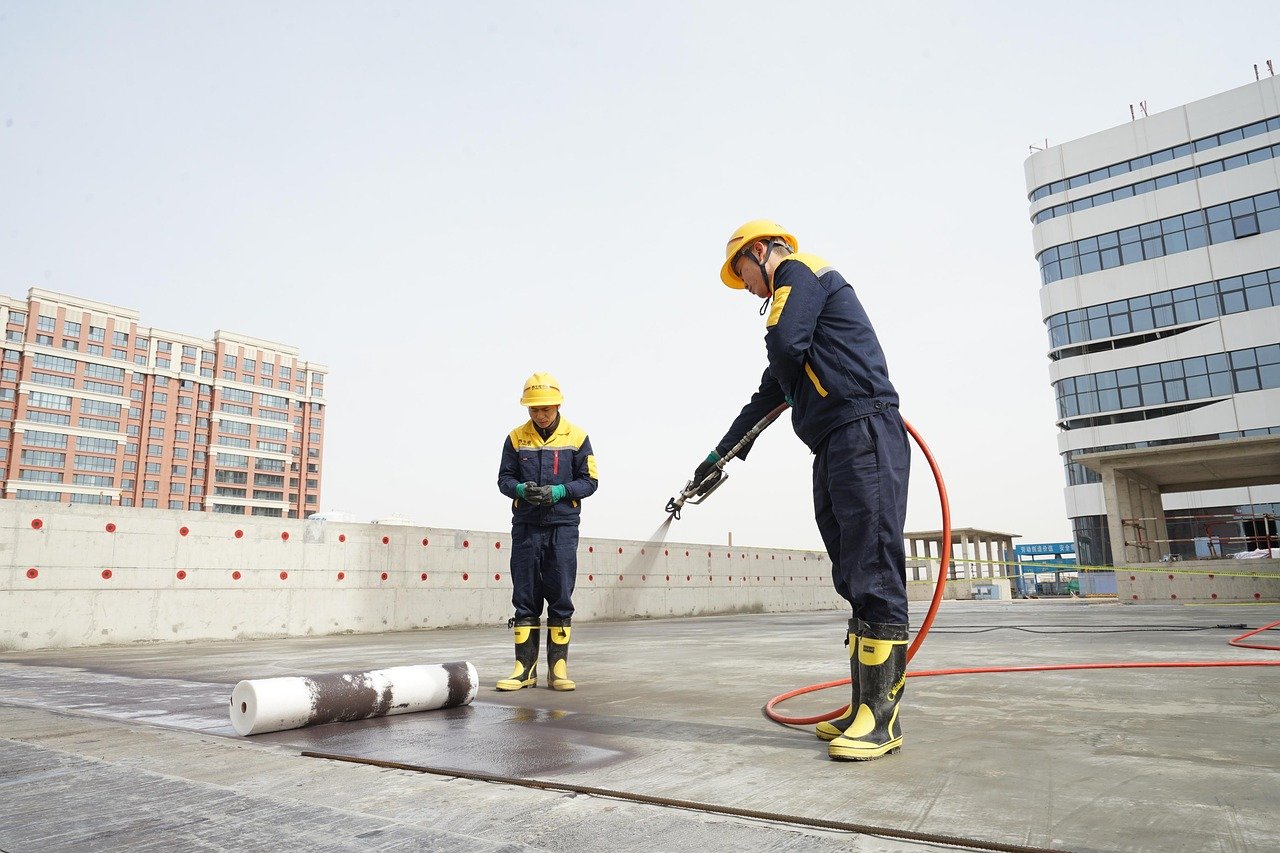
Liquid-applied membranes form a seamless, fully adhered layer that follows every contour. They excel around penetrations, irregular shapes, and details where sheet membranes struggle. Most modern liquid systems are polyurethane, silicone, or hybrid formulations. They are applied by roller, brush, or spray in multiple coats, often with reinforcing fabric at critical points.
Sheet membranes come in large rolls. Common types include EPDM (rubber), TPO, PVC, and modified bitumen (SBS or APP). These are either fully adhered, mechanically fastened, or ballasted. Seams are heat-welded, taped, or torch-applied depending on the material. Sheet systems can be extremely durable when installed correctly, but seams and details remain potential weak points.
Coatings and restoration systems are thinner liquid applications used to extend the life of an existing roof rather than create a brand-new waterproofing layer from scratch. Acrylic, silicone, and polyurethane coatings fall into this category. They are popular for maintenance and when a full tear-off is not yet justified.
Hybrid approaches—such as a liquid system over a prepared existing membrane—are increasingly common because they reduce waste and cost while delivering strong performance.
Materials Deep Dive: Liquid Systems, Sheet Membranes, and Coatings
Liquid Polyurethane Systems
These are my preferred choice for most concrete flat roofs and complex details. They offer high elongation (often 500–600% or more), excellent adhesion, and strong resistance to ponding water. Reinforced polyurethane systems with embedded fabric create a tough, seamless membrane. They handle movement well and can bridge small cracks. Drawbacks include higher material cost and the need for careful application in the right temperature and humidity range. Once cured, they form a durable, flexible skin.
Silicone Coatings
Silicone stands out for UV resistance and ponding-water performance. It stays flexible, does not degrade under intense sun the way many acrylics do, and can be applied over certain existing roofs as a restoration coating. The main complaints I hear are that some silicones attract dirt and can be slippery when wet. Application requires a clean, dry surface and attention to thickness. For pure waterproofing on roofs that hold water, silicone often outperforms acrylic.
Acrylic Coatings
These are the budget-friendly, reflective option. They are easy to apply, water-based in many cases, and excellent at reflecting heat. However, most acrylics do not handle prolonged ponding well and can re-emulsify or degrade if water sits for extended periods. They work best on roofs with positive drainage. I use them for energy-efficient top coats when the underlying waterproofing is already solid.
EPDM (Ethylene Propylene Diene Monomer)
This black rubber membrane has been a workhorse for decades. It is highly flexible in cold weather, relatively inexpensive, and available in large sheets that minimize seams. Traditional black EPDM absorbs heat; white or coated versions improve reflectivity. Seams are typically taped or adhered rather than heat-welded, which some installers consider a slight weakness compared with thermoplastic membranes. Lifespan commonly reaches 25–30+ years with proper care.
TPO (Thermoplastic Polyolefin)
White, reflective, and heat-welded at the seams. TPO offers good energy performance and strong seam strength when welded correctly. Quality varies more than with older materials, so choosing a reputable manufacturer and experienced installer matters. It performs well in warmer climates and is widely used on commercial buildings.
PVC
Similar to TPO in many respects but generally more chemical-resistant and often considered more robust long-term. Higher cost is the main trade-off. Heat-welded seams are very reliable.
Modified Bitumen (SBS and APP)
Torch-on or self-adhered asphalt-based membranes remain popular, especially where contractors are highly experienced with them. SBS offers better low-temperature flexibility; APP handles higher temperatures. They provide good puncture resistance and can be installed in multiple plies. Fire risk during torch application and odor are practical considerations. Reflective coatings or granules on the surface improve UV performance.
For more technical comparisons of single-ply membranes, resources from established roofing associations and manufacturers provide detailed performance data.
Step-by-Step Application Principles That Prevent Failure
No material overcomes bad preparation. Here is the sequence I insist on:
- Thorough inspection and repair. Find and fix all existing leaks, damaged insulation, and structural issues first. Water trapped under a new membrane will cause blisters and eventual failure.
- Complete cleaning. Remove dirt, oil, loose coatings, vegetation, and debris. Pressure washing or mechanical cleaning is often required. The surface must be dry.
- Crack and joint treatment. Seal cracks, treat expansion joints, and reinforce transitions with fabric or specialized details before the main membrane goes down.
- Priming where required. Many systems need a primer for proper adhesion. Skipping it is one of the fastest ways to create delamination.
- Application according to manufacturer specifications. Correct thickness, number of coats, curing times, and temperature windows are non-negotiable. Measure wet-film thickness rather than guessing.
- Detail work. Flashings, penetrations, edges, and drains receive extra attention and reinforcement. Most leaks start at these locations, not in the middle of a large field.
- Final inspection and protection. Check for holidays (thin spots), ensure drains are clear, and protect the new surface from foot traffic or construction debris until fully cured.
Honest Material and System Comparisons with Real-World Verdicts
After watching systems age in real conditions, here is my current ranking for typical residential and light-commercial flat roofs in mixed climates:
- Best overall seamless performance and detail handling: reinforced liquid polyurethane.
- Best UV and ponding resistance for coatings: high-quality silicone.
- Best long-term single-ply durability when installed well: PVC or high-grade EPDM.
- Best energy performance and heat-welded seams: TPO or PVC.
- Best value for experienced crews familiar with asphalt: multi-ply modified bitumen with a reflective coating.
- Most budget-friendly temporary or light-duty solution: acrylic coating (only if drainage is excellent).
No single product wins every job. A complex concrete roof with many penetrations favors liquid. A large open commercial roof with minimal details may favor a sheet membrane for speed and consistency. Climate and existing substrate always influence the final choice.
Essential Maintenance and Inspection Practices
Even the best system needs attention. I recommend twice-yearly inspections—ideally in spring and fall—plus after major storms.
Key items on every checklist:
- Clear debris from the surface and drains.
- Look for ponding water and correct drainage problems.
- Examine seams, flashings, penetrations, and edges for cracks, lifting, or open joints.
- Check for blisters, punctures, or coating wear.
- Inspect interior ceilings and walls for new stains.
- Document findings with photos for comparison over time.
Keep gutters and downspouts clean. Trim overhanging branches. Limit unnecessary foot traffic. Address small problems immediately; a $200 repair this year can prevent a $10,000 problem later.
Common Mistakes That Shorten System Life
- Applying material over a dirty or damp surface.
- Choosing a product unsuited to the climate or the presence of ponding water.
- Ignoring manufacturer instructions on thickness, temperature, or curing.
- Neglecting flashings and penetrations.
- Assuming the job is finished once the membrane is down—maintenance is part of the system.
- Using the cheapest material without considering total life-cycle cost.
Cost Considerations and When to Call a Professional
Material costs alone can range from a few dollars per square foot for basic coatings to significantly more for multi-layer liquid or high-end sheet systems. Labor, access, tear-off of old material, and disposal often equal or exceed material cost. Full replacement of a failed roof is far more expensive than timely restoration or proper initial waterproofing.
DIY is realistic for small areas, simple coatings, or minor repairs if you follow instructions carefully and the roof is accessible and safe. Complex systems, large areas, or any work involving torch application, heat welding, or structural concerns belong with experienced, insured professionals. Warranties usually require certified installers.
Emerging Trends Worth Watching
Reflective “cool roof” coatings continue to improve energy performance and are increasingly specified in hot climates. Hybrid liquid systems that combine the seamlessness of liquids with the toughness of reinforced membranes are gaining ground. Better moisture-detection tools and infrared scanning help catch problems earlier. Sustainability is pushing longer-lasting systems and reduced tear-off waste through restoration coatings. Green roofs and solar installations are driving demand for robust, root-resistant, and puncture-resistant waterproofing underneath.
Frequently Asked Questions
How long should a properly installed waterproofing system last?
Fifteen to thirty years is realistic depending on the material, climate, and maintenance. Some high-quality systems exceed that.
Can I waterproof over an existing membrane?
Often yes, with the right preparation and compatible products. A professional assessment is wise.
Is ponding water always a problem?
Prolonged ponding stresses most systems. Good design minimizes it; materials with proven ponding resistance help when it cannot be eliminated.
Do I need a vapor barrier or insulation under the waterproofing?
It depends on the climate and roof assembly. Condensation control is critical in some regions.
How do I know if my current roof needs full replacement versus restoration?
Widespread saturation of insulation, multiple active leaks, or a membrane that is brittle and cracked usually point toward replacement. Surface wear with a sound substrate often allows restoration coatings or overlays.
Closing Thoughts
Roof waterproofing is not glamorous work, but it is one of the most important investments you can make in a building. The systems that perform best over time share the same traits: they were chosen for the specific conditions, installed on a properly prepared surface with attention to every detail, and then given basic ongoing care. I have walked away from jobs feeling confident the roof would outlast the next owner, and I have returned to others only a few years later to find preventable failures caused by shortcuts. Choose carefully, prepare thoroughly, and maintain consistently. A dry building is the quiet reward that makes all the effort worthwhile.
Author Bio
Marcus Hale is a building envelope specialist and field researcher with over twenty years of hands-on experience in commercial and residential roof systems. He has supervised waterproofing projects across varied climates, tested materials under real weathering conditions, and contributed practical guidance to contractors and property managers. His focus remains on durable, maintainable solutions that protect structures without unnecessary complexity.